

Day 11 (Part 1): Tso Kar – Read More
Day 11 (Part 2): Leh City
Staying on Old Leh Road feels like resting above a charming street lined with trendy shops. After exploring Ladakh remoteness, I wasn’t all that thrilled about doing another round of exploring standard tourist spots of the city. Tourist attractions around Leh – Click here
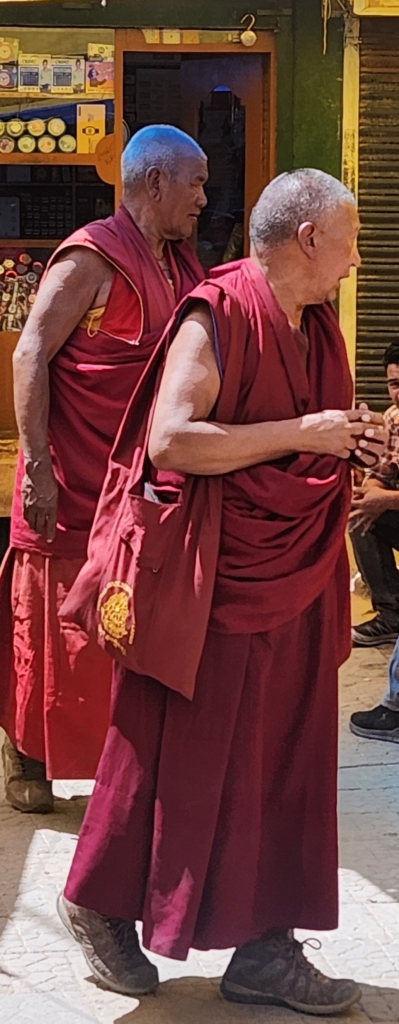
Leh, of course, has its spiritual pulse in Buddhism, and the unmistakable sight of lamas – young and old, decked out in their flowing red robes – was a constant reminder of the city’s deep-rooted spiritual tradition. These lamas, drawn from all corners of the country, come here to delve deeper into their journey, finding their chosen monastery and setting off on a path that’s as winding as the streets we were exploring.

Khardung La Road
Revived by evening, Danish and I took a late-evening set-off on foot to explore Leh’s backstreets. As we walked along, I figured out that the entire city economy seemed to be dedicated to tourism anyway, from hotels to tour organizers, motorbike rentals to shops decked out with Pashmina shawls and handicrafts.
With Danish slipping into his unexpected role as a self-proclaimed tour guide, his enthusiasm was contagious. He steered us away from the main drag and into narrow, time-worn lanes that seemed to hold the whispers of Leh’s past.

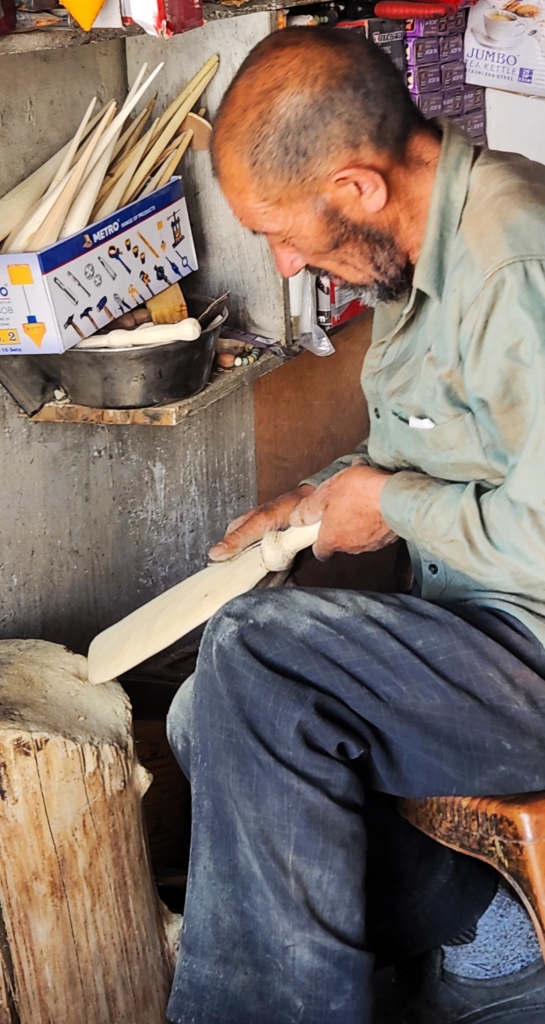
Shopkeepers chatting over cups of steaming butter tea, and craftsmen working with quiet concentration. One shop caught our eye – a tradesman was skilfully crafting a block of wood, shaping it into a rustic kitchen tool. With every stroke, it felt as though he was embedding a bit of his own care, ready to infuse warmth into every meal it would one day stir.


We ambled along the legendary Khardung La Road, letting the rich texture of the city surround us. The old market was alive with energy, as people and cars darted every which way, and shops, with their faded charm, beckoned quietly from the sides.
It’s not all Pashmina and apricots here – this area still holds tight to the everyday Leh, with grocery stores, hardware shops, and everything else needed to keep the city ticking.
Every corner had a story, he assured me, and with each turn, we stumbled upon glimpses of local life. Danish would point out this little detail or that, offering me tales from his previous visits, and soon I was fully absorbed, letting the city’s old soul show itself in patches between the busier tourist paths.
Moti Market
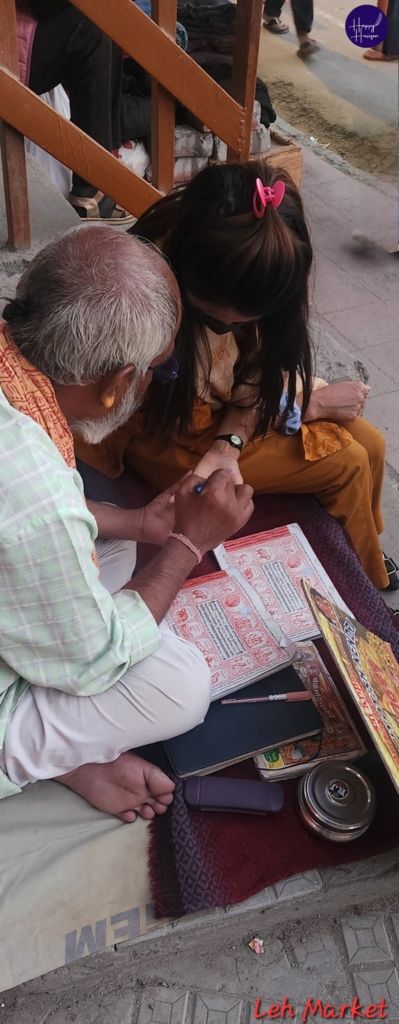
Winding down side alleys, we found ourselves in Moti Market, a labyrinth of small shops that cater less to wanderlust and more to life’s basics.
While tourists might stumble in here for a taste of local flair, this area is primarily a place for the locals to stock up on everything from garments to utensils. It’s the kind of market where you’ll either know exactly where you’re going or risk getting thoroughly turned around.
Danish, navigated Moti Market like a seasoned pro, on a mission to find some cloth for his family. After hunting down his favourite shop, he mulled over a selection before zeroing in on a Korean fabric that had made its way here.
The allure of goods from far-flung lands endures, a resilient reminder of Leh’s storied connection to the ancient Silk Road, linking this little mountain city to cultures and markets across distant horizons.
As the local lady sat with the palmist, eager to uncover her fate and what the future held, I was reminded of Nida Fazli’s fitting lines:
apnī marzī se kahāñ apne safar ke ham haiñ
ruḳh havāoñ kā jidhar kā hai udhar ke ham haiñ
This couplet translates to: “Where are we the masters of our own journey? We go where the winds take us”.
These lines by Fazli beautifully capture the essence of surrendering to life’s ebb and flow, much like the lady seeking answers beyond her control. The poet reflects that we often believe we control our journey, but life has a way of guiding us in directions we may never anticipate.
Some stores catered to tourists with an array of stunning jewellery, dazzling in bright stones set in silver. Ladakhis have a thing for stones – they’re more than just a fashion statement here. The pieces that really steal the show are laden with turquoise, a gem treasured not only for its deep London Blue hues but also for its almost mystical significance. Turquoise is revered, even more than gold, symbolizing wisdom, spiritual journeys, and, if you believe the local lore, keeping the occasional demon at bay. I felt that familiar itch to snag a turquoise trinket as a souvenir, but Danish quickly reined me in, reminding me we weren’t exactly turquoise experts. With a sigh, I conceded.
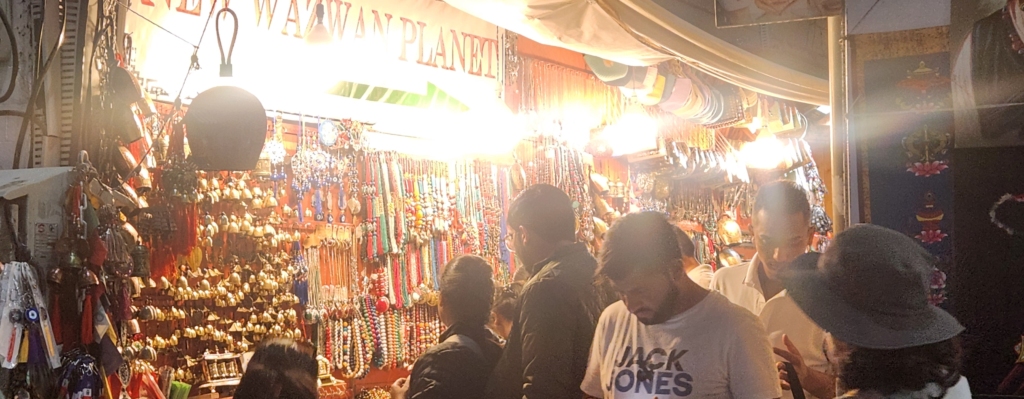
Our conversation veered to stones of another hue, as Danish brought up Kashmir’s famous blue sapphires. Mined in Kishtwar, these sapphires are precious, he noted. The sun had fully set, and our stomachs were growling. Danish had his heart set on a Wazwan meal, so he went off to chase his culinary cravings while I meandered my way to a quiet spot and gave in to a comforting slice of pizza. Dinner done, we ambled back to our homestay, surrendering to the call of an early night.

Day 12: Encounter with Locals & Market Life @ Leh
We woke up refreshed and set-off early to scout for breakfast – a ritual of sorts you’d miss if you were holed up in a hotel. Leh, however, takes its sweet time waking up. This isn’t a town that bursts to life at dawn, so if you’re an early bird, you’ll need to know where to peck for food.
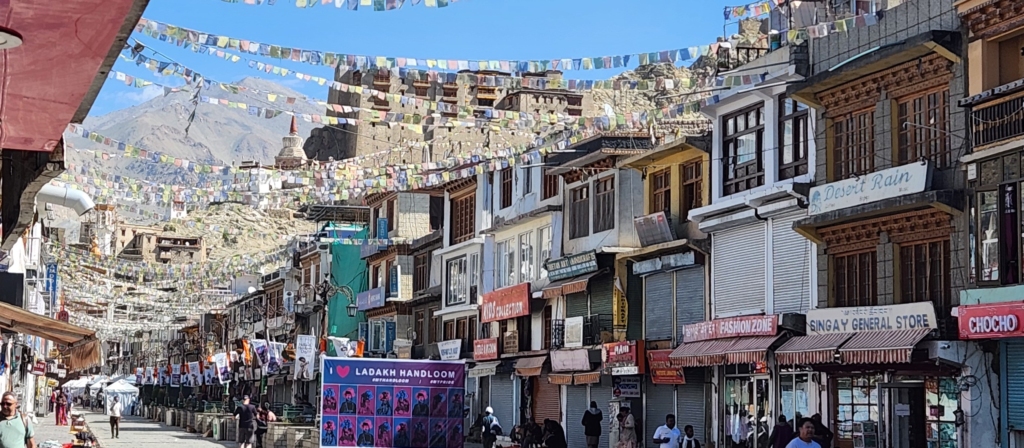
On Danish’s suggestion, we aimed for market area, banking on a local spot for some grub. After a bit of asking around, we discovered a bustling basement joint, the kind of place where locals line up before work, waiting for steaming hot parcels of breakfast. Inside, it was alive with chatter. A group of young guys sat nearby, buzzing with excitement over the stock market, eagerly awaiting the opening bell like it was some prized ritual. Nothing like trading tips and momos, I suppose.
When we stepped out, the local market still had that early-morning hush. The street dogs were stretched out, snoozing along the pavements, while a cluster of casual labourers gathered nearby, waiting to be hired for the day.
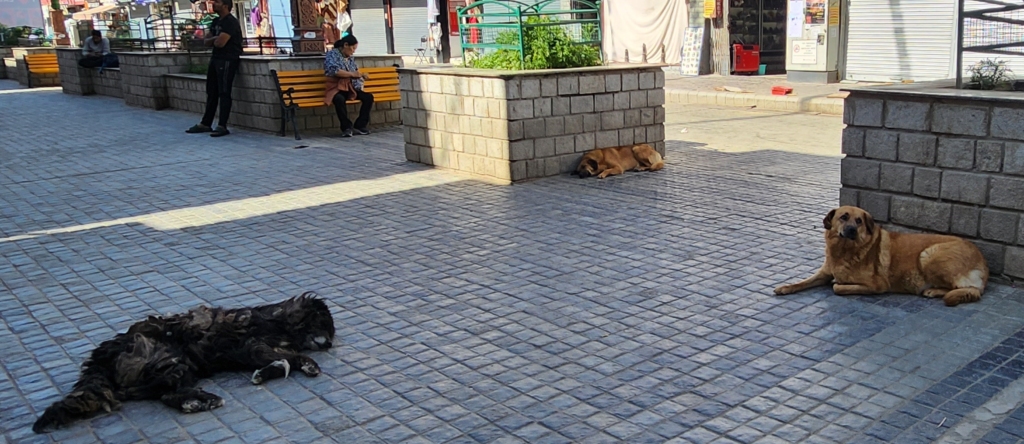
In minutes, the match-up was complete – each tradesman whisked away to some project or another. The morning rhythm of Leh, with all its understated charm.
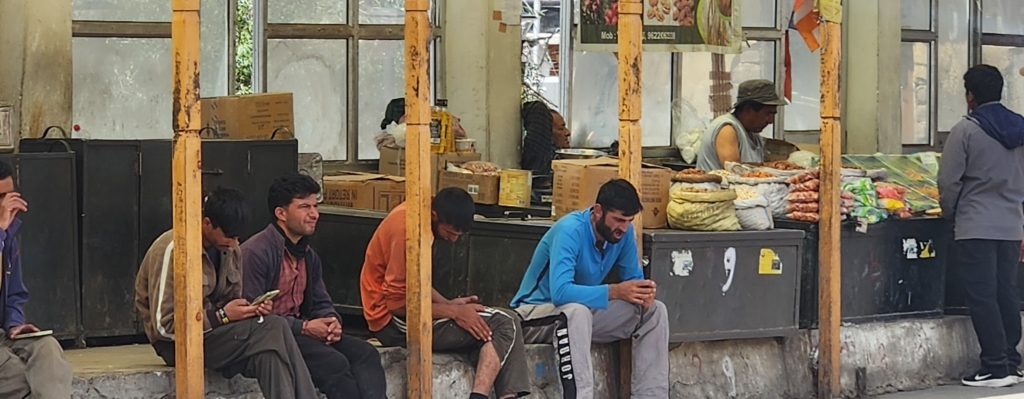

We drifted along, eventually finding ourselves inside a tiny salon tucked into a corner of the market. After a bit of sprucing up, Danish announced he’d be heading back to Srinagar. With warm hugs and promises to meet again on some winding road, we parted ways.
Local Street Life &Tibetan Market
Across Leh Market, the street was lined with stalls set up in a whimsical, almost theatrical arrangement. Vendors proudly displayed artefacts, fragrant spices, and heaps of dried fruits – especially the star of the show: apricots. Here, you can get apricots however you fancy – dried to savour back home, or fresh and juicy, picked straight from Ladakh’s sun-soaked orchards. The locals turn apricots into oils, juices, and jams, each use as creative as the next.
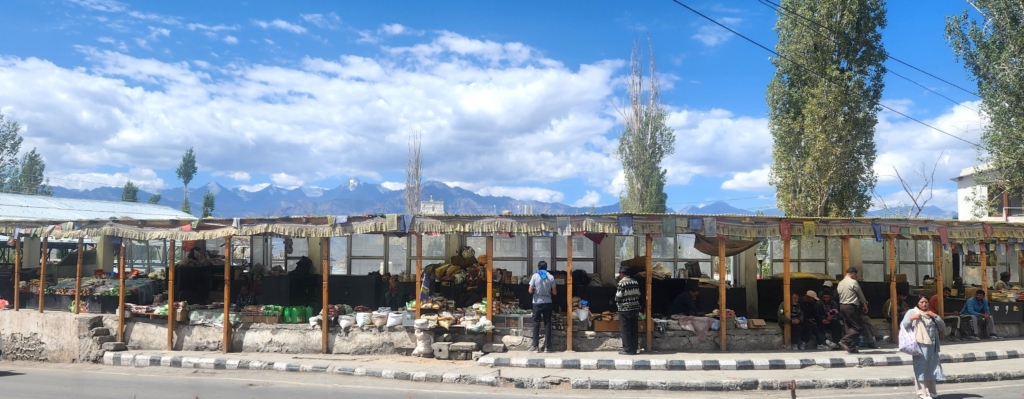

Each stall seemed to have its own personality, bursting with colours and quirks, making it hard to resist snapping a few photos. But for some reason, my usual urge to capture every detail faded, and instead, I just stood back, soaking in the scene like a quiet observer. There was something honest and unfiltered about watching the local Ladakhi people go about their morning without the lens between us.

Next to this street market is the Tibetan market, another delightful trove of local crafts and treasures. With so many intricate pieces calling my name, I couldn’t resist picking up a few souvenirs for friends and family – a piece of Leh to share.
Leh Market / Old Fort Road
As the sun climbed higher and the day warmed up, I decided it was time for an early lunch, followed by the ultimate travel luxury: a midday snooze. The Leh Market was alive with vegetable vendors selling fresh produce, and a restaurant called Maryul caught my eye. Inside, I met Paridhi, the owner, and a hidden gem herself.
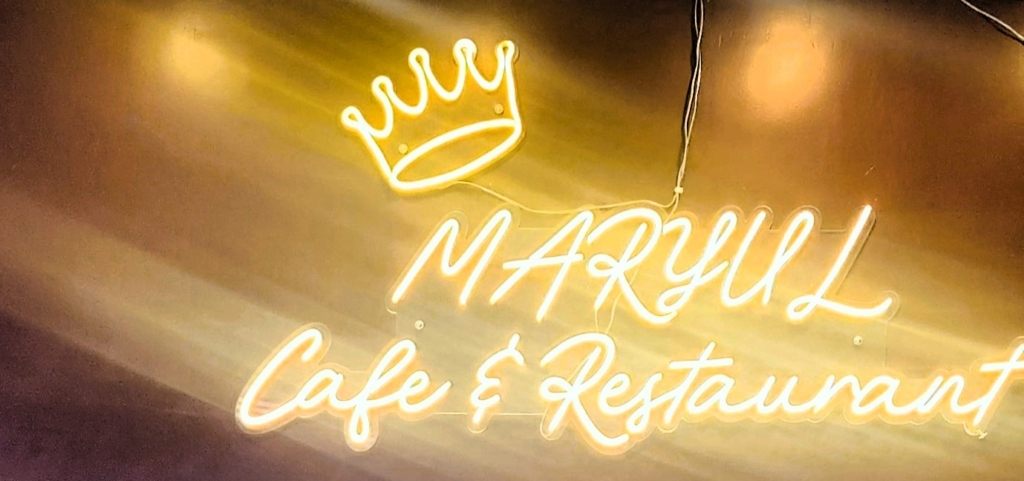
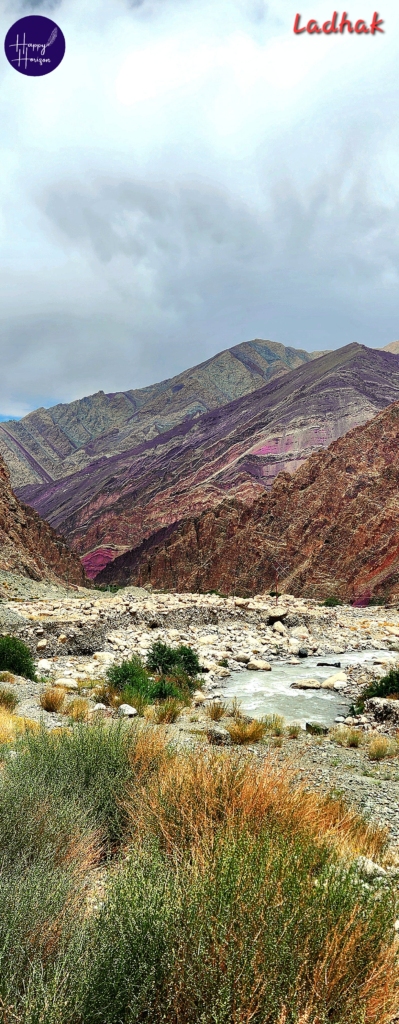
Over lunch, Paridhi explained that “Maryul” refers to the ancient kingdom of Ladakh, a quirky reference to “Land of Red Soil” due to red hues found in the local mountain ranges.

To my surprise, she was a couple of years behind me in university back in Mumbai! She’d originally come to Ladakh on a backpacking trip but had stayed on, drawn by a mission to bring soft skills to kids in Ladakh’s remote regions. I couldn’t help but admire her dedication, especially knowing the lengths she goes to in the bitter winters. She insisted I try seabuckthorn juice – a bright yellow-orange drink made from a thorny local shrub that thrives in Ladakh. She explained how every part of this “wonder plant” has a use – medicine, nutrient, fence, you name it. And the juice? Refreshing, and simply amazing! If you ever get to Ladakh, seabuckthorn is a must-try.

Later in the evening, I caught up with Rafeeka, who had helped me organize my stay in Turtuk. We chose a café with a perfect view of Leh Market and a glimpse of the grand Leh Palace towering above.
The palace, with its nine stories and rugged façade, was abandoned when Kashmiri forces besieged it in the mid-19th century, forcing the royal family to move to Stok. Now, the palace stands as a reminder of Ladakh’s rich and turbulent history, perched defiantly atop Namgyal Hill.

The café was located near Jama Masjid, which currently permits entry primarily to men.

Historically, an agreement between the Mughal Empire and the Ladakhi kings saw the Mughals offering military support to Ladakh in exchange for a tribute. The construction of Jama Masjid symbolized this alliance.
After coffee, Rafeeka and her friend Farida gave me a tour of Leh Market & Old Fort Road, one of the most lively and colourful places in Ladakh. Shopping here isn’t just shopping; it’s a full dive into Ladakhi culture and craft. From intricately hand-crafted Pashmina shawls to stalls packed with Buddhist-inspired designs, the market is a feast for the senses. The lotus motif – symbolizing the Buddhist ideal of rising above earthly troubles to bloom peacefully – seems to pop up everywhere.
Thanks to Rafeeka and Farida’s local connections, I managed to get my hands on an authentic Pashmina shawl. My bag was now stuffed to bursting with shawls, but with a little packing magic, I hoped it would all fit. With a heart (and luggage) full of gratitude, I thanked them for a fantastic day in Leh Market.

Dinner with Ishfaq

As darkness settled over Leh, exhaustion started to kick in. I was heading back to my homestay when I spotted Ishfaq, lounging outside his souvenir shop with a grin that could charm a yak.
He called me over, promising a “special discount”. What began as a quick greeting turned into an hour-long deep dive into his collections. He even unveiled a few hidden treasures – shawls and semi-precious stones he’d reserved for true connoisseurs (or, in this case, tired travellers who can’t resist a good salesman).
Naturally, I walked out with more Pashmina and a handful of dazzling stones. Ishfaq, it turned out, also had a thriving business in Goa, where he retailed semi-precious stones during the winter.
We agreed to reconvene for dinner and found ourselves on the rooftop of a restaurant, with the night air cooling us off. The best surprise? The place was owned by Paridhi! From backpacker to business mogul – she’d carved quite the niche for herself in Leh.
Day 13: Leh Airport – Mumbai

With Danish already back in Srinagar, I called on my backup for airport duty – Sonam, the ever-smiling, endlessly patient Ladakhi. Right on time, Sonam arrived and even suggested a stop at a Vaishnav dhaba for a quick breakfast. Over steaming cups of tea, he shared stories of his family, his life in Leh, and his dreams, filling the morning with that easy warmth Ladakhis are known for. I can’t recommend him enough for anyone in need of a reliable, heartwarming guide around Ladakh.
When we got to the airport, Sonam insisted on getting a trolley for me, a small gesture but one that speaks volumes.
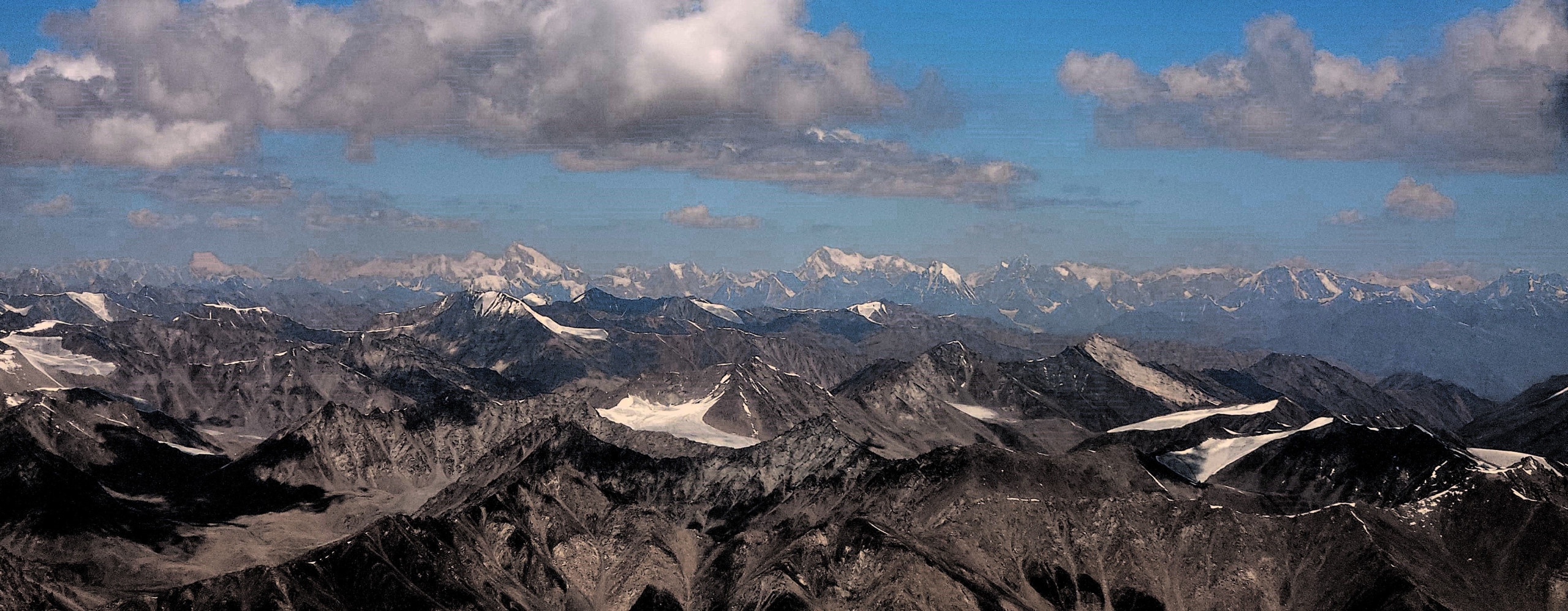
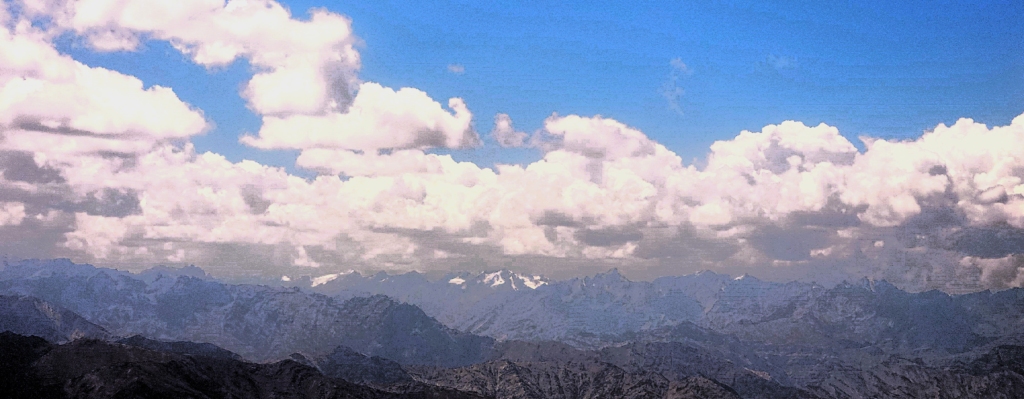
Pro Tip: For an unforgettable farewell, book a window seat on the left side of the plane on your way out of Leh. You’ll get one last spectacular view of the mountains, as if Ladakh itself is waving you off.


August 2024
If you’re planning a trip to Leh or explore Ladakh, we at HappyHorizon would be thrilled to curate your holiday plans to enhance your travel experiences. Feel free to reach out to us: connect@happyhorizon.in
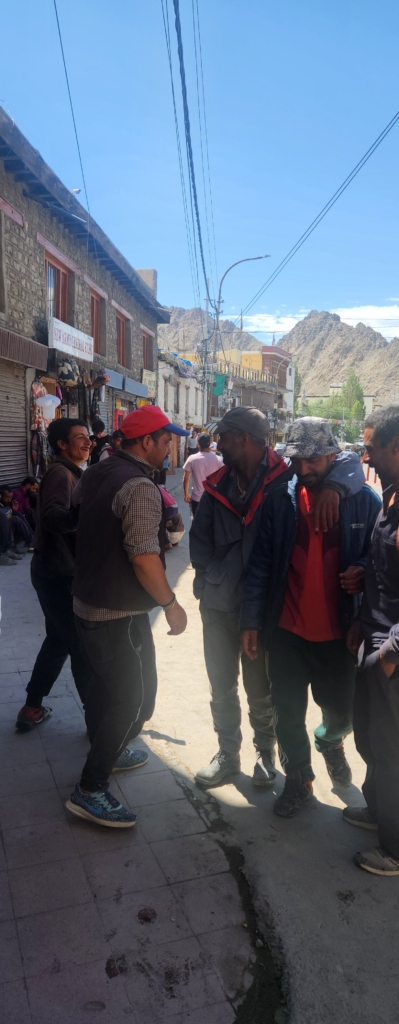


Gallery
Sukumar Jain, a Mumbai-based finance professional with global experience, is also a passionate traveler, wildlife enthusiast, and an aficionado of Indian culture. Alongside his career, which includes diverse roles in international banking and finance, he's working on a wildlife coffee table book and enjoys sculpture and pottery. His interests span reading non-fiction to engaging in social and global networking.

