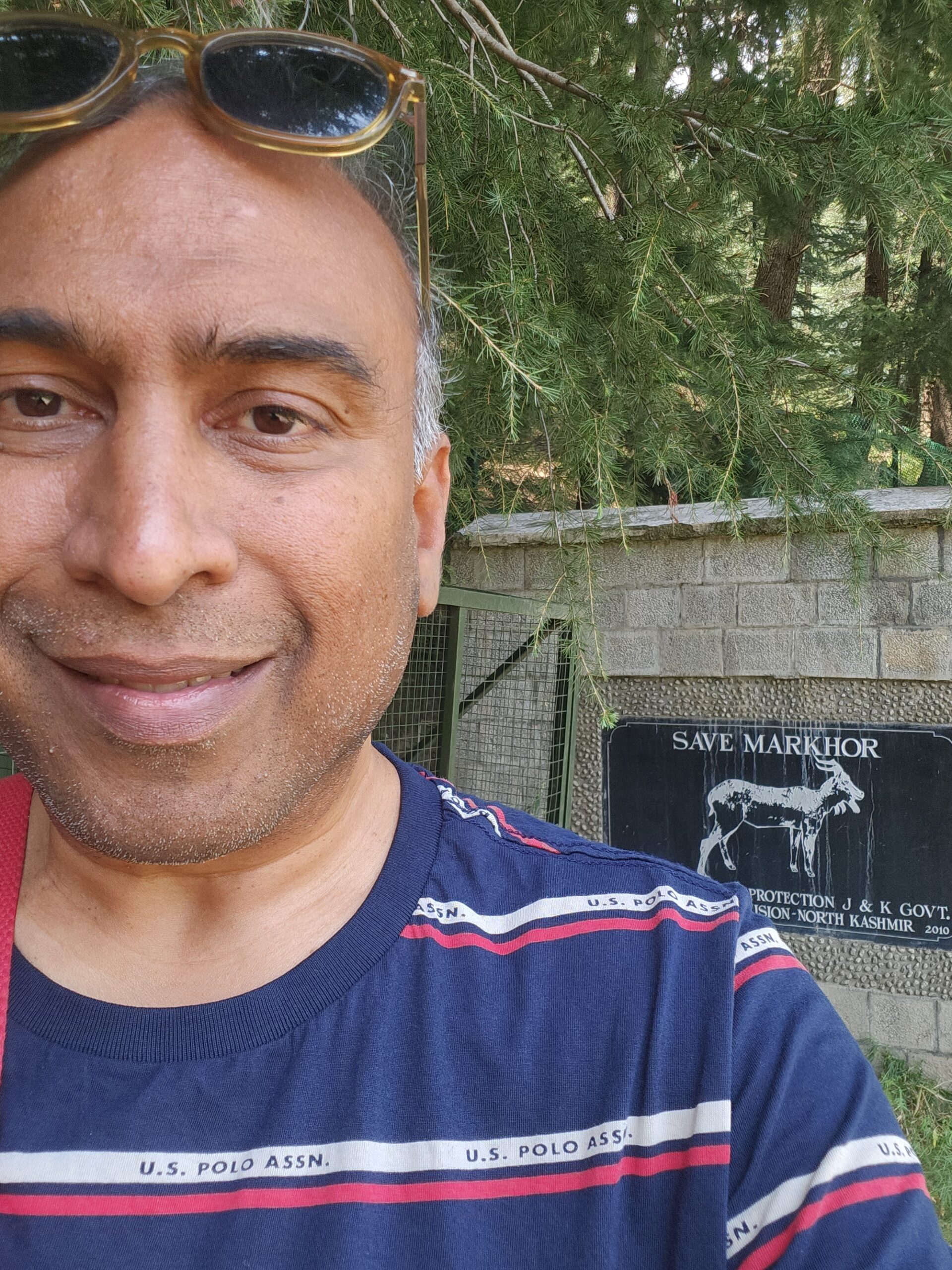

Day 5: Wular Lake – Read More
Day 6: Sopore (the “Apple Orchard” City), Danish’s Maasi ji, Peer Baba -2, Kalaroos Caves, Keran Valley
Watlab – Kalaroos (via Sopore – Kupwara): About 60 Kms. / 2 Hrs.
The next morning, I rose with the sun, eager to bask in the tranquility of the resort’s garden lawn. Breakfast was swiftly ordered, and I extended an invitation to Shaulat, the resident manager, to join me. Amidst our conversation, Shaulat unveiled the rich history of the property, explaining it was owned by a prominent doctor’s family from Srinagar and how its heritage designation limited modifications.
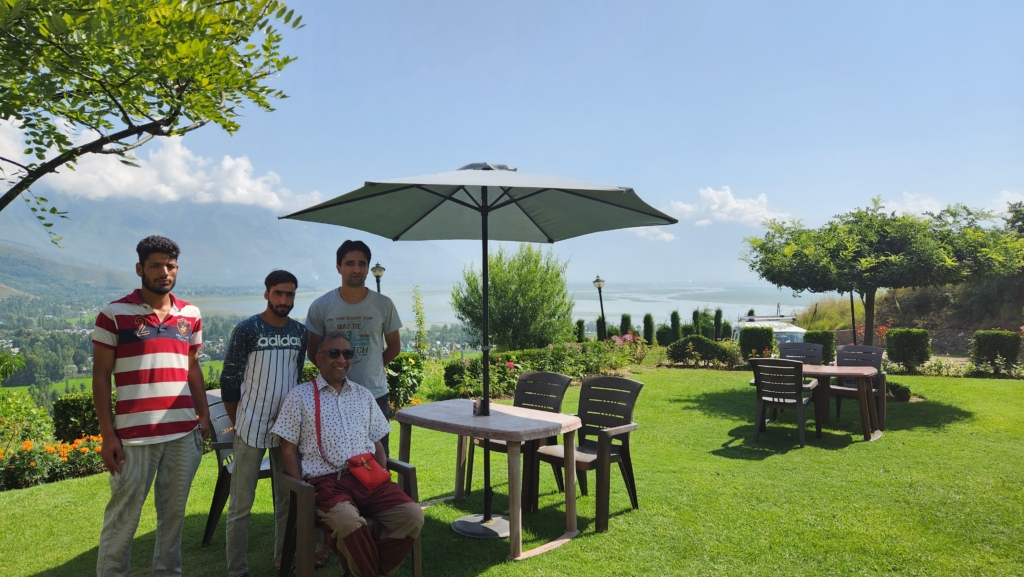
Our dialogue meandered to the picturesque locales of Kashmir, with Shaulat fondly reminiscing about Doodhpatari, his cherished spot, where he first encountered his then-girlfriend. Danish soon arrived, and after a brief tea session and luggage loading, we bid farewell to Wular, embarking on our journey towards our next destination – Lolab Valley.
The plan for Lolab Valley was laid out meticulously: starting from Watlab to Sogam and then completing a scenic road loop covering Sogam, Chandigam, Tekipora, Nagmarg, Khruhana, Redmarg, Lalpora, Darapora, Krusan, and back to Chandigam. This route promised a captivating journey of approximately 90 minutes, with opportunities for stops at Nagmarg to capture the panoramic view of Wular Lake and explore the Kalaroos caves. This was my original route plan which was scuttled on the way by Danish recommendation – more on this to follow. But in short, the shift in plans underscored the importance of local insights and adaptability while embarking on a road trip through unfamiliar terrain.
Staying for two days in Chandigam was also a decision borne out of a desire to take things easy on the second day. Despite relying on Google Maasi, it was evident that local knowledge would be indispensable for navigating the intricate network of unfamiliar roads.
Pro Tip: The mobile network connection is weak in the region, so please plan adequately.
Sopore – Stop-over @ Danish’s Maasi
As we left Watlab, Danish suggested making a quick stop at his Maasi’s residence in Sopore. He mentioned that her place would be on our way to Lolab Valley.
As we drove, Danish opened up about his personal life, sharing how he used to sneak out during the Covid curfew period for long walks in nearby villages. He despised the feeling of being confined to the atmosphere of house arrest. He didn’t mind the solitude during these walks. I couldn’t help but wonder how he managed to conceal his smoking habit from his parents, especially during the Covid period. Danish chuckled and admitted that there were always ways to evade parental scrutiny, a sentiment I could relate to from my own childhood.
Passing by a small village, Danish revealed a long-standing love affair he had with a girl from that village, spanning about 3-4 years. I teasingly suggested stopping by to say hello, but he declined, indicating that the relationship had ended on a sour note due to deceit and betrayal by his girlfriend. Respectful of his privacy, I’ll refrain from delving into the details, as he’s wary of his family reading about it. However, I’d be willing to share more in a one-on-one conversation over a good cup of crafted coffee.
Despite the pain from his past relationship, Danish has found happiness with his current girlfriend, whom he intends to marry. He’s been transparent with her about his past, and their “nikah” is set for October 2024. It’s heartening to see him moving forward with optimism, and I wish Danish and his fiancée, Bilkis, a lifetime of happiness together.
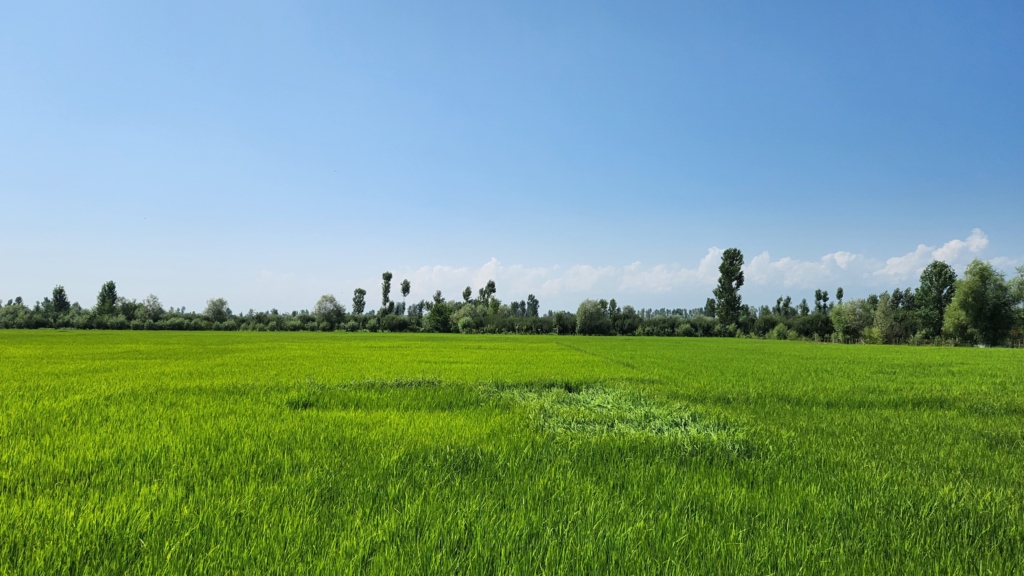
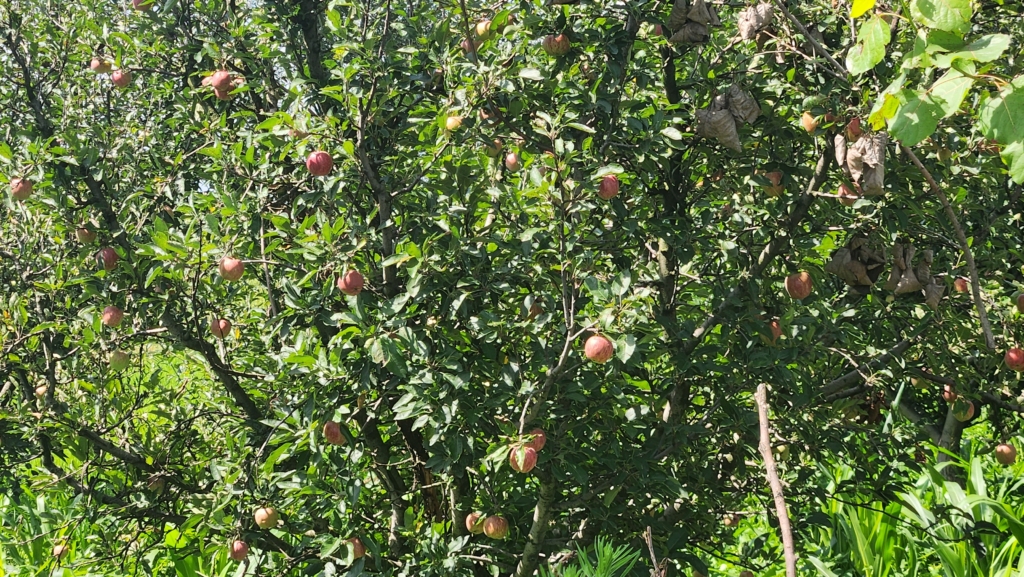
Danish’s intimate knowledge of the region led us through enchanting apple orchards and quaint villages, showcasing the rich cultural tapestry of the area. We could see apples in various shades of pink laden on the trees. As the tree gets heavy with the fruits, the apple trees are supported with sticks, so they don’t trip over. The apple was due for harvesting couple of months later. Danish said Sopore region is known as Apple Town of India. Local families who have apple orchards are very rich and some of these families are well settled outside Kashmir in metro cities of India. After passing through orchards, fields and canals, we reached outer town area of Sopore.
Upon reaching Sopore, we were greeted with the majestic Chinar trees on either side of the street. They stood tall, each one meticulously numbered and accounted for to safeguard them from poachers. Often mistaken for Maple trees due to their similar leaves, Chinar trees, locally known as “Booni” or “Bouin,” hold significance in Kashmiri culture, attributed to Goddess Bhawani. However, the term “Chinar” derives from Persian, alluding to the fiery hues the tree’s leaves exhibit during peak autumn when they turn a vibrant orange red.
Our plan was a direct route to Lolab Valley, however, Danish suggested a detour to his Maasi’s residence in Sopore. Though unplanned, I agreed, as a short visit would offer a glimpse into the daily life of the locals. Danish had not intimated his Maasi about our stop-over. It was their strong love and affection between aunt-nephew that Danish took leeway of – allowing us a brief visit to their lovely home, nestled amidst a small garden she meticulously tended to.


Maasi, a gentle and gracious lady, welcomed us into their beautiful home. She led us to their summer house on the right side of the garden. Their winter abode, where the bhukari (traditional Kashmiri stove) was placed, remained unused on the other end of the garden, as winter was some time away.
Engaging in conversation, we touched upon various topics ranging from her family life with two young children to her professional role as an auditor in a state co-operative society. Reflecting on her visit to Mumbai years ago, she marveled at the city’s towering buildings and bustling pace, expressing contentment with life in Kashmir. I extended an invitation for her to visit Mumbai again, promising to show her the marvels of a forthcoming 100-storey building. She laughed and said, “We are happy in Kashmir”. I agreed with her and invited her to visit Mumbai again to see an under-construction 100-storied building.
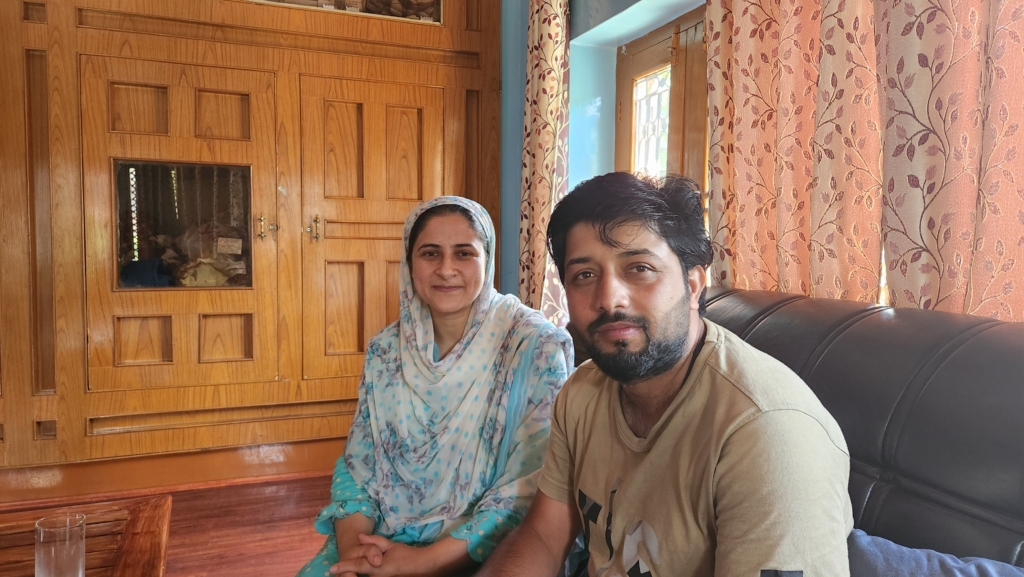
Aware that she had to rush to work, we bid our farewells, leaving her with a smile on her face. As we departed, she proudly showed me her backyard kitchen garden, where she grew vegetables for their daily needs, managed with the help of her mother-in-law due to her busy daily schedule.
With exchanges of goodbyes, we set off for our next destination, Kupwara, grateful for the glimpse into the lives of the locals and the warmth of her hospitality. Her gracious hospitality and stories of her family life offered a glimpse into the everyday joys and challenges of Kashmiri living. Despite the language barrier, her warmth transcended, leaving a lasting impression. I cherished the opportunity to catch a glimpse into the lives of the locals. Daily life seemed similar across the country, yet here, the challenges of harsh winters and the looming presence of militancy added an extra layer of difficulty. Despite this, the locals had adapted to these challenges seamlessly, perhaps unaware of how daunting it might appear to outsiders.
Before parting ways, Maasi hurried inside and returned with a few apples from their garden, a gesture of kindness that warmed my heart. Given the impromptu nature of our visit, all I had to offer were some chocolates and cookies from Mumbai, which I left behind for her children.
Lolab Valley
We reached Kupwara without any difficulty but finding our way to Kalaroos caves proved to be a little challenging. As we entered Lolab Valley, we were greeted by minarets – a striking combination of three on one side of the road and a lone one on the other. Whether this asymmetric construct was by design or an unfinished job by the Mughals remains a mystery. These minarets stand as the welcoming gateways to the beautiful Valley of Lolab, known as Bab-e-Lolab, meaning the Gateway of Lolab. I must admit, passing through these “waadiyan” leaves no room for resentment towards the Mughals for their prolonged stay in India.


Kalaroos Caves
Guided by Google Maasi, we navigated through narrow lanes and hilly terrain, only to reach a spot, where the local villagers informed us that we had ventured to the wrong side of the valley. They pointed towards a hill on the far end of the fields beyond the river, indicating that the caves were located somewhere on its top. Not many tourists venture there, they added. How I wished Google Maasi had learned some graciousness and modesty from Danish’s Maasi. Danish glanced at me and inquired if I still wished to explore. I nodded, and we retraced our steps for a couple of kms. On our way back, we noticed a signboard for Kalaroos Caves, which we probably missed earlier.

Taking the diversion, we passed through fields and crossed the river, transitioning from a tar road to a dirt track. Uncertain if we were heading in the right direction, we hesitantly pressed on. With no villagers in sight due to the peak noon hour, we considered turning back at every turn. It felt like being explorers on a treasure hunt with only vague clues, knowing that even a map did not help Columbus. After navigating through narrow roads that allowed only one car at a time, we finally reached a small village. We noticed a small, impoverished shop, where an old man sat, seemingly waiting for someone to pass by. The whole village appeared deserted, making the chance of encountering anyone more remote than humans landing on Mars.
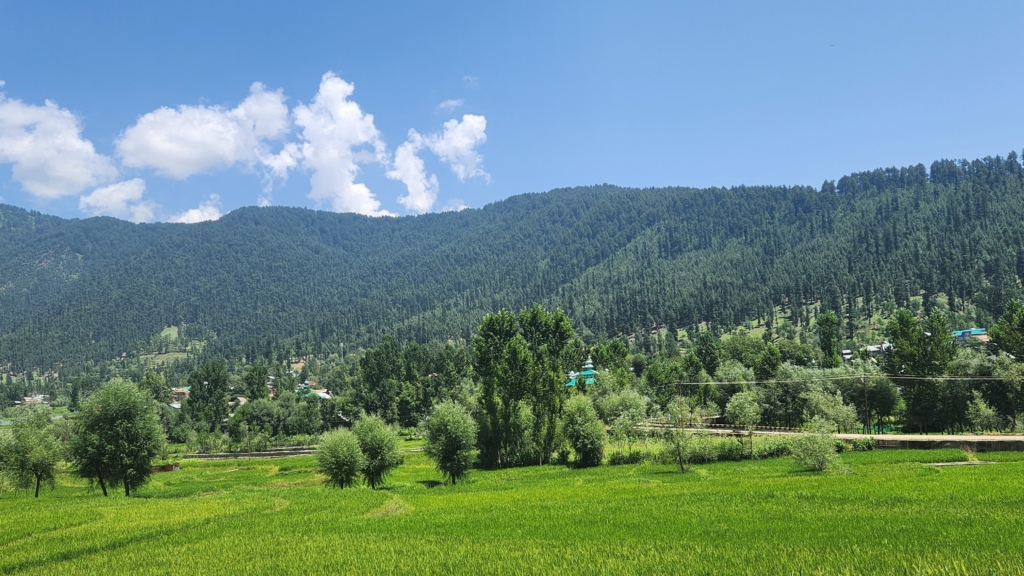
We approached the old man for directions to Kalaroos caves. He pointed us towards a small foot pathway. A young boy in his teens stood nearby, munching on potato chips and listening to our conversation. Sensing our confusion, he innocently asked, “Do you know the way to Kalaroos?” We both replied in unison, “No”. Without hesitation, he offered, “Come, I’ll show you the way.” Parvaiz, whom I dubbed Peer Baba – 2, joined us. He led us on foot through the backstreets of the village. At times, we found ourselves navigating through swarms of the village. The narrow village backstreets evoked a sense of isolation reminiscent of a scene from a Hindi movie set in Kashmir, where militants would hide.
Had I been alone, the feeling might have been more daunting, and I probably wouldn’t have ventured beyond the village. But with my Peer Baba and Danish by my side, I felt reassured. Parvaiz, or Peer Baba – 2, earned his title because without him, finding our way to Kalaroos caves would have been nearly impossible. He was the one who came to our aid when we needed it most. With the village seemingly asleep in the afternoon sun, there was no one else around to ask for directions.
Parvaiz pointed towards some rocks midway up the mountainside. “The caves are there,” he said. Despite the challenge, I couldn’t pass up the opportunity, especially with the intriguing stories surrounding Kalaroos. The initial climb was tough, especially in the unforgiving sun, but fueled by excitement, I pushed forward. Kalaroos caves hold mythological significance dating back to the time of the Mahabharata, where it’s believed the Pandavas sought refuge during their exile.
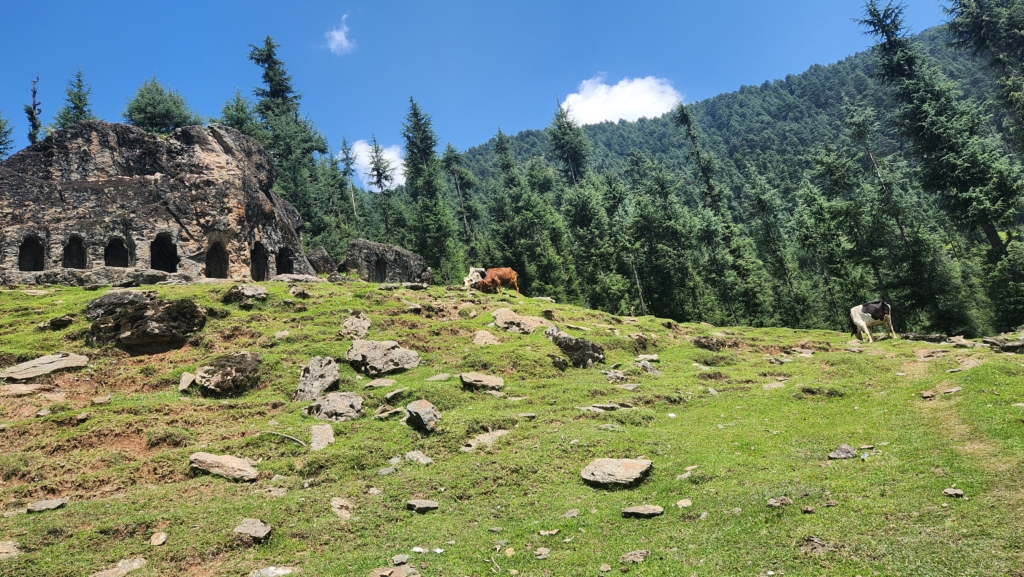
The caves, with their seven entrances, were once said to lead to Russia (“Roos” in hindi) or possibly some Central Asian country (part of erstwhile USSR). Parvaiz shared that he had ventured inside once but found it dark and suffocating, quickly retreating for fear of getting lost. However, these tunnels are now sealed. Parvaiz said that locally, the caves are also called “Satbaran”, probably due to seven entrances, derived from the words “Sat Barr”, meaning seven doors.
My assumption has been that since the caves are dug into black rocks, probably that’s the reason it has got the name Kalaroos – a black rock leading to folklore route to Russia. While the truth behind these stories remains uncertain, the caves exude a mystic aura. Why would anyone make such caves in middle of nowhere. Parvaiz said that locals believed that they were once copper mines. Regardless, if you’re up for adventure, a trek to Kalaroos can offer panoramic views and a chance to explore the unknown. Just be prepared with water supplies and plan your visit accordingly.
Parvaiz, a science student, aspired to join IIT for further studies. We wished him success and thanked him warmly for his invaluable guidance before bidding him farewell. Parvaiz’s kindness left an indelible mark. His willingness to assist without expectation embodied the spirit of Kashmiri hospitality, a testament to the enduring generosity of its people. It made me ponder: are there still such kind-hearted individuals willing to selflessly assist others without expecting anything in return?
Kalaroos – Keran Valley (via Kupwara – Kralpora)
About 75 km. / 3 hr.
As we rested and refreshed at old man’s shop, Danish received friendly phone advice from his uncle. According to him, the entire Lolab Valley resembled what we’d already witnessed previously in our trip, nothing unique – he added. He proposed a detour to Keran instead. In hindsight, it was a sound advice. Hesitantly, we made the decision to head toward Keran straight from Kalaroos.
Travel Tip: Make sure to carry 7 to 8 paper copies of the police approval for each segment of travel – Keran and
Teetwal respectively, as they will be required to be submitted at numerous check-posts along the way. Website approvals typically come through within a day, so you can plan accordingly.
Reaching the main tar road quickly, highlighted that retracing our steps is often simpler than forging ahead. Danish picked up speed, and suddenly, we spotted a convocation of majestic eagles perched on a dry branch at the roadside. They were imposing creatures, likely Himalayan Eagles, although I couldn’t be certain. It would have been a photo opportunity of a lifetime, but alas, by the time we considered turning back, they had already taken flight. I still rue not seizing that moment, but the image will remain etched in my memory for years to come.

Access to Keran required prior permission from the police authorities. Danish’s uncle mentioned an online approval process, so I promptly navigated to the website and completed the formalities, awaiting confirmation. The need for security clearance from police station underscored the bureaucratic hurdles of traveling to remote border destinations. Danish suggested that if our online permission for Keran didn’t arrive by the time we reached Kralpora, we could obtain physical approval from the police station there. Travelers heading to Keran and Tangdhar / Teetwal should note the importance of securing security clearance from the Kralpora police station. It’s a crucial checkpoint for approval.
While driving, I received a call from an unfamiliar number. In my enthusiasm I assumed it was the caretaker at Chandigram, inquiring about our check-in time and lunch preferences. I informed him of our change in plans. Presuming things can be dangerous, I was about to learn a big lesson in three days to come.
Upon reaching Kralpora and finding the website approval still pending, Danish promptly visited the local police station and processed our security approval in just 15 minutes. Remember to plan to reach Keran before dark. Armed with all the necessary approvals and brimming with excitement to explore Keran, we embarked on our journey from Kralpora. With Google Maasi’s assistance, we navigated to the exit from the main road, embarking on a straight path to Keran.
Pro Tip: It’s essential to note that alcohol is strictly prohibited in Keran, a rule enforced by the guards at the check-post.
Upon arriving at the first check-post, Danish handled the paperwork while I observed the surroundings. I noticed a young adult, aka Mr. Bhat, stretching by the roadside, seemingly a local resident of Keran. Intrigued, I struck up a conversation with him, eager to learn about the accommodation options in Keran. However, before he could provide more details, his driver called for him to return to the car. With a quick farewell, he assured us of meeting us in Keran – “Keran mein milte hai, Sir ji”. In hindsight, I’m grateful he didn’t share more information then, as it might have led to a premature end to our journey.
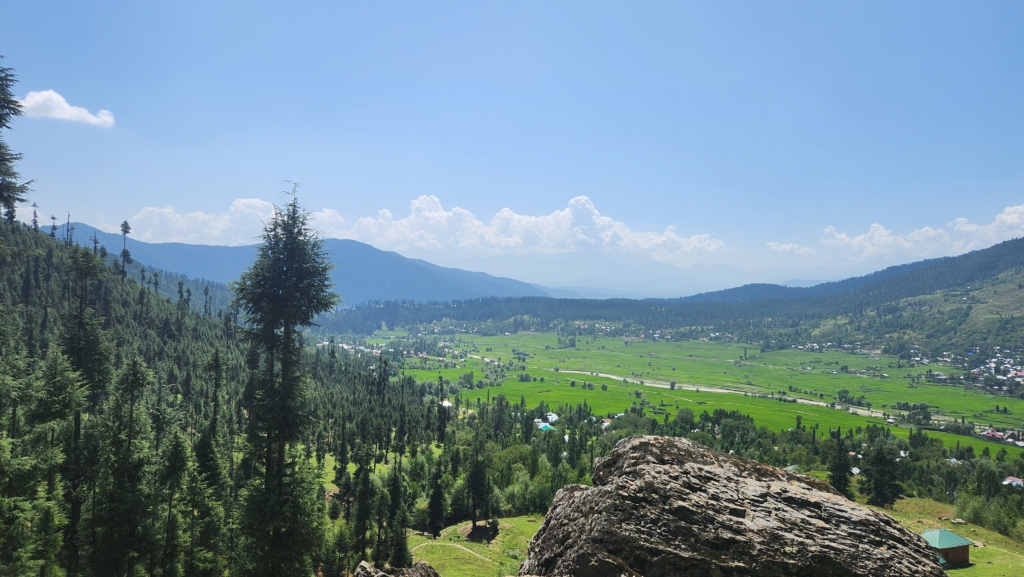
As we ascended, the weather grew cooler, offering a pleasant respite from the exhaustion. The view of Kupwara town from the mountain top, glimpsed through thick foliage, was mesmerizing. Wildflowers adorned the roadside, adding to the scenic beauty.


Passing Firkiyan (or Pirkiyan) Gali, approximately 9,600 feet above sea level, nature’s beauty intensified. The flora differed markedly from that of Gurez, Tulail, or Lolab Valley, untouched by human interference. It’s a testament to both nature’s resilience and humanity’s restraint. The serene environment, accompanied by the sounds of nature and the misty evening ambiance, created a surreal atmosphere, inducing a feeling of isolation. In this tranquil setting, one could easily lose themselves, feeling as if they’ve been abandoned in the vastness of the world. It’s a sensation that can be both exhilarating and daunting. In such moments, it’s as if your heart and soul are laid bare, ready to share their stories with the universe, even as your physical form remains tethered to the earth.


With no other vehicles or people in sight, you could easily feel as though you had been abandoned in the world. Descending from P/Gali, we stopped at a small dhaaba for a tea break, where we encountered local boys from nearby villages. We bought them some snacks and cold drinks to break the ice.
At first, they were little hesitant but as one opened to conversation the others joined and we engaged in livid group discussion. Their aspirations varied, from dreaming of becoming the local Salman Khan to aspiring Formula One racers. Amidst their high spirits, one boy expressed disillusionment with the lack of development in Keran, highlighting the internal conflict among the younger generation – whether to leave their homeland for economic opportunities or stay behind. This dilemma mirrored my observations in Gurez. With easy access to social media, the future of local communities remains dependent on individual choices and societal shifts.
We noticed some log huts across the dhaaba. Curious about their purpose and why they appeared abandoned, we inquired of the local boys. They explained that these huts belonged to nomadic tribes, serving as temporary shelters during their travels. Our stopover was brief, mindful of the approaching sunset.


Further along, we encountered the first village of the Keran Valley. Perched high on the mountain slopes above the main road, these houses stood out as some of the most picturesque and charming I had seen. Nestled amidst dense forests, I couldn’t help but admire their beauty and imagine the breathtaking views they offered. However, our time was limited, and Danish reminded me that we had to press on.
Despite the remote location, it was evident that the residents here had a keen eye for design and likely had the means to support such architecture. Throughout Kashmir, I observed a relatively high standard of living, with well-constructed homes and few signs of extreme poverty despite the region’s tumultuous history. While I couldn’t fully grasp the local economy in these border areas, it seemed to rely heavily on government employment and military contracts. At that moment, I found myself contemplating a life here, willing to trade my position in Mumbai for the tranquility of these mountains. As we finally arrived in Keran, our priority became finding accommodation before nightfall, with only an hour of daylight remaining.
Upon reaching Keran, we were instructed to park our vehicle at the designated lot, as private vehicles are prohibited beyond this point. The village is remarkably tranquil, with no vehicular activity, mainly limited to couple of vehicles owned by local residents. Danish attempted to negotiate special permission for me to be driven closer due to my health. Thankfully, Mr. Bhat, whom I had encountered earlier, was present at the check-post. After his intervention and a brief health check, the security allowed me to be dropped off at Mr. Bhat’s camp, while Danish would return to park the car and deposit his mobile device as security. Mobiles are the most prized asset one carries these days, replacing the traditional valuables like watches and mangalsutras.
Pro Tip: In Keran, the mobile service is only available on 5G network, preferably Jio platform.
As we rolled into Keran village pass through the security, we were greeted by the sight of the majestic Kishanganga river. Contrary to my previous assumptions, Keran was not perched atop a mountain but nestled in a valley. Across the river, we could observe the territory known as “Neelum Valley” in Pakistan-occupied Kashmir (POK).
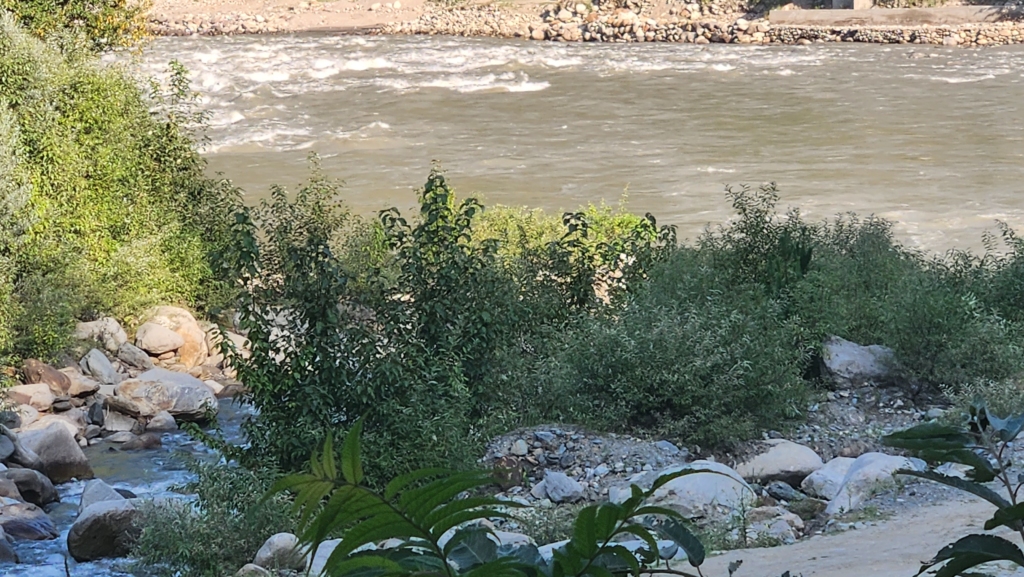
Mr. Bhat’s house, located a short distance from the village road, offered a picturesque view of the river. Tents lined the riverbank, while on the opposite side, human activity was more pronounced, likely due to the presence of a nearby resort. On reaching Mr. Bhat’s homestay, where he offered us the choice between a tent or a room in his house. Danish went to inspect the accommodation while I ventured out to explore the village.

Kishanganga was roaring. As dusk approached and as I stood there absorbing the glorious view all around, I found myself surrounded by the warm greetings of five young girls in their teens, their infectious smiles brightening the evening. Despite my struggles with the local greeting customs, they eagerly engaged in conversation, curious about my origins and experiences, including whether I had encountered Bollywood celebrities. Among them, the eldest, hailing from Srinagar, had ventured to Keran to visit her aunt, accompanied by her cousins from the village. Their camaraderie and enthusiasm were contagious, and I couldn’t help but notice the eldest girl’s stunning yellow jhumkas, complementing her vibrant floral dress. As they shared details about their lives and relationships, I couldn’t resist asking to visit their house for tea, although they playfully noted the challenging terrain.
Regrettably, I missed the opportunity to capture the moment in photographs, but their genuine concern for my well-being in Keran left a lasting impression. Indeed, amidst the beauty of nature, it’s the connections with beautiful souls that truly enrich our experiences.
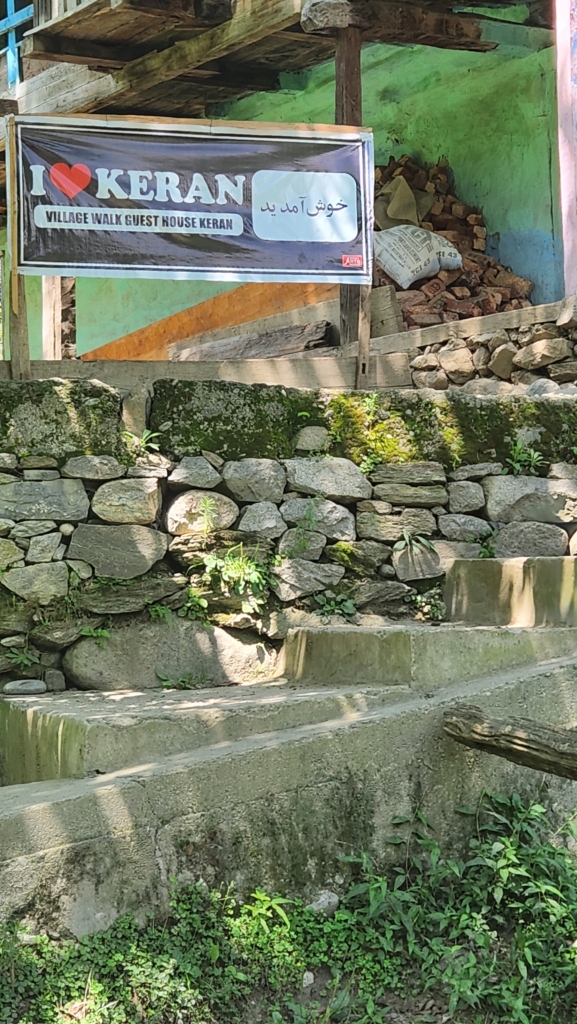
Danish returned, visibly disappointed. He informed me that we would have to make do with sleeping on the floor. Additionally, there were no western-style toilets available, a detail Mr. Bhat attributed to religious reasons.
Though I found the sudden religious explanation perplexing, our immediate concern was finding suitable accommodations.
As darkness descended, I bid farewell to the girls and turned my attention to our options. Mr. Bhat made a final effort to locate a room with a western toilet. After a tense wait, he returned with news of success. We proceeded to Raza’s homestay, where we were warmly welcomed by Raza Vikas.
The room exceeded expectations, boasting a generously sized bed and luxurious carpeting. Raza, a young and affable host, assured us of a comfortable stay and engaged us in friendly banter. Amidst our conversation, I remembered to inquire about the toilet facilities, to which Raza proudly confirmed the presence of a western toilet, a rarity in Keran Valley.
As we settled in for the night, I couldn’t shake off my apprehensions about navigating the stairs to reach the toilet on the ground floor in the dark. However, Raza’s reassurances alleviated some of my concerns. His simple advice was – don’t drink too much water after dinner. After a well-prepared dinner by the household’s ladies, I retired to bed, relieved that the night passed without incident. With no midnight trips to washroom, I drifted into a peaceful sleep. Raza was truly God sent.
If you’re planning a trip to Lolab Valley / Keran Valley / Kashmir, we at HappyHorizon would be thrilled to customize your holiday experience to enhance your travel experiences. Feel free to reach out to us: connect@happyhorizon.in
Day 7: Keran Valley
Gallery


Sukumar Jain, a Mumbai-based finance professional with global experience, is also a passionate traveler, wildlife enthusiast, and an aficionado of Indian culture. Alongside his career, which includes diverse roles in international banking and finance, he's working on a wildlife coffee table book and enjoys sculpture and pottery. His interests span reading non-fiction to engaging in social and global networking.