Day 6: Lolab Valley / Kalaroos Caves – Read More
Day 7: Keran Valley, Sadhna Pass & Tangdhar
Keran – Kralpora: About 60 km. / 2 hr.
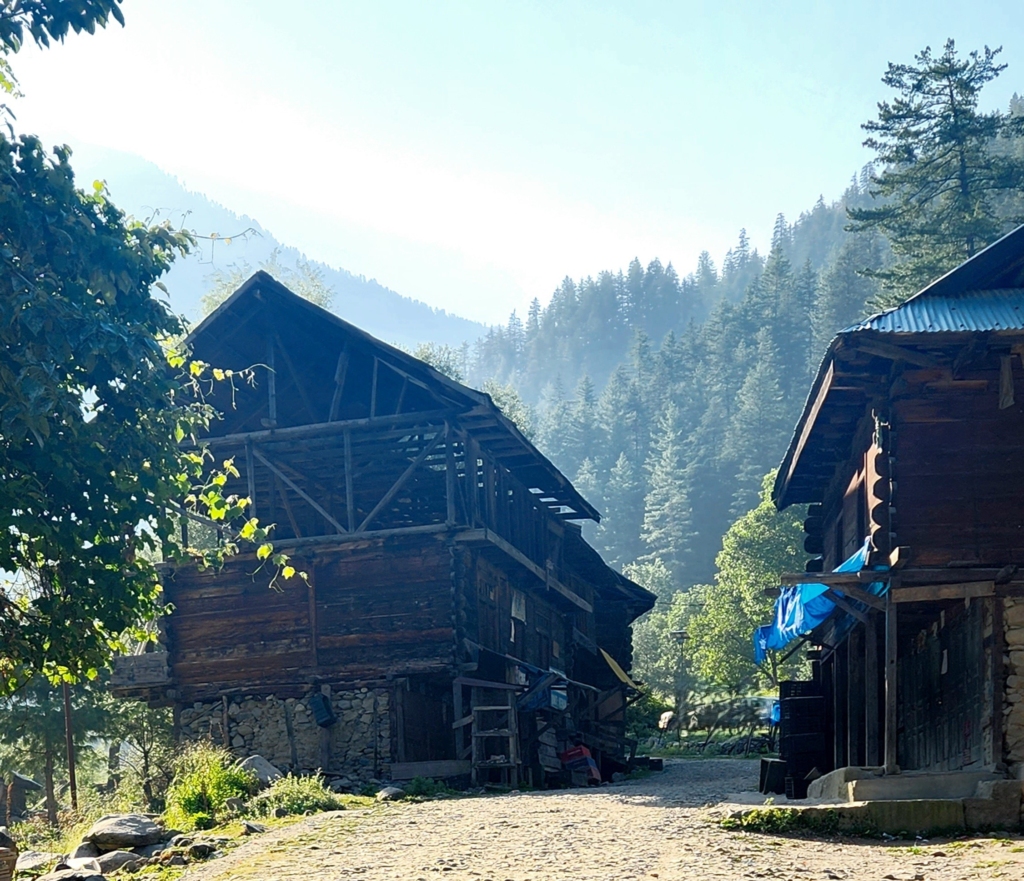
I woke up early, eager to explore the valley before the village stirred to life.
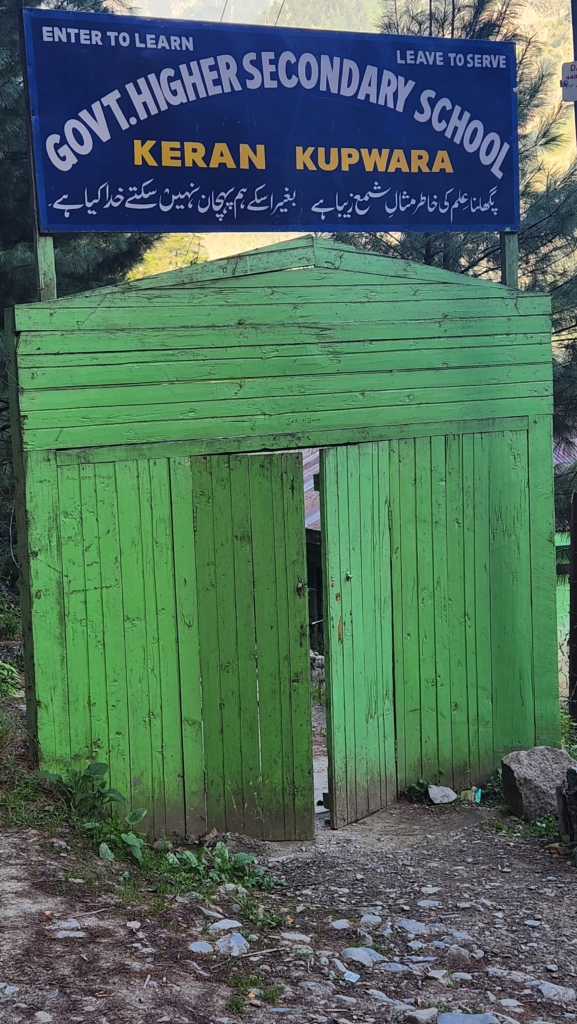
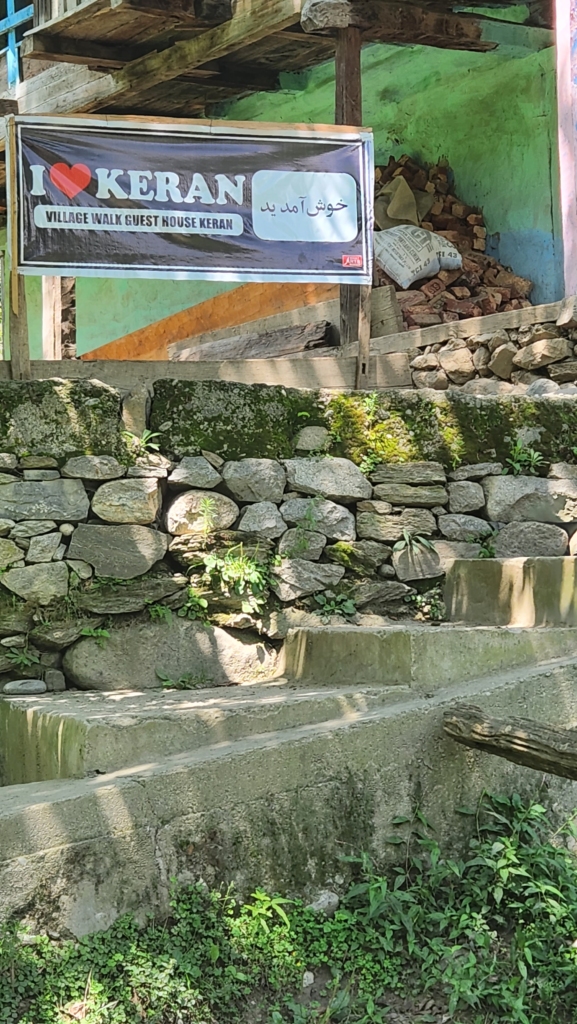
Engaging a local villager for guidance, I opted to venture through a wooded area leading away from the village. Along the way, I passed a village school, adorned with an inspiring mission statement: “Enter to Learn, Leave to Serve”. The message resonated with me, evoking memories of my own school’s motto: “Born to Bloom“.
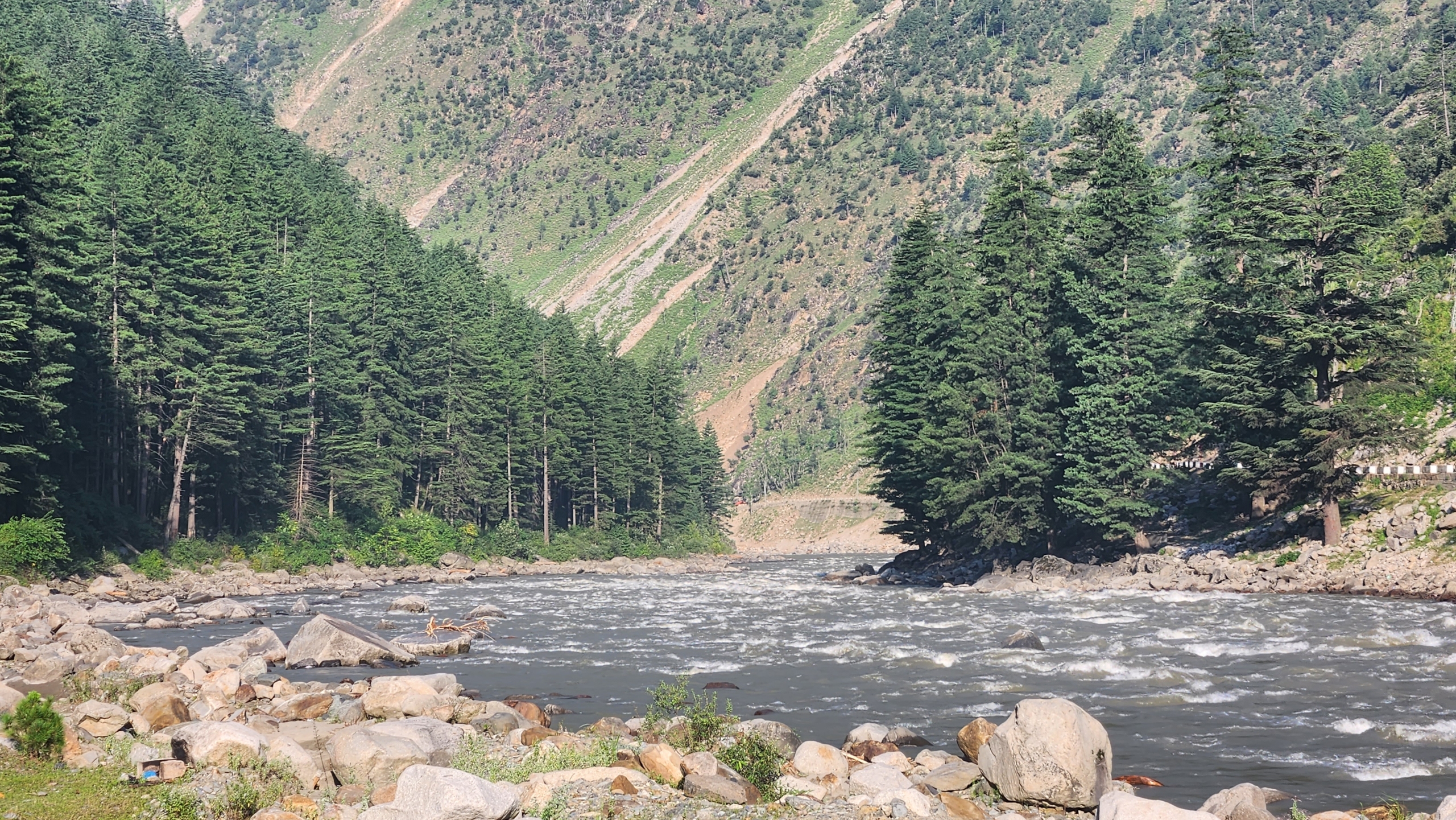
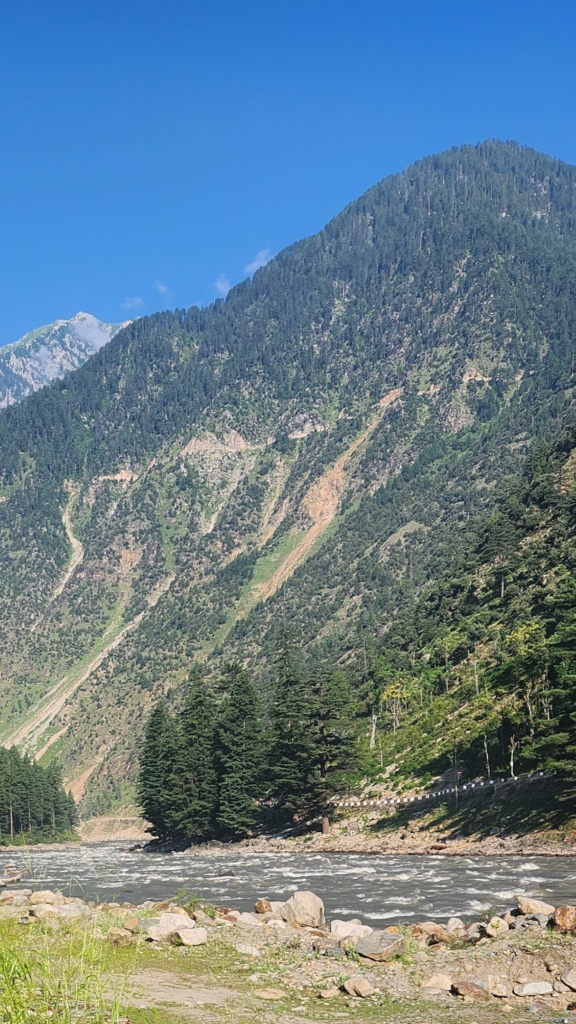
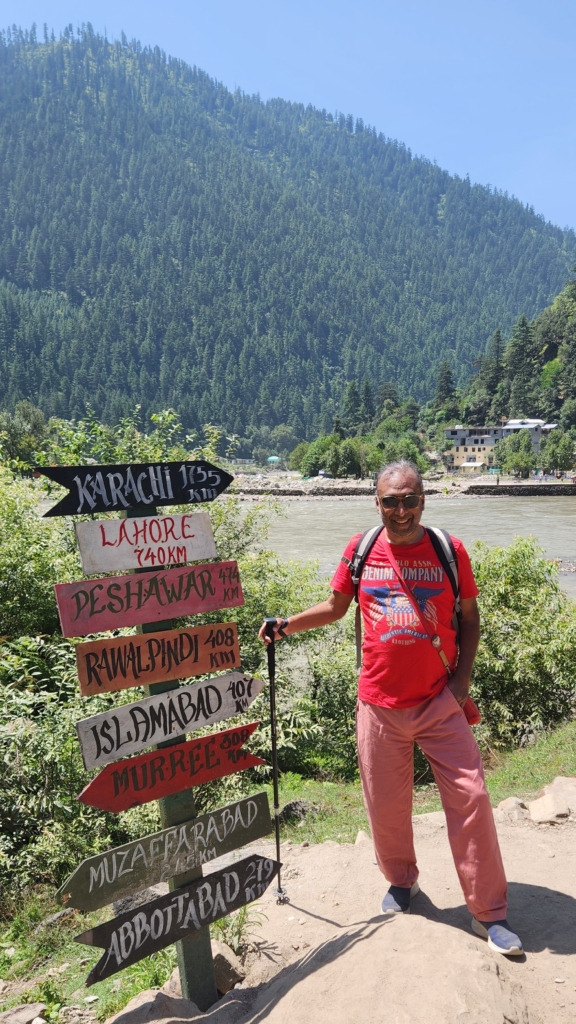
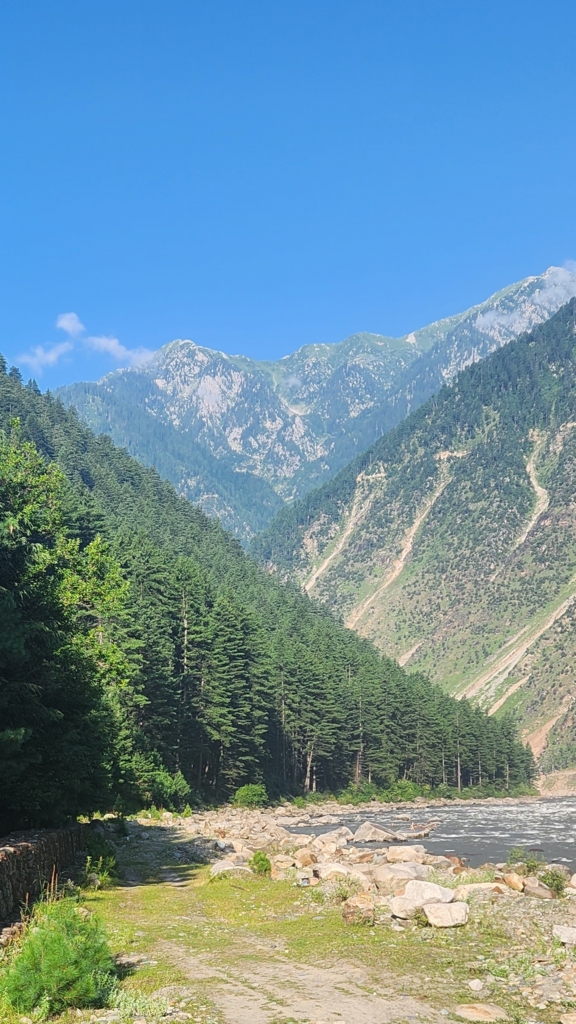
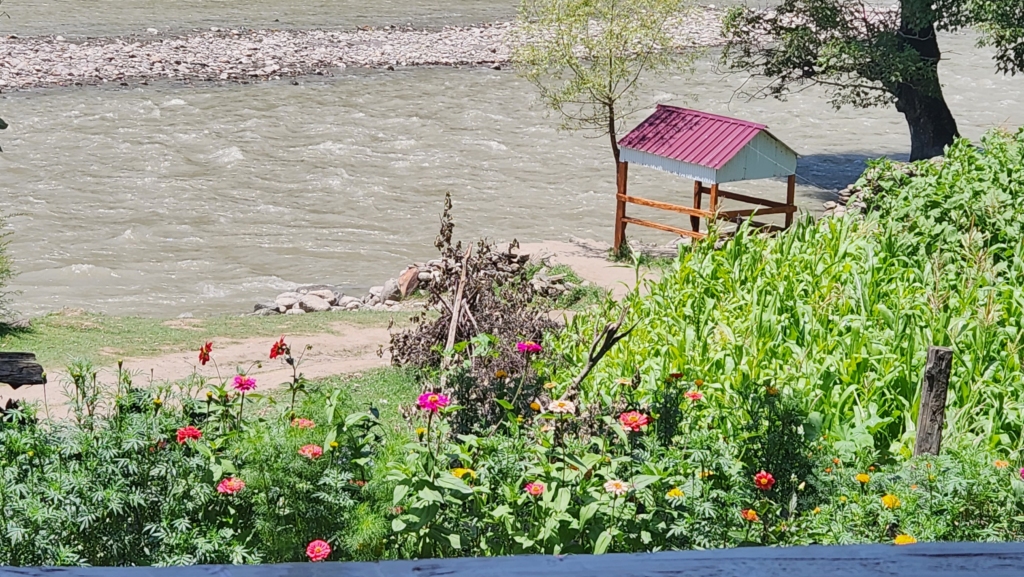
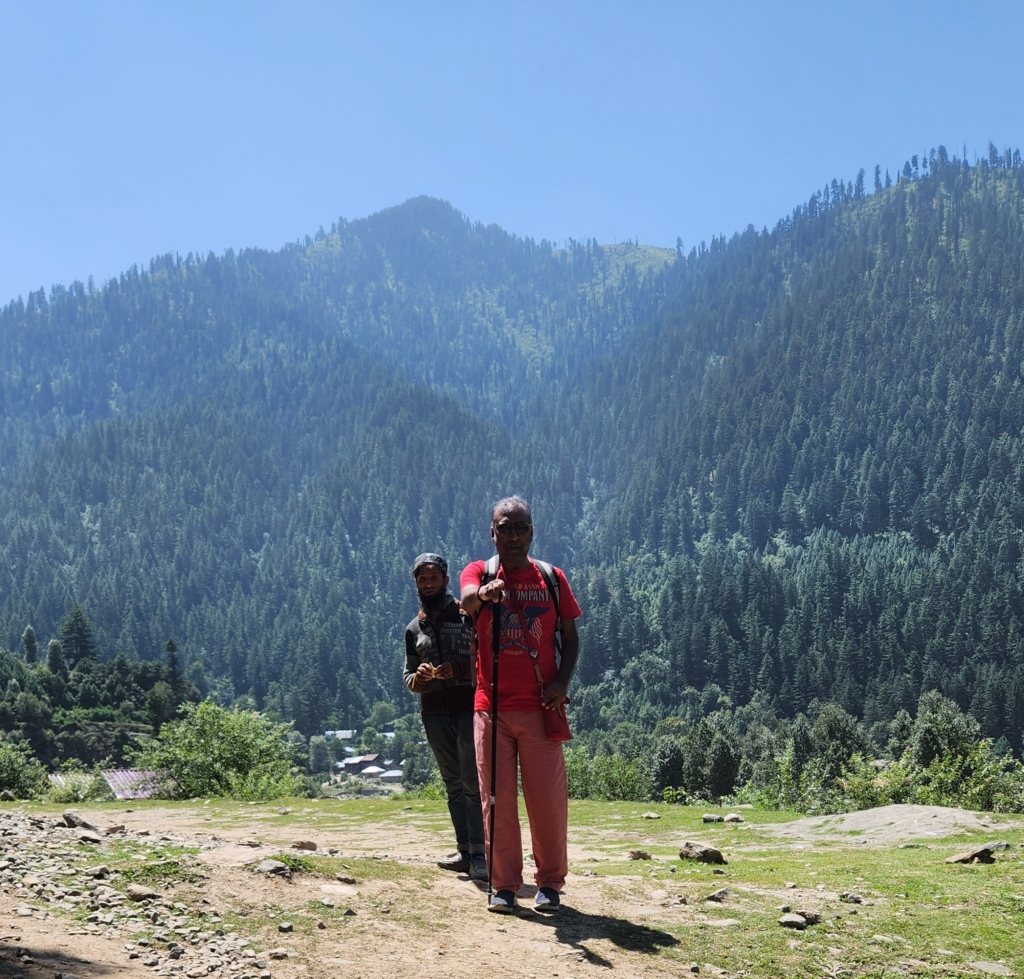
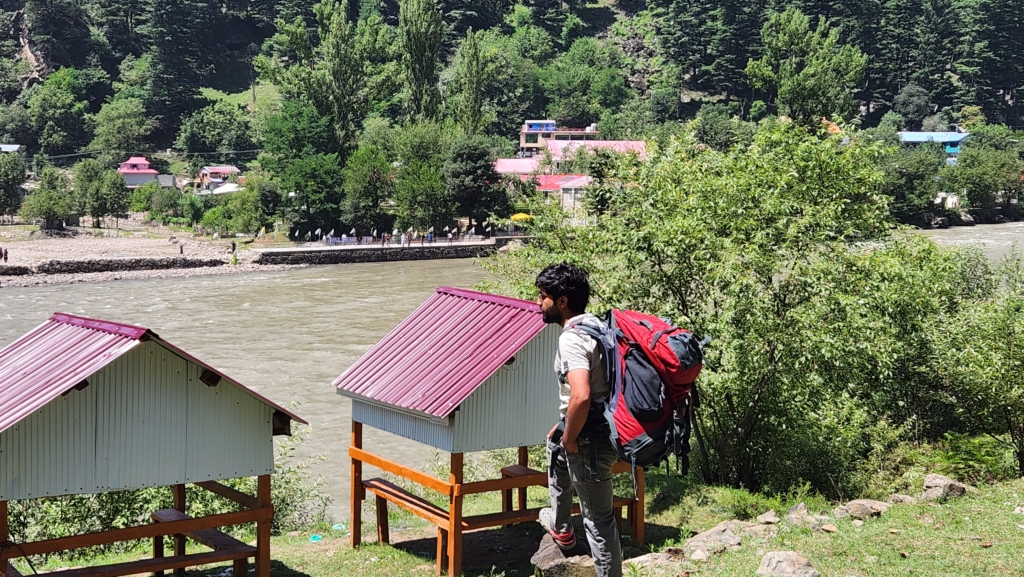
Continuing through a small rough road adjacent to the school, I eventually reached the riverbanks, where I found myself staring across the Kishanganga River into Pakistan-occupied Kashmir (POK).
It was a poignant moment, my first informal encounter with our hostile neighbour on the western front. Memories of past conflicts and territorial losses stirred a mix of emotions within me, fueled by the prevailing sentiment that this land rightfully belonged to us, seized by force. Despite the border separating us, the shared water and air reminded me of our common humanity.
The complexities of the geopolitical landscape weighed heavily on my mind as I stood on the border, gazing across the river into the territories claimed by our neighbour. I would reserve my opinion on partition and our equation with Pakistan but for now this boundary was stopping me to cross over and explore Gilgit.
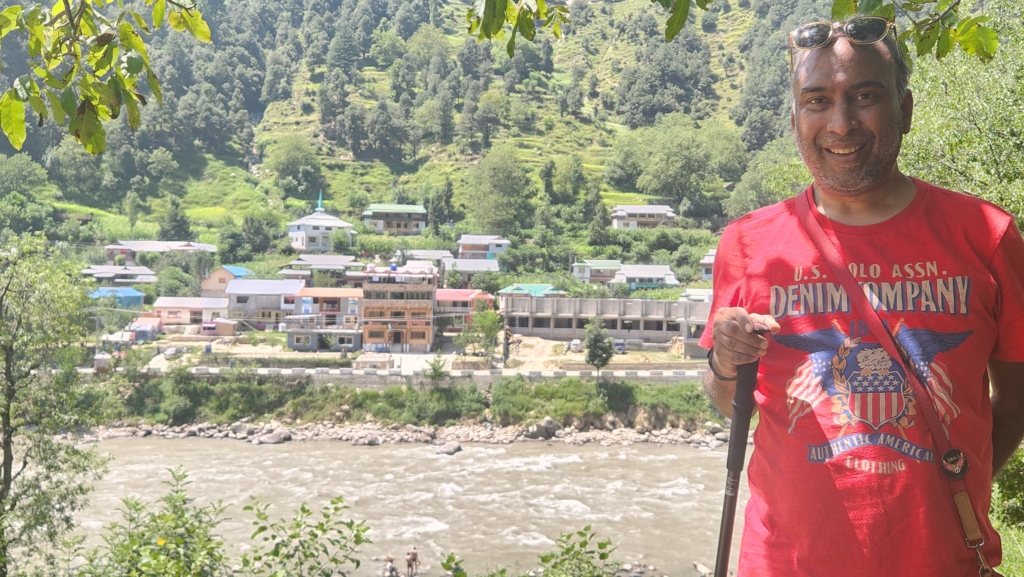
It was a strange feeling that I am standing all alone fearlessly, in bright red coloured outfit, a direct provoking act and providing myself as bulls-eye for the enemy to target, on a hostile border front where many had given their lives. But the faith on our Indian army strength was so rock solid that any misadventure by the enemy would had cost them the valley.
However, amidst the tension, I couldn’t help but ponder the possibility of a different future, one where peace prevailed over hostility. What if both nations agreed to prioritize social development over the arms race? A simple question like – is following a tradition / religion more important than having a peaceful life which fulfils three necessities of life – food, shelter and clothing. Standing alone by the river, I contemplated the possibility of peace between our nations, envisioning a future where military budgets could be redirected towards social development. Such a shift in focus could redirect vast resources towards improving the lives of the people, fostering a climate of cooperation rather than conflict.
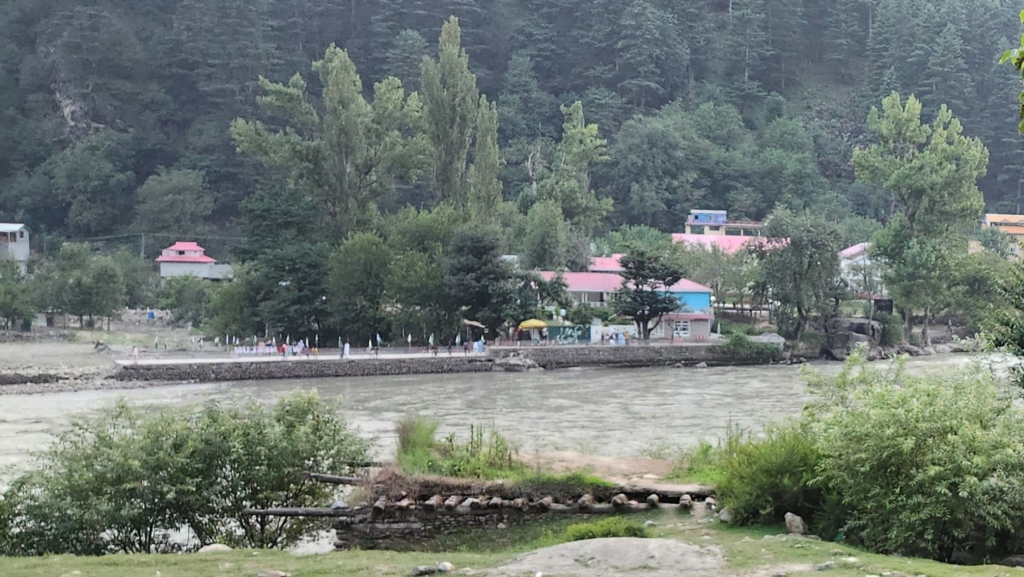
Meanwhile, Raza’s attitude towards those across the river revealed a contrasting perspective. Despite shared familial ties and the interconnectedness of daily life, Raza harboured a deep-seated animosity towards the residents of POK.
Over our discussions the previous evening, his assertions about the disparity in land fertility and his refusal to acknowledge the similarities between the two sides of the river highlighted the extent of his prejudice. He said that the people on POK drank from Kishanganga and people on this side drank water from Chasama. We all had a great laugh, on this observation. He had added that the land on India side was far more fertile than on POK. This was true though, the land all along the river on Indian side was rich with paddy fields, trees and vegetation’s. The land across the river was mountainous. Raza said that their family had relatives on the other side, but they did not held great respect for them. He refused to give any specific reasons, but he made it sound very dramatic by adding that he does not even look on the other side of the river.
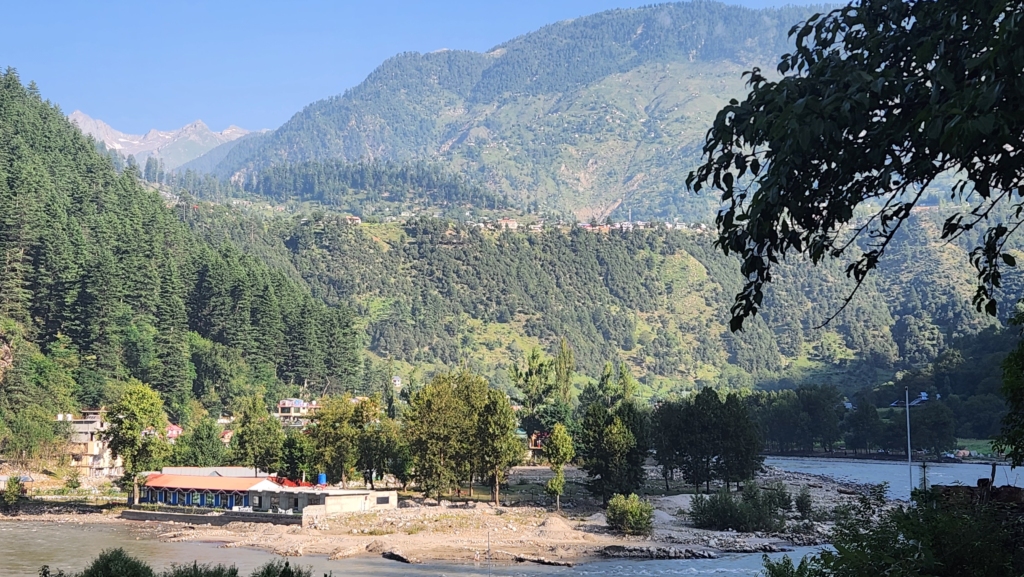
I couldn’t help but notice the irony of Raza’s investment aimed at attracting visitors to gaze across the border. Was his venture driven by genuine optimism for the valley’s future, or was it merely a means to profit from the curiosity of tourists peering across the border? While respecting my host’s views, I couldn’t shake off the contradictions inherent in his stance, recognizing the delicate balance of social etiquette in such conversations.
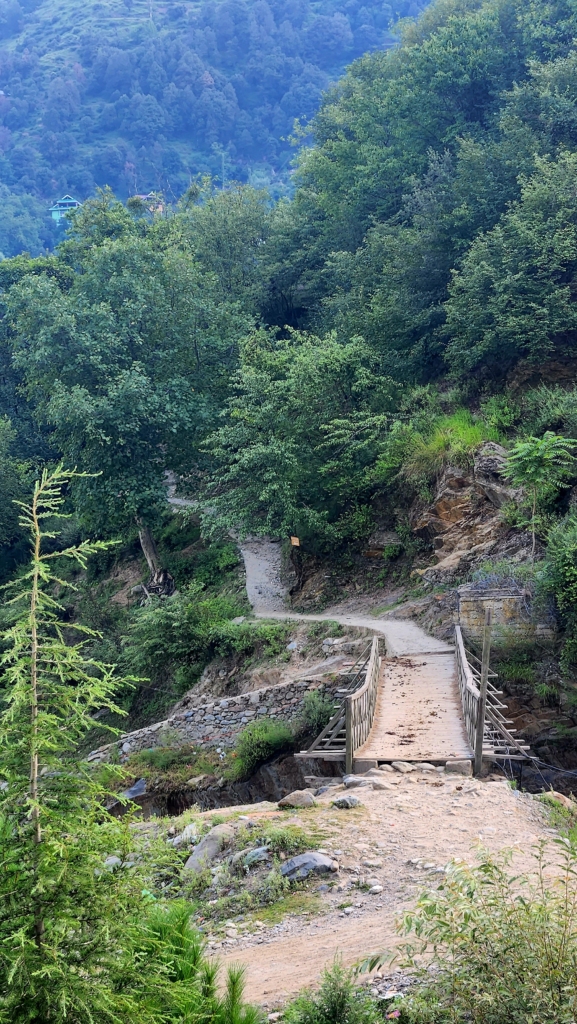
As the sun rose higher, I decided to retreat from the border and return to the village.
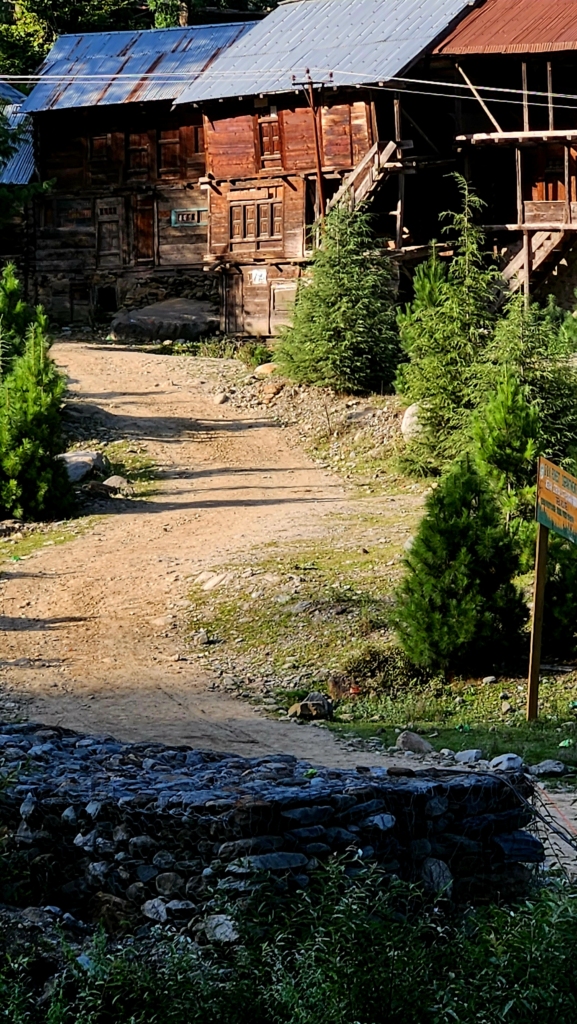
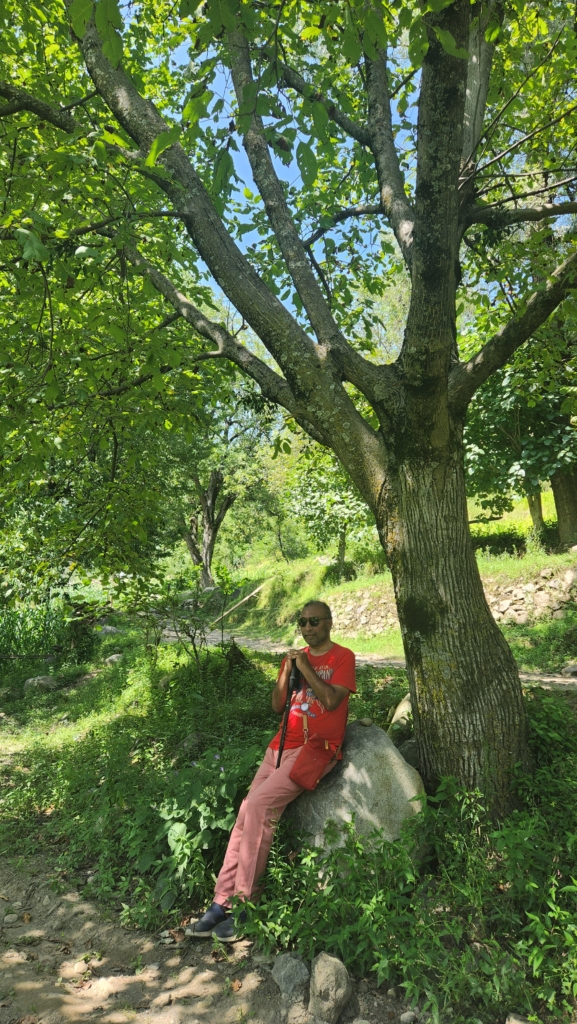
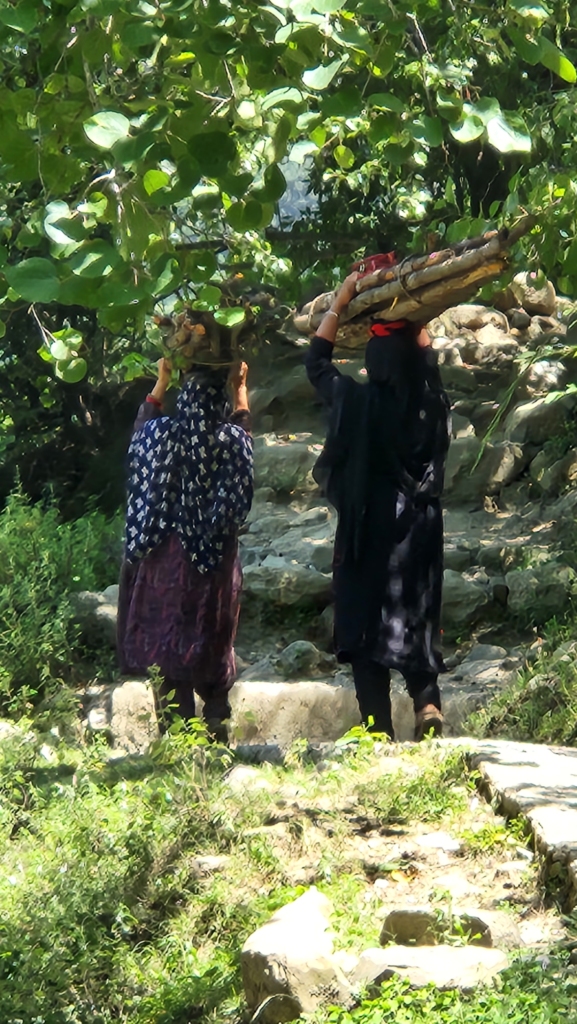
Back in the village, life was slowly stirring, with elderly residents and daily wage labourers going about their routines. Finding a spot under a shady tree amongst the picturesque surroundings, I observed the passing villagers, reflecting on the complexities of life in this border region. Despite the challenges and tensions, there was a sense of resilience and hope for a better future. For them it was life as usual.
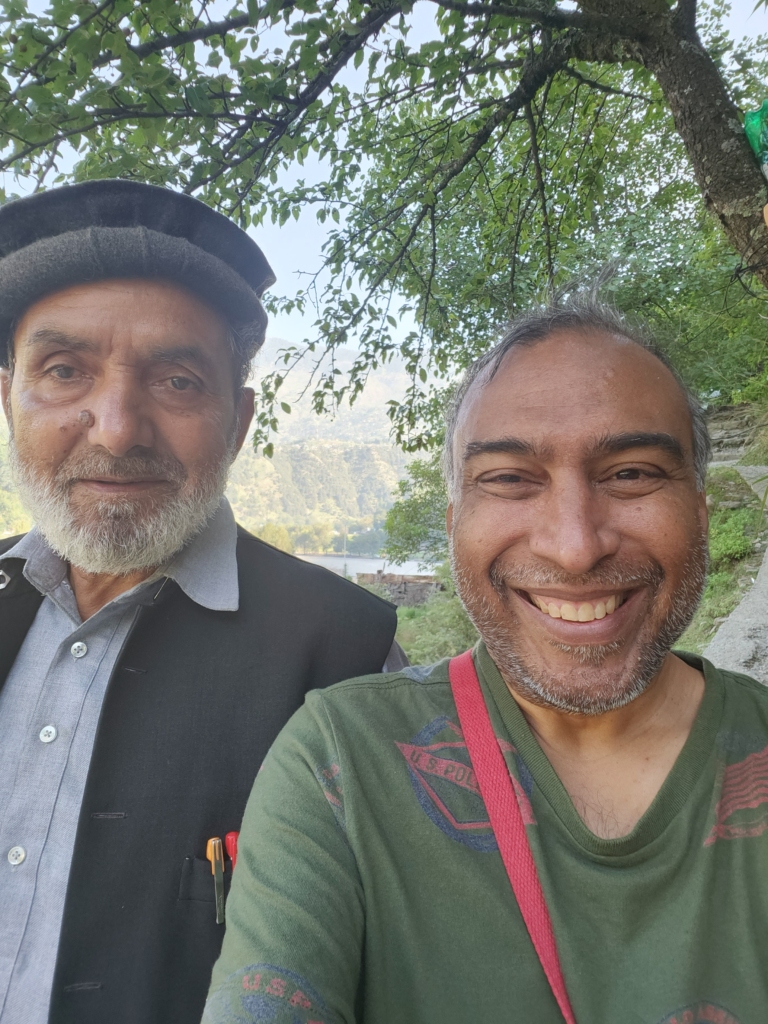
Encounters with locals added depth to my experience in Keran.
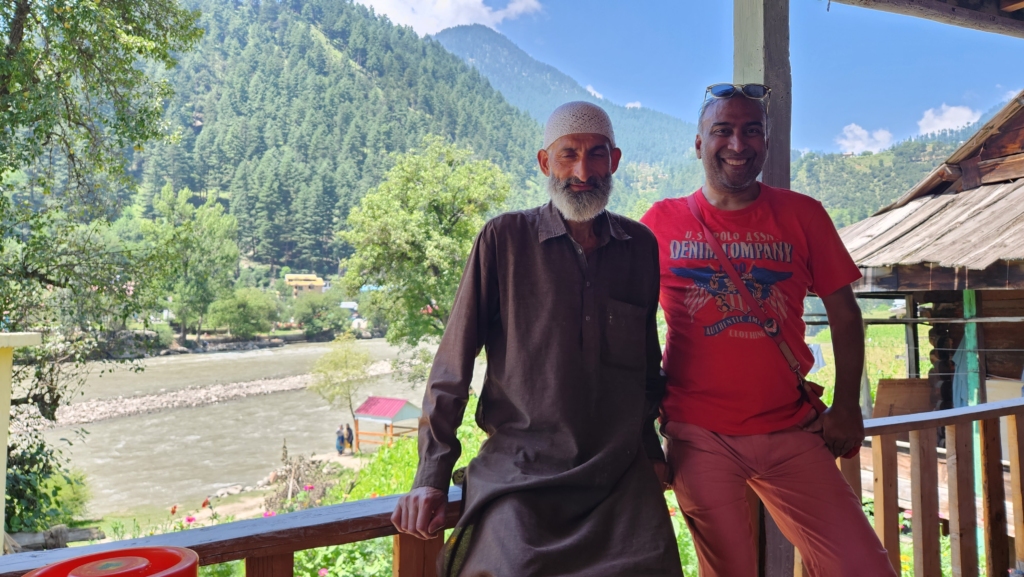
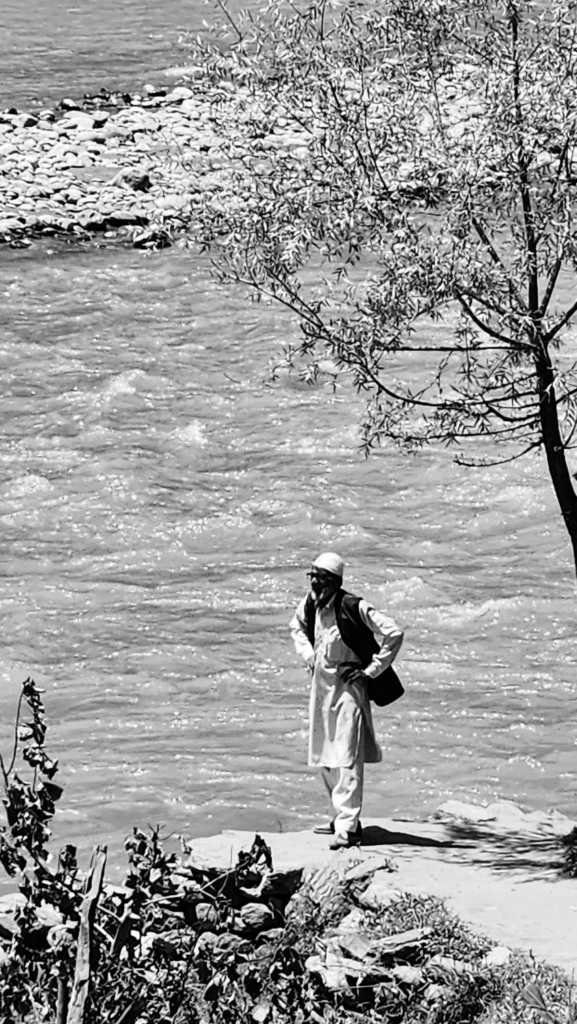
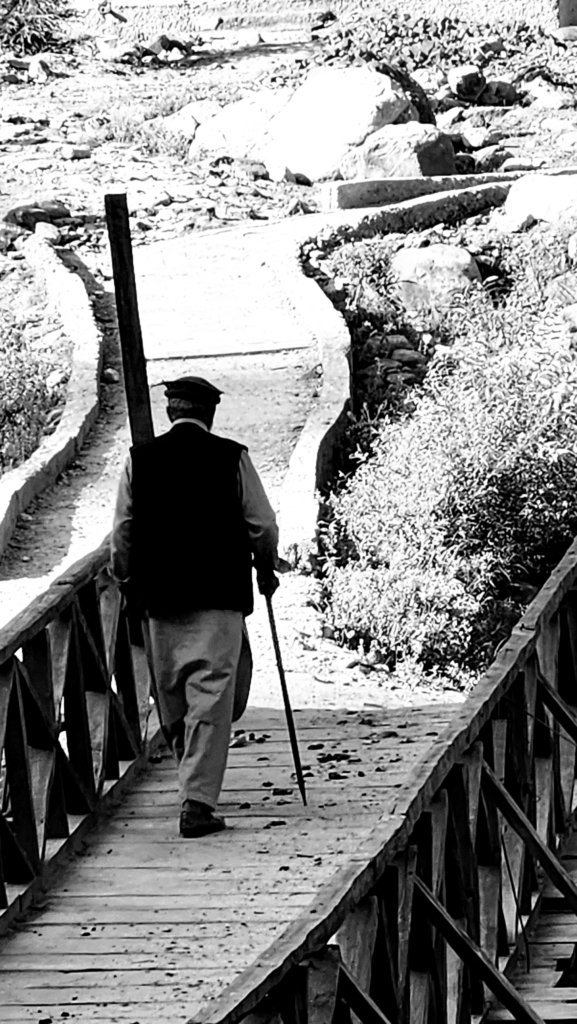
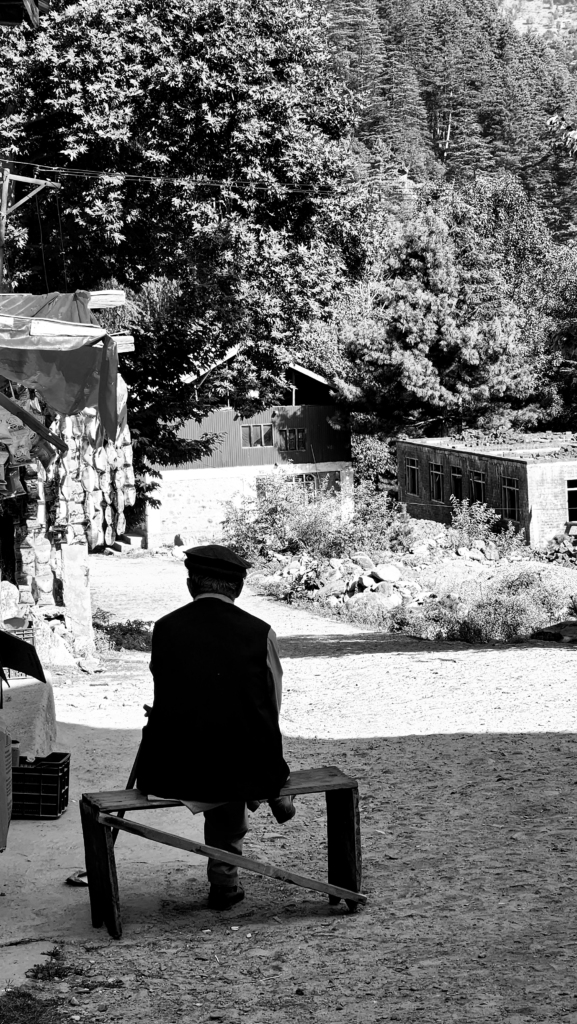
First, I met a dignified elderly gentleman, clad in traditional attire with a local head gear. He was well built, handsome and had a walking stick in his hand, just like me, to avoid missing a step on the rough hilly terrain. He was probably the oldest walking taking resident of the valley, reminiscing about its former prosperity and unity.
Sadly, he observed a growing sense of discord among the people, fueled by disputes over land ownership. It struck me how valuable land had become in our lives, triggering conflicts among those seeking to claim it. Though I wished to converse further, I didn’t want to prolong his standing in discomfort. His final good-bye words left a deep impact on my thoughts – “the times had changed drastically over the years, the river which had fed the valley fertile, is now the dividing the people creating a feeling of mistrust amongst themselves”.
Next, two young girls came up to me where I was sitting, brightened my morning with their cheerful greetings. I felt a sense of camaraderie in this unfamiliar place. They asked if I had not recognized them. I hesitantly admitted with a “no”. They said, we met yesterday evening near Mr. Bhat house. Yes, they were two young girls with the “jhumka” girl. They were on school vacation, roaming aimlessly through the valley early morning. We spoke a little and they carried along their way, hand in hand.
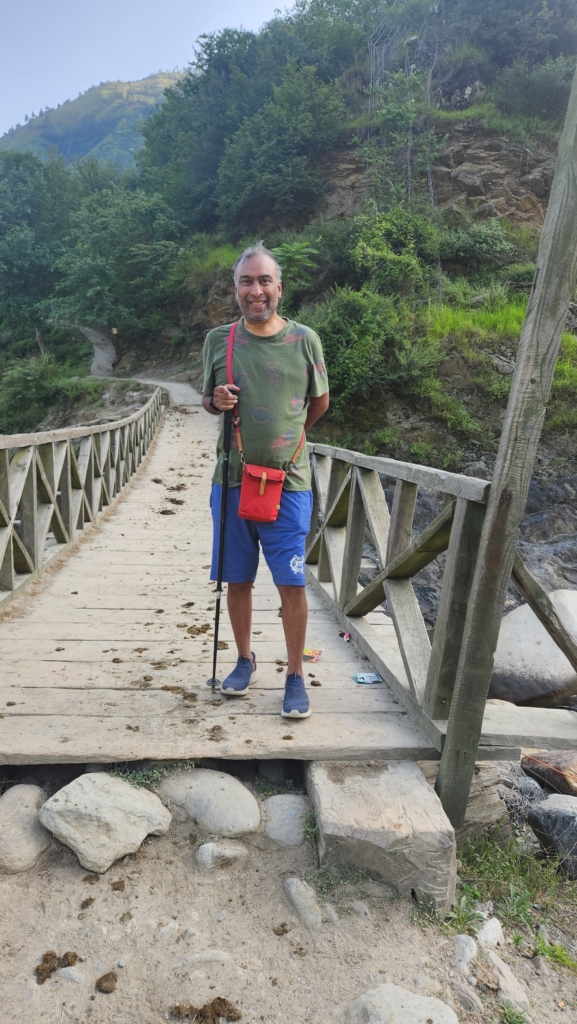
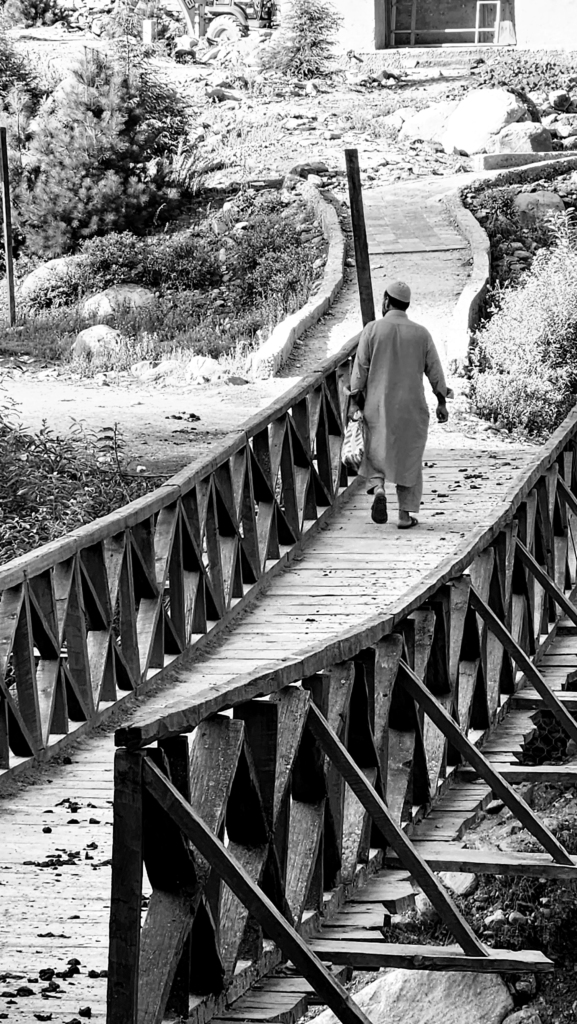
Another gentleman, sprightlier in demeanour, crossed my path, he exuded energy and purpose. I could guess based on his pace of walking, probably he was in a rush to head somewhere. Anyways there’s always some buffer time for a quick hello. My good morning halted him. He asked why I was sitting in such an awkward place, was I injured, he enquired. I jokingly said, I was designated spy appointed by his wife to keep a watch on his movements. We laughed together.
I loved his enthusiasm and his mission statement – always a clear purpose in life, otherwise we will be like mobile handsets without telecom/wi-fi network. I made him say it again, just to record it. Probably I got it partly, he was man in a hurry.
His wit and vitality left a lasting impression, reminding me of the richness found in chance encounters. These interactions, though seemingly ordinary, underscored the depth of human connection and the varied perspectives that colour our journeys. Each encounter added a layer to my understanding of Keran and its inhabitants, enriching my travel narrative. And yes, if you’re reading this, you’re proof to these stories, no matter how trivial, still captivate curious minds.
As I returned to our lodging, I half-expected Danish to have initiated a search party for my whereabouts, but he was still deeply entrenched in slumber.
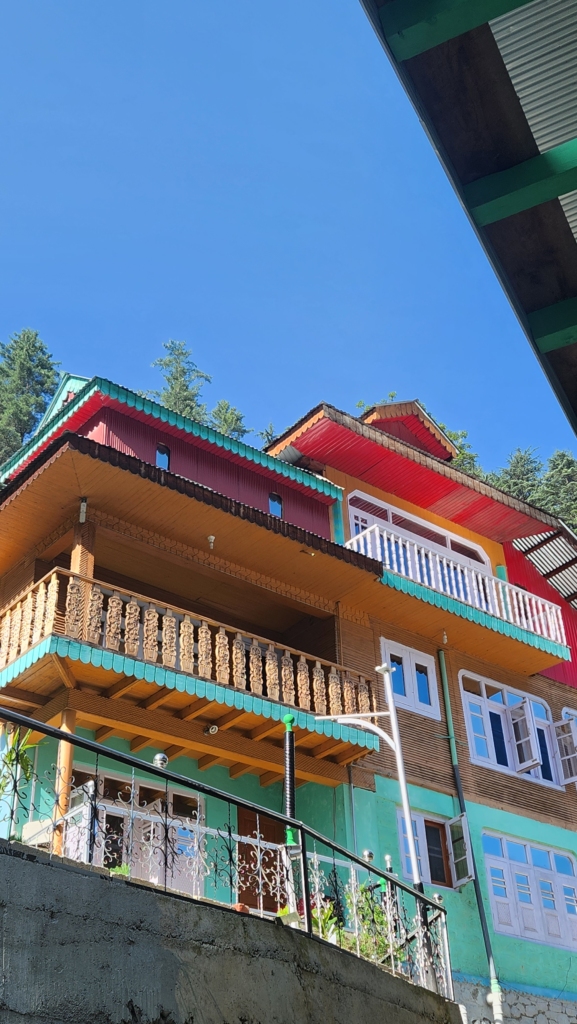
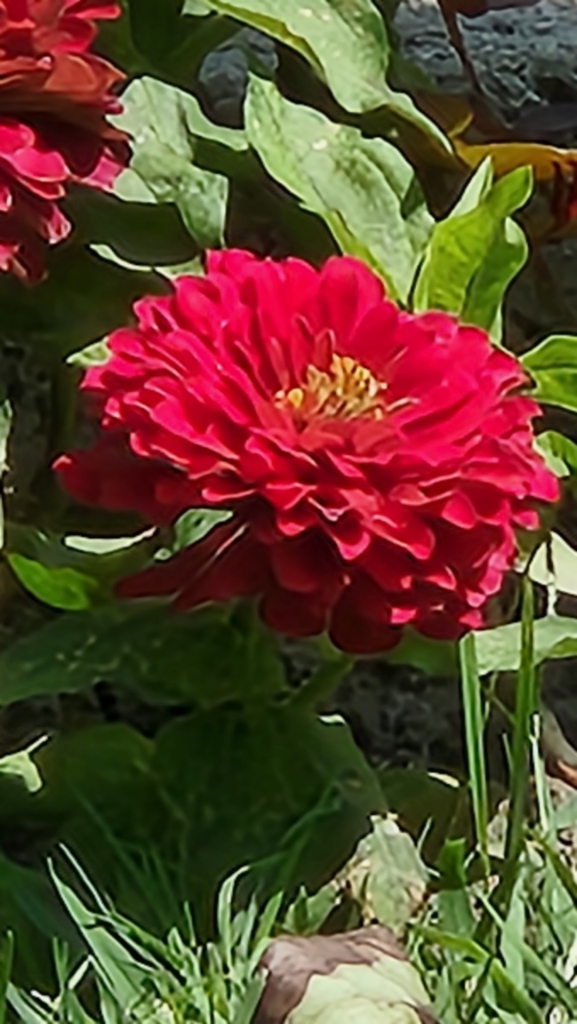
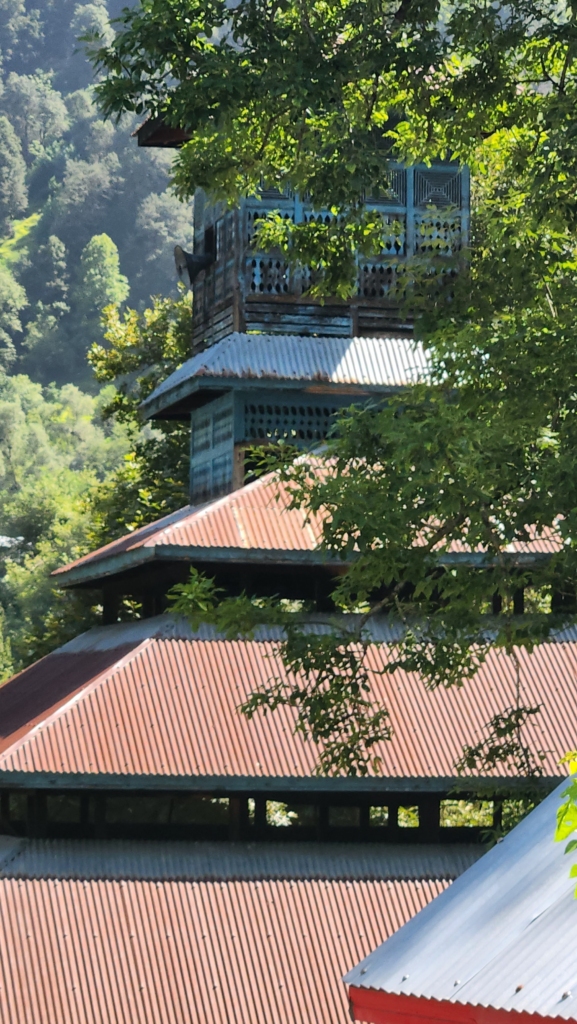
Raza, our gracious host, had breakfast ready, and I opted to enjoy it amidst the vibrant hues of his well-tended garden. As we savoured the morning meal, Raza shared his fervent enthusiasm for the 20-room boutique hotel under construction nearby. Utilizing Deodar wood, renowned for its quality, the hotel promised opulence, with Raza envisioning a presidential suite atop its structure.
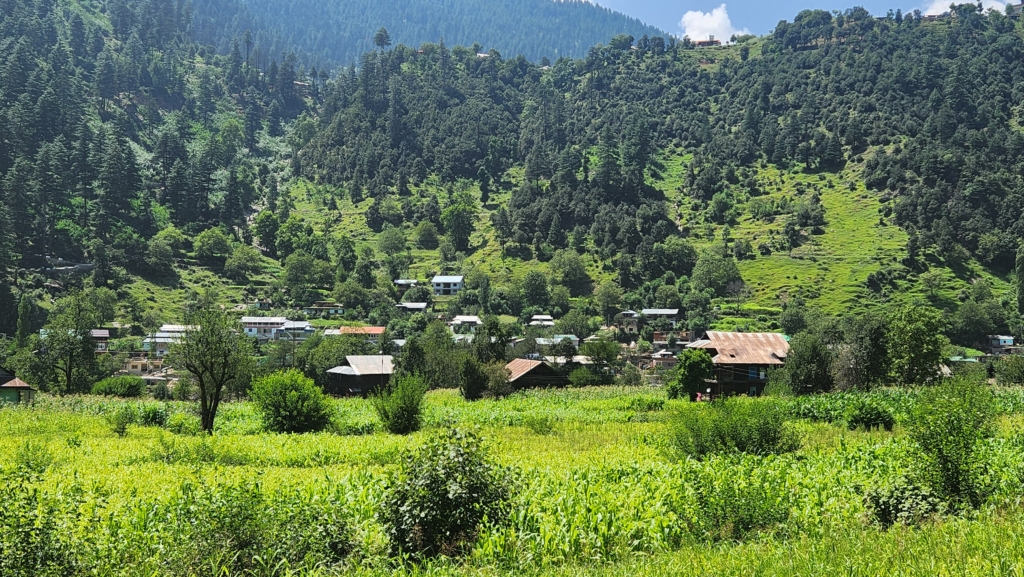
Promptly at 10 am, Mr. Bhat arrived as planned, ready to escort us to his home for lunch. The vista from his residence, with its picturesque backdrop of mountains, flowing river, and lush greenery, evoked childhood drawings of idyllic landscapes.
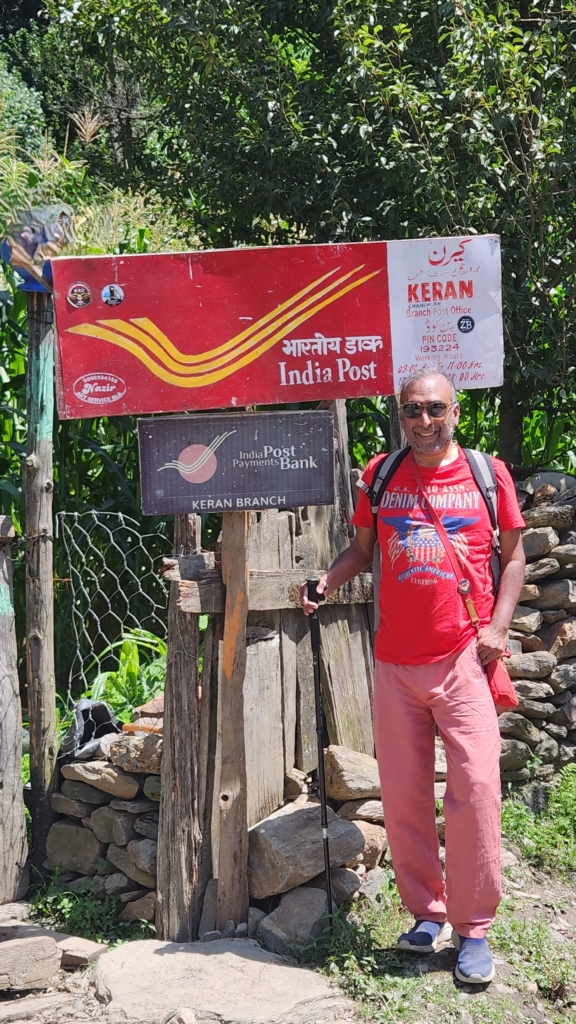
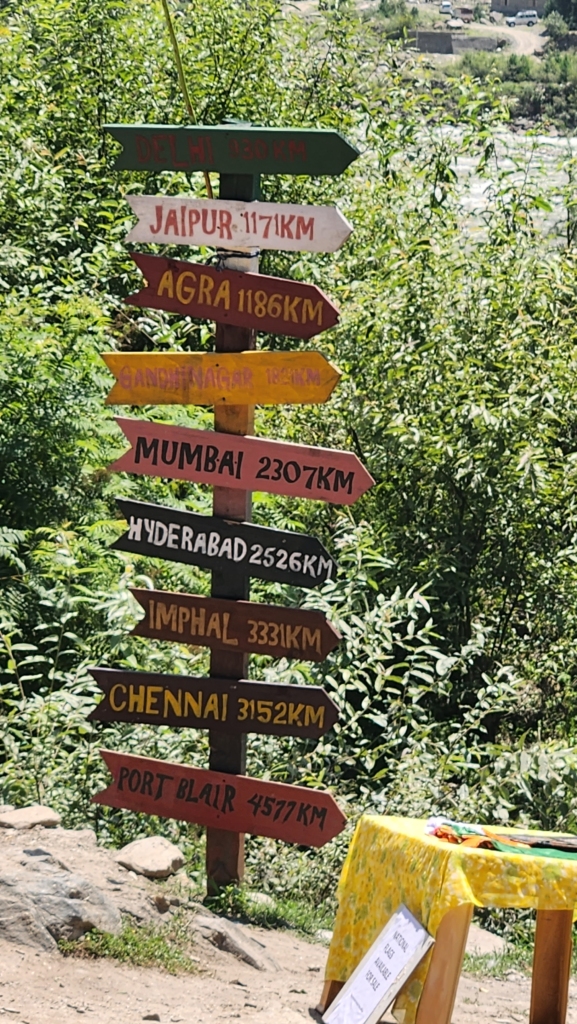
Outside his house, Mr. Bhat had set up a stall selling Indian flags, anticipating an influx of tourists during the upcoming national holiday – Independence Day. Mr. Bhat’s fervent patriotism was on full display as he admonished his staff for slipping a flag from the adjacent table – due to sudden gush of wind. Their home doubled as the local post office.
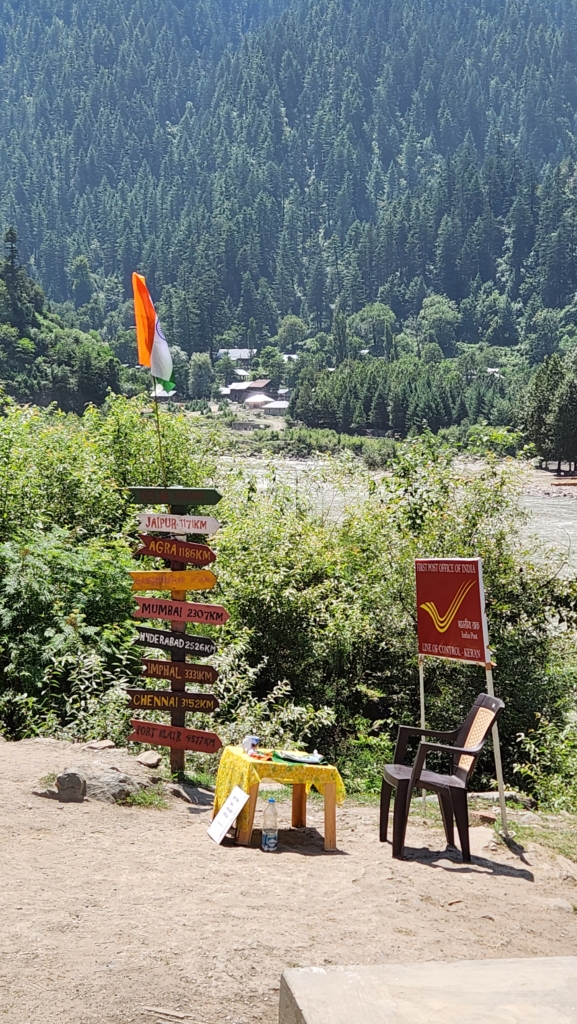
A government office adjacent to Mr. Bhat’s house was abuzz with activity, preparing to host government dignitaries and media personnel to promote tourism in Keran. On enquiry, we were told that the media troop was being led by the District Collector. It was heartening to witness local administration’s efforts to showcase the region’s beauty and potential.
Amidst the commotion, Mr. Bhat’s father graciously arranged a swift yet heartfelt lunch, expressing his commitment to installing a western toilet on their premises, prioritizing humanitarian service over religious practices. After a brief respite, we embarked on a stroll along the river.
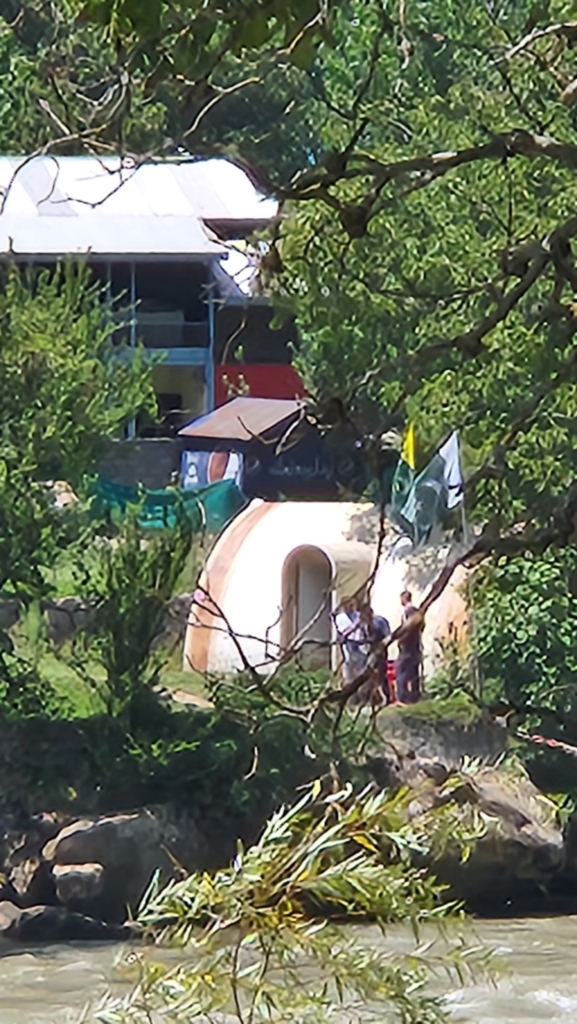
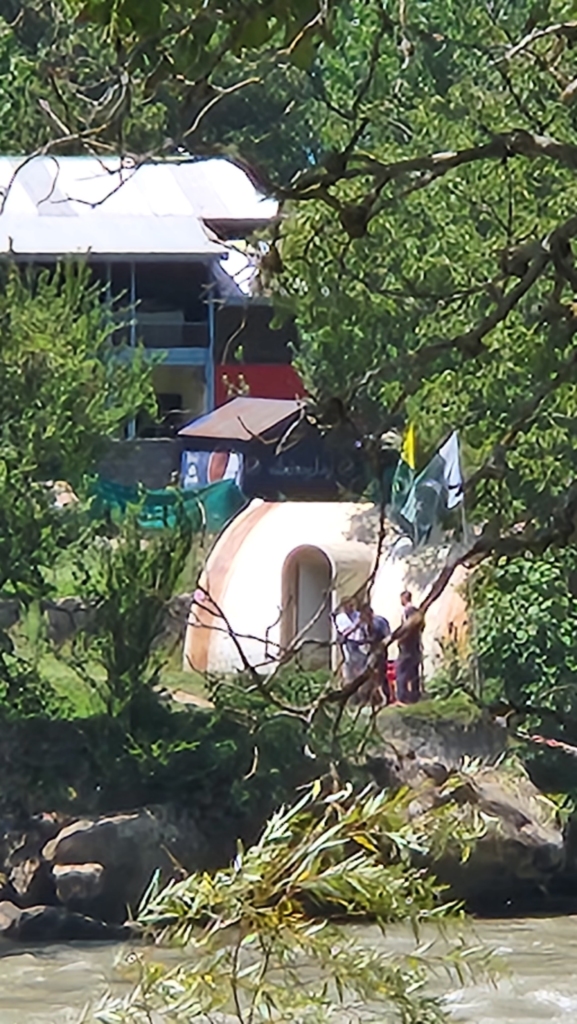
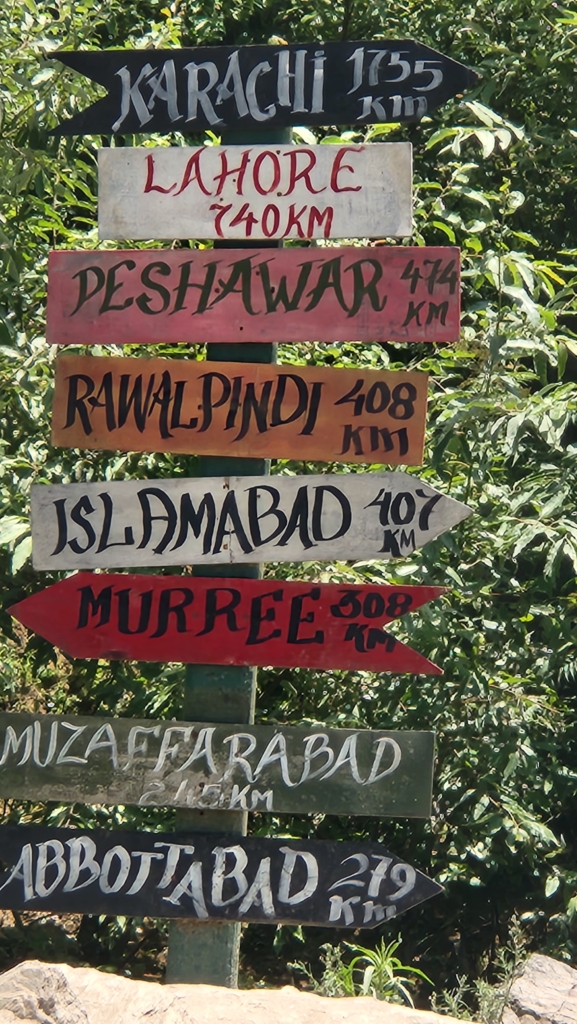
As we ventured further, the river narrowed, bringing us closer to the POK border, marked by flags proudly displaying the region’s moniker, “Azad Kashmir,” alongside Pakistan’s flag. The POK (“Azad Kashmir”, as they called) flags were always accompanied by Pakistan’s flag – how “azad” I felt. The Neelum Valley a tourist destination on the other side, was dotted with lodges, restaurants, and resorts, catering to all types of tourists.
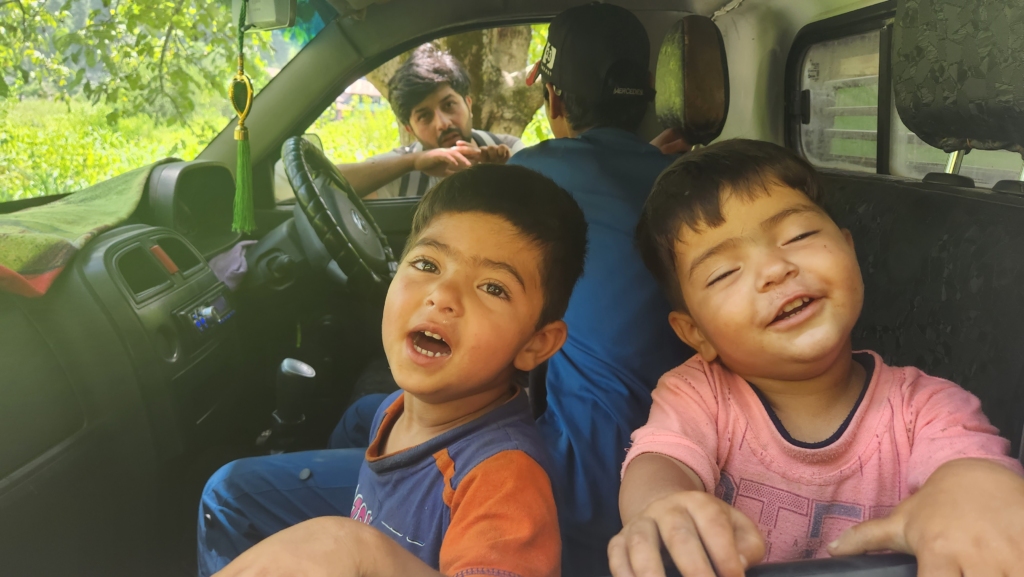
After our extensive trek, the prospect of retracing our steps back to the check-post seemed daunting. However, luck was on our side when we stumbled upon a parked jeep along the road, its driver conspicuously absent as children gleefully played within. We opted to wait, engaging with the youngsters under the shade of walnut trees until their father finally returned. Gratefully accepting a ride back to the check-post from the father, Muddasar, we learned he had acquired his car through EMI for business purposes, ferrying packages between Keran and Kralpora while also offering his home as a homestay for tourists.
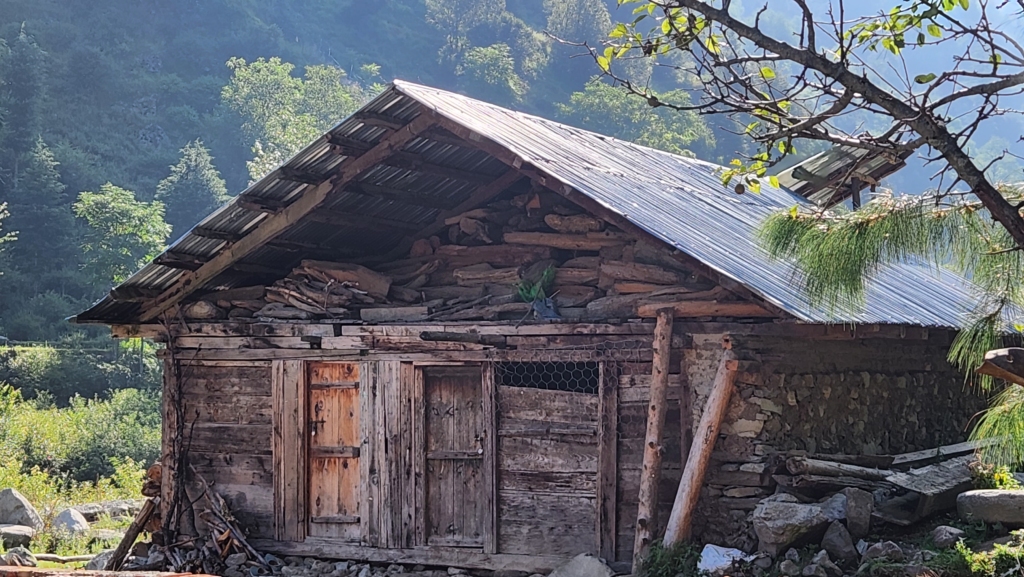
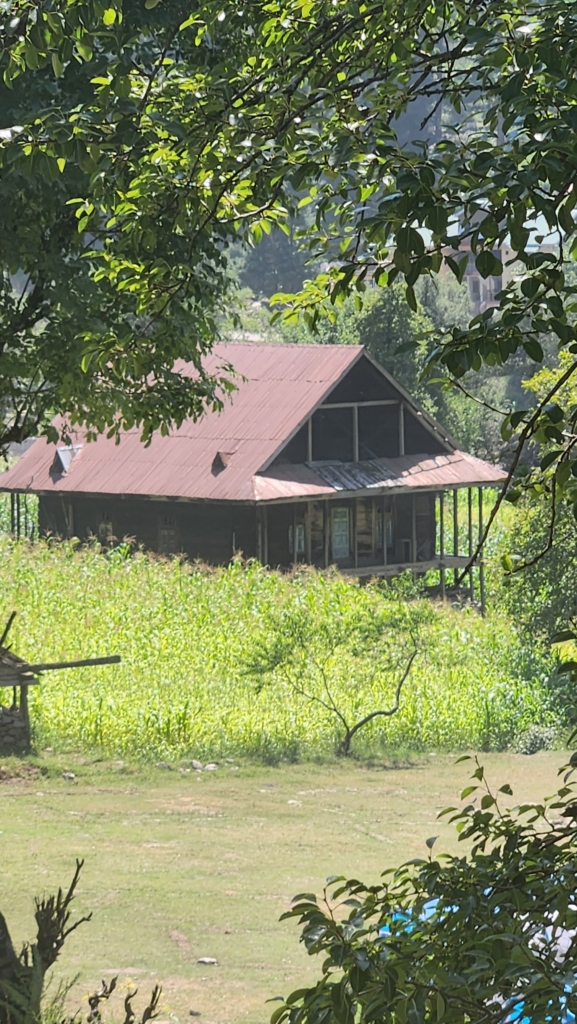
There were some houses which were in dilapidated condition and seemed abandoned, an unusual view compared to other houses in the village. Muddasar said that these were enemy houses – the houses / property which people had left behind during partition. The government and local people had refrained from encroaching over it. The Indian government had gone extra step to protect these. Such reverence for property, struck me as a testament to the community’s values. Am convinced that this would not be the situation across the border in Pakistan.
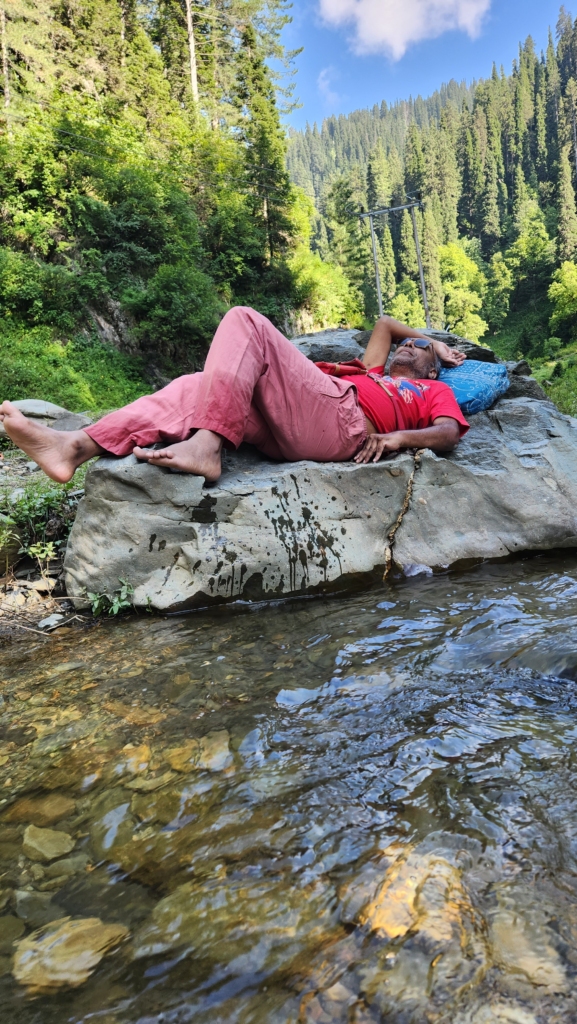
On the way back to Kralpora, we stopped by a small stream. While Danish washed the SUV, I discovered the perfect spot for a quick snooze.
Kralpora – Tangdhar (via Chowkibal, Sadhna Pass): About 60 km. / 2 hr.
Upon our swift return to Kralpora, we promptly visited the police station to secure approval for our onward journey to Tangdhar / Teetwal. We made a quick stop at a pizza cafe, indulging in my personal weakness. This break, while enjoyable, proved costly.
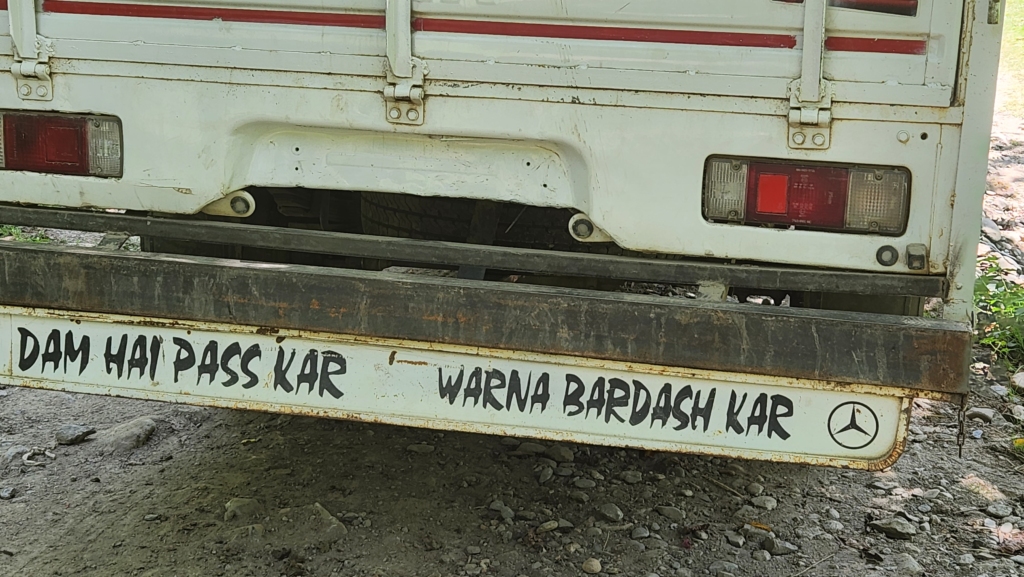
The route from Kralpora (via Chowkibal) upto Tanghdar is very scenic and has three beautiful tourist stops – Drangyari Range, Bangus Valley and Sadhna Pass. As we embarked on the scenic route towards Tangdhar, passing through Drangyari Range, Bangus Valley, and the picturesque Sadhna Pass, I couldn’t help but feel a sense of excitement.
Drangyari Range and Bangus Valley were scheduled stop on our way back from Tangdhar. Sadhna Pass like Razdan Pass is supposedly very scenic. We had grossly miscalculated our travel time to pass through Sadhna Pass. It had turned dark, and our smooth ride was momentarily derailed by inclement weather and a sudden fog engulfing Sadhna Pass, reducing visibility to a mere few meters. The roadsides were not barricaded towards the valley side, which was on our left. The gushing wind passing through the mountain pass was creating a howling sound. It was scary to sum it up, an experience which I had not encountered ever before in my life. Navigating the treacherous terrain, I kept instructing Danish to drive on the right side of the road. Maybe I would have got onto his nerves with my frequent comments, but he kept his coolness – a must trait to tackle these road conditions and passengers like me. In our 2 hours of road journey, we would not have seen not more three vehicles pass us.
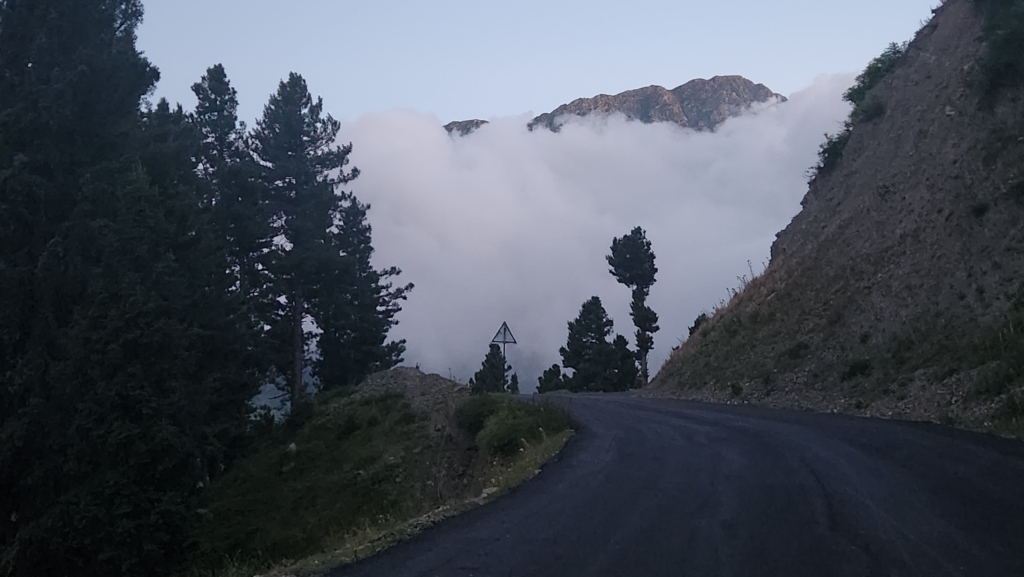
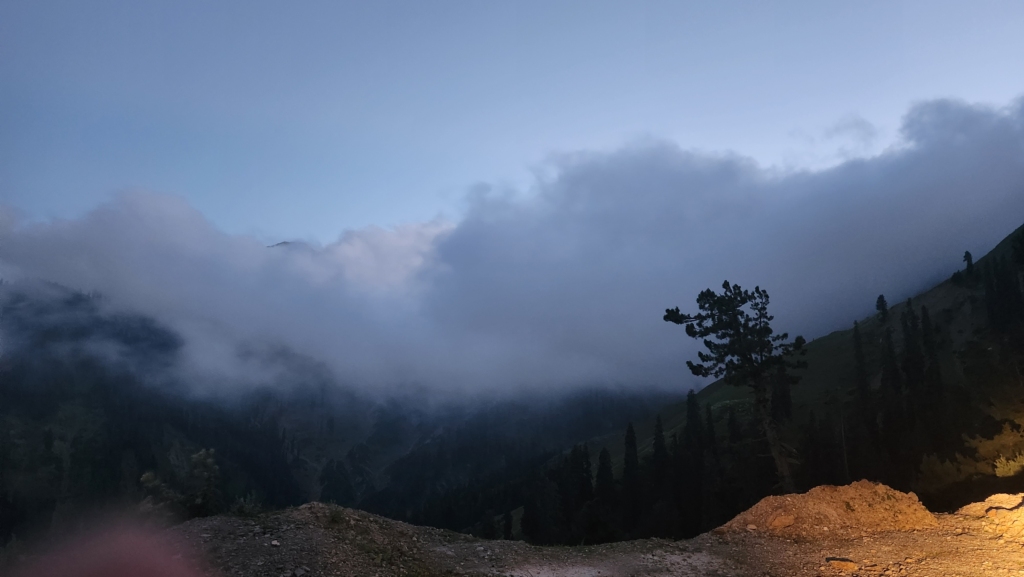
Pro Tip: Please cross Sadhna Pass during day light. First, its safer and secondly, you get to appreciate the nature beauty at its best.
We arrived in Tangdhar around 8:30 pm, we found the town eerily quiet. We had to seek assistance from the local police patrol jeep to guide us to our accommodation. Our homestay was very close to a mini Habba Khatoon look-alike hill. It looked very pretty – reminded me Habba Khatoon in a flashy night-gown.
Jaffar Bhai, the proprietor of our homestay, had arranged for a caretaker to meet us and show us to our rooms. Basic yet well-maintained, the property offered respite after our arduous journey.
Hungry and weary, we, ultimately ordered dinner from a local restaurant that required our presence for dine-in service, a stark departure from the convenience of city home-delivery apps. Dinner at the quaint restaurant – “Pick-up & Delivery”, manned by a lone cook, provided a taste of local hospitality despite its peculiar name. We asked the cook why the restaurant had such a strange name. He said that there was a departmental store before which closed during Covid period and the owners did not bother to change the name.
We thanked the cook. Satiated, we retired to our modest accommodations, grateful for a well-deserved rest on the slender beds.
If you’re planning a trip to Keran Valley or Kashmir, we at HappyHorizon would be thrilled to customize your holiday plans to enhance your travel experiences. Feel free to reach out to us: connect@happyhorizon.in
August 2023
Day 8: Tangdhar – Read More
Gallery
Sukumar Jain, a Mumbai-based finance professional with global experience, is also a passionate traveler, wildlife enthusiast, and an aficionado of Indian culture. Alongside his career, which includes diverse roles in international banking and finance, he's working on a wildlife coffee table book and enjoys sculpture and pottery. His interests span reading non-fiction to engaging in social and global networking.