Day 7: Keran Valley – Read More
Day 8: Tangdhar & Tithwal / Seemari
Tangdhar – Tithwal: About 25 km. / 1 hr.
As we lingered over breakfast at the “Pick-up & Delivery” restaurant, the once-bustling eatery was now alive with a few extra hands in the kitchen, assisting the multitasking chef. Our table was attended by a spirited young teenager named Yusuf, who approached us with youthful exuberance, eager to take our orders. Between serving our meals, he enthusiastically suggested other tourist spots we might explore after Tithwal.
To my surprise, he even offered to rendezvous with us on our return journey, promising a quick 15-minute response time upon our call. I hesitated at the thought of him leaving his work, and out of curiosity, I asked if he had a girlfriend. With a cheeky grin, he quipped, “Sir ji, aaj kal kiske pass mobile handset aur girlfriend nahi hoti hai?” (Nowadays, who doesn’t have a mobile phone and a girlfriend?). We all shared a hearty laugh, and I couldn’t help but wonder if his girlfriend would be okay with him diverting from their evening plans. With a casual shrug, he replied, “Sir ji, woh udhaar hi raheti hai” (She stays around that area). In that moment, I felt assured he would honour his word.
As our breakfast plates cleared, it became clear that we needed a local reference for the police clearance required for our visit. Yusuf graciously offered to escort us to the local police station to secure the necessary approvals for Tithwal and Seemari. With Independence Day celebrations approaching, we learned that approvals were only granted up to Tithwal. We accepted the limitation and set off toward our destination.

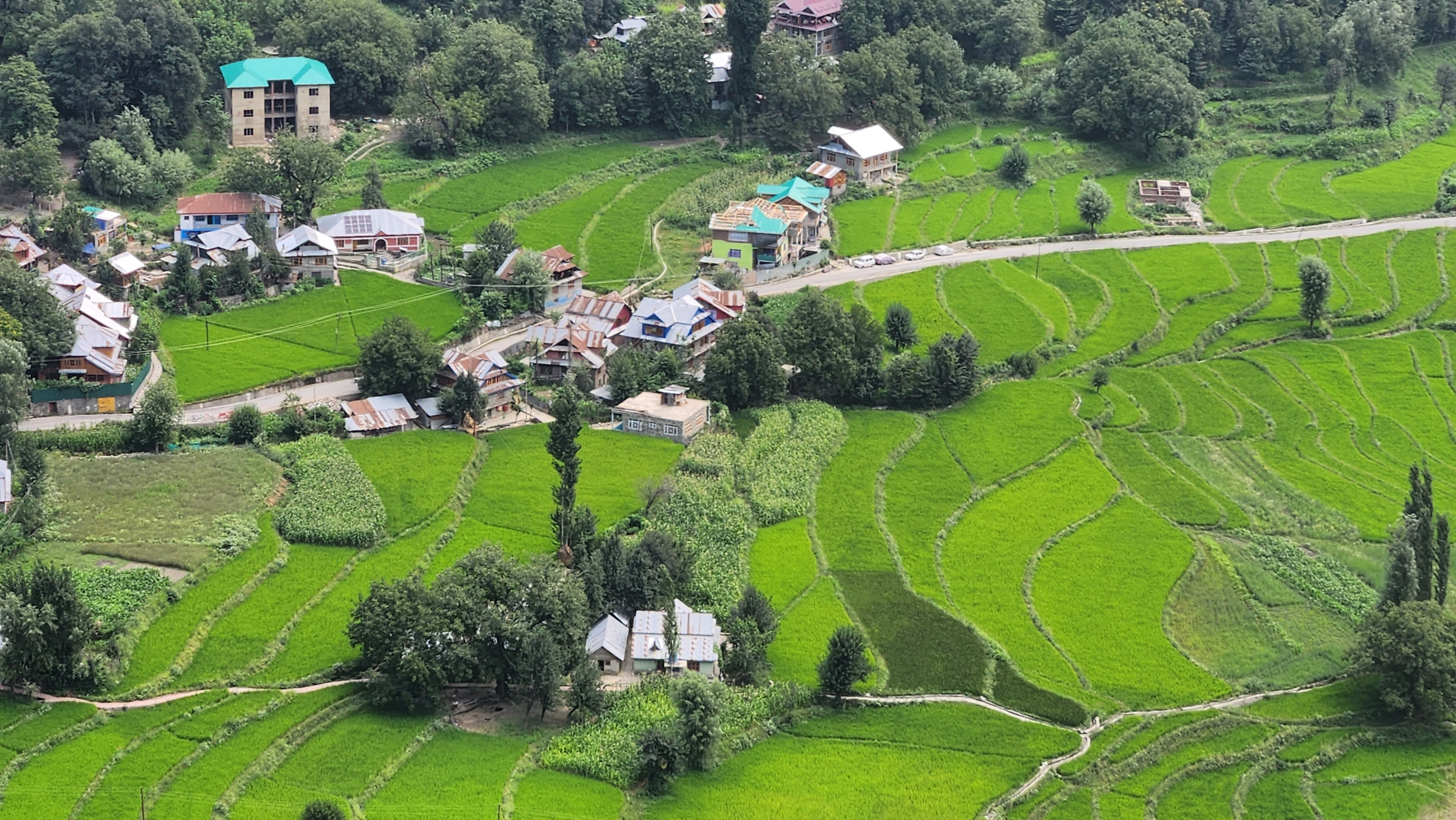
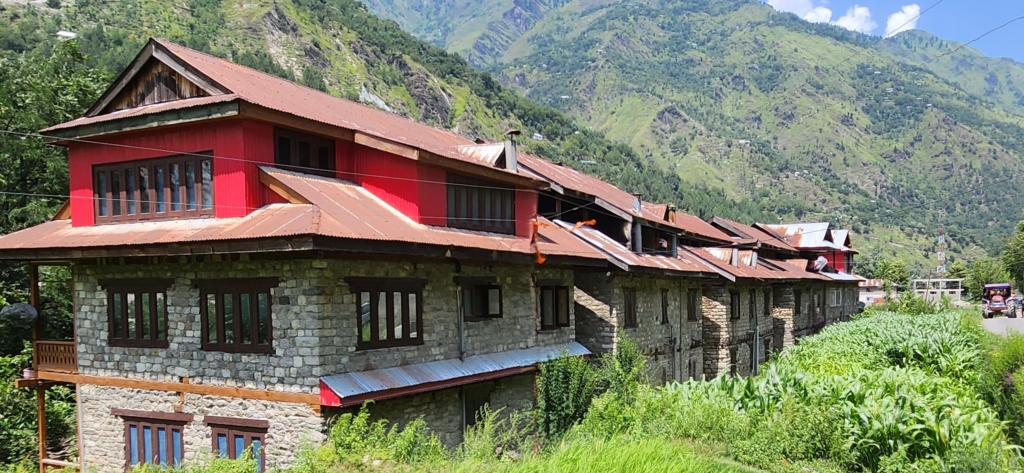
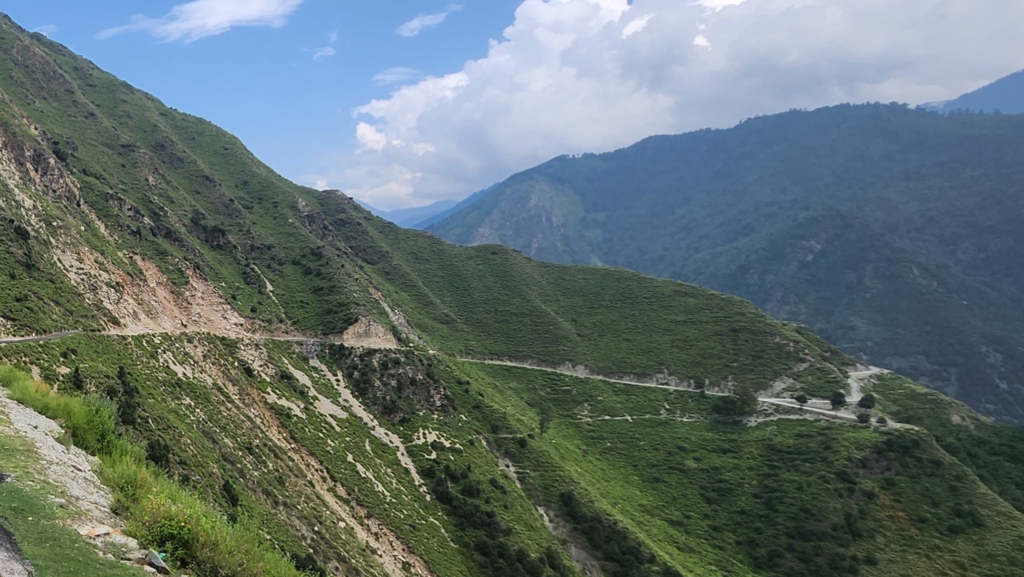
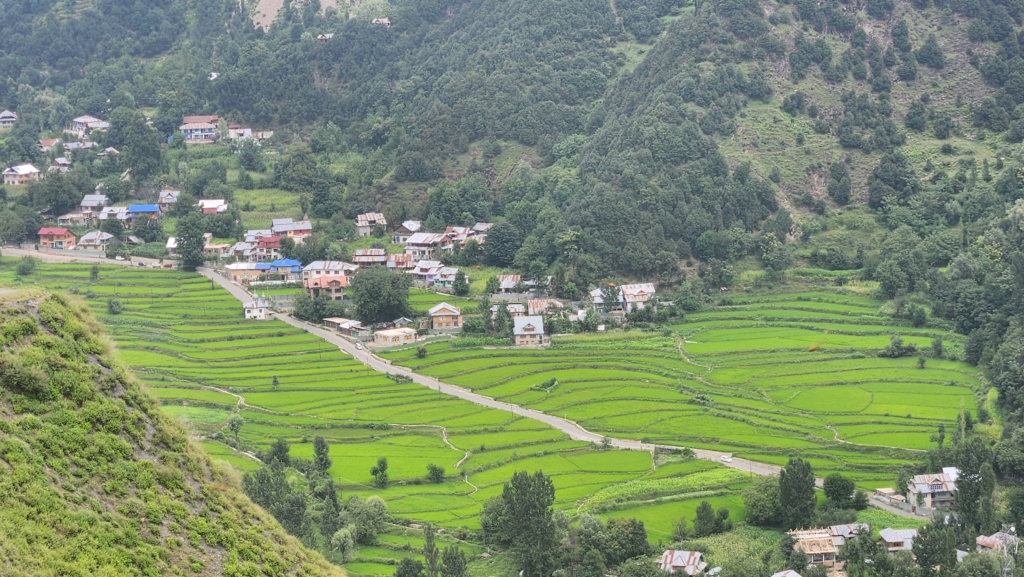
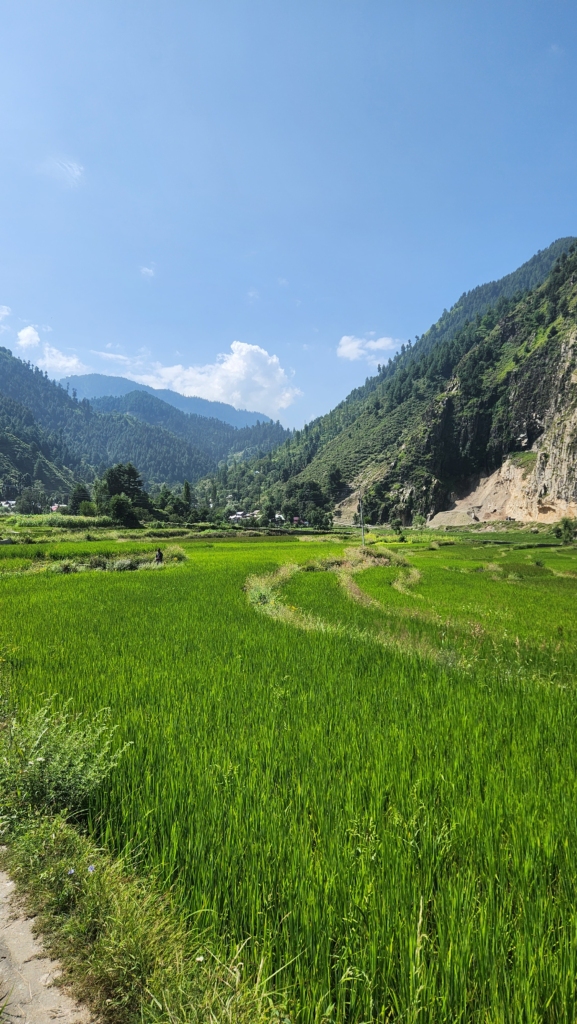
Following Yusuf’s suggestion, we chose the scenic route through village lanes, allowing ourselves to be enveloped in the vibrant tapestry of rural life around us. Navigating the narrow thoroughfares weaving through Tangdhar’s lush fields was a sight to behold. The terraced mountainsides showcased the artistry of step farming, painting the landscape in varying shades of green. Each hue shift was vivid and striking, captivating our senses.


I mused that the true appreciation of a locale often unfolds during subsequent visits; the first encounter merely scratches the surface. Yet, the allure of uncharted territories often overshadows the call to revisit. Tangdhar, with its understated charm, beckoned for a leisurely escape. Despite the locals’ assurances of limited attractions, therein lay the essence of true retreat – embracing nature’s raw beauty, meandering aimlessly, and savoring a cup of Lipton chai amidst the rustic chatter. The mere thought of crossing to the valley’s other side stirred my wanderlust, promising fresh landscapes to explore.
One of the villages in Tangdhar had a predominantly Sikh population. While the story of their settlement remains a mystery, it would have undoubtedly made for an intriguing tale. Tangdhar boasted extensive walnut orchards, with Lolab Valley renowned for producing premium varieties. The locals distinguished between hard-shelled walnuts, which required a hammer’s force to crack, and the softer “kaagazi” variety, easily broken by hand. The latter, prized for its delicate flavour and lighter hue, epitomized the region’s bountiful harvest.
As we ventured deeper into Tangdhar and entered Tithwal village, the majestic Kishanganga River flowed beside us, marking the border with the other half of Kashmir, POK. On our side of the road, fertile agricultural fields stretched toward the mountain slopes, while the Kishanganga roared through the valley on the other. Across the river, the terrain grew hilly and less fertile, showcasing the geographical diversity of the region.
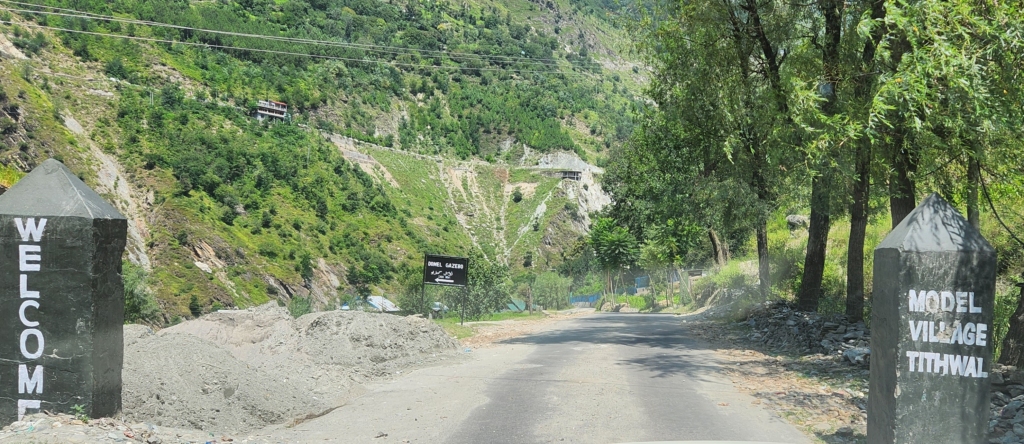

Eager to immerse ourselves in local life, we decided to pause at a village grocery store and engage in conversation with the residents, ready to uncover the stories hidden in this vibrant corner of the world. The proprietor, Mhd. Qureshi, a venerable septuagenarian, lamented the toll that Covid had taken on his business, evidenced by a stock of aging inventory that still found buyers, blissfully unaware of expiration dates. I sought to support him by discreetly transferring funds under the guise of a purchase.

A few locals had gathered at his shop, engaged in their usual daily gossip session. As discussions meandered from the local economy to cross-border interactions, we learned about Qureshi’s familial trials: the tragic loss of his eldest son in a road accident, the service of his second son in the army stationed beyond Kashmir, and the youngest’s private employment in Srinagar, while his deceased son’s family resided under his roof.
His grandson, Sheru, a mere sixth or seventh grader, managed the store with remarkable ease, all while Qureshi entertained us with captivating tales. Sheru’s quiet demeanour belied his age – a trait I found both intriguing and admirable.
As our conversation shifted to the land and lives of people beyond the borders, Sheru unexpectedly proposed a detour to the riverbanks, teasing a hidden trail and a quaint bridge connecting the shores. “Aajao, kuch nahi hoga, hum friends ki meeting place hai,” he urged with a grin, instantly reminding me of a local Hardy Boy. Intrigued, we eagerly accepted his offer for a glimpse into the local secrets.

With agile steps, Sheru led us through the underbrush, plucking a small, round blackish fruit from the overhanging branches and urging us to sample its sweetness. The unfamiliar fruit resembled a bigger bulb of blueberry. Hesitant, I took a small bite and was pleasantly surprised; it was sweet, with a pulp texture akin to that of a fig. We plucked a few more, evoking nostalgic memories of childhood foraging adventures, reminiscent of school days spent climbing trees to pluck mangoes, gooseberries, and tamarinds.

Venturing down dirt tracks and through overgrown grasses, we followed Sheru’s lead, his confidence echoing that of a seasoned local adventurer. Amidst the wilderness, he pointed out a modest hanging bridge linking India to POK – a symbol of local connectivity rather than a commercial passage. Eager to explore further, I entertained visions of crossing over for a grand adventure to Gilgit, only to be reminded that the bridge’s utility was now limited, serving mainly familial exchanges although discontinued post Covid regulations.
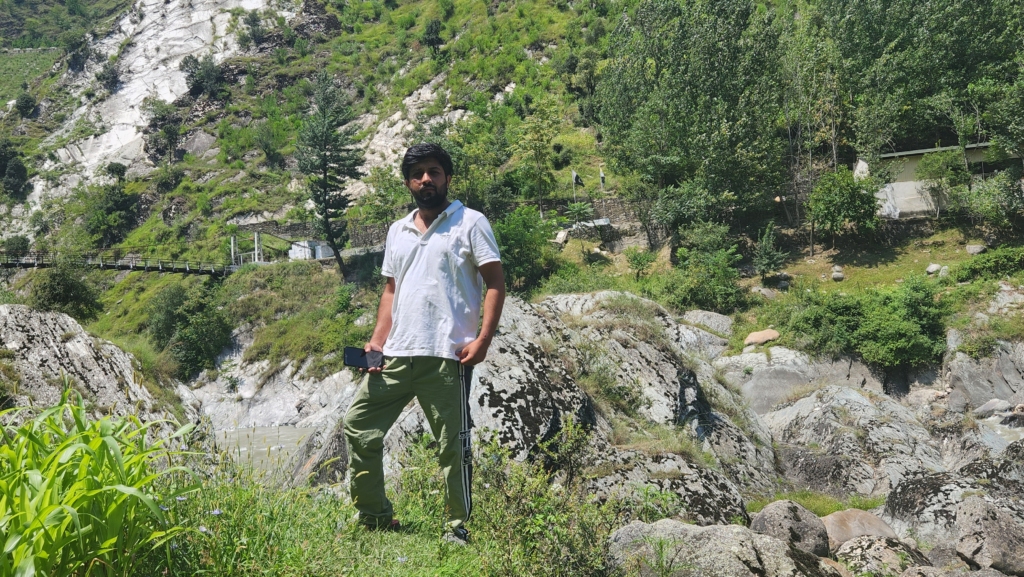
As we reached the rocky riverbank, the striking proximity between our side and the opposite shore was apparent; they were mere meters apart. Across the Kishanganga River lay the highway, a vital artery connecting to Muzaffarabad, its path intermittently shielded by tin sheets, likely housing an army checkpoint. This region of POK, part of the greater Neelum Valley district, bore signs proclaiming affection for the region: “We Love Neelum”, along with customary flags planted near the highway – a sight that elicited a chuckle from me. I could see locals on the other side going about their day, and a yearning stirred within me to meet them and hear their stories.

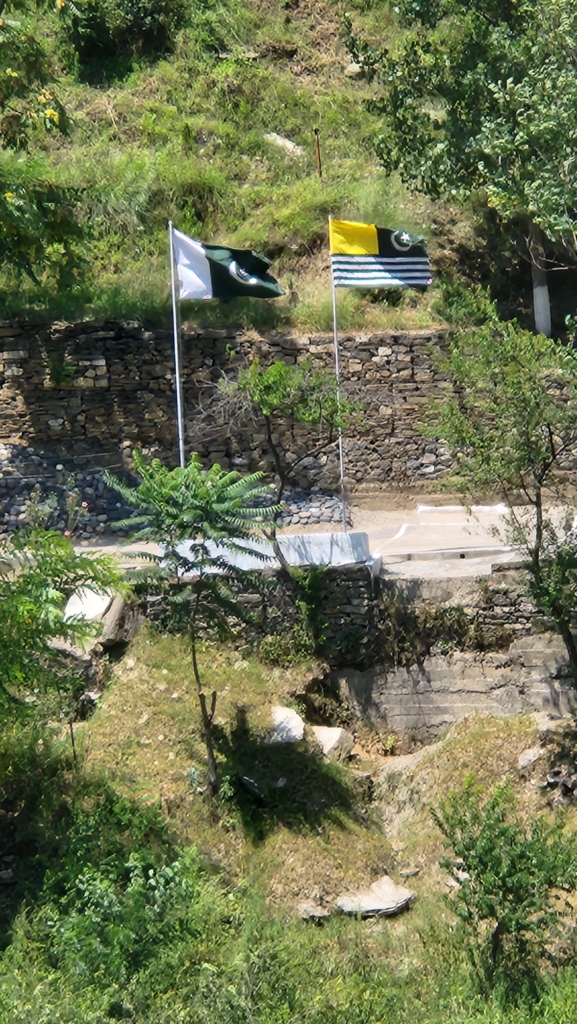
Danish shared a poignant observation, suggesting that the people on both sides of the river were fundamentally the same, divided only by the whims of their respective governments. His words weighed heavily with empathy, a perspective I found puzzling, perhaps a byproduct of my own urban conditioning and the media’s influence.
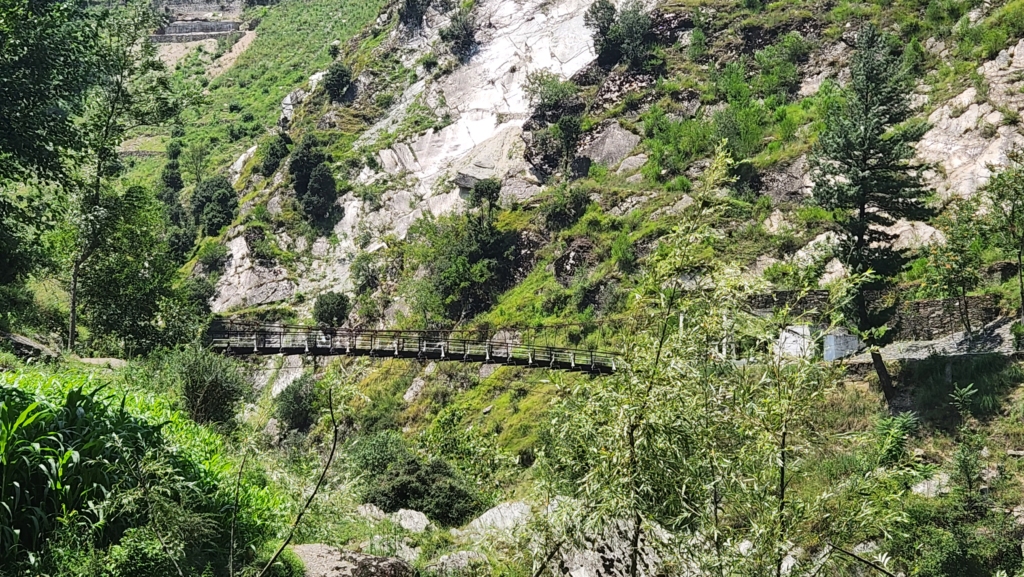
As we lingered by the river, I noticed a dilapidated house precariously perched on the slope, perhaps a relic of past animosities. Sheru mentioned that he had seen someone use the house occasionally. I asked him to keep an eye on it and share any information when I returned in a few months. I had unofficially hired Sheru and his friends as my “Hardy Boys” team, inspired by the beloved book series. Curiously, I asked if he or his friends had ever thought of crossing over to the other side. “No,” he replied, a hint of longing in his eyes, yet grounded in the reality of their circumstances.
Sheru was a delightful guide, tiptoeing along the path with a stick in hand, humming a local tune that floated through the air like a soft breeze. When I asked him if he’d ever consider becoming a professional guide, he chuckled, “No, I like science better.” Why not, I mused – these small villages have historically birthed some of our finest scientists.

As we returned to our car, I offered Sheru some cookies and chocolates I had brought from Mumbai. At first, he hesitated, but with Qureshi’s gentle encouragement, he shyly accepted them, gratitude shining in his eyes. Not to be outdone in hospitality, Qureshi urged Sheru to fetch a bag of walnuts from home. I offered to pay for the walnuts, but Qureshi insisted I give the money to Sheru, as those walnuts were meant for his family. Sheru’s face lit up, his delight palpable; to him, this small windfall likely felt like a fortune that would last him months. We bid farewell to our gracious hosts, their gratitude a quiet yet profound testament to the simplicity of rural life.

Sheru suggested we seek permission from a nearby army checkpoint to access the bridge, further fuelling our excitement for what lay ahead. As we walked toward the checkpoint, an eerie silence enveloped the deserted post, a silent reminder of the military presence. We retreated quietly, prudence dictating that we exit the area without drawing attention.
Our riverside sojourn offered a glimpse into the delicate coexistence across the divide – a tacit understanding to maintain peace by respecting each other’s presence. In that moment, it became clear that fostering peace and harmony was indeed the best approach.
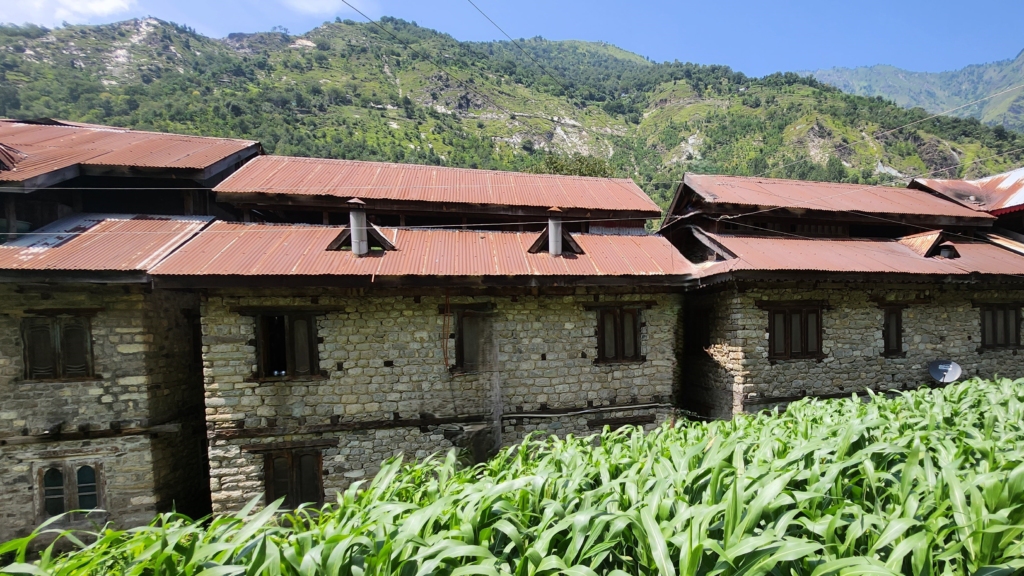
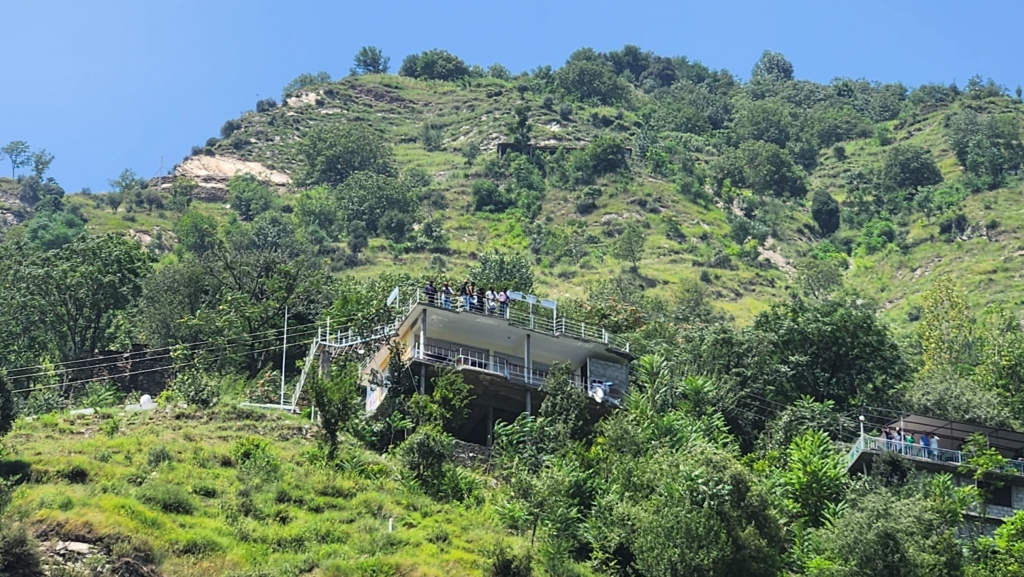
Continuing our journey, we drove a little farther and settled near a field, soaking in the slow-paced village life and the stunning beauty of nature. The nearby Sharada Devi temple’s golden dome gleamed brilliantly in the sunlight, a sacred site recently inaugurated by the Home Minister. This temple stood as a tribute to the ancient Sharada Peeth university complex, whose ruins now lie in POK, about 30-40 km. away. Historically, Sharada Peeth was a centre of learning and knowledge, tragically destroyed by successive Mughal invasions. We opted to forgo a visit to the temple complex, pressing on toward Seemari, only to meet the anticipated rejection at the final checkpoint.
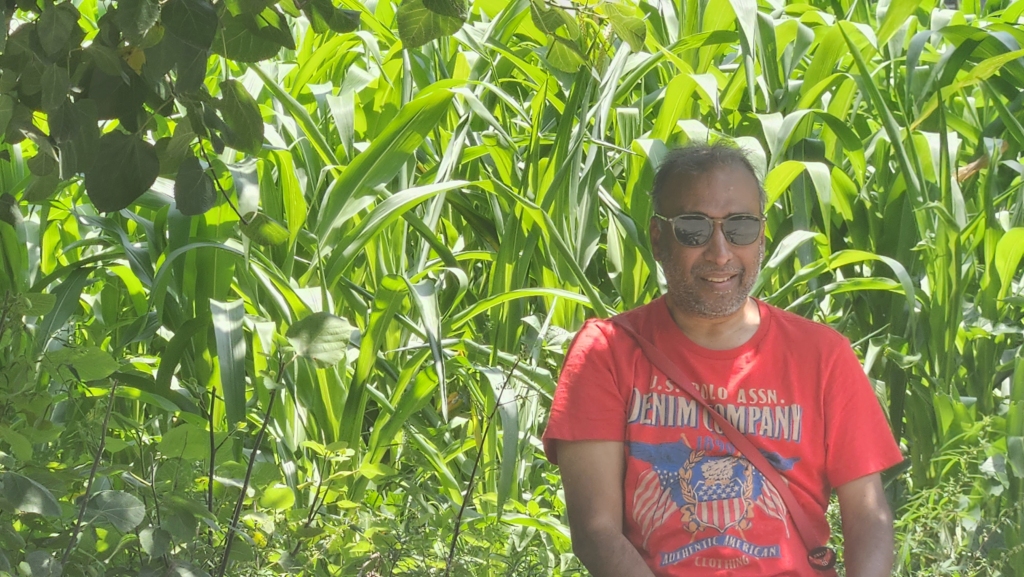
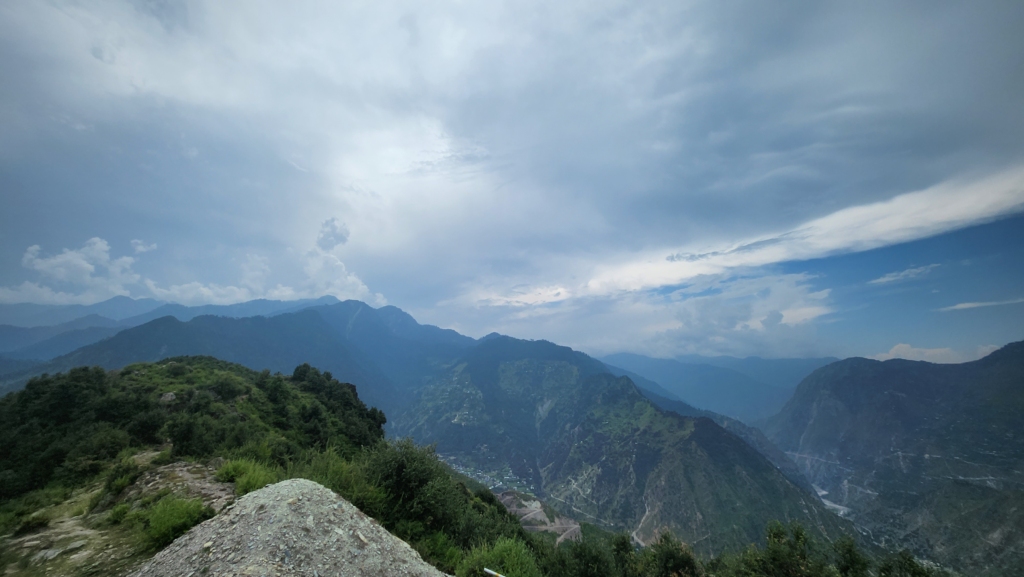
On our return, we diverted toward the village where Yusuf’s mysterious girlfriend resided, though ultimately we chose not to disturb him and her. The hilltop view of the village offered us a moment of serene contemplation, where we admired the landscapes before us. In the distance, the rhythmic hum of construction echoed, a reminder of the ever-evolving landscape and the government’s efforts to forge new strategic routes through the rugged terrain. Throughout our journey, the simplicity and resilience of these border communities left an indelible mark on my soul, reinforcing the enduring power of human connection, even in the face of seemingly insurmountable divisions.
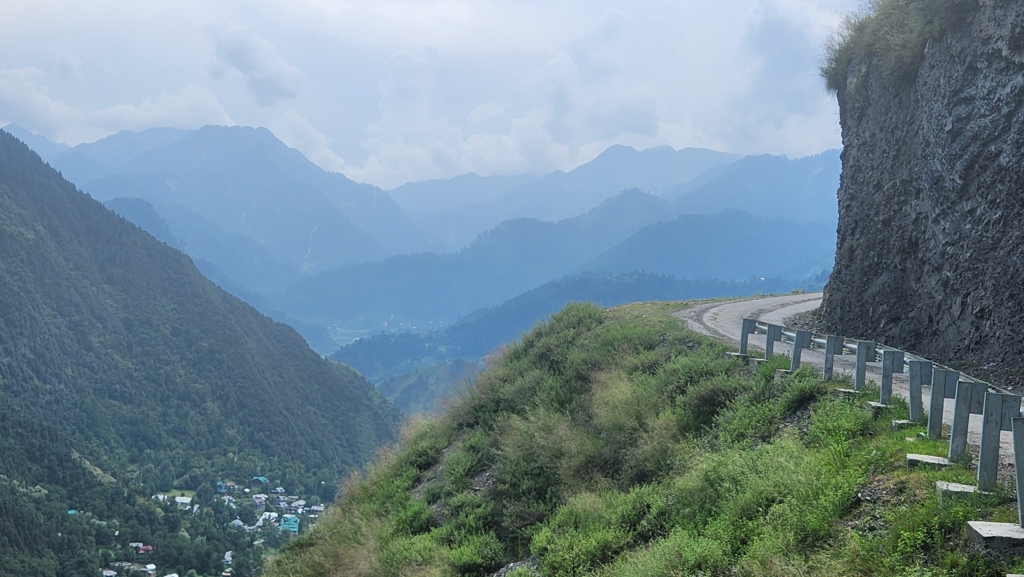
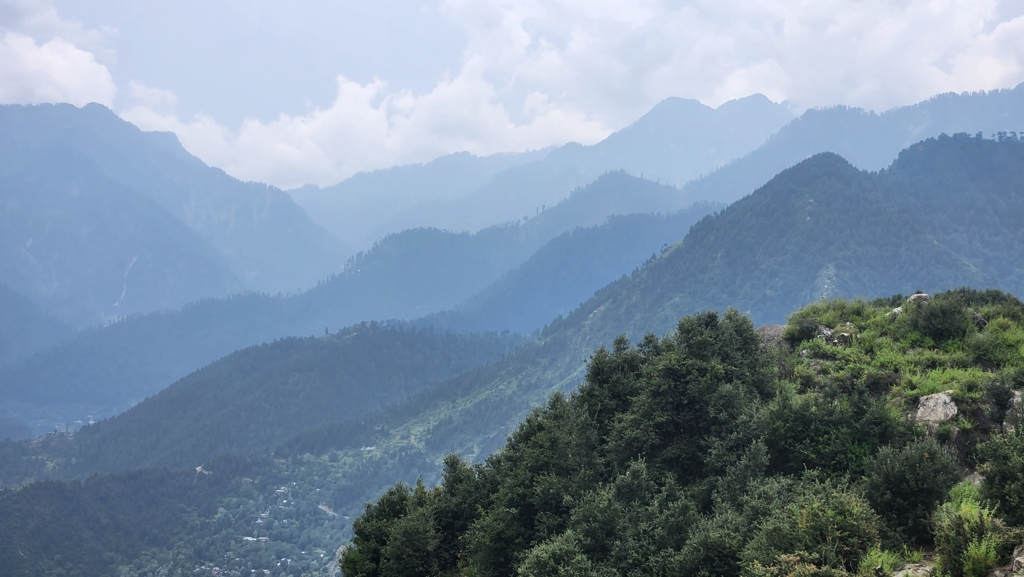
As we journeyed uphill, a grim scene unfolded – landscapes tarnished by thoughtless dumping from nearby villages. The air thickened with the rancid stench of decaying trash, a stark reminder of the pressing need for proper waste management. Plastic litter danced on the wind, painting a desolate picture of environmental neglect.
Next, we hastened toward “Pick & Delivery” for a belated lunch, craving sustenance after our long day. Despite the hour, Yusuf graciously agreed to serve us. With dusk descending, we embarked on a brief stroll through the town, the marketplace gradually winding down for the night. Among the modest establishments, the presence of a State Bank of India branch stood out, a sign of commercial progress in these northern Kashmiri enclaves.
In the waning light, we settled into the bustling local barber shop for a much-deserved grooming, where gossip flowed as freely as the shears. It allowed me to absorb the town’s chatter, though it was lacking in spicy anecdotes.

Afterward, we ventured into NH-701 Café to soak in the vibrant atmosphere, savouring the flavours of our adventure.
Just a quick trivia nugget: National Highways (NH) have recently undergone a renumbering, aligning their designations with their geographical orientation. Even-numbered highways typically traverse north-south, while odd-numbered ones chart east-west routes.
Among the sparse clientele, a young father indulged his son in a fast-food treat, a scene of familial warmth that stood in stark contrast to our own satisfied appetites.
We decided to forgo dinner in favour of an early breakfast. Seeking Muddasar’s guidance, we apologized for our late-night intrusion. His laughter dissolved our concerns as he advised us on the necessity of an early departure, citing restrictions on vehicle passage through the Sadhna Pass. Heeding his wise counsel, we resolved to set forth on our journey promptly at 8 a.m. the next morning.
If you’re planning a trip to Tangdhar / Tithwal or Kashmir, we at HappyHorizon would be thrilled to customize your holiday plans to enhance your travel experiences. Feel free to reach out to us: connect@happyhorizon.in
Day 9: Bangus Valley – Read More
Gallery



Sukumar Jain, a Mumbai-based finance professional with global experience, is also a passionate traveler, wildlife enthusiast, and an aficionado of Indian culture. Alongside his career, which includes diverse roles in international banking and finance, he's working on a wildlife coffee table book and enjoys sculpture and pottery. His interests span reading non-fiction to engaging in social and global networking.