Background: Romancing the Mystic Hills of Darjeeling & Sikkim (Read More)
Day 1 & 2: Dawaipani: Flirting with the Darjeeling “Princesses” (Read More)
Day 3 & 4: Zuluk: Tracing the Old Silk Route (Read More)
Day 5: Gangtok – Seven Sisters Falls – Tingchim – Dzongu
65 Kms. / 2.30 Hrs.
Gangtok
The next morning, I woke up around 6 am under the overcast sky, with intermittent drizzles ruling out any chance of catching a glimpse of Mt. Kanchenjunga. Despite booking what was promised as a premium, super-deluxe corner room with a view, the elusive sight of the third highest mountain in the world seemed beyond our reach. MunMun and Tazo still snug in their beds. Desperate for some semblance of a mountain view, I finally spotted a peak in the range and shouted, “There’s Kanchenjunga!” Both my companions sprang to the window to see.
As punishment for disturbing their morning peace, the girls tasked me with fetching bed tea. Navigating the maze-like hotel proved challenging, with staircases criss-crossing between multiple building structures at different floors. The solid wood staircases were impeccably polished, emitting a pleasant aroma and a crisp tik-tok sound with every step. After several futile attempts to locate Aniket, Ashika, or the kitchen, I returned empty-handed. Tazo then reminded me about Aniket’s mobile number. Aniket swiftly took our tea order, and Ashika promptly delivered it. She said that our breakfast was scheduled for 9 am.
It was national election result day, as the muted television screen displayed the latest poll results, we efficiently packed our bags and got ready. Tazo and MunMun attempted to draw me into political discussions, but I skilfully avoided getting embroiled. Personally, I believe discussing politics with friends can be treacherous ground, risking friendships over differing views. By the end of the day, my predictions for the polls turned out to be spot on.
Breakfast was served as planned, with the kitchen on the ground floor and the dining area on the second floor. Ashika and Aniket skilfully navigated the two steep floors, efficiently laying out the buffet and managing our customized breakfast orders. Their youthful energy and efficiency were commendable. We thanked the hotel staff warmly for their hospitality and wished them well.
Rohit arrived punctually, and we departed Gangtok, leaving the city’s undiscovered charms behind. Throughout the journey, Rohit’s usual jovial mood and witty remarks kept us entertained. His perspective on girls and marriage, which initially leaned towards “not liking girls – it’s a waste of time,” had remarkably shifted to “intending to marry in the next 3-4 years.” Tazo and MunMun playfully prodded him about this change in just two days. Rohit explained that he viewed flirting with girls as frivolous but sees marriage as a future goal. We accepted his reasoning for now. As our conversation delved deeper, Rohit mentioned a ladies’ hostel near his home in Gangtok, where reportedly a lawyer girl harboured a crush on him. Shy and busy with driving, he hadn’t yet met her. We encouraged him to explore this potential relationship further.
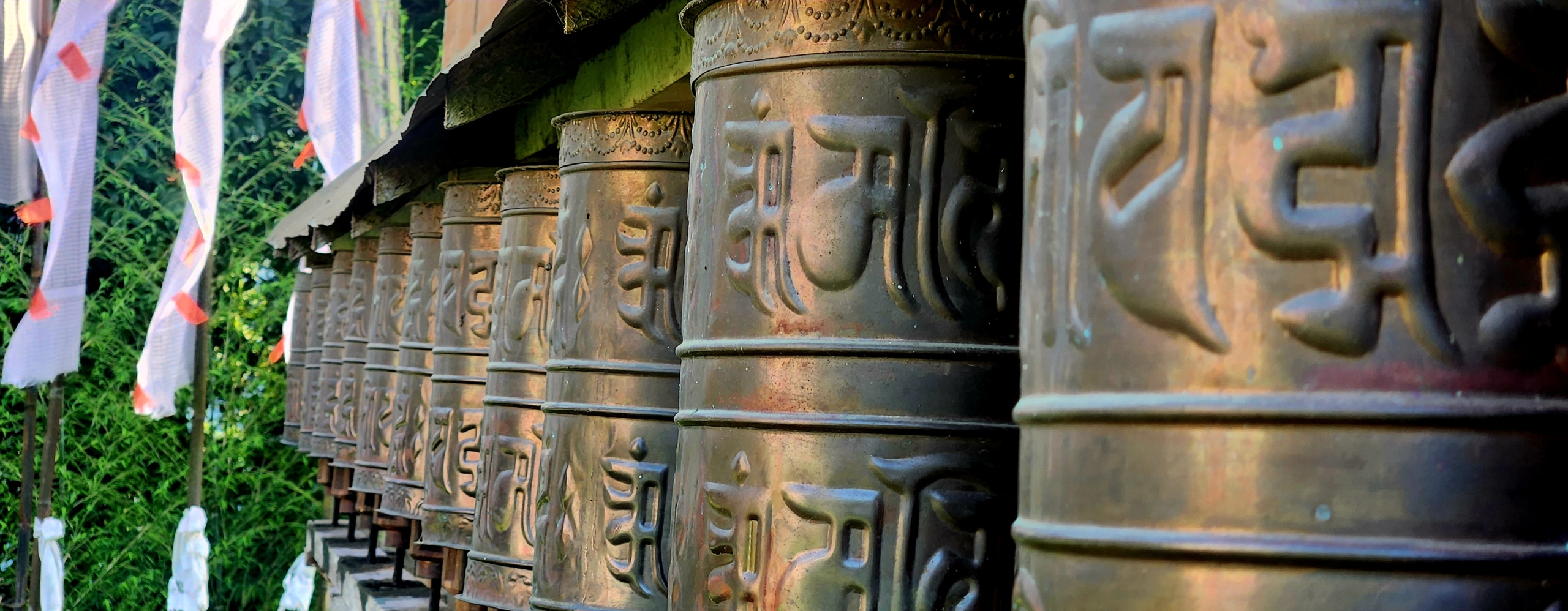
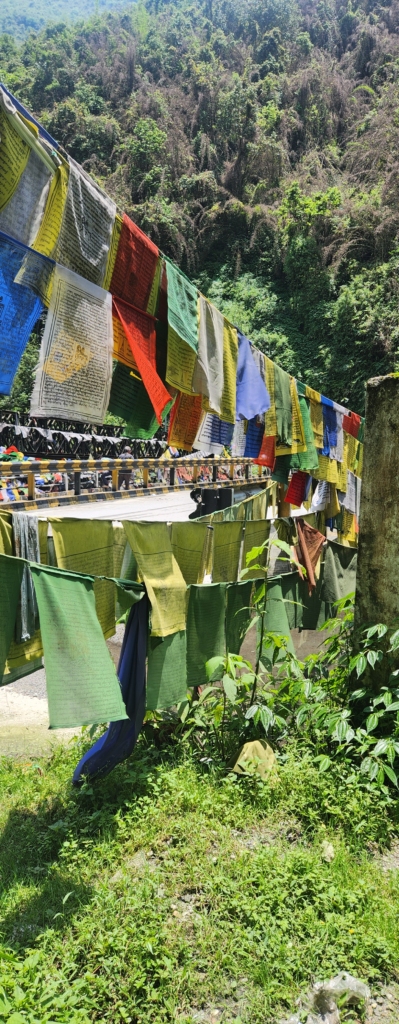
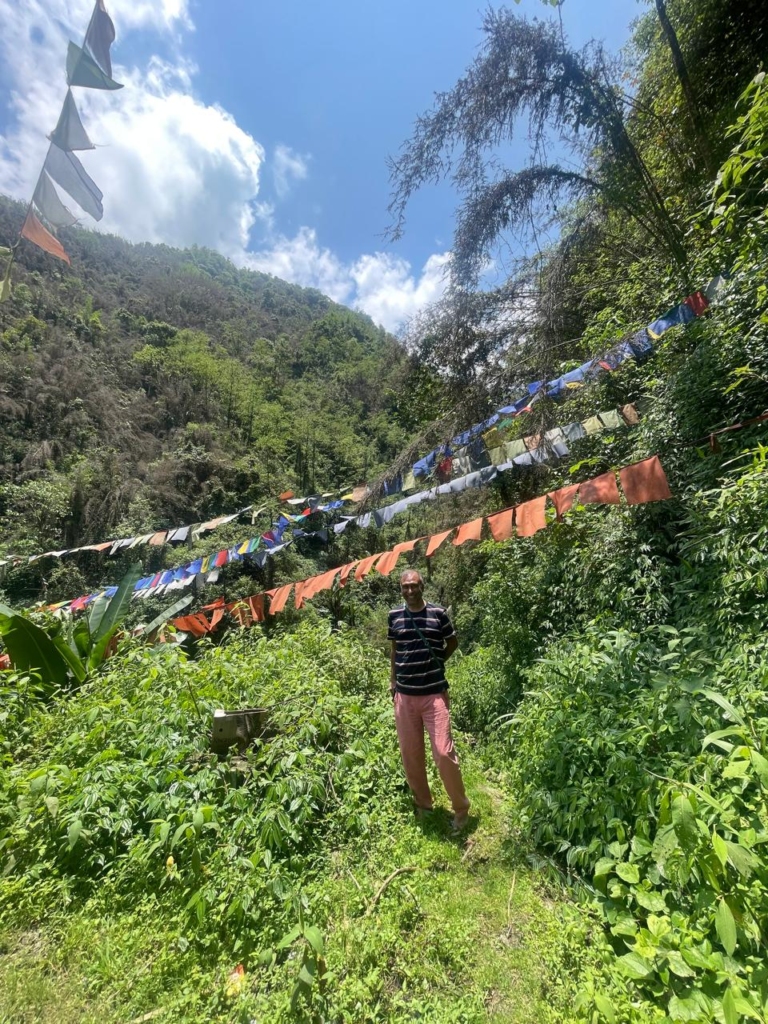
We passed by several tourist spots on the outskirts of Gangtok city, but opted not to explore them until we reached a small bridge adorned with Tibetan prayer flags. The colourful flags – blue for sky/space, white for air/wind, red for fire, green for water, and yellow for earth – against the serene backdrop made for a perfect photo opportunity. We were fortunate there were no other tourists around, allowing us to capture the essence of the moment undisturbed.

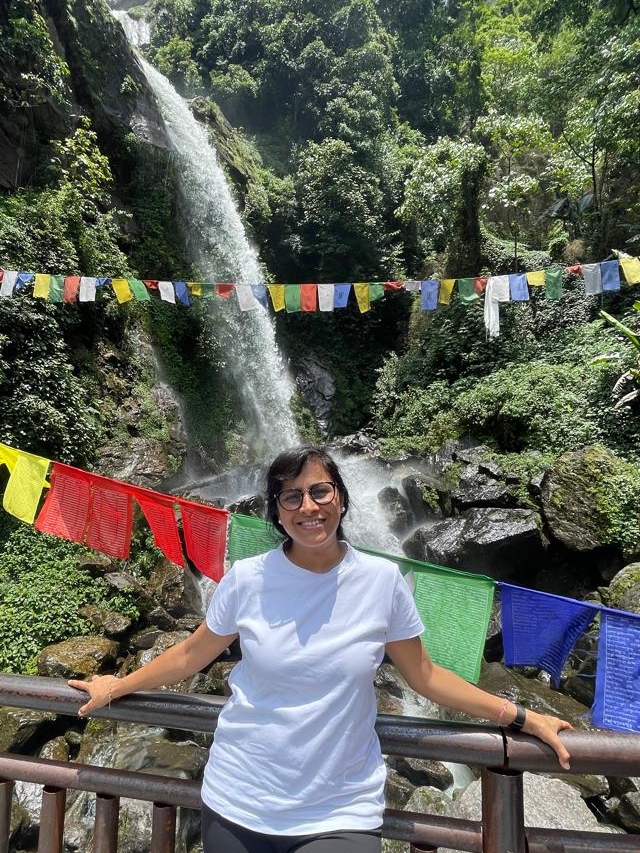
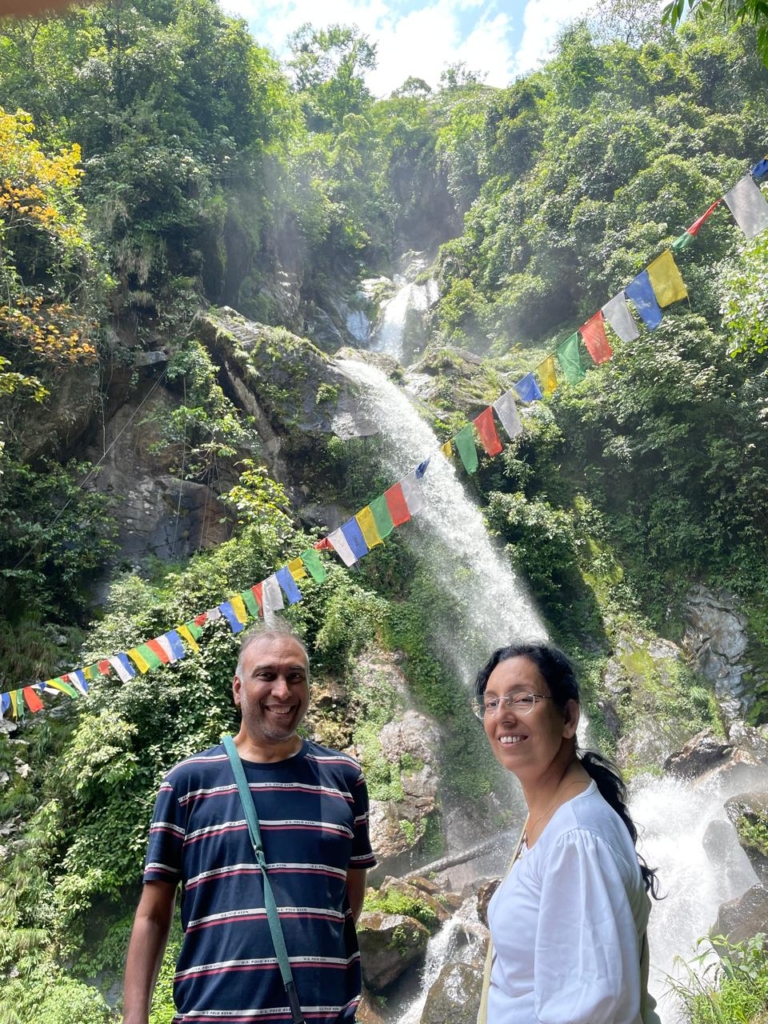
Seven Sisters Waterfall
Our next stop was the renowned “Seven Sisters” waterfall, where a crowd had already gathered. Rohit informed us that the waterfall derives its name from the seven different streams that cascade down the hills, though from our vantage point, we could only see a couple of these streams. Nonetheless, the sheer volume of water plunging down created a magnificent spectacle, accompanied by a powerful roar that resonated throughout the valley. Government efforts to enhance infrastructure promised future views of all seven streams and the valley from higher up the mountain.

Nearby shops sold intriguing candies made from a local fruit known as “lapsi” in Nepali or Nepali hog plum in English. Harvested between September and January, lapsi is dried and processed into sweet and sour candies and various home-made pickles. We sampled different varieties of dried lapsi from the local shops, savouring each unique flavour until there was none left.
Further along the journey, Rohit treated us to “churpi,” a hardened yak milk cheese resembling a rock the size of a dice. Known for its rock-like hardness, churpi can be kept in the mouth like chewing gum, gradually melting with saliva, although chewing it is nearly impossible. Personally, I never acquired a taste for it, but Rohit’s gesture amused MunMun. Maybe it was Rohit’s ploy to keep MunMun quiet for the remainder of the trip, which she naively succumbed to.
Tingchim
Later, as we passed through the small town of Tingchim, Rohit suddenly remembered a hidden trail and lake rumoured to be in the area. Intrigued, we agreed to explore it. Driving through the village, we were mesmerized by an unexpected sight – a pair of strikingly colourful turkeys crossing the road. It was my first time seeing turkeys up close; the male proudly flaunted his vibrant plumage while the female shyly disappeared into the bushes. The male proudly stood in the middle of the road possibly protecting her escape.


When we reached the end of the village road, we parked the car and set out on foot down a trail that led into the forest. Sikkim is known for its lush greenery, with over 70% of the state covered in forest, so stepping off the paved road often means stepping right into the woods. As we ventured deeper into the forest, we felt a bit uneasy, uncertain whether the lake we were seeking actually existed. We were relying solely on Rohit’s hearsay. Tazo confidently led the way through the forest. The forest was enchanting, its freshness invigorated by the melodious chirping of birds. MunMun was engrossed in identifying each flower by name, using her iPhone’s photo recognition feature, added a touch of curiosity to our journey. After a delightful ten-minute walk, we arrived at the lake, stunned by its hidden beauty. Few species of fish swam gracefully in its clear waters, captivating us with their tranquility.

To our surprise, a young boy sat on the far side of the lake, absorbed in his notepad. Introducing himself as Kuncho, the forest officer for the Mangan zone, he was peacefully taking notes until our arrival piqued his curiosity. He shared fascinating local lore about Tingchim Tsho, the sacred wishing lake dating back seven generations. According to Kuncho, the lake’s guardian spirit, Jom Tshering, is revered by locals during Bhutia New Year for granting wishes and bringing inner peace. Though not New Year, we joined Kuncho in paying our respects to Jom, appreciating the lake’s serene ambiance and mystical significance.


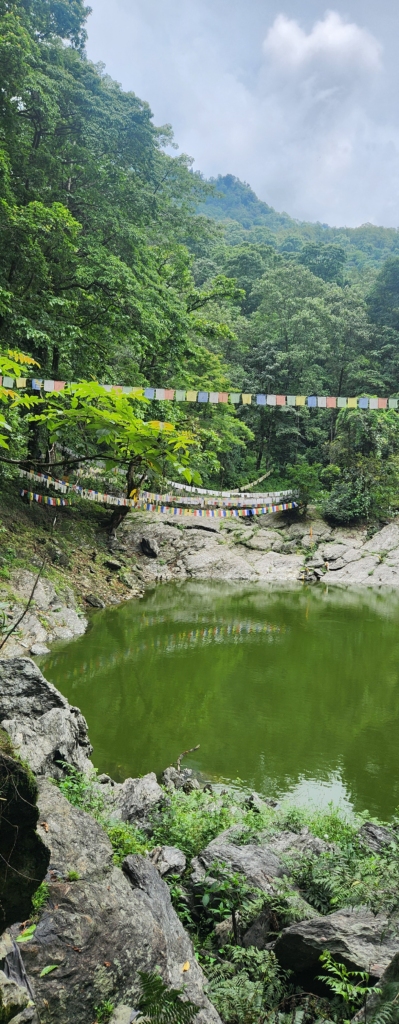

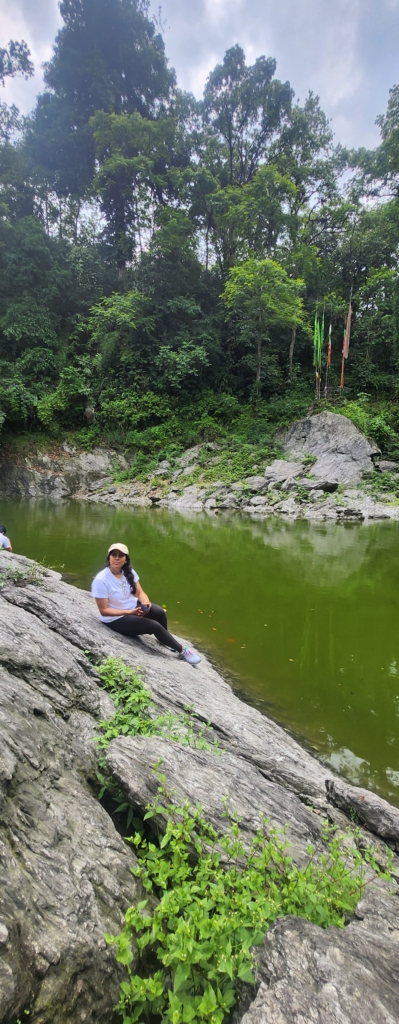


Kuncho guided us through the forest, sharing his knowledge about the local flora and fauna. He pointed out a curled fern, explaining that it is used by the locals to prepare a traditional vegetable dish. He also showed us the seeds of lapsi, a local fruit we had quickly become fond of. Kuncho mentioned that lapsi trees can be either male or female, and farmers often can’t distinguish between them until the trees mature. He noted that female trees tend to produce more fruit.


Dzongu
Our time with Kuncho eventually drew to a close as we had to continue our journey to Dzongu for lunch. Despite the short distance, we encountered delays at the Sangkalang check post due to heavy traffic. The main road to Lachung and Lachen had been severely damaged by heavy rains, making this bridge an essential alternate route. The fierce flow of the Teesta River beneath, flanked by dense mountains, provided a spectacular yet slightly intimidating backdrop. As per Google Maasi, our homestay was only 20 minutes away, yet we somehow found ourselves in an isolated, desolate area with no signs of human activity. Spotting a remote house by the road, Tazo bravely stepped out to inquire about directions. The house stood eerily vacant, even the stray dogs watching her in curious silence. With cautious optimism, we continued onward.
Along the road, the Tibetan prayer flags transitioned from short, colourful flags to long, white ones. Rohit explained that while the colourful flags were for the well-being of the current generation alive, the long white ones were meant as a homage to ancestors.
Suddenly, our phones picked up a mobile network signal, allowing us to coordinate with Sanjeev, the caretaker of our homestay at Dzongu. He was waiting for us further ahead. Our homestay, nestled deep within the jungle, remained unseen even when we were just a few meters away. Constructed primarily of wooden planks likely sourced from the surrounding farms, the homestay featured our room on the first floor, adjacent to the lounge and dining area. The backyard even boasted a couple of tents.
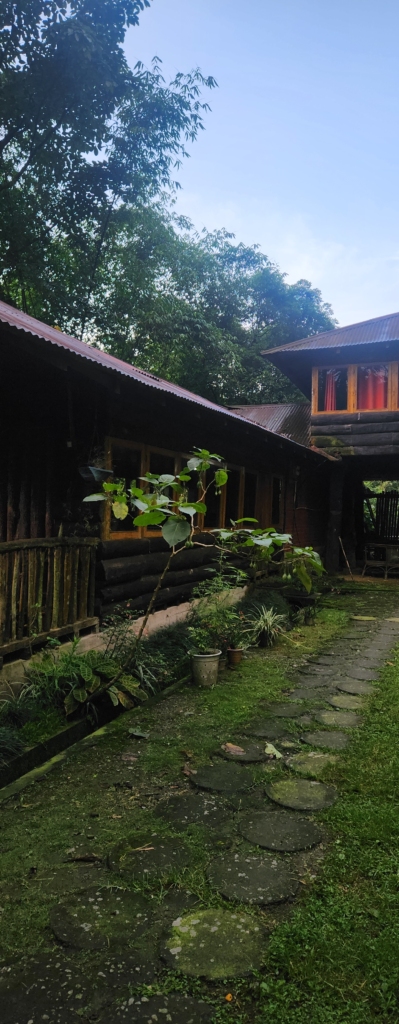


The location was simply captivating – a charming homestay set in serene environment, with perfect weather, and gracious staff, creating an overall atmosphere that surpassed even the most luxurious five-star properties could offer. Exhausted from the long day, we settled onto the balcony overlooking the dense forest, enjoying a bottle of wine while Tazo sipped her masala chai. Observing our wine, Sanjeev offered to arrange a local beer called “Tongba” for us the following day. We spent some time chatting and experimenting with low-light photography.



A young couple from Kolkata briefly joined us with their pet dog. They shared the heart warming story of rescuing and adopting their pet seven years ago from the streets of Lachen, during their return journey from Gurudongmar Lake. The dog, just three months old at the time, had survived despite the drastic weather changes between the two locations, serving as a testament to the power of love and affection in overcoming life’s challenges. We exchanged our travel stories. The girl had recently relocated from Delhi to Kolkata after her marriage, and inevitably, the topic of politics briefly crept into our conversation before dinner intervened and saved us from deeper debate.
Keepu, the young chef, had prepared a sumptuous dinner featuring an array of vegetables, dal, and hot chapatis. The local tomato chutney served alongside was tangy and delicious, prompting me to intend to take the recipe back home. Tazo and MunMun particularly enjoyed the chicken dish. Intrigued by the curled fern we had encountered in Tingchim, we showed the kitchen staff a photo and inquired if they could prepare it in the local style. Keepu explained that they would need to forage for ferns in the forest, as it wasn’t readily available in local markets. Although the team kindly offered to arrange a lunch session for us the following day by a nearby riverside, an offer we eagerly accepted.
Just before we retired for the night, Tazo suggested a game of cards. MunMun, feeling tired, decided to call it a night and went to bed. Tazo and I played a couple of rounds of rummy for about an hour. Since Tazo isn’t here to share her version, in a show of chivalry, I’ll declare that the game ended in a draw.
Day 6: Hee Gyathang Monastary & Lunch by “Teesta”
The next morning broke at 4 am again, but I opted to linger in bed for an extra hour while the girls remained fast asleep. By 5 am, unable to resist any longer, I drew open the curtains and windows. The weather was splendid, and birdsong filled the air in perfect harmony. Despite my attempts to rouse Tazo, it seemed she had come on this holiday primarily to sleep, or perhaps she was avoiding me after our rummy game. MunMun agreed to join me for a walk in the woods.
Hee Gyathang Monastary
The homestay was cloaked in utter silence. No staff or other guests were visible as we tip-toed out to explore the area. We followed the main road for a while, seeking an entry into the woods. Other than two affectionate creatures, Twitter and Pinky, there was no sign of civilization around. I made the mistake of reaching out to Twitter, who promptly leaped onto me, leaving muddy paw prints all over my t-shirt. Helplessly, I endured his playful antics while Pinky observed in silence. They accompanied us for a stretch, leading us aimlessly along the path to nowhere.


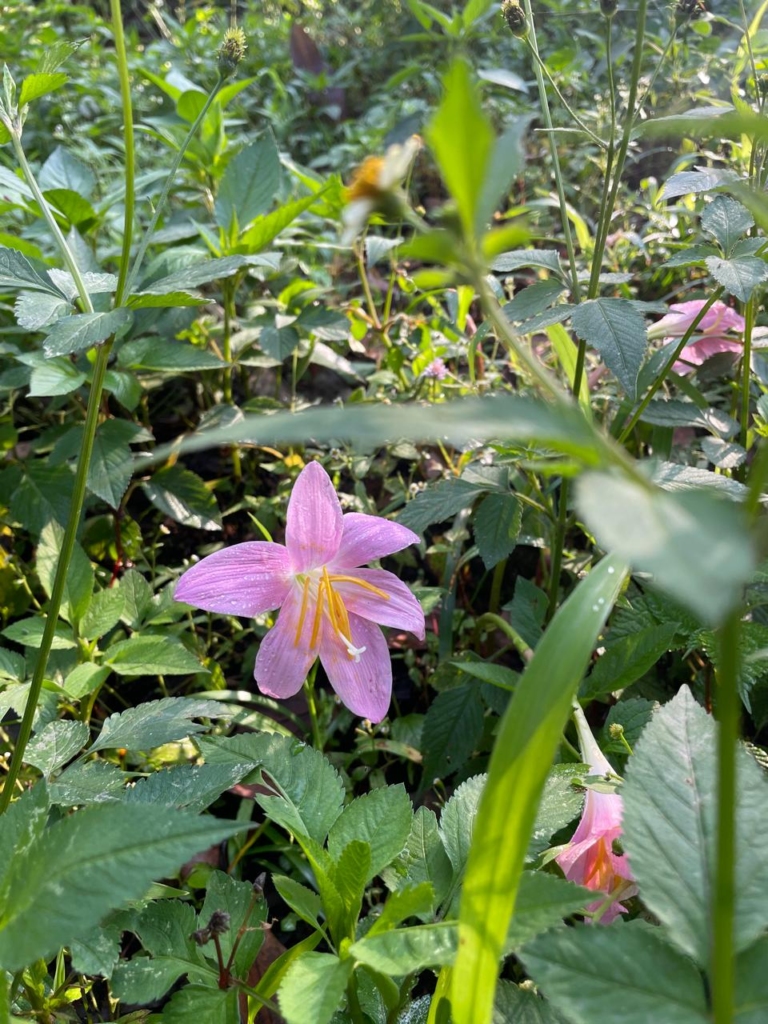
A little further along, we encountered a local collecting dry wood. He directed us to a nearby monastery, promising it was just a 5-minute walk away. We soon learned not to trust a mountain native’s estimation of distance – they possess energy levels and high altitude hill-walking abilities at least five times greater than ours. Nonetheless, the journey was stunning, with dense forests and unique plant life lining our path. Twitter and Pinky eventually left us to explore on our own, knowing the walk was far from a mere 5 minutes. As we paused to catch our breath, we marvelled at the intricate details of each plant and flower. It’s unfortunate that photographs and videos can’t capture the full essence of such experiences. As MunMun and I trekked through the dense forest in search of the monastery, we shared memories and deepened our friendship through personal revelations.


As we trekked along and gained altitudes, our body temperature rose steadily, and while I was dressed in a plain t-shirt, MunMun had on a duffle jacket. The climb became increasingly strenuous, prompting her to leave the jacket by the forest trail behind to retrieve later. After 30 minutes of walking, we finally glimpsed the monastery, a moment of immense relief and renewed energy. In our excitement, we missed the staircase and opted for a rugged ascent. MunMun took the lead, extending her hand to help pull me up. Mid-way we soon realized not all monks would necessarily follow this same arduous path daily. Nevertheless, we made it to the top – a beautiful, deserted monastery greeted us. It puzzled me why all the monasteries seemed abandoned during our trip; where did all the monks go? This mystery lingered in my mind.


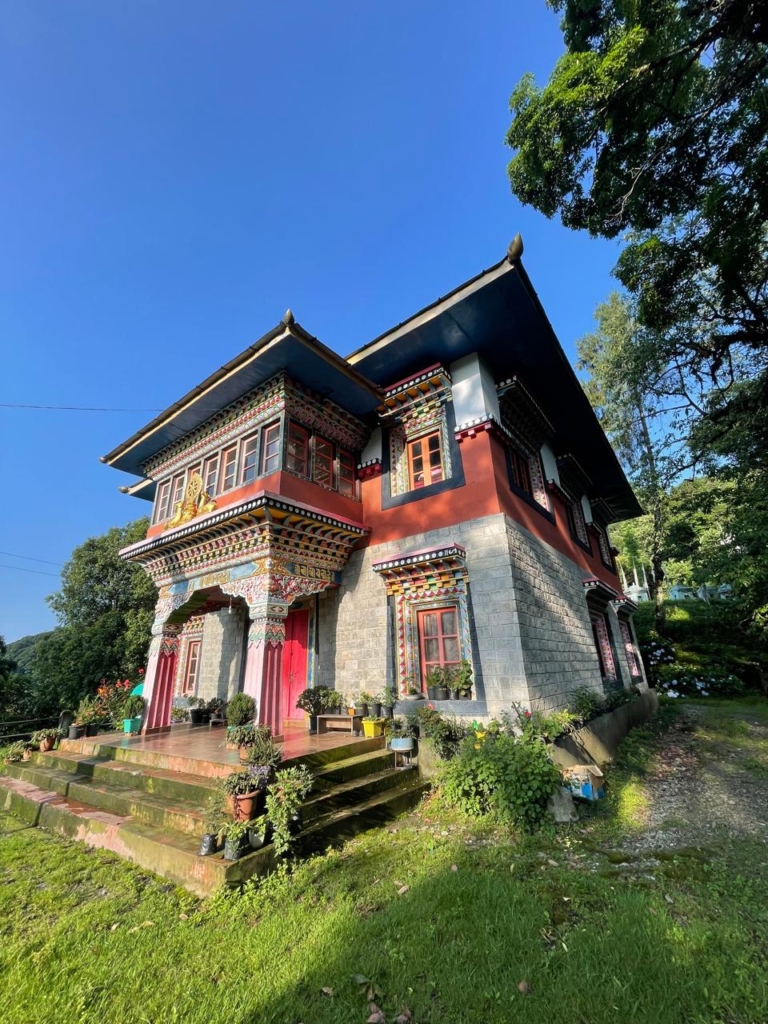
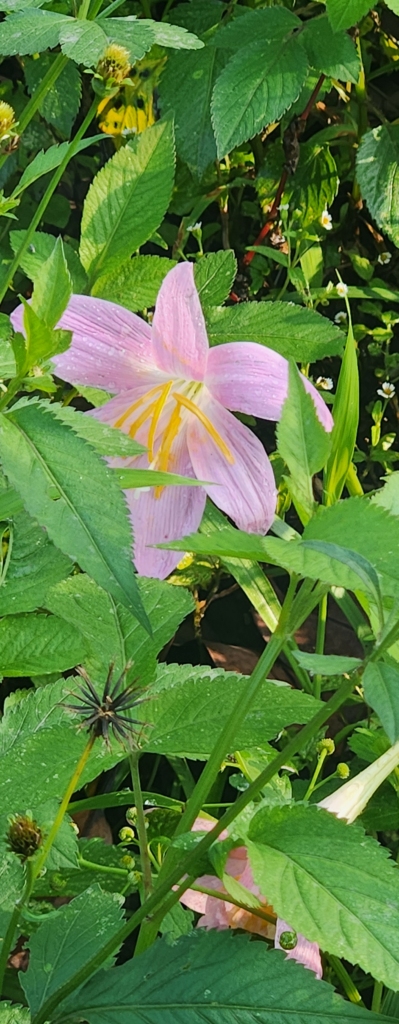
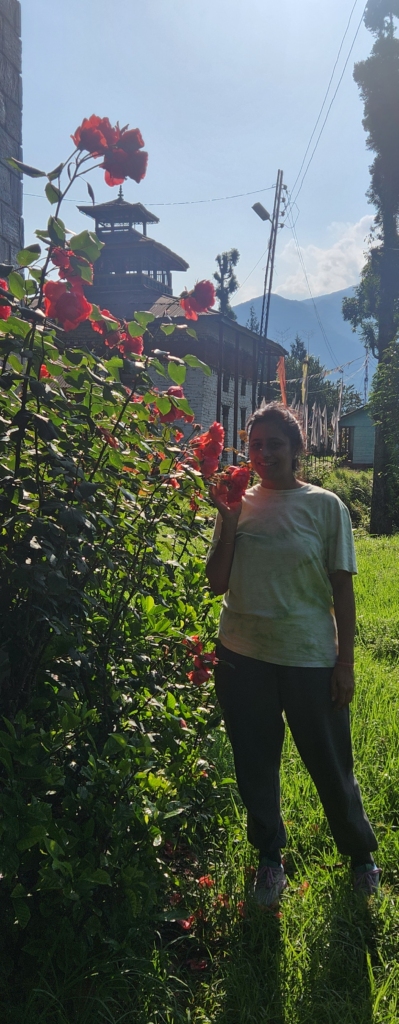
Exploring the adjoining garden, we discovered a delightful array of hydrangea plants in full bloom, which MunMun adored along with the roses. Clearly, someone tended to these plants regularly, as they were impeccably groomed and thriving.

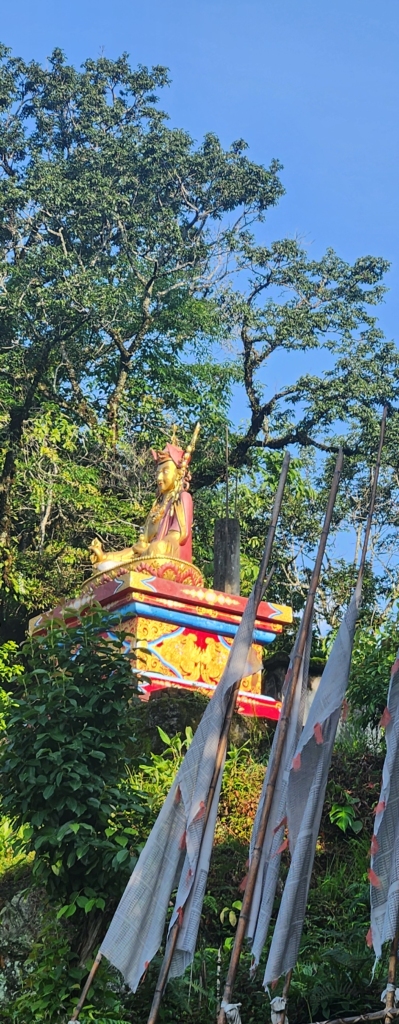

A small path led us further upward, where we found a statue of Lord Buddha and a meditation spot for the monks. MunMun took the rugged path while I opted for the stairs. As we sat at the summit, a multitude of birds in vibrant hues – crimson red, kingfisher blue, and more – darted among the trees, their calls echoing through the air. It was a dazzling display of colour and sound against the majestic backdrop of the Himalayan mountains. Immersed in the moment, we counted our blessings and revelled in nature’s beauty.

There was still a trail continuing upward into the dense forest, but after following it for a while, both of us grew apprehensive as it narrowed and delved deeper into the dense forest. We decided it was prudent to turn back and return to the homestay, concerned about causing worry over our prolonged absence. However, upon our return, no one seemed alarmed by our delayed return.


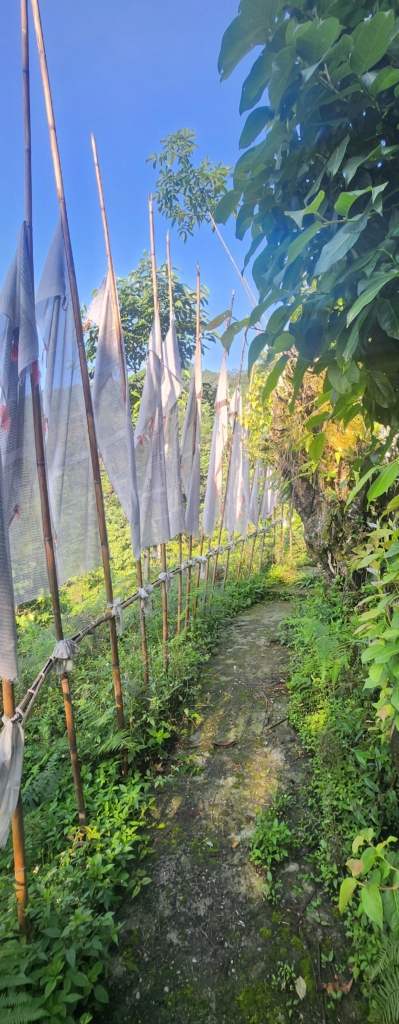

Fortunately, on our way back, we retrieved MunMun’s jacket right where she had left it.
The descent was swifter, and Twitter and Pinky eagerly awaited our return. We played with them for a while before they decided to escort us back to the homestay.
The neighbourhood gradually came to life, with more locals engaged in their morning routines.
Back at the homestay, we found Tazo seated in the balcony with her laptop, sipping her masala chai. MunMun and I ordered our green tea and black coffee respectively, knowing breakfast was still an hour away.
Rising between 4 am to 5 am stretched the day long, and time crawled at a snail’s pace. I had initially anticipated that our return from the monastery adventure would seamlessly lead us to the breakfast table.
Lunch by “Teesta”
We utilized the time to freshen up, and still had ample opportunity to tease Tazo before breakfast. The caretaker informed us that we’d depart by 11 am for a riverside lunch, where they planned to cook everything on the spot. Excitement built among us at the prospect. The drive to our secluded spot alongside the river, nestled within a dense pine forest, was a mere 15-minute journey from our homestay. The other two couples who were also guests at the homestay would join us. True to plan, we set off promptly at 11 am, loading the car with supplies and ourselves. Twitter and Pinky, tails wagging, watched curiously, pondering our intentions. A brief off-road detour led us to our destination – the river. The staff crew set up their makeshift kitchen on a levelled area.


The river flowed swiftly down the mountain slopes, its currents gathering strength, while intermittent rocks created fascinating rapids. Fed by distant melting glaciers, the river’s waters were icy cold. The entire setting was therapeutic, a perfect blend of serene surroundings and good company. We were fortunate that the weather held up; the sun intermittently pierced through the clouds. The river flowed carelessly, the mountains provided necessary shade, and birdsong provided a harmonious backdrop. The crystalline effect of the sun’s rays on the water, the melodic flow of the river, and the birds’ chirping combined to create a celestial atmosphere, engulfing mind and body in profound peace. It was an experience that immersed you wholly in its serenity.
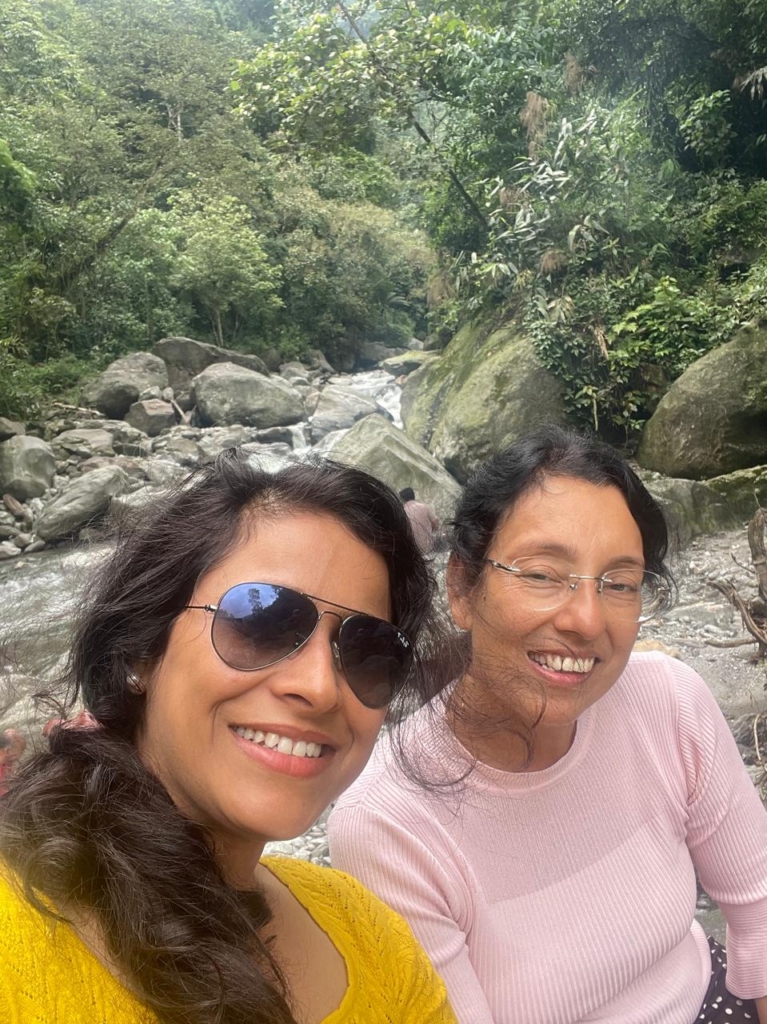
MunMun, Tazo, and I found a comfortable rock to settle on, dipping our legs into the river to enjoy the soothing melody of the Teesta tributary. We cautiously acclimatized to the cold water, submerging one leg before the other. The icy river water instantly awakened our senses, dispelling all traces of fatigue from body and mind. The cool breeze mingled with the river’s melody, creating a symphony of nature’s own.
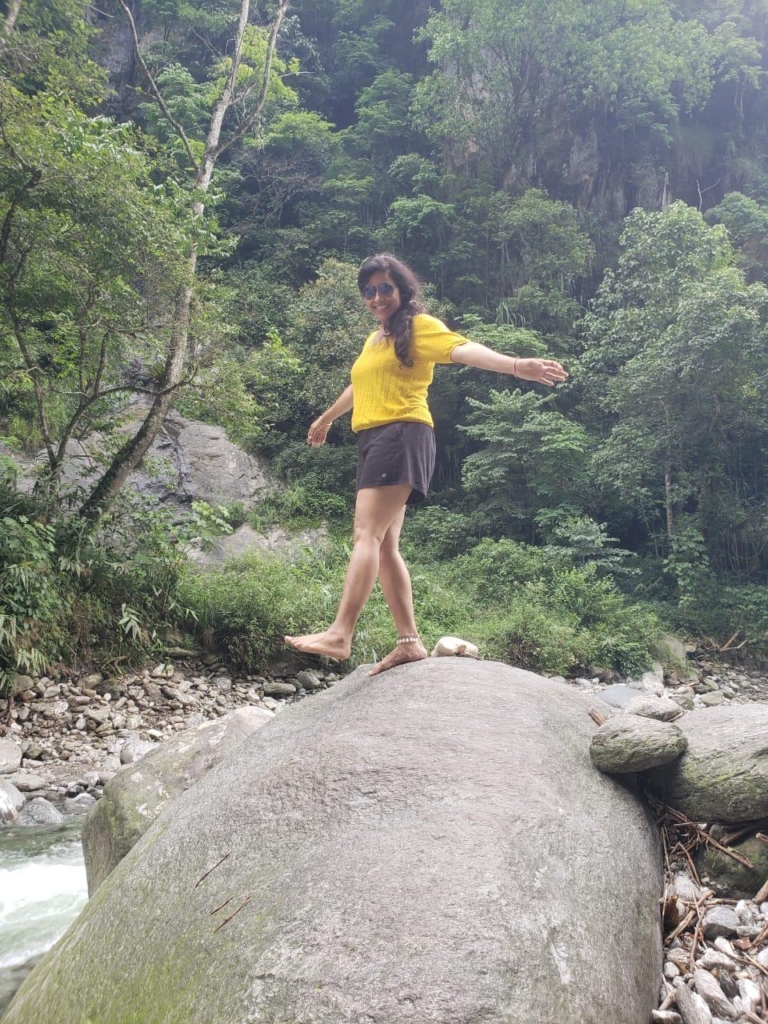


MunMun expressed a desire to take a dip, but we dissuaded her due to the strong river current. Nonetheless, the playful flow had created small pond-like structures between large rocks, where the other couples ventured in for a refreshing splash. The thrill of the river’s rushing waters against the stones awakened a childlike excitement within us. As we sat on the rocks, engaged in silent communion with the river, we found ourselves attaining a state of “nirvana” effortlessly – a perfect therapy for inner peace. We felt our minds melding with the natural world, our souls refreshed by the verdant tranquillity. It was an exquisite amalgamation of river, hills, and woods – the untouched, unseen beauty of Sikkim.


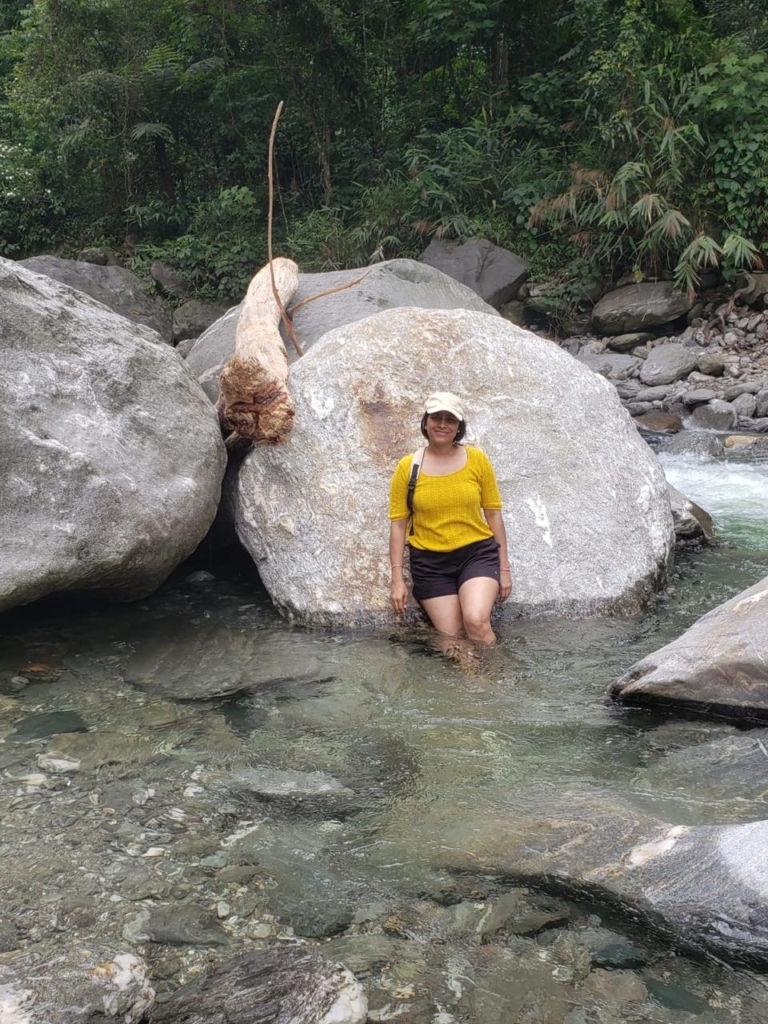
Meanwhile, instead of bathing in the river, MunMun opted to stand in waters, soaking in the lush green surroundings. Ultimately, MunMun found a perfect boulder and drifted into a peaceful slumber. She may not have had the world’s best bed, but the river’s lullaby ensured she enjoyed a perfect sleep in no time.
Sanjeev shared that spending an evening on the riverbanks during a full moon night would be a once-in-a-lifetime experience. He painted a vivid picture of the moonlight filtering through the pine tree branches, teleporting me momentarily to that ethereal setting.

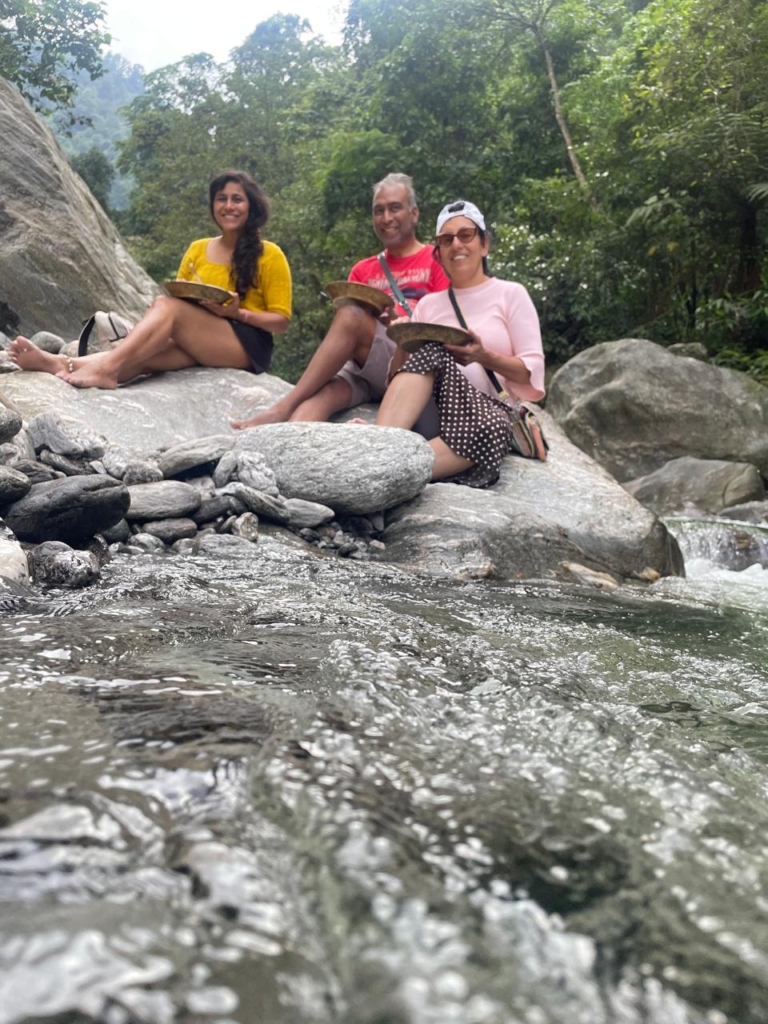
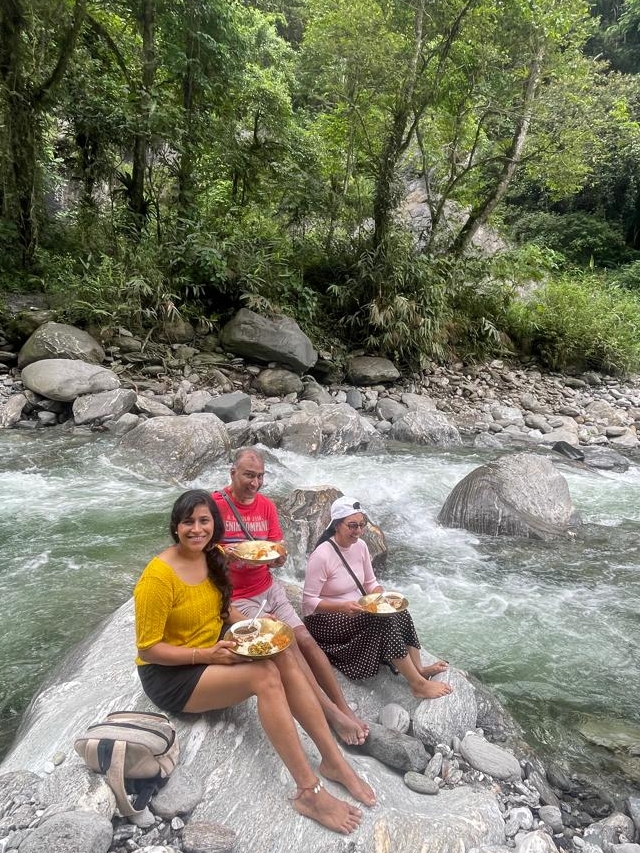
The staff had prepared a delicious lunch for us, and their thoughtfulness extended to bringing brass plates, bowls, and spoons. They had taken care of every detail, ensuring everything was perfect. Tempted to dine quickly and leave MunMun sleeping behind, Tazo’s compassionate heart prevailed, and she woke her up. While a beer would have been ideal, we managed without one, opting to drink water straight from the river using the bowls. I’m certain we received a healthy dose of minerals along with it. We offered a round of applause and three cheers to the staff for their hard work, ensuring a truly memorable lunch session.

Back at the homestay, we were disappointed to learn that “Tongba” couldn’t be arranged due to it being out of stock – a not uncommon scenario given the delightful weather. Later, at Chimney, I discovered just how elaborate the preparation of Tongba was. We relaxed on the balcony with our respective tea blends.
As we lounged and chatted, Rohit unexpectedly requested an early departure the next morning to accommodate another booking. The sudden change in plans meant we had to rework our itinerary. Since we were arriving in Gangtok earlier than expected, we decided to spend only a couple of hours there instead of staying overnight. This allowed me to visit my cousins in Gangtok before heading to Chimney, our final destination.
We had to coordinate our stay and travel arrangements from Gangtok. Fortunately, MunMun found a charming place to stay close to our Chimney homestay for the interim. However, we soon discovered that finding a taxi with a West Bengal number plate to travel from Gangtok to Chimney was proving to be an impossible task – a nuisance that both State Governments should address for the convenience of tourists. Local taxi operators often exploited the situation, quoting exorbitant fares and offering unreliable service. Finally, Ashik, helped us to secure a taxi driver willing to pick us up from Rangpo, with Rohit agreeing to drop us there. The whole process drained us considerably. Sorting out stay and travel arrangements wouldn’t have been so nerve-wracking if I hadn’t been accompanied by two beautiful girls with brains. But as they say, “all’s well that ends well”.
As we finalized our next day plans, a group of 6-7 boys from Mumbai checked in, adding to the bustling atmosphere. They were in Sikkim for a couple of days following a 20-day road trip to Meghalaya. I was impressed by their enthusiasm and stamina to complete such an extensive journey. During our conversation, we discovered they too had been left stranded by their taxi driver after dropping them at the homestay. One of them was busy on the phone, arranging their airport drop from Dzongu, thankfully with a two-day notice – clearly they had more time than Rohit had given us.
Keepu couldn’t locate the curly ferns for dinner. We settled for a light meal before retiring early to bed, knowing an early start awaited us the next morning.
Day 7 – 9: Darjeeling: Romancing with “Queen of Hills” & Shopping (Read More)
Gallery





Sukumar Jain, a Mumbai-based finance professional with global experience, is also a passionate traveler, wildlife enthusiast, and an aficionado of Indian culture. Alongside his career, which includes diverse roles in international banking and finance, he's working on a wildlife coffee table book and enjoys sculpture and pottery. His interests span reading non-fiction to engaging in social and global networking.