Day 9: Bangus Valley – Read More
Day 10: Langait – Limber Wildlife Sanctuary (via Baramulla)
About 50 km. / 2 hr.
Danish was never much of a morning person, and today, I found myself indulging in a lazy start as well, lounging on my king-sized walnut bed. In a bid to shake off my lethargy, I video-called my friend, who happened to be traveling through Bhutan at the time. My goal was simple: to flaunt the breathtaking beauty of Langait from my bedroom. “Who goes to Bhutan for work?” I teased. Despite my attempts at humour, a familiar pang of longing for my life back in Mumbai crept in – the family, the friends, the comforts of home.
The cook had already prepared breakfast along with a steaming cup of Lipton tea as we geared up for what would be the final destination of my journey: Limber Wildlife Sanctuary. Just before we set off, I had the impulsive idea of squeezing in a quick detour to Bada Bangus Valley. But Danish, less enthusiastic, shot down the suggestion with a subtle reminder of our previous misadventures trying to find our cottage in Langait. “Your accommodations”, he said with a wry grin, “seem to be in the most ‘out-of-the-world’ places. We practically have to hunt them down”. Given that our stay at Limber was also in a forest, Danish wanted no further risks, though this time, we had established contact with the caretaker, Fareed Khan.
As we left Langait behind, I called Mr. Aslam, our generous host, to thank him for his hospitality. We dropped off our caretaker and Mr. Bhat along the way, and with a heavy heart, I realized I was departing Langait with a wealth of cherished memories – moments filled with love, warmth, and laughter to treasure for years.
Baramulla
According to “Google Maasi” (as we humorously dubbed it), the drive from Langait to Limber was just about two hours. Soon, we found ourselves rolling into the historic city of Baramulla, a city shaped by the flow of the mighty Jhelum River. This river, a key part of the Indus Water Treaty, is fed by the Kishanganga rivers near Muzaffarabad in POK.
Baramulla had once been at the heart of a fierce battle for Kashmir during the Pakistani-sponsored aggression post-independence.
I was reminded of the militants who, while en route to capture Srinagar, were delayed by their greed, looting Baramulla and giving the Indian Army the crucial time it needed to reach the capital. The sacrifices of Baramulla’s people had undoubtedly saved the valley from falling into enemy hands.
Driving through the narrow lanes of old Baramulla, I couldn’t help but feel a sense of disillusionment. The old town seemed trapped in time, the structures reflecting the historic struggle. Danish noted that the newer, more developed part of the city lay on the other side of the Jhelum.
As we passed the city’s outskirts, we found ourselves amid rows of parked trucks. I was curious – there wasn’t any apparent agricultural or industrial activity to justify so many trucks. Danish explained that this region supplied large quantities of gypsum across India, with mining operations tucked away in the nearby mountains.
Not far along, we saw signs for Eco-Park. Danish chuckled and commented that it was a popular spot for the city’s unmarried, lovey-dovey couples. “Did you ever bring your ex-girlfriend here?” I teased. He laughed, and we watched as young boys recklessly zipped past on motorbikes, their girlfriends riding pillion. The thrill of youth – something I could relate to once but now found slightly amusing as an adult.
Limber Wildlife Sanctuary
Approaching Limber, the playful mood gave way to the serious task of locating our cottage. Fareed had provided general directions, but navigating these rural roads proved challenging, especially with the village seemingly in a midday slumber. It was reminiscent of our earlier misadventures in Kalaroos, and I wasn’t in the mood for yet another search. Though Fareed’s directions were vague – likely due to the lack of landmarks – I couldn’t blame him entirely. We crawled along the bumpy road, the path ahead looking more like a road to nowhere than an entry to our destination.
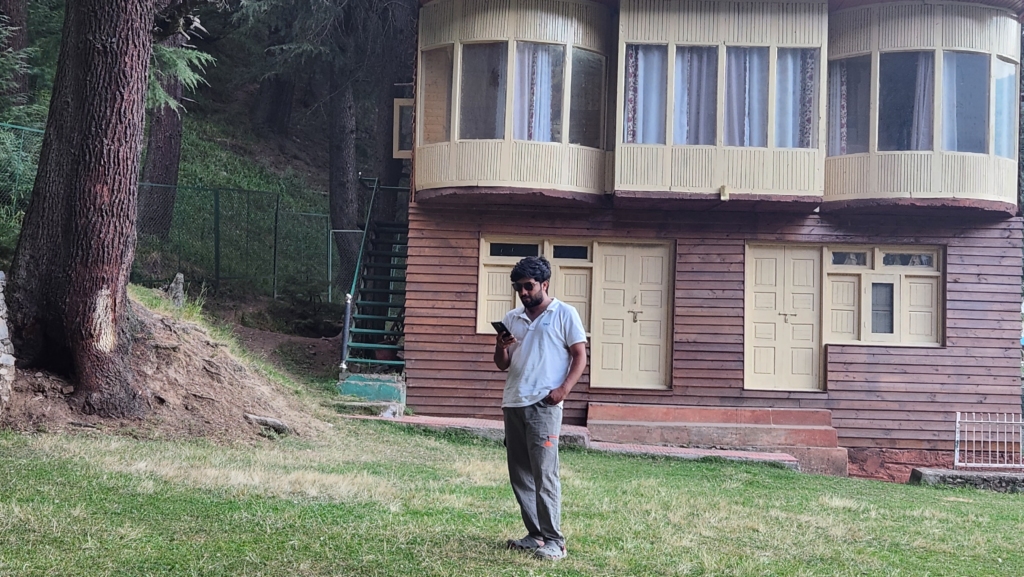
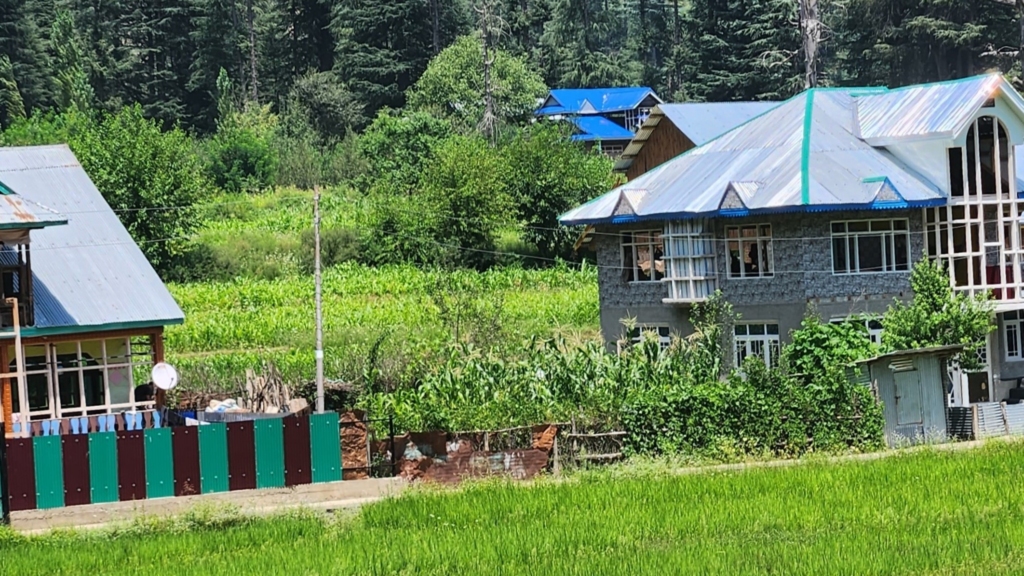
Just when we were beginning to doubt ourselves, a small vehicle emerged in the distance. We flagged down the driver and asked him to speak with Fareed for confirmation. With his help, we sped off confidently, only to realize we had shot right past our cottage! Fareed must have had quite the laugh watching us zoom by. When we eventually looped back, we found Fareed waiting, waving us down as we approached. Finally, with a sigh of relief and a shared laugh, we arrived at Limber Wildlife Sanctuary – our adventure was far from over, but at least for now, we had found our way.
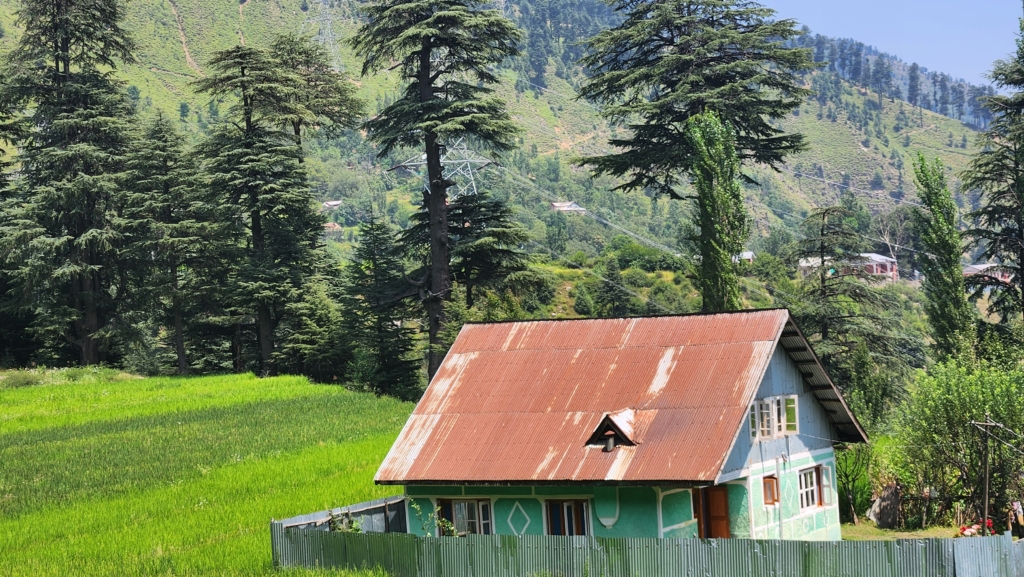
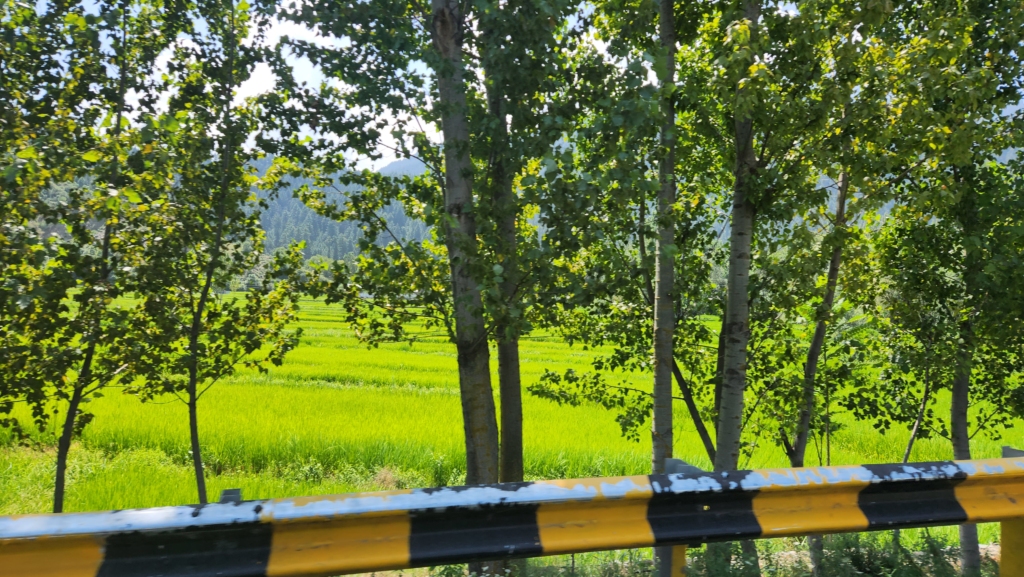
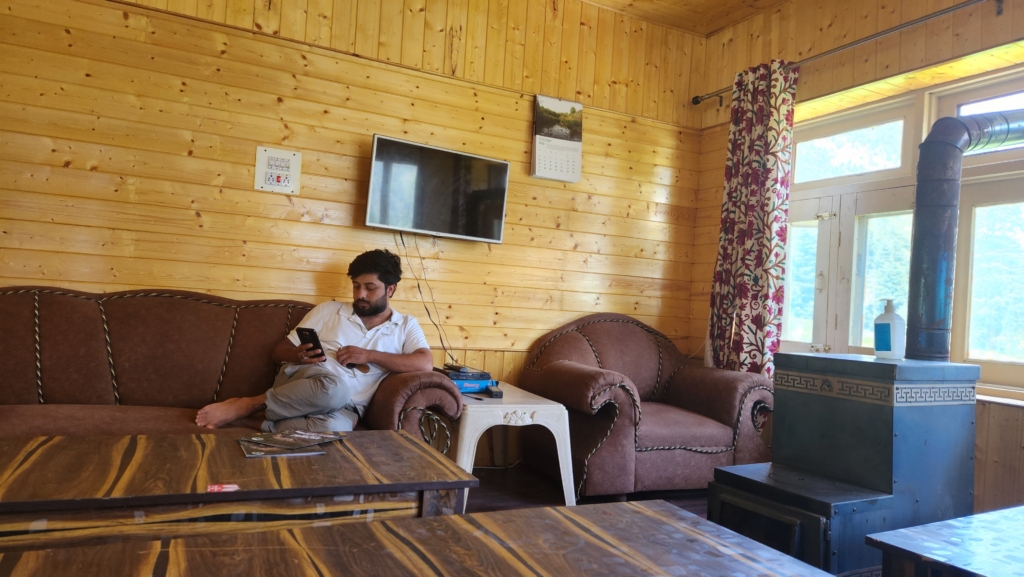
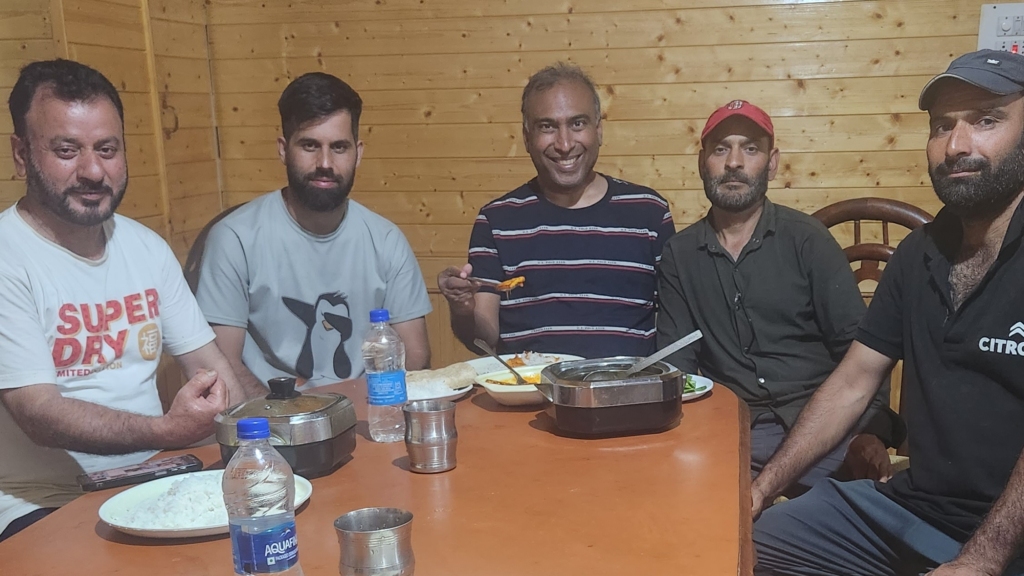
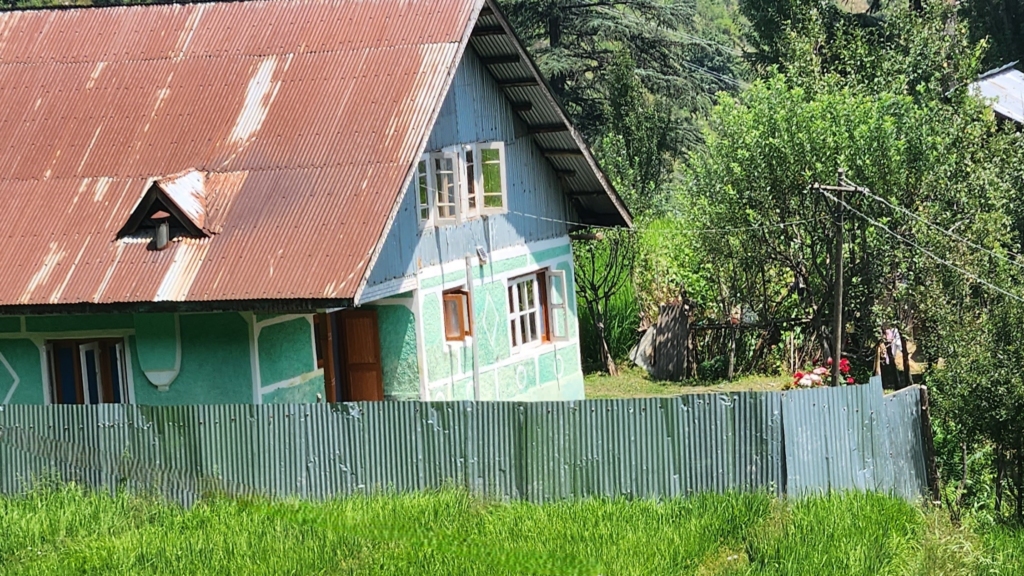
Nestled in a quaint corner of the hills, the cottage where we stayed had a serene charm. On the first floor, there was a cozy living and dining area, flanked by two modest bedrooms. The living room had a provision for “bhukari” (traditional wood stove) for harsh winter. Downstairs, a small office space shared the floor with a functional kitchen and quarters for the staff. Though we had arrived well past lunchtime, our gracious host, Fareed Khan, laid out a satisfying meal. We relished it while seated in the living room. With large windows offering an uninterrupted view of the vibrant paddy fields below. These lush fields stretched out toward the mountains, and just beyond lay a small, picturesque village, home to only a handful of charming houses.
A door at the back of the living room led to a staircase descending into a garden, which was a delightful retreat in itself. The garden, teeming with life, rested on the cusp of a dense forest. A narrow, winding trail snaked its way through the woods, leading to a treehouse cabin. Fareed offered to serve our evening tea there, promising a magical setting among the trees. I could already imagine the tranquil scene, but for the moment, I chose to settle on a garden bench, taking in the tranquillity of the space.
Soon, the garden was filled with the laughter of village children who had wandered over, drawn by their evening routine of play. We shared a few games, and even though words like “Hello” and “Bye” seemed foreign to them, their innocent joy spoke louder than any language barrier. Being surrounded by their boundless energy was refreshing, a reminder of life’s simpler joys. As we sat under the late afternoon sky, a young forest officer named Aslam joined us.
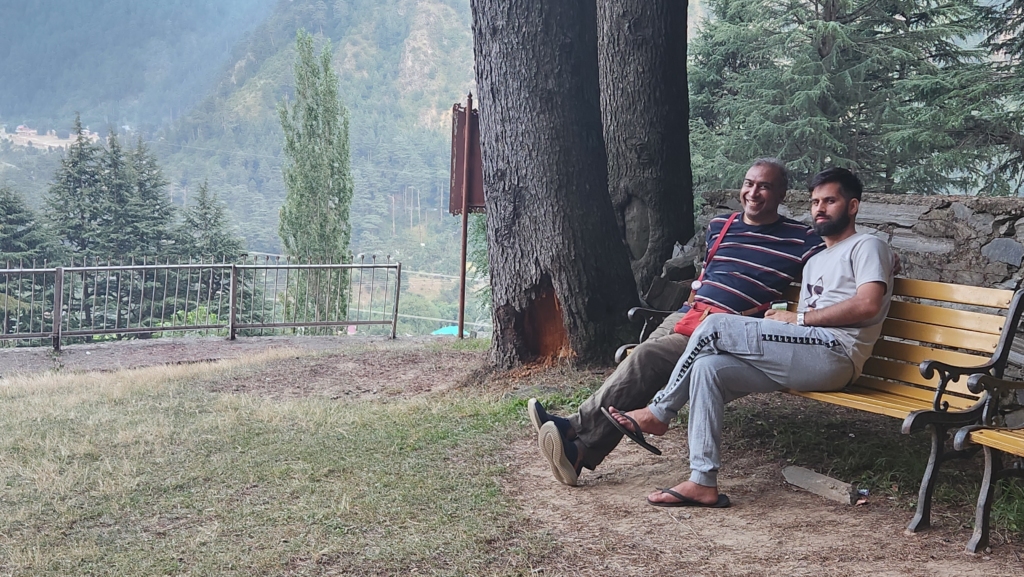
Aslam was in his early thirties, with a calm yet determined demeanour. Over pleasantries, Aslam shared his unlikely journey – though he had studied history, the forest had called to him, a pull he couldn’t resist. His father, a respected senior forest officer, had influenced him deeply through countless dinner-table conversations about the wilderness. Unlike his four siblings, who had pursued other careers, Aslam had embraced the forest. Yet, despite his passion, he faced the challenge of not yet being confirmed as a permanent employee. His low income weighed on him as he tried to support his small family – just him and his wife. Still, his zest for life was undeniable, and I admired his resilience.
Aslam had ventured into other pursuits to make ends meet. He had leased a small apple orchard, was working on a homestay project in Limber’s buffer zone, and even dabbled in movie scriptwriting. His energy was infectious, and when he promised to narrate one of his scripts over drinks, I was intrigued. Startled by the thought of an impromptu drinking session, I raised an eyebrow, but Aslam laughed, clarifying that he meant a cold Coke, not alcohol. Even more intriguing, he hinted that the story of how he met his wife was far more fascinating, promising to share it over those chilled drinks!
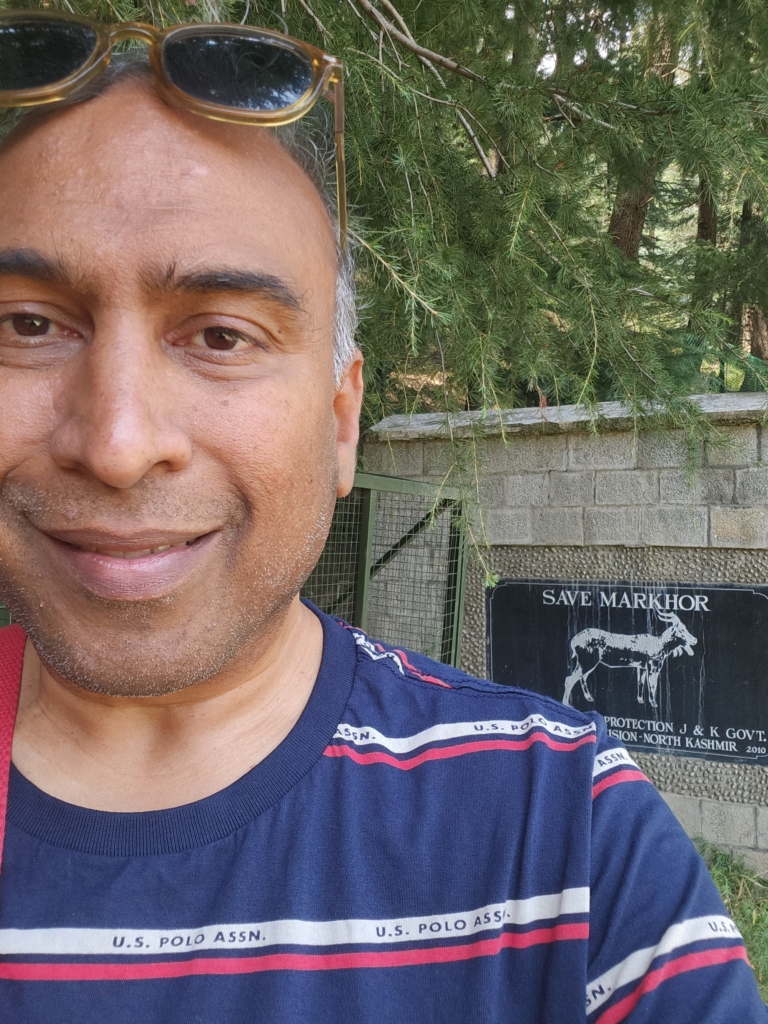
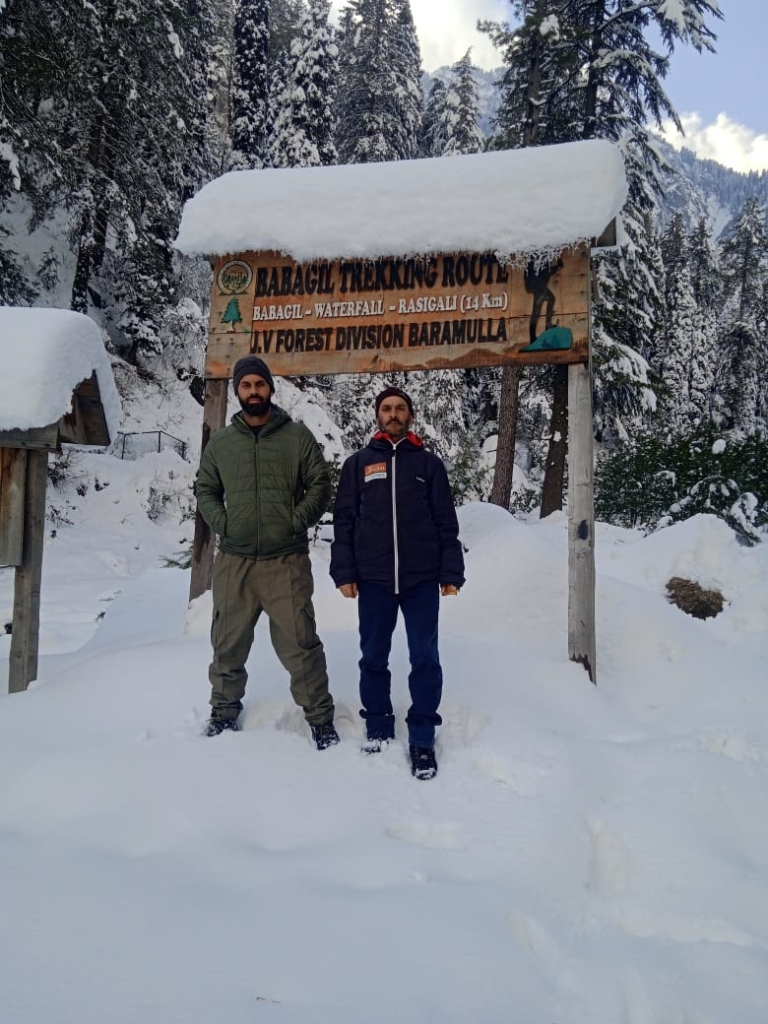
Later, Aslam suggested we explore the Limber forest. He said that Limber and Lachipora Wildlife Sanctuaries are part of Kazinag National Park and focuses the attention towards conserving the rare Markhor wild goat. The National Park runs across the LOC.
Later, Aslam suggested we explore the Limber forest. With a few more companions in tow, we set off. The journey led us to a security check-post – border regions are closely monitored here, and even with a forest officer in our group, entry was not a given.
We were allowed to proceed under strict conditions: we had to return within an hour, submit our ID cards, and leave our mobile phones behind at the check-post. We complied, eager to enter the heart of the forest.
While we waited for security clearance, a group of school children, dressed in crisp uniforms, began trickling out of the nearby village school. Spotting our SUV, a group of boys excitedly asked for a ride to their village. Before I knew it, eight tall boys, full of energy, had squeezed themselves into the already crowded backseat. It was a sight to behold – how they fit, I’ll never know! Their joy was palpable as we drove along the rough, winding road toward their village, a journey that would have taken them at least an hour on foot. Watching them scramble out of the car brought back memories of my own childhood – those carefree days, long gone but still cherished. But those memories are for another day. Here, surrounded by the wild beauty of the forest and the quiet joy of village life, I felt at peace.
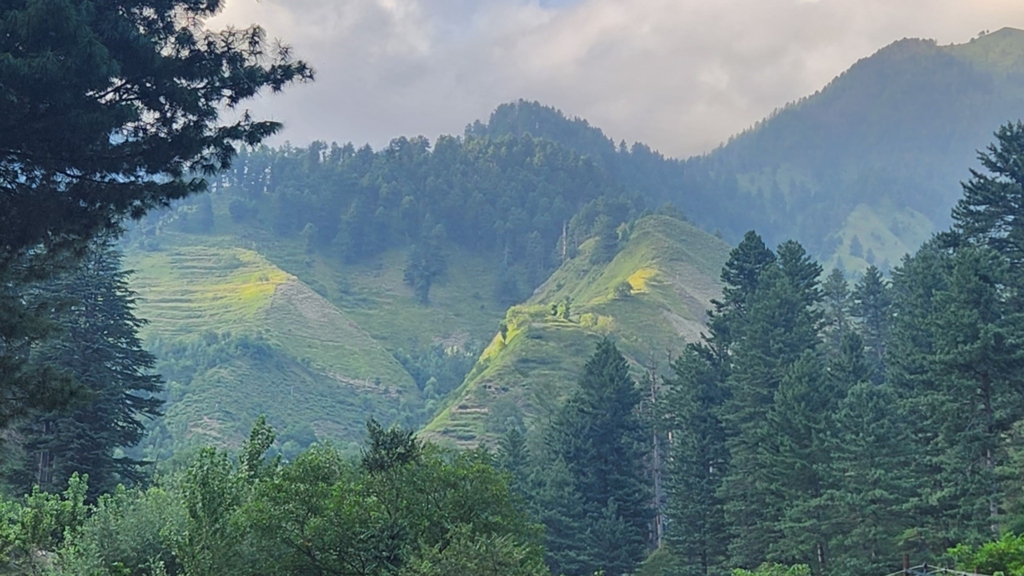
At the end of the winding road, we left the comfort of the car behind and set out on a narrow foot trail that snaked its way through the heart of the forest. Aslam, brimming with excitement, wanted to show me a slice of life in one of the remotest corners of India. His passion for the forest was palpable – this wasn’t just a job for him, it was his kingdom. I could see a bit of Mowgli in him, the grown-up version who had found his place amidst the wild. He spoke with pride about the flora and fauna as if each tree and creature were under his care. At one point, he mentioned a hidden waterfall, which was a two-hour hike away, but we were on a tight schedule with only an hour to spare before we had to return.
The trail led us through two small villages nestled on opposite slopes of the mountain, separated by caste and tribe. I found it strange that such divisions still existed, but Aslam shrugged, “They live in peace, that’s what matters”. The forest department’s role, he explained, wasn’t just to protect wildlife but also to teach these communities to coexist with nature. The villagers’ biggest nuisance was the “big bad black bear” that frequently ventured down to raid their chickens and destroy kitchen gardens. It was a constant battle to safeguard their crops.
We soon reached a peaceful spot where a small stream crossed our path. We sat there for a while, just soaking in the tranquil beauty of the place. Snow-capped peaks shimmered in the distance, framed by green slopes – a sight that was pure bliss for the soul. Unfortunately, we had left our mobile phones behind, but perhaps it was better that way. Some moments are meant to be simply lived, not photographed.
The villagers had a deep respect for the forest personnel, who were often their first line of defence against wildlife. A pre-arranged system of signals was in place to summon help in emergencies. One of the villagers even invited us for namkeen chai at his home, which sat at a vantage point offering a panoramic view of the distant Himalayan range. It was a stunning sight. After a quick 15 minutes of conversation and tea, we thanked our host and made our way back, retrieving our belongings from the check-post as we left.
As we drove back, Aslam suddenly pointed to a spot in the distance, his voice filled with excitement. “That’s where I’m going to build my homestay,” he declared. The project was still in its early stages, but his eyes sparkled with hope and ambition.
Approvals, finances, and time constraints loomed large over his dream, but I could tell that Aslam was determined. I promised him I’d be his first guest when it was ready.
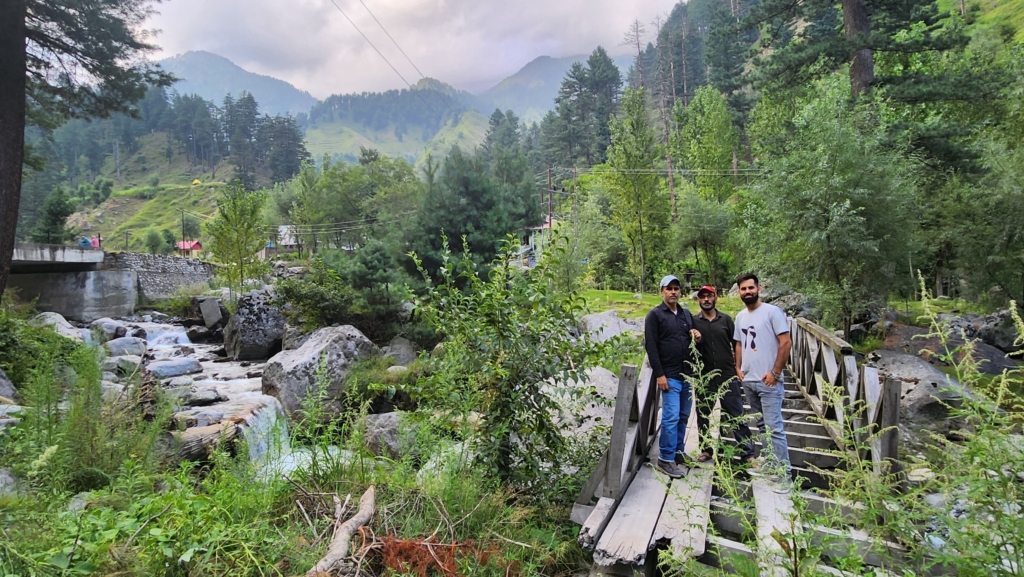
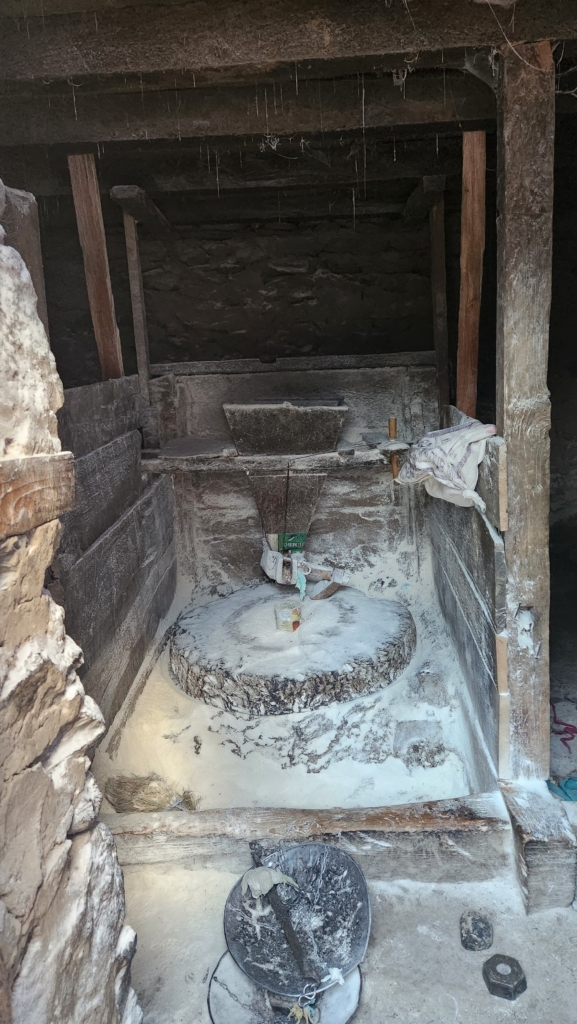
Aslam asked to pull over the car near a small village, eager to show us an old panchaki – a water flour-mill. Though I had seen one before on my trip to Himachal, I wasn’t about to dampen his enthusiasm. We crossed a rickety wooden bridge, some planks missing, swaying as we walked. The village, like many we had seen, was a small cluster of 8-10 houses, self-sufficient and still largely dependent on wood-burning stoves.
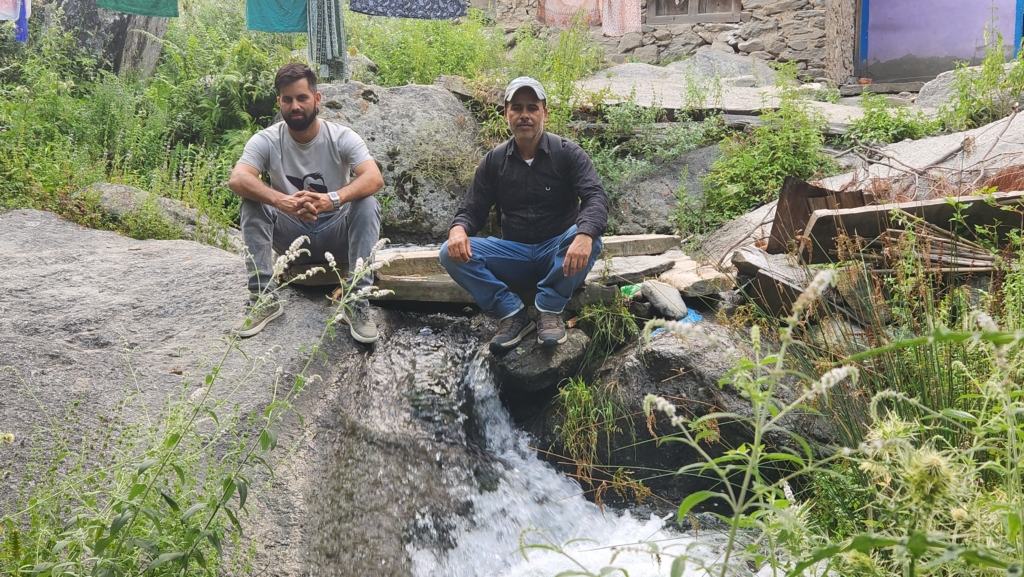
A kind woman greeted us and offered to demonstrate how the water flour-mill worked. It was fascinating to see the whole process come to life before my eyes – the village’s quiet reliance on nature, and the gentle hospitality of its people. Though we declined her offer for tea, I was touched by her humility and warmth. “Atithi Devo Bhava”, they say, and she truly embodied that spirit. As we left, I wished I had carried something for her children, perhaps some cookies or sweets. The village was charming, surrounded by wild vegetation that gave it an almost storybook-like appearance. The woman gestured to the plants, “Everything here has a utility”, she said with a smile.
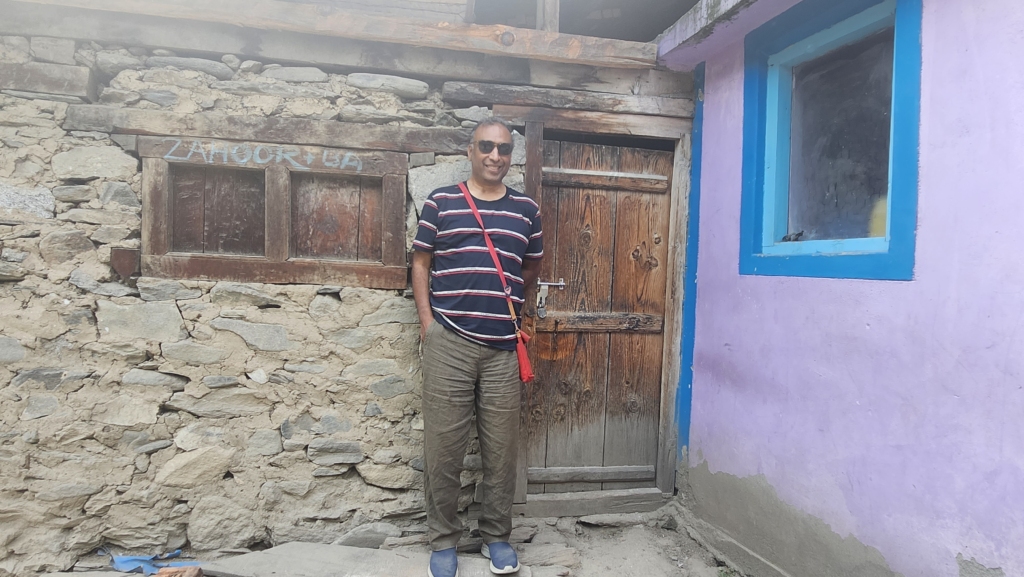
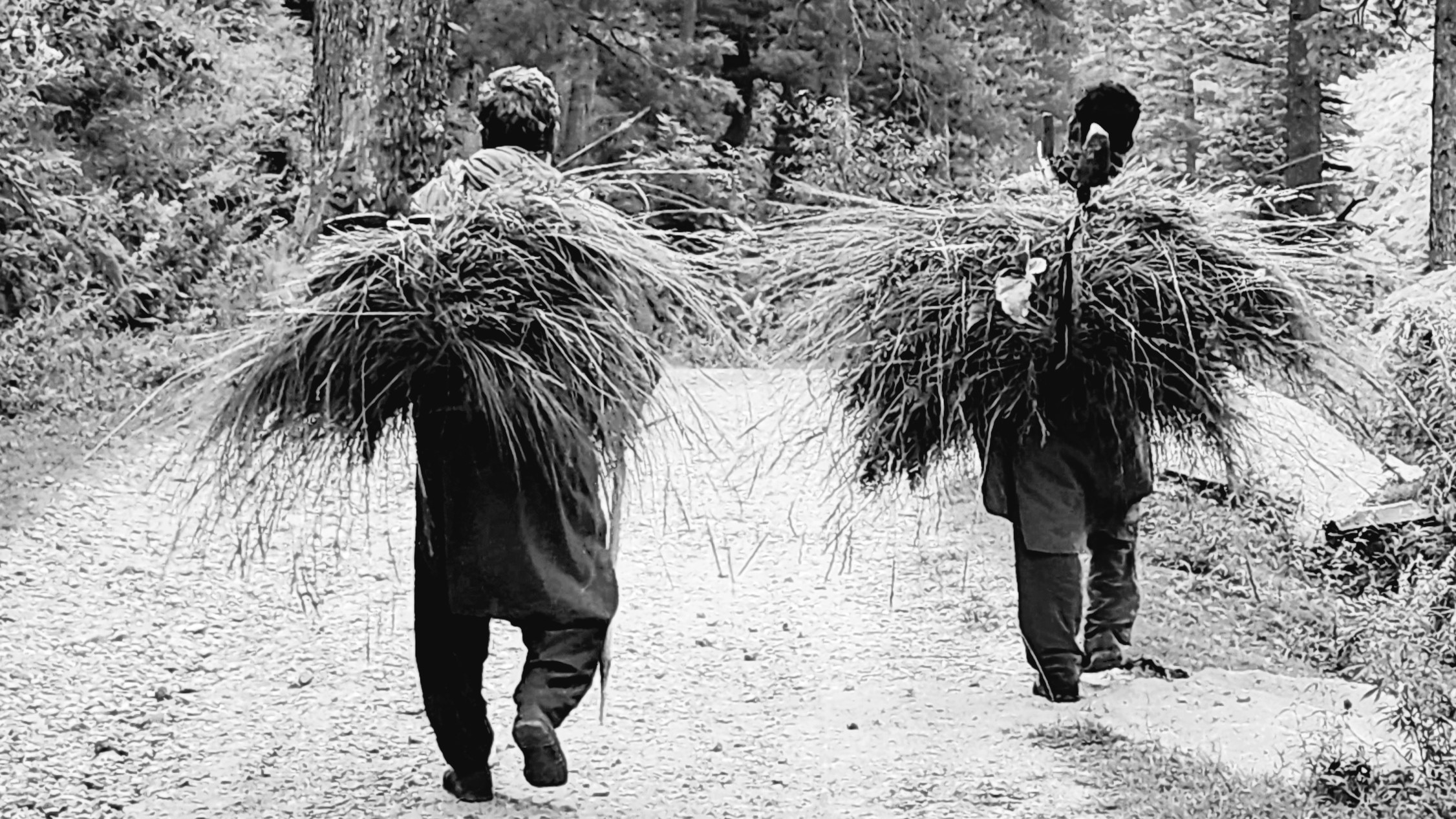
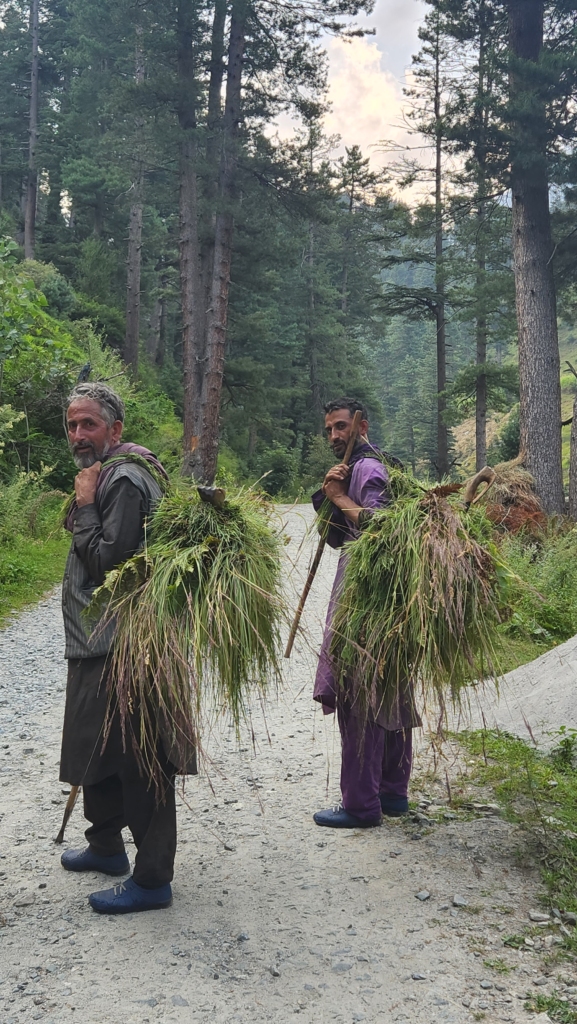
As we made our way back to the car, we saw two elderly men carrying bundles of dry wood. They could have easily cut trees closer to their homes, but instead, they respected the forest, taking only what was already dead – living in harmony with their surroundings.
We stopped briefly to grab some snacks and our “drinks” for the evening before heading to the cottage. As we settled down, I noticed Fareed and his fellow companion rushing out. Curious, I asked Aslam what was going on. He calmly explained that the distant sound we had heard earlier was a distress signal – a wild animal had wandered into the village, and the forest team was headed to deal with it. I hadn’t even registered the sound, but the forest guards were always on high alert.
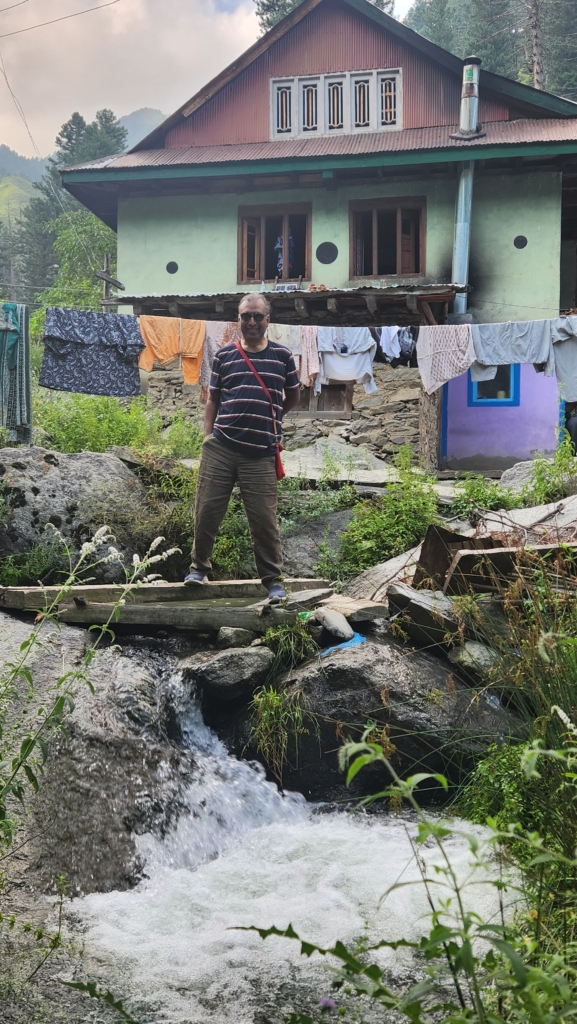
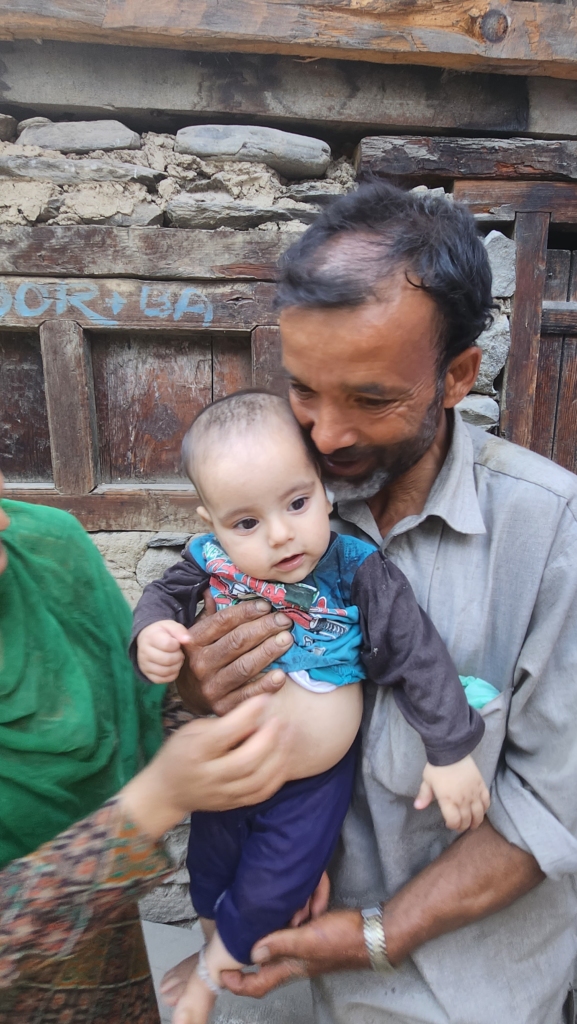
I marvelled at their preparedness, especially knowing that the nearest village was at least 2 km. away through dense forest. Aslam explained that sometimes more than one animal shows up, and the most dangerous encounters are with black bear mothers protecting their cubs. As we sat there, waiting for news, I couldn’t help but admire the balance of life in these remote places – the constant dance between nature and humanity, where every day is an adventure, and every moment, a test of survival.
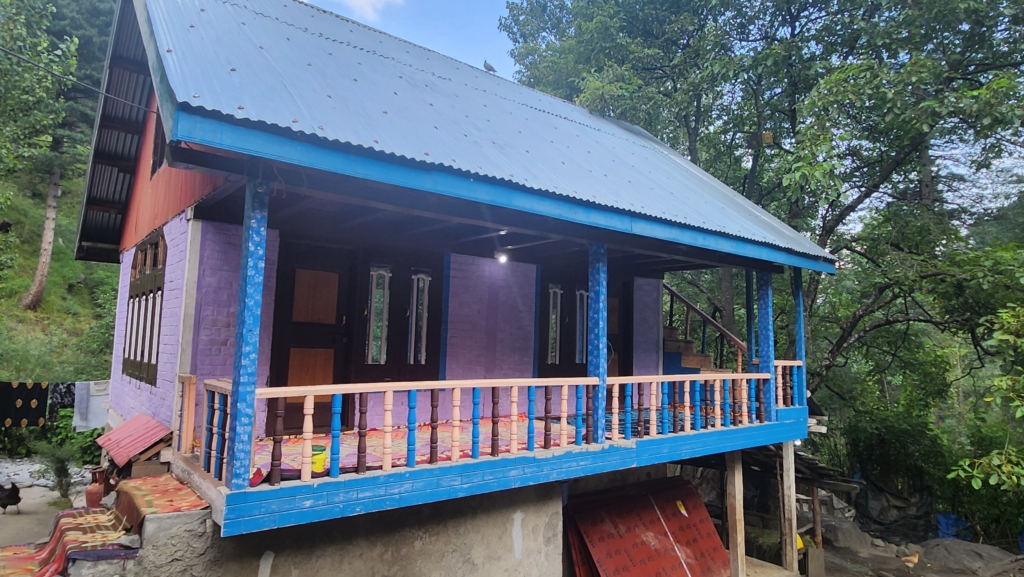
We cracked open our snacks, setting the table for a cozy evening of drinks. Aslam, ever the storyteller, began narrating a movie script he was working on – a romantic tale with a tragic ending. I won’t delve into the details, as the script is still under wraps, but he confided that the story was deeply influenced by his personal experiences. I couldn’t help but wonder how much a story set in a rural Indian village would resonate with city-dwellers. It felt like the kind of film that would be labelled “art-house” – beautiful, meaningful, but likely for a niche audience. He left out the ending, and I thought it best not to press him for it. Some stories are best unravelled on their own time.
But the story that followed was far more intriguing – how he met his wife, Rehana. I wasn’t sure if it was the richness of his storytelling or my own curiosity that kept me hooked, but it was a tale of love unfolding cautiously, like a delicate flower in bloom. It all began in 2019, a chance encounter in the most mundane of circumstances. Aslam had gone to Srinagar to meet a friend at the university to collect a certificate. His friend, busy manning a cash-collection counter for college admission forms, asked Aslam to cover for him during a quick restroom break. And that’s when fate stepped in.
Aslam took over the counter, processing forms and accepting the nominal fee of 150 rupees. The window was small, blocked by a cardboard screen, so neither Aslam nor the students submitting their forms could see each other. All he could see were hands reaching in, passing their forms and cash. It was a mindless task, and the line moved quickly. Then, in the midst of it all, a hand slipped in – delicate and beautiful, along with a form and 200 rupees. He stamped the form, tore off the receipt, but before he could return the change, the person had already disappeared into the crowd. He marked the form with a note and explained the situation to his friend when he returned.
Back in his village, Aslam called the number on the form to inform the girl – Rehana, about the extra money. She vaguely remembered submitting the form but wasn’t sure about the overpayment. Since both lived far from Srinagar – Aslam to the north, Rehana to the south—the cost of travel would be more than the 50 rupees in question. They agreed, Aslam would hold onto the money until he was back in Srinagar. But that wasn’t the end. Aslam, with his impeccable morals, couldn’t let it rest. He kept messaging her, despite her dismissals, and their conversations grew beyond that trivial sum. Soon, they were exchanging messages more frequently, finding common ground, becoming what Aslam called “phone friends with a dash of love”.
Neither of them had a feature phone back then, and they spent weeks messaging back and forth before agreeing to meet in person. Aslam laughed as he recounted his anxiety before their first meeting. He had no idea what she looked like, but he had convinced himself that if she wasn’t what he imagined, he’d simply return the money and leave. “At least she had a pretty voice – and a pretty wrist”, he joked. Rehana, it turned out, had similar reservations. She wasn’t looking for a bald, older man; she wanted her own Shah Rukh Khan. As fate would have it, they liked what they saw, and love slowly blossomed between them. Aslam, grinning mischievously, said, “Well, she did get part of her wish. I may not be SRK, but I’m Aslam Khan. She got the Khan part, at least!” We both laughed, the easy camaraderie of old friends enveloping us.
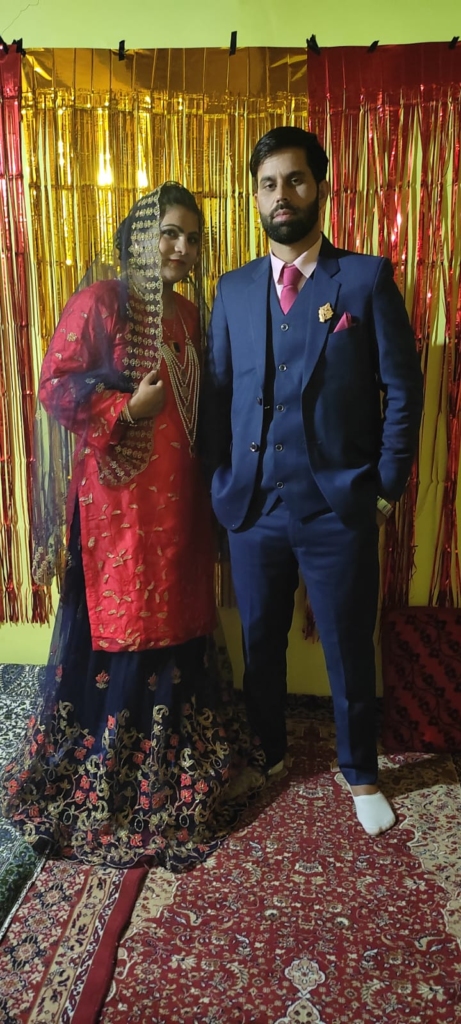
Their once-occasional messages turned into regular calls, and soon, Aslam brought up the topic of marriage – though with the condition that it had to be with his family’s blessing. Rehana agreed, with the same caveat. After a fact-finding meeting between both families, Aslam’s family accepted Rehana. But her family had two conditions: first, Aslam had to provide a government certificate to prove that he wasn’t from a lower caste, and second, he needed to secure a home south of Baramulla for the couple.
Aslam chuckled as he told me about the absurdity of the first condition. “In a country where people fight to prove they’re backward for government benefits, I had to prove the opposite!” he said. His visits to government offices were met with laughter. “If you were lower caste, we could give you a certificate”, they’d say. “But we don’t issue certificates for not being one!” After much persistence, he finally managed to get something official enough to satisfy Rehana’s family.
The second condition required his family to band together to purchase a small house south of Baramulla. With that hurdle cleared, the couple was free to marry, and they now live happily in that house.
As Aslam finished his story, the rescue team returned. A black bear had wandered into a nearby village, causing chaos, but by the time the team arrived, the bear had already retreated into the forest. We sat down to a hearty dinner, the day’s adventures lingering in the air. Exhausted, we retired early, the soft hum of the forest outside lulling us to sleep.
If you’re planning a trip to Limber (with overnight stay in forest-area) or travel through Kashmir, we at HappyHorizon would be thrilled to curate your holiday plans to enhance your travel experiences. Feel free to reach out to us: connect@happyhorizon.in
Day 11: Pattan / Magam – Coming Soon!
Gallery
Sukumar Jain, a Mumbai-based finance professional with global experience, is also a passionate traveler, wildlife enthusiast, and an aficionado of Indian culture. Alongside his career, which includes diverse roles in international banking and finance, he's working on a wildlife coffee table book and enjoys sculpture and pottery. His interests span reading non-fiction to engaging in social and global networking.