
Background: Romancing the Mystic Hills of Darjeeling & Sikkim (Read More)
Day 1 & 2 – Dawaipani: Flirting with Darjeeling “Princesses” (Read More)
Day 3: Dawaipani – Kalimpong – Rangpo – Aritar – Gaddigaon
75 kms. / 3 hrs.
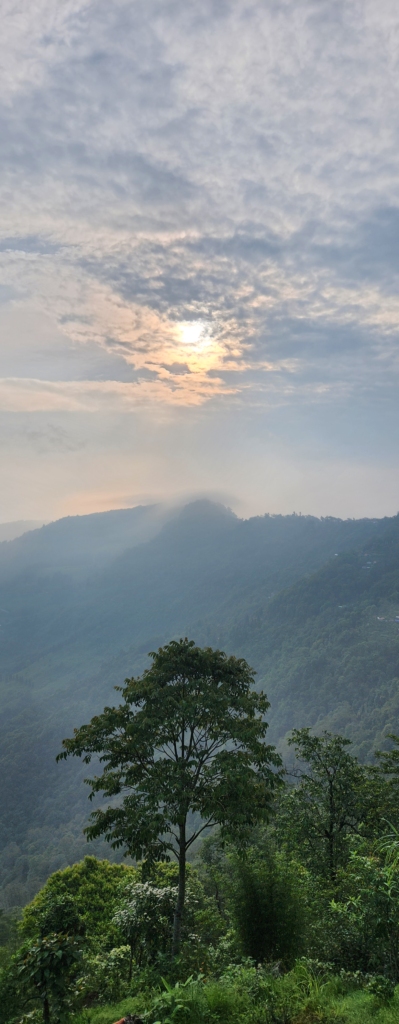
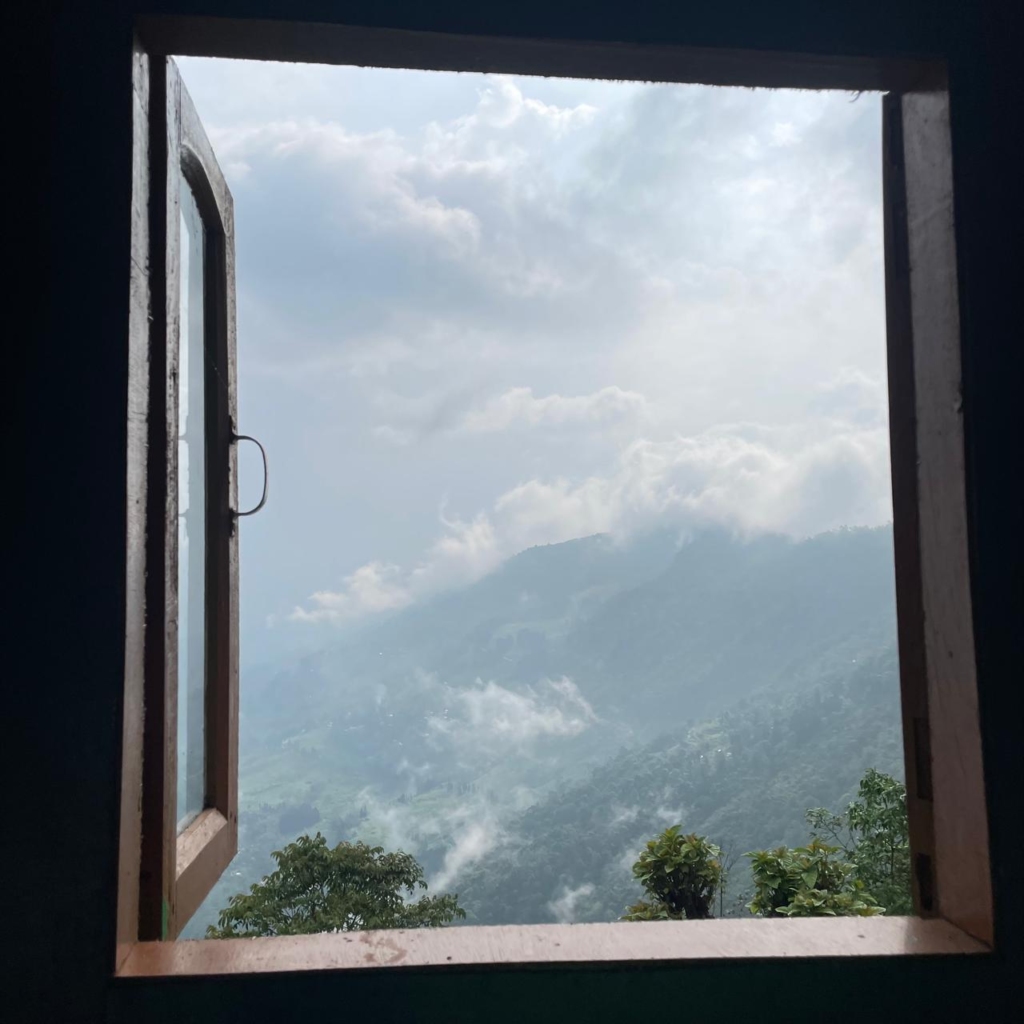
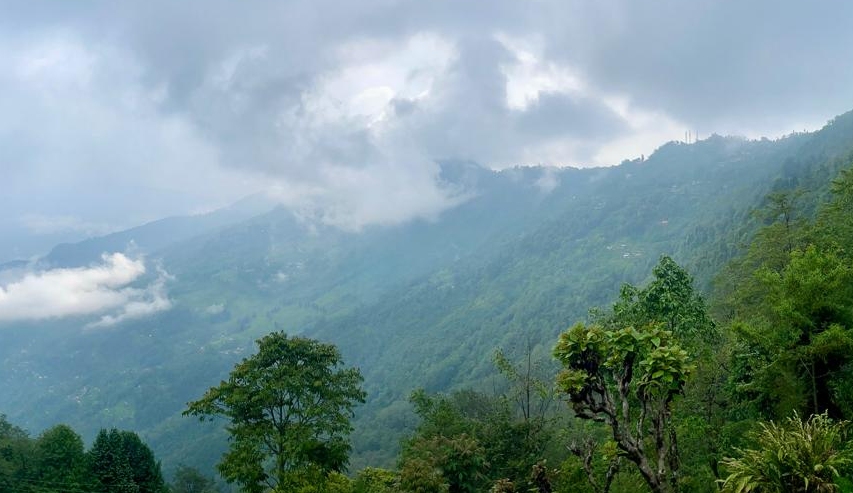
The day broke at 4 am again, syncing me with nature’s rhythm as I awoke without any alarm. From my bed, the entire valley lay draped in fog, with clouds drifting freely between mountain peaks and villages. My attempt to rouse the girls failed miserably, so I joined them and suggested we sleep in for an extra hour.
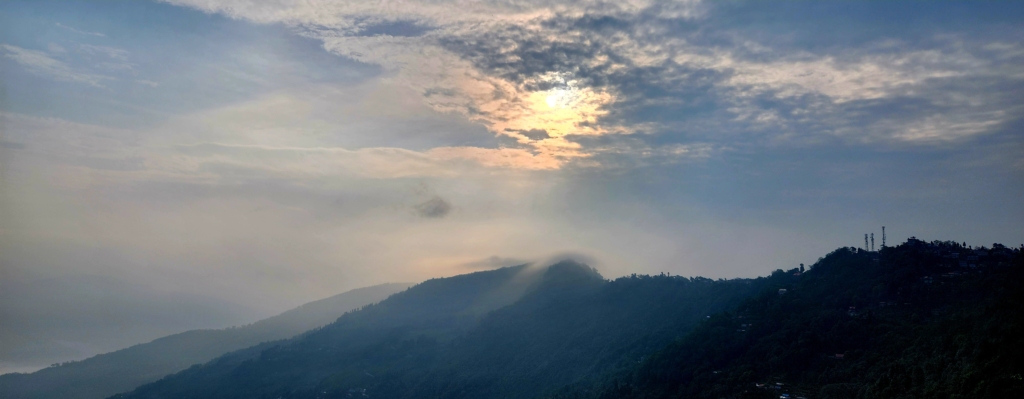
An hour and a half later, the weather remained unchanged, but I could not resist admiring the beauty of the surroundings, so I decided to step out of bed. The early birds were busy with their daily routine and flying from one tree to another, without making any sense to me. We were surrounded by a chorus of birdsong, diverse in species and echoing from every direction. Some were familiar, like local sparrows, magpie and robins, while others remained hidden in dense foliage. The valley was teeming with flora and avifauna, making me wish we had a good pair of binoculars to better appreciate the chirping birdlife.

MunMun joined me a bit later, and we began discussing our options for the day, should we fail to secure travel permits for Dzongu, our next intended destination. Following our conversation with Sougata, we decided to explore the lesser-known Pakyong district in East Sikkim, often overlooked by tourists due to its distance from the usual circuit, while hopeful for permits to Dzongu and Lachung to come through.
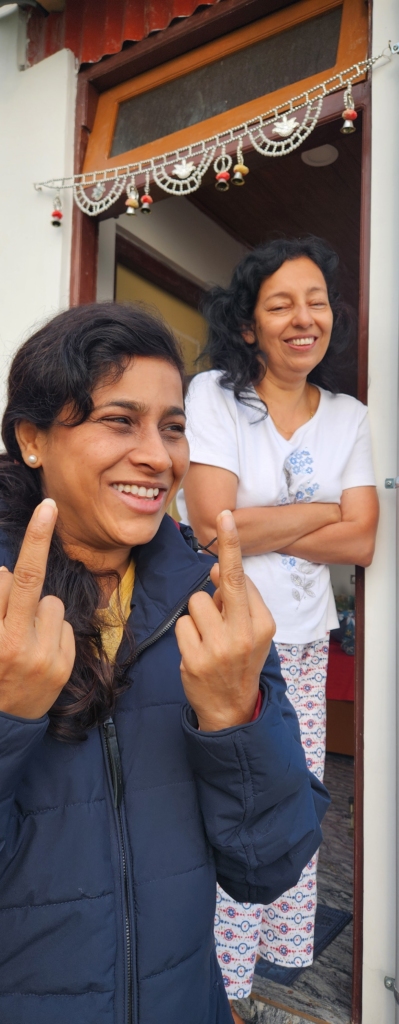
The sun and clouds engaged in a game of peek-a-boo, casting changing shadows and light over the landscape. Around 8 am, Rohit called to announce his arrival. At just 24 years old, Rohit exuded cheerfulness. We never saw him sulking or sad during our entire trip. Throughout our five days together, he kept us entertained with his lively banter, particularly with MunMun and Tazo. However, today he bore some disappointing news: the Sikkim State Government had temporarily ceased issuing travel permits for North Sikkim due to bad weather conditions.
Undeterred, we swiftly enacted our backup plan. We instructed Rohit to secure permits for Zuluk instead. Adjusting our plans accordingly, we decided to spend the night in Gaddigaon and proceed to Zuluk the next day. With his resourcefulness, Rohit swiftly made a call and arranged everything needed. It’s incredible how simple it has become to get things done with a few taps on a mobile phone. It made me ponder over a world without internet connectivity.
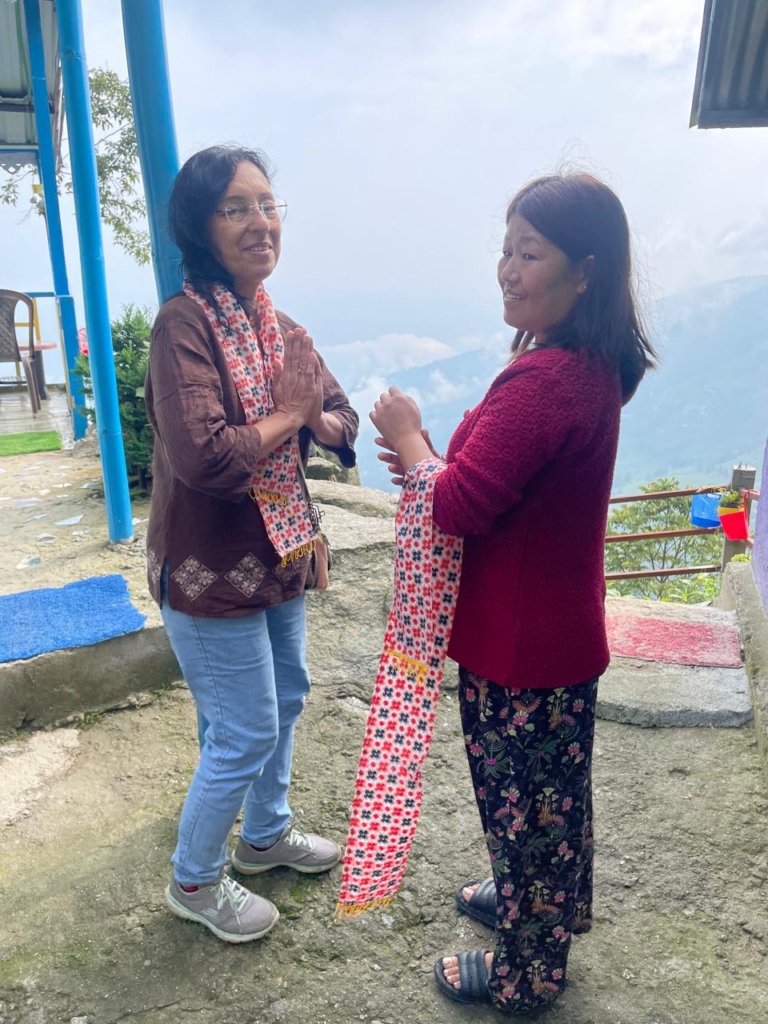
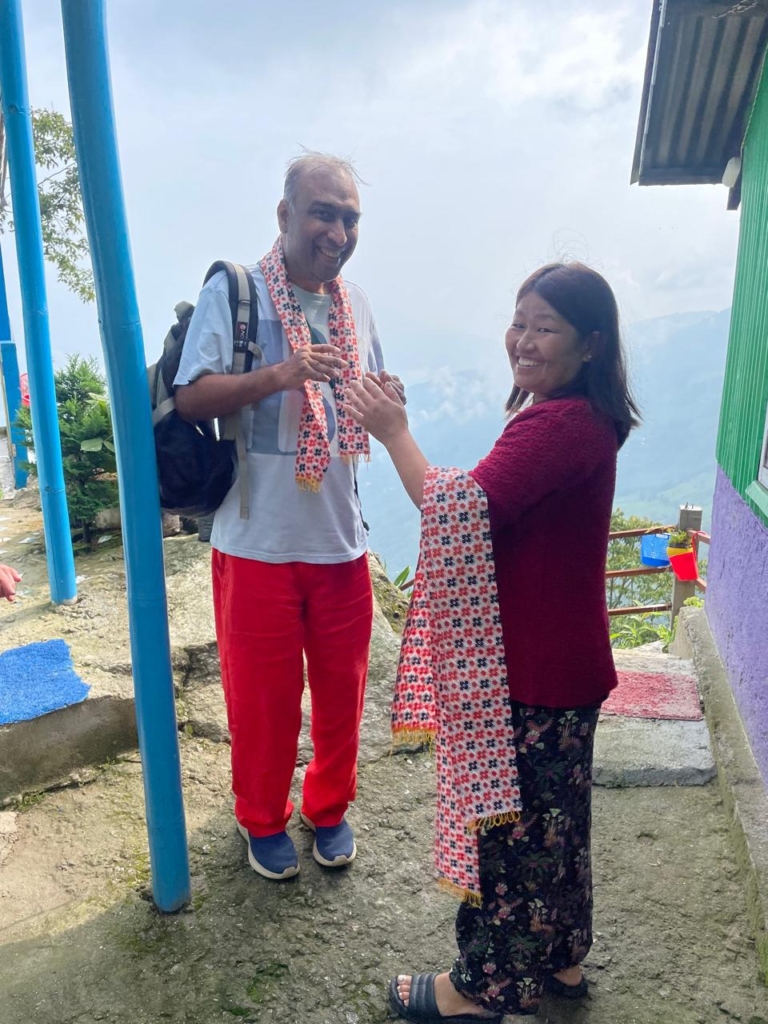
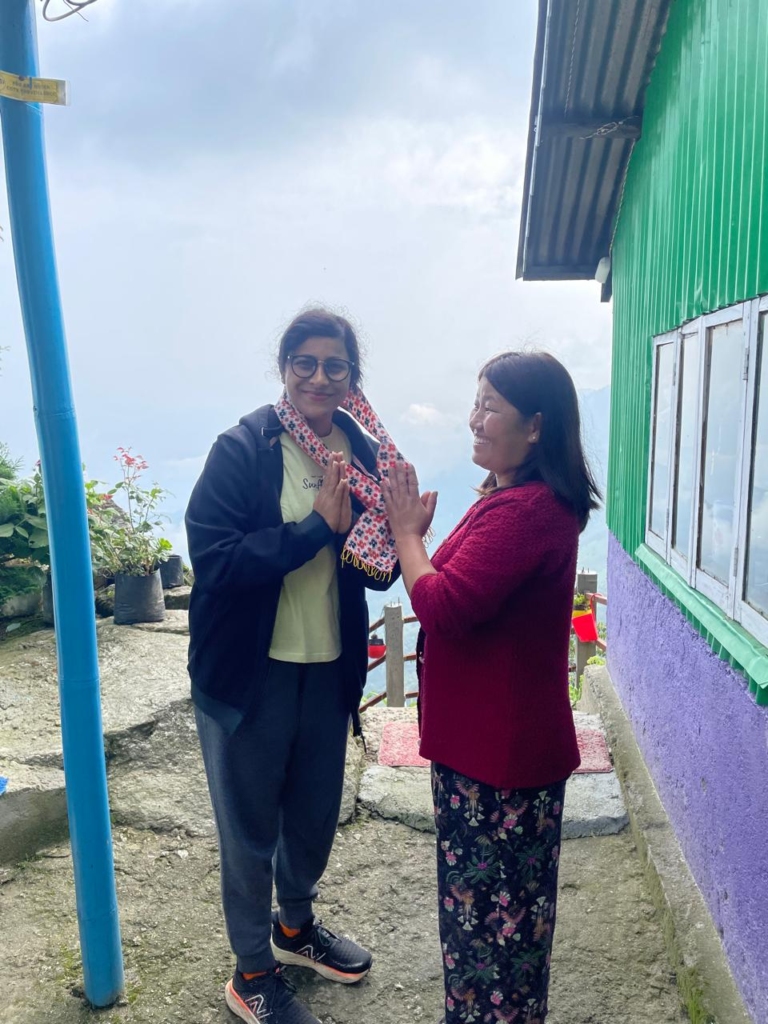
We requested Susheela to serve us an early breakfast so that we could promptly embark on our journey to uncharted territories. Our revised route was new even to Rohit, who had previously visited Zuluk only for a day trip via Gangtok. We quickly finished our breakfast and loaded our bags into the car, expressing heartfelt gratitude to Susheela for her warm hospitality. In return, Susheela bid us farewell with a “katak”, a traditional Tibetan ceremonial scarf symbolizing respect, gratitude, or greeting. Kataks are akin to flower garlands in signifying peace, love, honour, or friendship, and are commonly exchanged during occasions such as births, weddings, funerals, graduations, and the arrival or departure of guests. They hold significance across the Tibetan diaspora and Himalayan communities, including Nepal, Bhutan, Sikkim, Ladakh, Himachal Pradesh, and Arunachal Pradesh. When given to departing guests, a katak conveys wishes for a safe journey and goodwill. Typically, kataks are white in colour, representing purity, auspiciousness, sincerity, kindness, and justice.
Kalimpong
Our route to Zuluk took us through outskirts of Kalimpong, my father’s birthplace and my paternal home-town, where we still have relatives. As per original plan, we had scheduled to visit them on our return from Sikkim. Over the years, Kalimpong has evolved from a quaint village into a bustling town, though it retains some of its rustic charm. Historically, Kalimpong was under Bhutanese royal sovereignty before the Britishers annexed it. Following China’s invasion of Tibet in 1950, Kalimpong became a hub where American and British imperialists and Tibetan rebels conspired. Kalimpong was famously labelled as a “nest of spies“, with then Prime Minister of India, Pandit Nehru, remarking that spies likely outnumbered the local population.
Today, while the espionage era has passed, Kalimpong remains a place steeped in history, inviting visitors to explore its rich tapestry of stories – a worthwhile addition to any travel itinerary. Its economic vitality historically stemmed from its climate, scenic beauty, and proximity to Jelep La (via Zuluk), a crucial trade route with Tibet – old Silk Route. Post the American trade embargo following the Chinese annexation of Tibet, the quickest route between inner Tibet and China was via the sea route through Kolkata and overland through Kalimpong – Jelep La into Tibet and vice versa. Additionally, Kalimpong was a stopping point for Tibetan devotees and Mongolian monks on pilgrimage to Bodhgaya and Sarnath, with the surprising acceptance of Mongolian currency in town.
The town’s climate fosters beautiful flowers, orchids, and orange orchards, attracting notables such as Prince Peter of Greece and Denmark and his wife, Princess Irene, who studied Himalayan flora here. Moreover, exiled royalties from Burma and Afghanistan found sanctuary in Kalimpong due to its favourable climate. In a charming anecdote, the Russian painter Svetoslav Roerich and his Bengali actress wife, Devika Rani, also resided in Kalimpong.
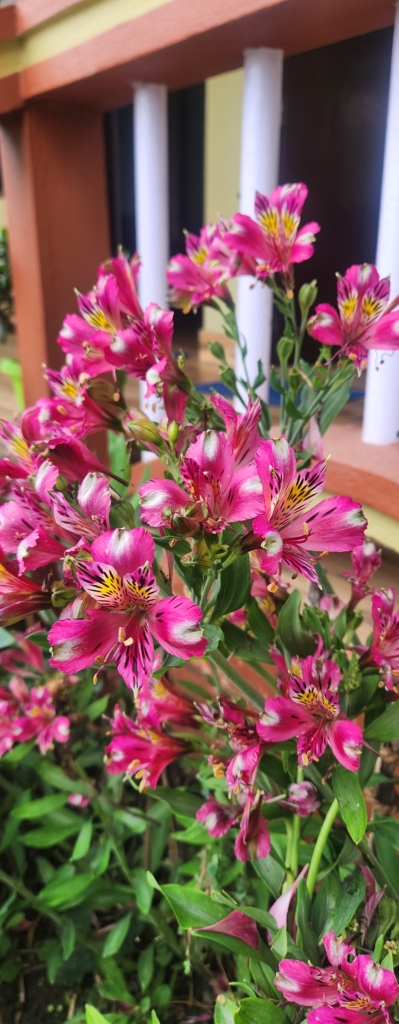

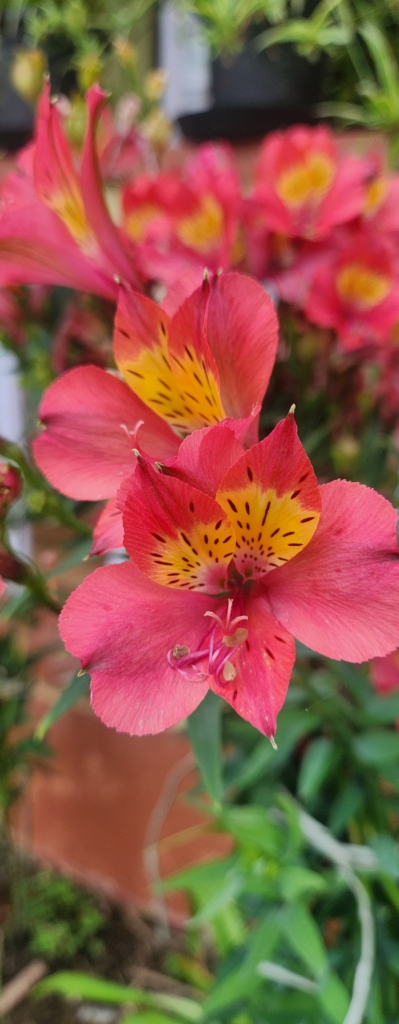
Among my cherished memories of Kalimpong is our ancestral house, “Happy Villa,” a sprawling bungalow with a garden that holds countless stories of my father’s upbringing and beyond. The family, comprising seven brothers and three sisters, weathered both prosperous times and significant challenges, including the untimely loss of my grandfather in a road accident. Left to fend for the family, my grandmother single-handedly raised the siblings as relatives turned away – a testament to her strength and resilience.
My passing visit to Kalimpong also rekindled fond memories of Kalimpong lollipops and indulging in high-tea with an exiled Afghan princess. The story of “Kalimpong lollipops” dates back to the 1950s when a missionary aiming to spread Christianity in Tibet, was denied entry and he instead settled in Kalimpong. Here, he established the Swiss Welfare Dairy, which became a significant employer for the locals. The dairy closed sometime during 1990 when when the Englishman had to leave India as his resident visa renewal was denied. The legacy of the Swiss Dairy and the tradition of Kalimpong lollipops have been upheld by former dairy workers. Over time, however, the quality of these lollipops has declined, notably losing their original taste and flavour.
As we ventured through the outskirts of Kalimpong, the Teesta River flowed rapidly beside our path, its waters turbid with silt. Rafting has emerged as a popular adventure activity on this river, with numerous SUVs ferrying guests and rafts. Meanwhile, MunMun and I focused on coordinating our stay options in Gaddigaon. We quickly agreed on a picturesque boutique homestay overlooking the valley and the majestic Kanchenjunga range in Gaddigaon over Aritar.


Rangpo
Our entry into Sikkim from West Bengal (Darjeeling / Kalimpong) was marked by Rangpo, an industrial town bustling with several large pharmaceutical factories lining the banks of the Rangpo Chu River. In the local language, “chu” translates to “little”, while another term for a small river is “khola”. The allure of lucrative tax exemptions likely prompted these companies to establish manufacturing facilities in the state.

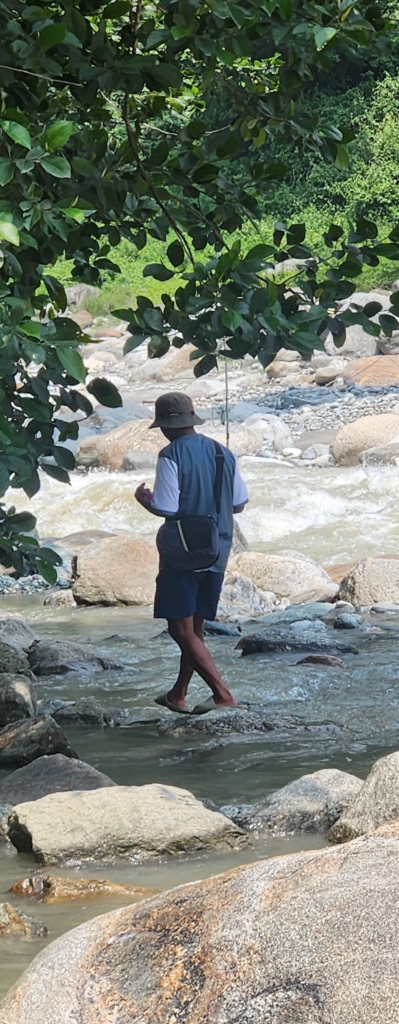
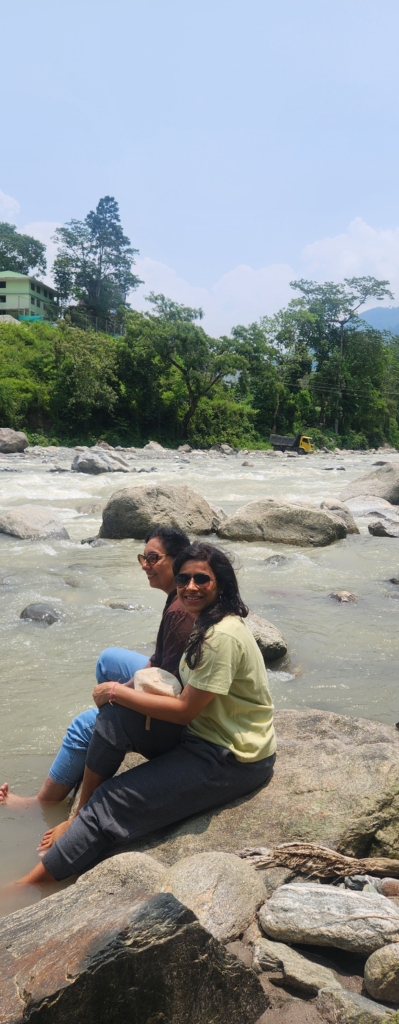
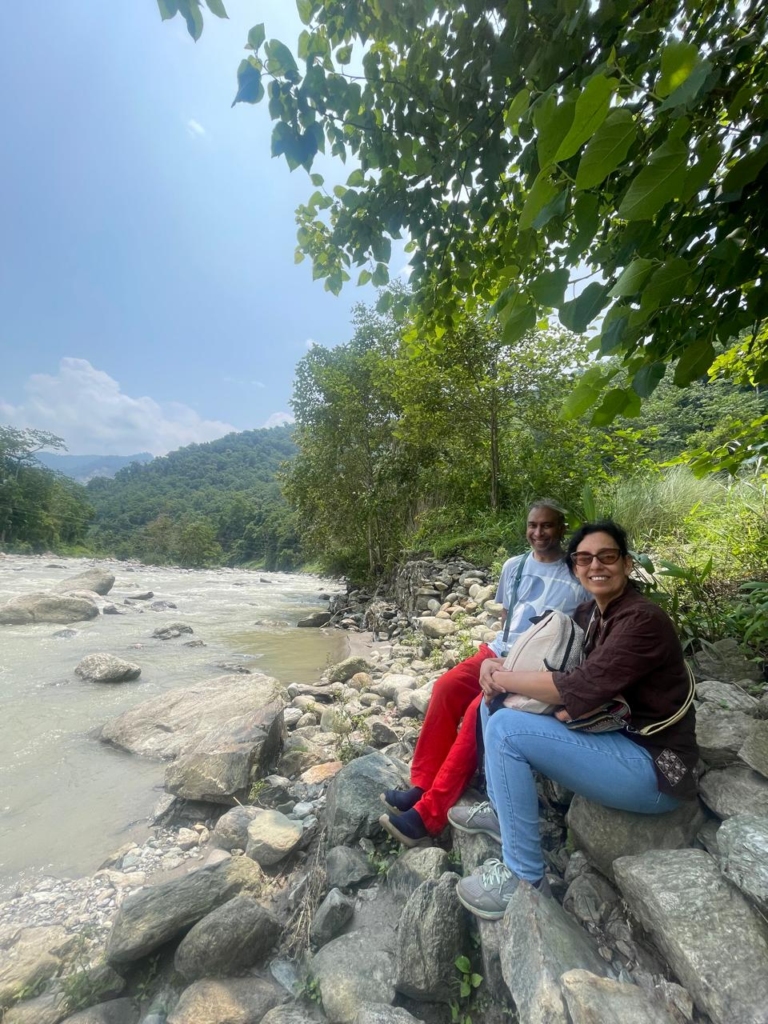
Driving through dense vegetation amid the mountains, MunMun and Tazo were captivated by the crystal-clear waters of the Rangpo Chu river flowing alongside our route. Their eagerness to immerse their feet prompted Rohit to find a tranquil spot beneath the Rorathang Bridge. Here, we 3-idiots spent an hour simply admiring the river water playfully dance over rocks. The icy-cold water limited our foot-dipping experience to a few brief minutes.


Gaddigaon
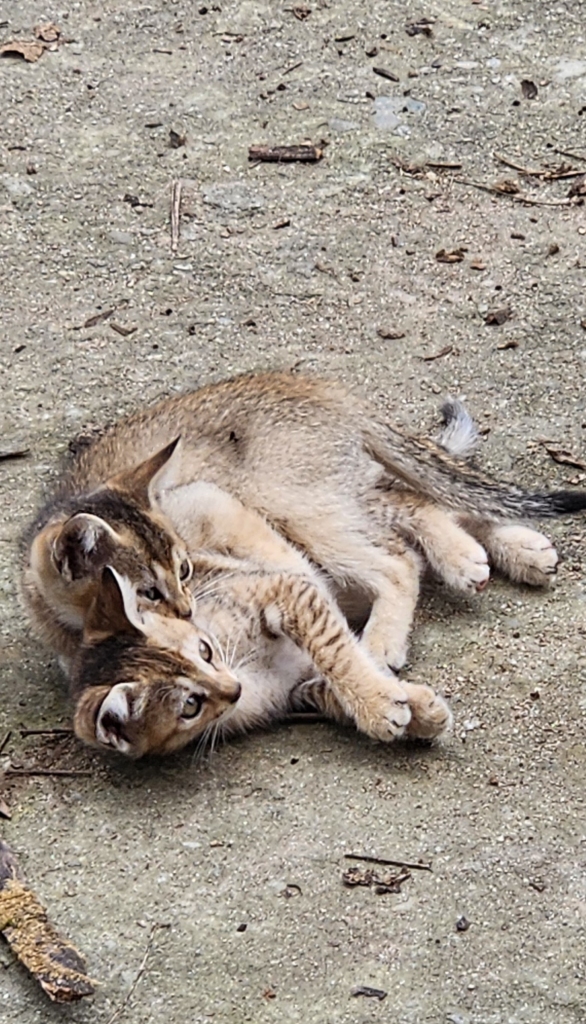
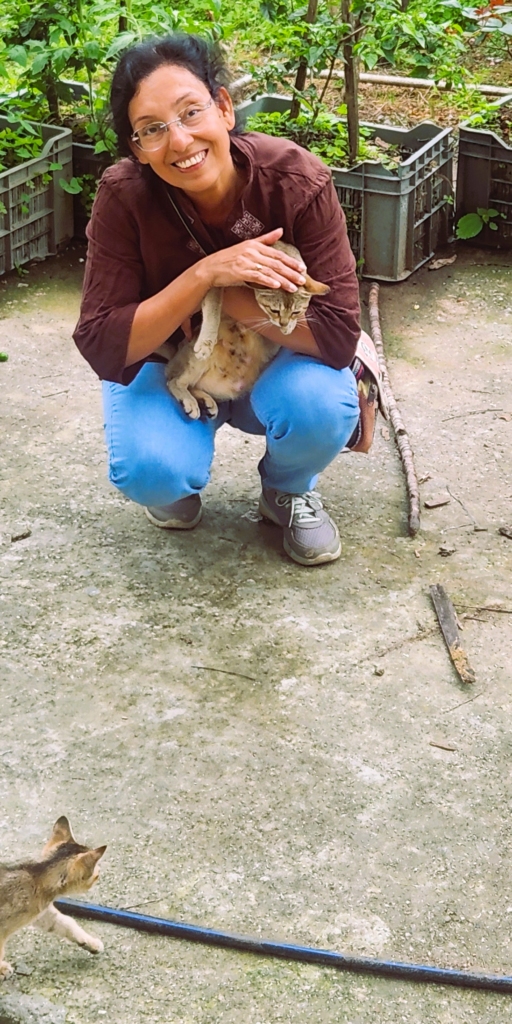
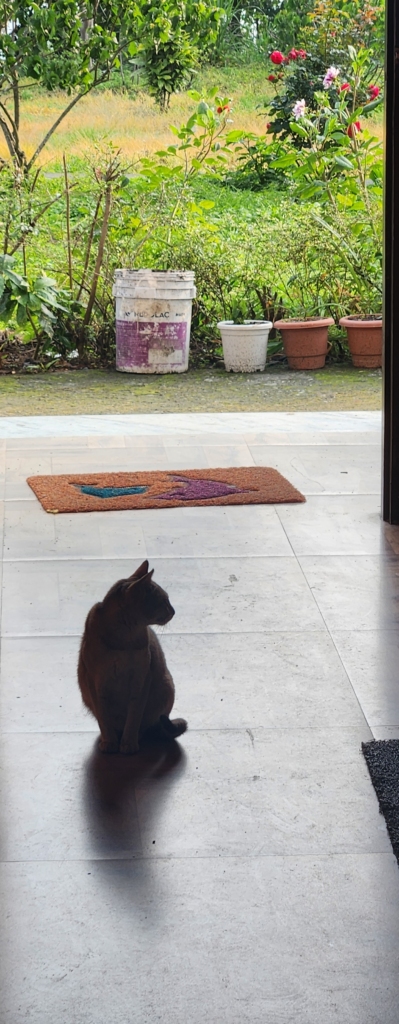
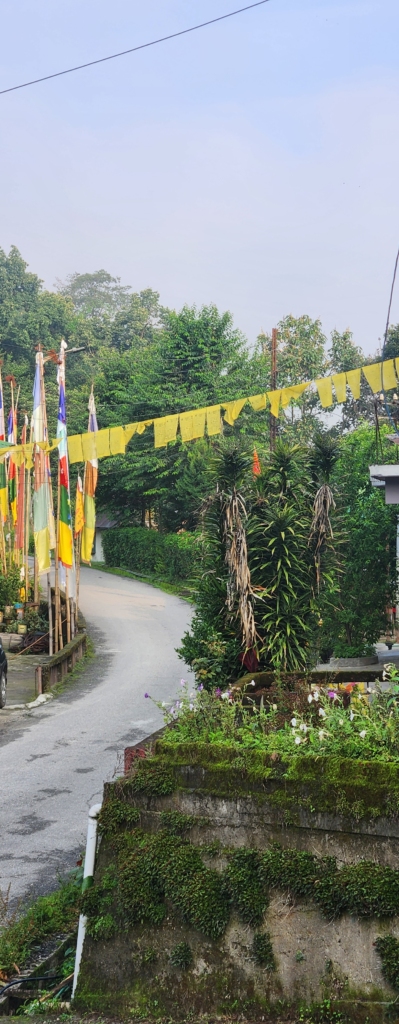
Continuing our journey past Aritar town, we arrived at the quaint village of Gaddigaon, characterized by a handful of houses lining each side of the street. The village exuded a quaint Swiss village ambiance. Our chosen homestay was a converted private residence turned boutique hotel, immediately capturing our hearts. Tazo, in particular, discovered two small kittens accompanied by their elder sibling and watchful mother.

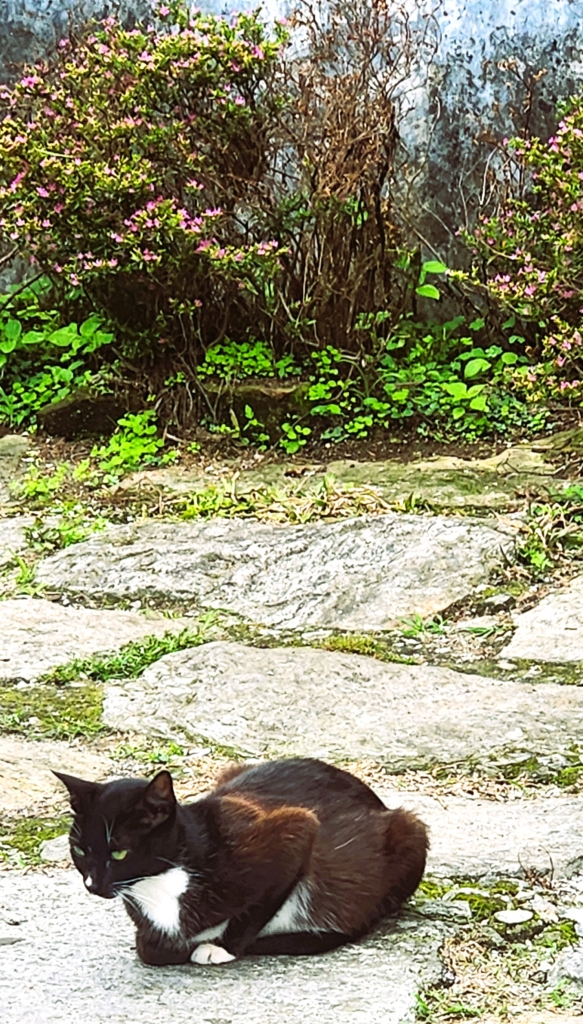
Sanjay, the caretaker, warmly welcomed us and gave us a tour of the entire property. Since we were the first guests to arrive that day, he generously allowed us to choose any room we liked. After MunMun and Tazo thoroughly inspected the property, we settled on a ground floor room that offered a view of the garden and the sprawling valley beyond.

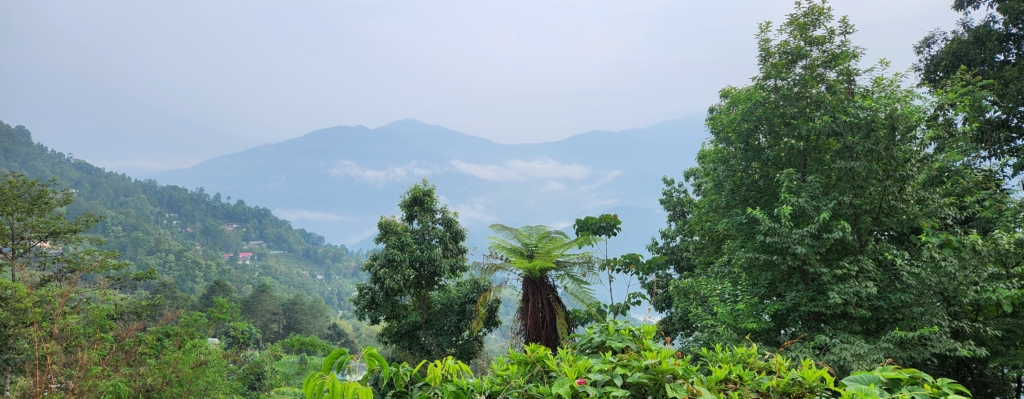
Sanjay had lunch ready for us, which we enjoyed amidst the tranquil surroundings. Over lunch, Sanjay shared a fascinating overview of Sikkim’s history and culture. He informed us that the Lepchas are believed to be the earliest inhabitants of the state. He said that Sikkim has been given many names depending upon the local inhabitants, for example the word “Sikkim” is thought to originate from the Limbu words “su” meaning “new” and “khyim” meaning “house”, for other tribe’s it meant “paradise” and for another “valley of rice”. As we discussed the political landscape, Sanjay said that in 1975, after a referendum, the monarchy in Sikkim was dissolved, and the territory formally joined India as a state.
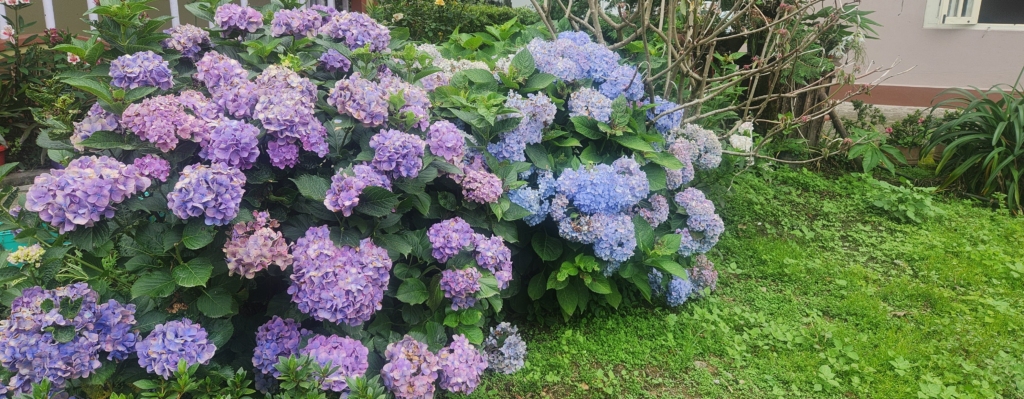
After lunch, refreshed and eager to explore, we decided to take a leisurely stroll around the village to soak in its serene atmosphere.
Gaddigaon / Aritar also holds historical significance as a prominent stop on the ancient Silk Route from Kalimpong to Tibet via Jelep La. The region’s natural beauty, breathtaking views of Kanchenjunga, and trekking trails through alpine forests attract visitors. The forest range, featuring various plant species, offers ample opportunities for camping and reconnecting with nature. Aritar offers as a favoured destination in Sikkim, perfect for those seeking a tranquil retreat surrounded by heavenly natural beauty, away from the hustle and bustle of typical tourist spots.

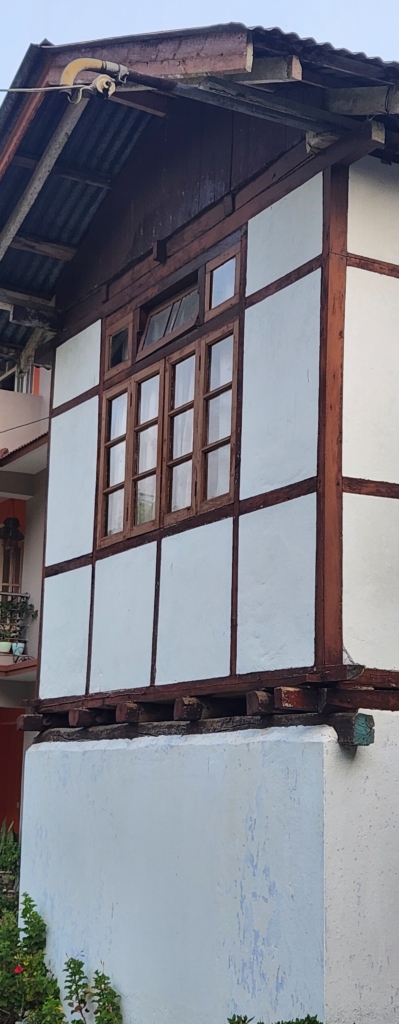
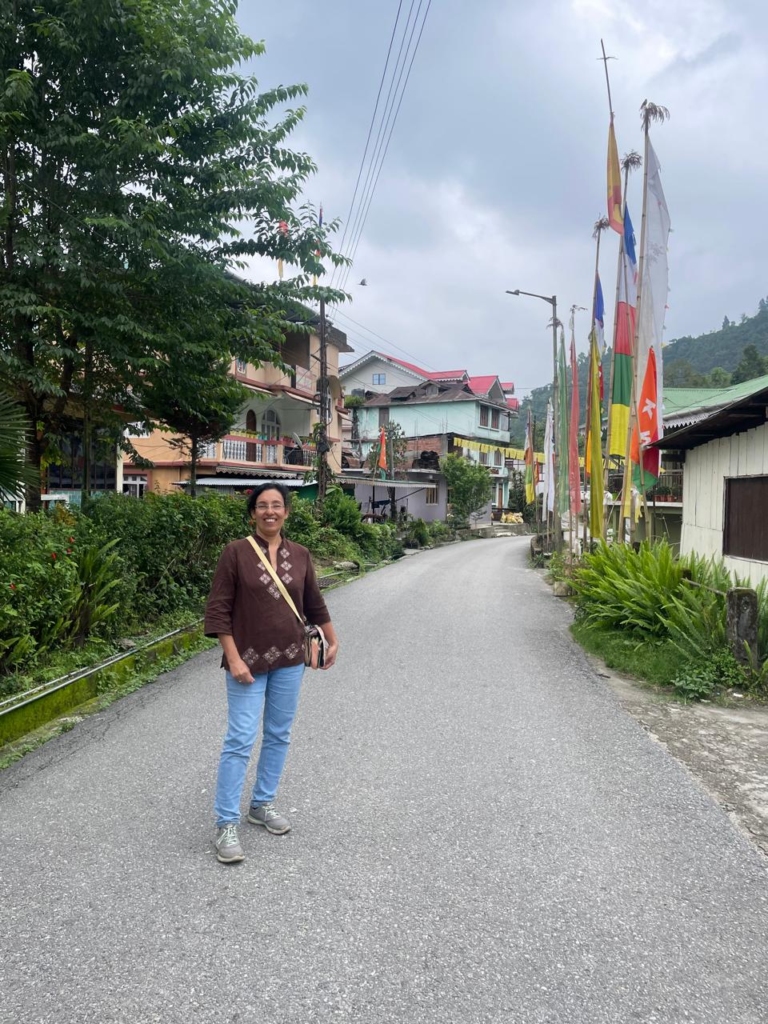

Adjacent to our homestay, we noticed a small house where family members were enjoying their evening tea on the porch. We struck up a conversation with them about life in Gaddigaon and the attractions in the surrounding areas of East Sikkim. They mentioned that the village transforms into a picturesque winter wonderland during December and January when it snows. They recommended visiting Aritar Lake and Mankhim View Point, both short drives from the village. To be honest, I had an eye on their delicious looking pastry’s which they had in a box next to them. I remarked that they looked delicious. Unfortunately, they did not offer and how shamelessly I could have stooped down to.

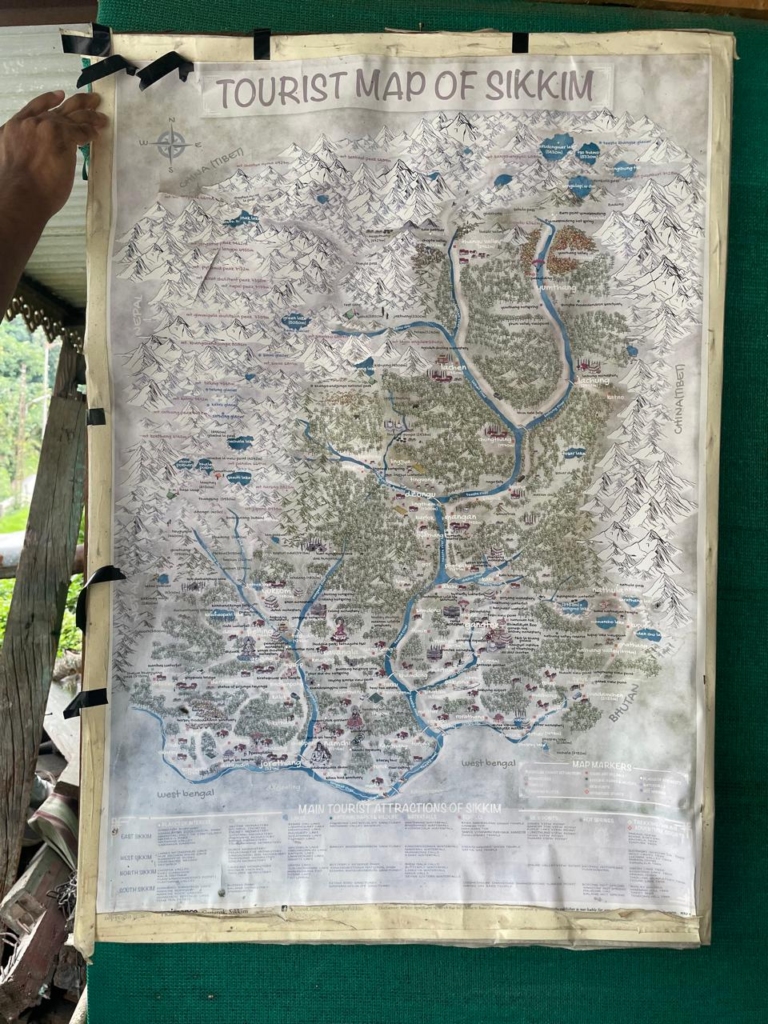

Lampokhari Lake
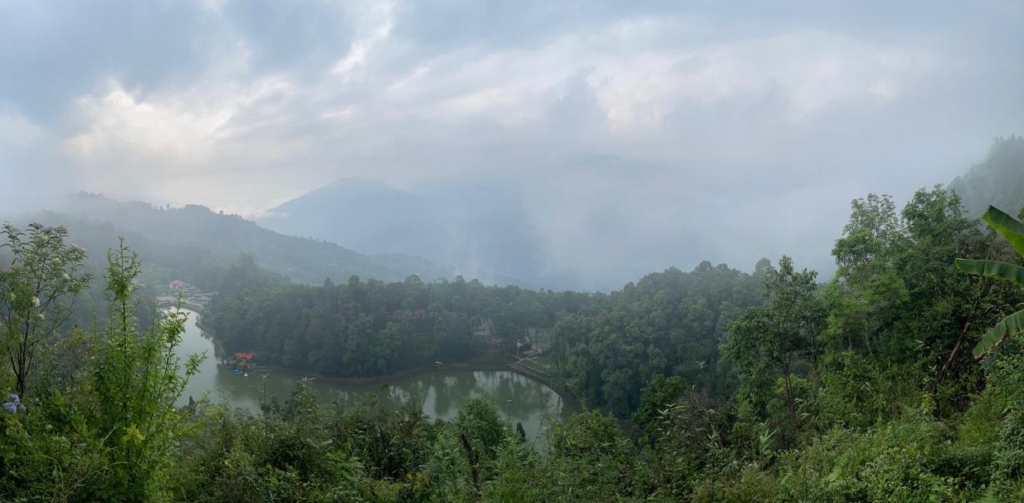
Lampokhari Lake in Aritar captivated us with its lush green surroundings. It’s one of the oldest natural lakes in Sikkim, and we strolled along its banks, taking in the serene beauty. A colourful temple at one end of the lake added to its charm.


Recently, the lake had been enhanced with an artificial embankment to facilitate boating, a first for Sikkim. Excited by the idea, the four of us decided to take a boat ride. Rohit amused us by pointing out that the large, elegant-looking ducks had migrated from China, while the smaller simpler ducks were their Indian counterparts. MunMun, Tazo, and Rohit took turns paddling the boat, and we playfully chased the Chinese ducks from one end of the lake to the other, protecting the Indian ducks in the process. It turned out to be a delightful and fun-filled activity that we all enjoyed immensely. Some visitors were feeding the fish at a restricted area of the lake, adding to the serene and picturesque ambiance. There were also accommodation options along the lakeside, which offered an alternative to staying in the village.
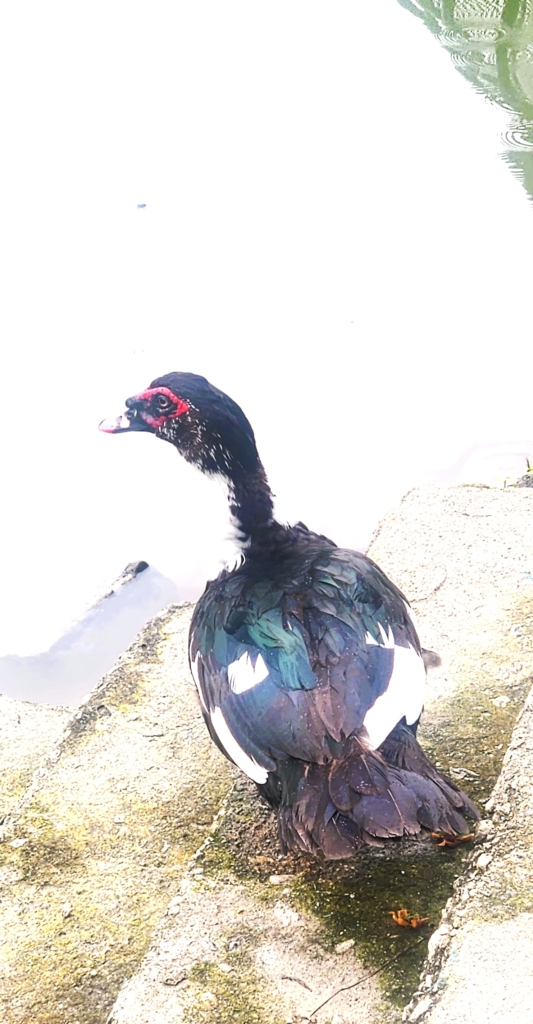

As we concluded our delightful boat ride, we decided to replenish our energy with tea and coffee at a small restaurant nestled beside the lake while we admired the dense forest enveloping the area.
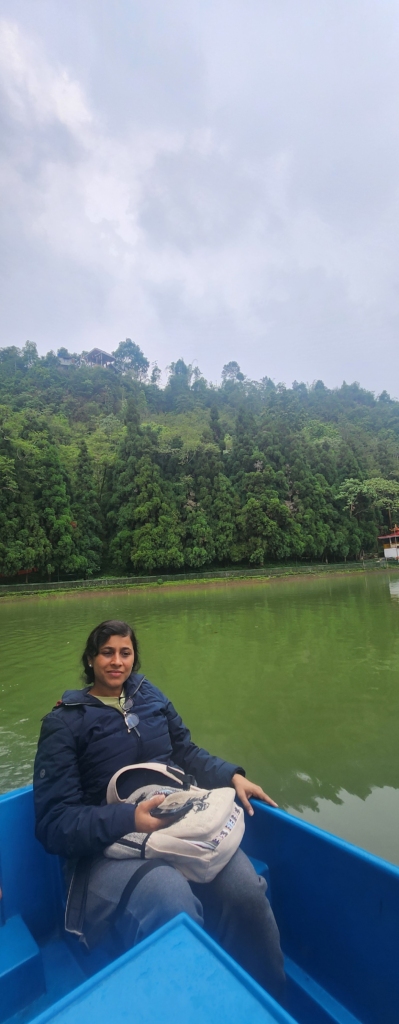
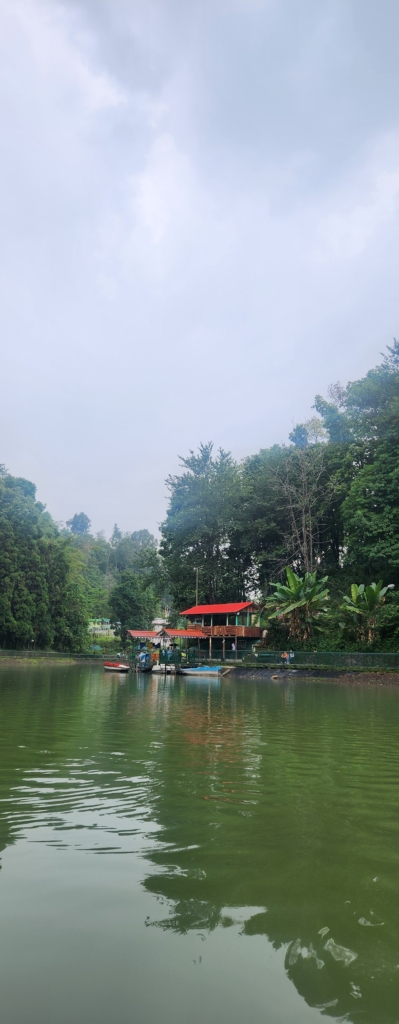

After placing our specific orders, we struck up a conversation with some jovial locals who were also enjoying their time at the restaurant. They playfully teased us about their ages, marital statuses, and occupations. We thoroughly enjoyed the banter with the locals who recommended visiting the nearby monastery, just a short drive from the lake. The restaurant owner proudly informed us that Sikkim is predominantly covered with forests, with approximately 35% of the state falling within the boundaries of the Kanchenjunga National Park, a UNESCO World Heritage Site. Excitedly, we shared our plans to visit Dzongu next, which lies within the realm of this national park.

Aritar Gumpa
The locals suggested a brief trek from the lake leading to Mankhim Dara, where a temple dedicated to the ethnic Rai community stands. However, we opted to drive to the monastery instead. The drive up to the monastery was short. Aritar Gumpa, known as one of the oldest and most sacred monasteries in Sikkim, captivated us with its colourful painted exterior walls. Adjacent to the monastery, a narrow trail wound through a small forested area. As we walked along the forest trail, we were greeted by a divine feeling enhanced by the melodious chirping of birds flitting from tree to tree. The dense forest, adorned with beautiful flowers, heightened the mystical atmosphere. The mist hanging in the air added an ethereal touch. The stroll through the woods proved to be an incredibly surreal experience.
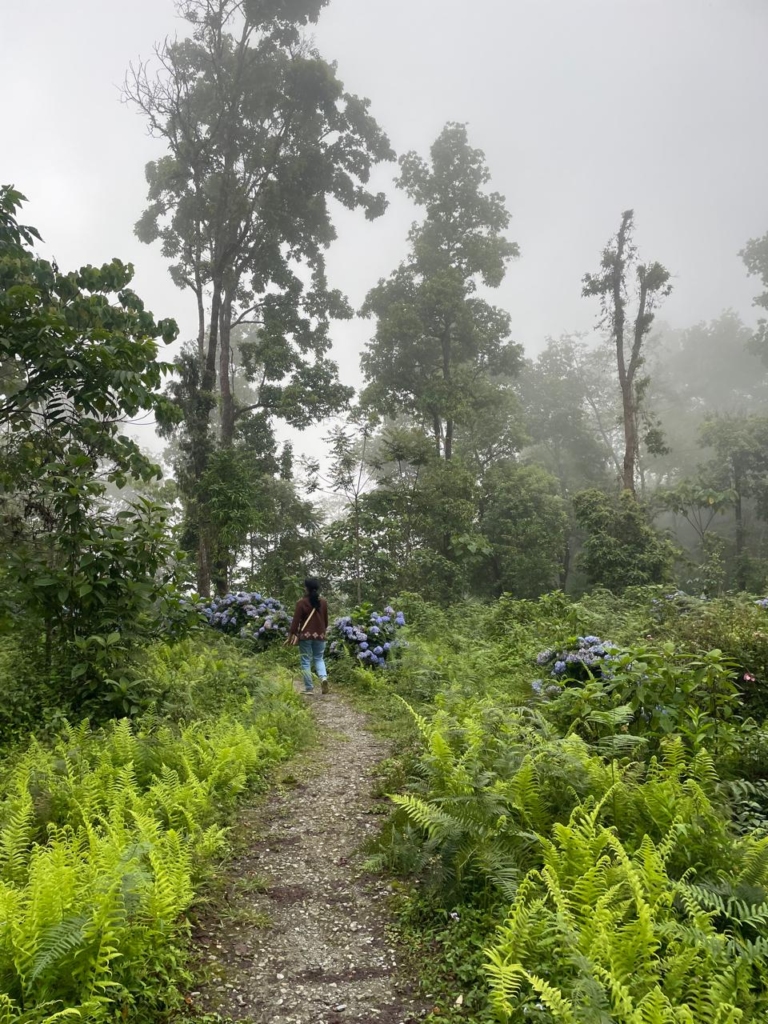
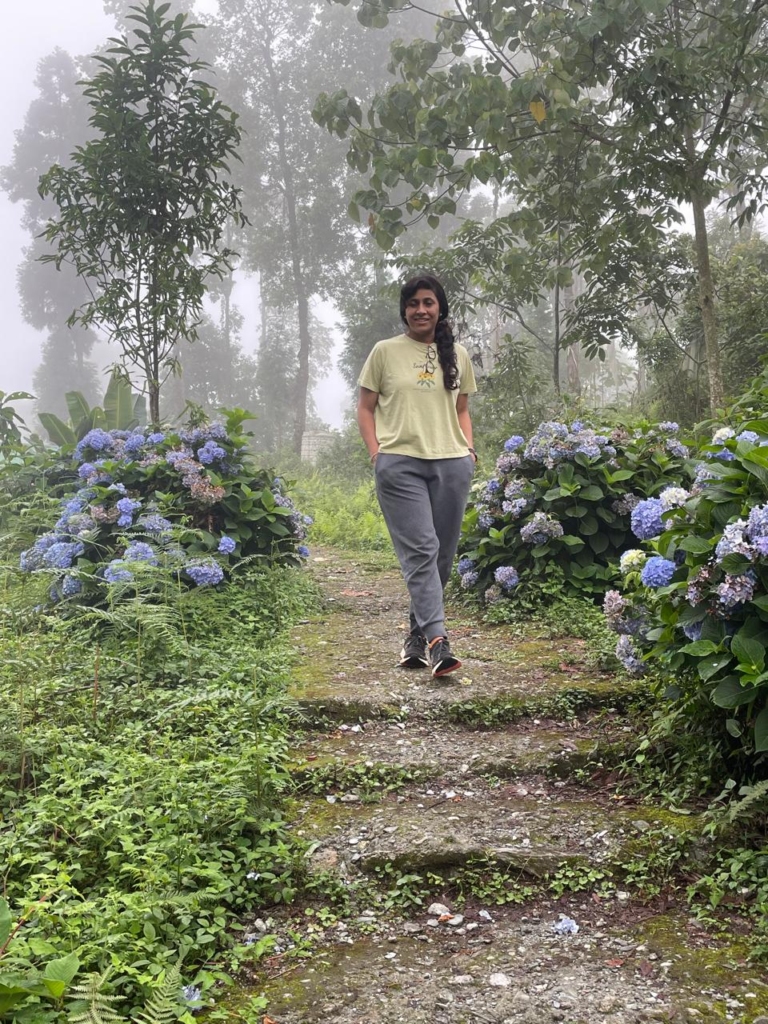

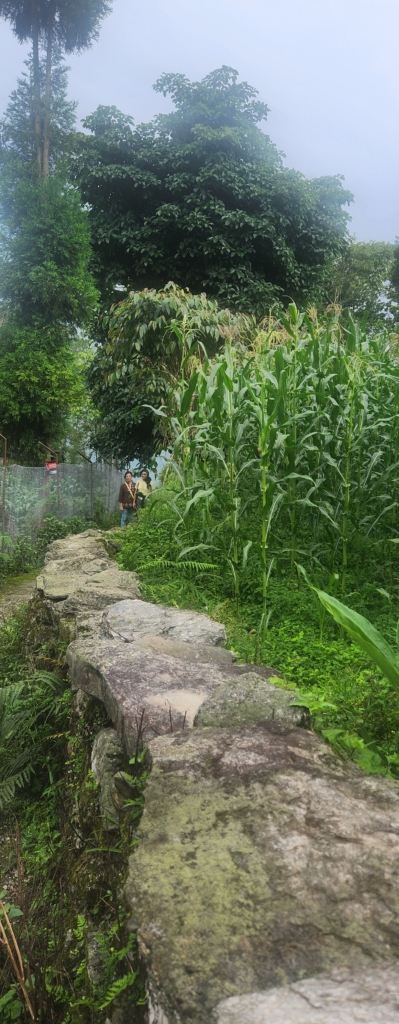

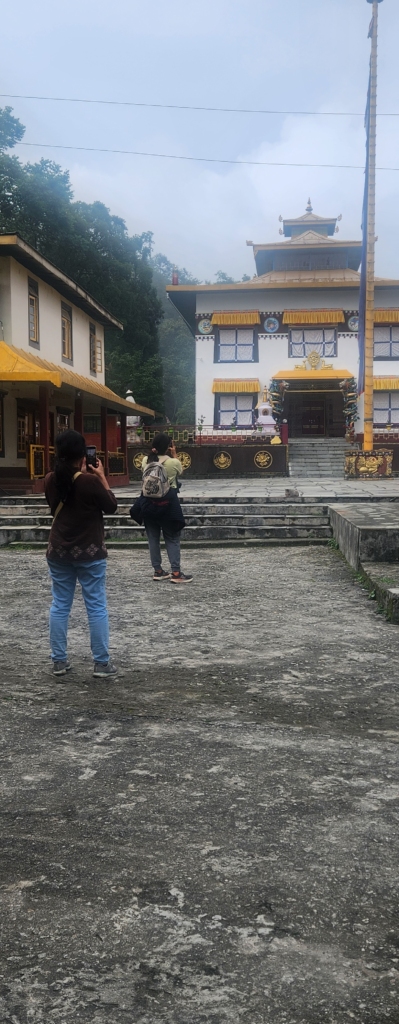
The forest trail led us to the edge of the mountain, where a magnificent statue of Lord Buddha overlooked the valley below. This serene spot, seemingly part of the monastery complex yet secluded from tourists, offered monks a peaceful retreat for meditation. From the mountain top, we were rewarded with a panoramic view of the lower Himalayan mountain range and the mist-covered Aritar lake below.
As darkness began to fall, we made our way back to our homestay. The kittens eagerly awaited Tazo’s return to feed them. Several families and a group of men had checked in, transforming the peaceful property into a bustling hub. MunMun and I planned to unwind in the garden gazebo with our bottle of wine, but it was occupied by a group of men enjoying their drinks. Sensing our dilemma, they kindly invited us to join them. Hailing from Kolkata, they were on an all-men trip and engaged us in lively discussions about the ongoing national elections and their predictions, all of which proved remarkably accurate.

The men group had travelled through Zuluk on their way to Gaddigaon, however they did not take a night halt in Zuluk. So unsure about the best accommodation options between Zuluk town and Nathang Valley, and uncertain about the infrastructure in both locations, we deferred our decision on where to spend the following night. It was a calculated risk with MunMun and Tazo in tow, but I had grown confident in Rohit’s driving skills and trusted he could safely take us to Gangtok if needed.
We planned an early start for the following day, and Sanjay kindly agreed to serve us an early breakfast. After a long day, fatigue set in, prompting us to retire early after dinner. Unlike the previous nights where we slept soundly, tonight was different. I sensed movement in the room and realized we had left the window wide open in our new surroundings, a homestay without enclosed boundaries. An initial fear of the unknown gripped me until I identified the intruder – which turned out to be curious kitten’s elder sibling exploring our room, evidently drawn in by Tazo’s friendly demeanour. I woke Tazo up, and she kindly attended to the cat, feeding it and ensuring it safely left the room. The incident left a warm impression, reminding us of these animals’ innate ability to seek out human companionship.
Day 4: Gaddigaon – Zuluk – Nathang Valley – Gangtok
135 Kms. / 4.3 Hrs.
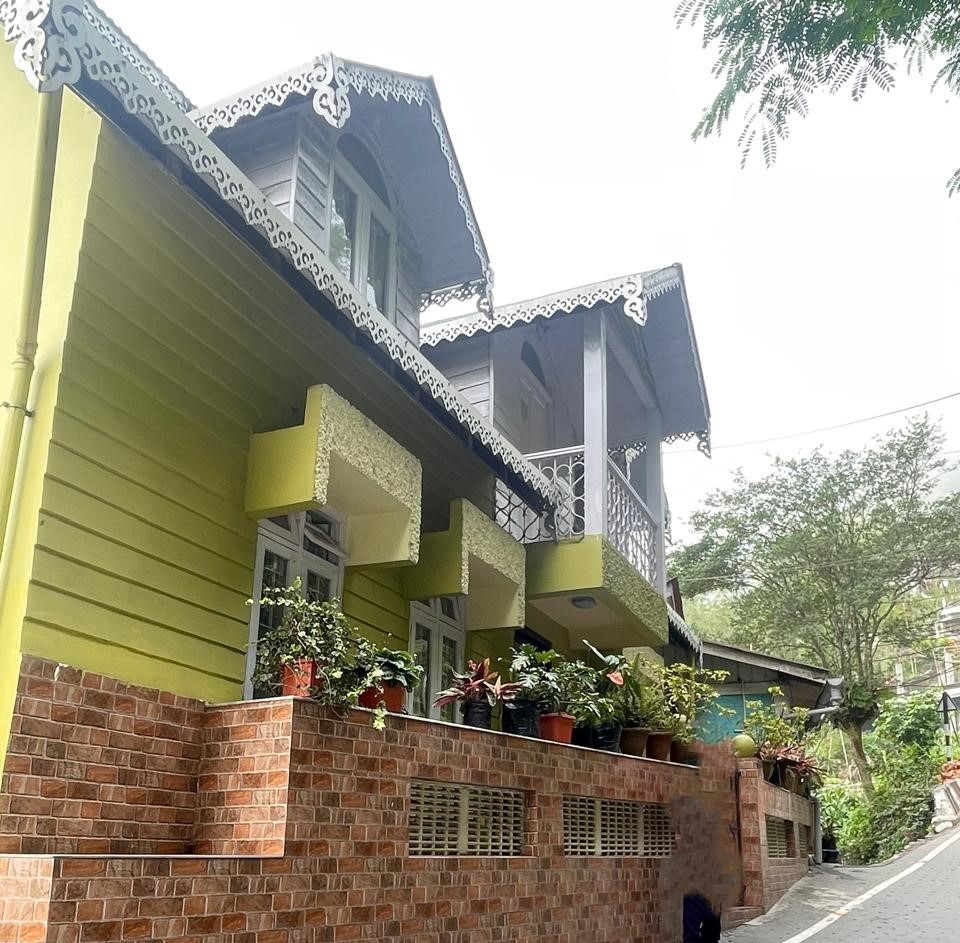
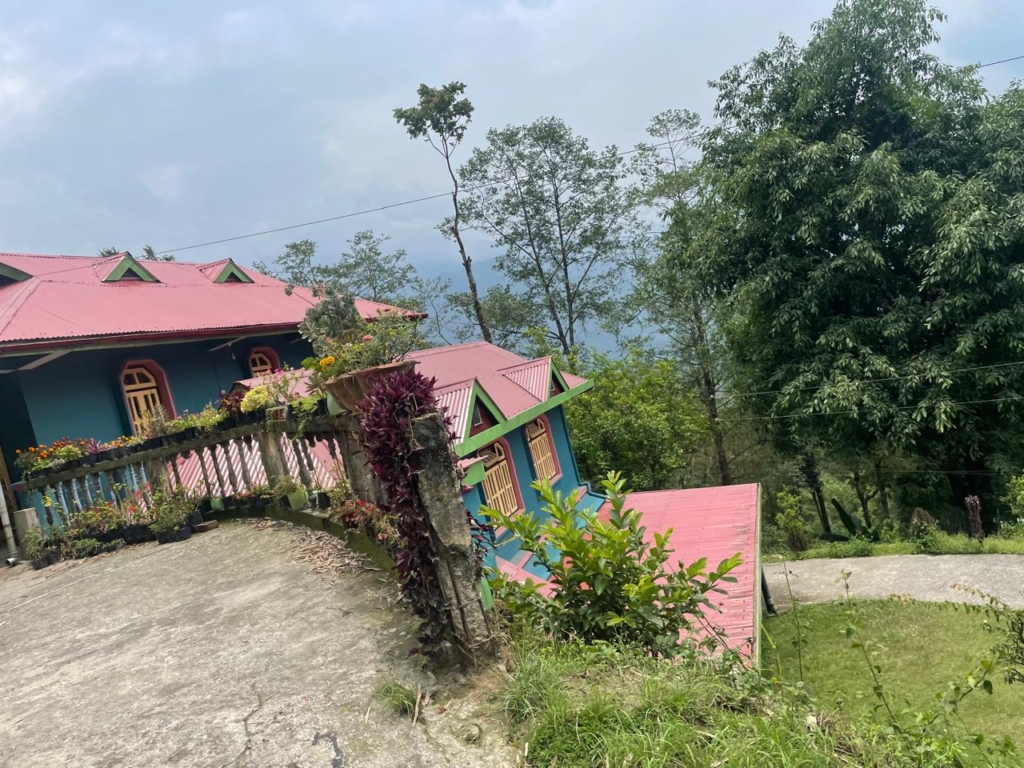
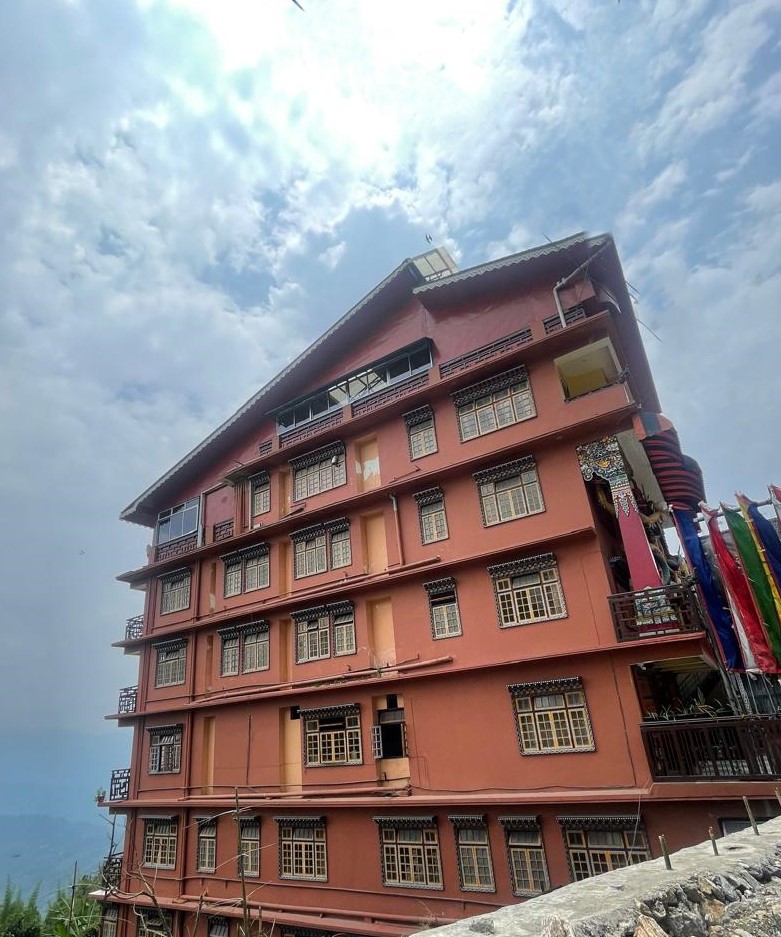
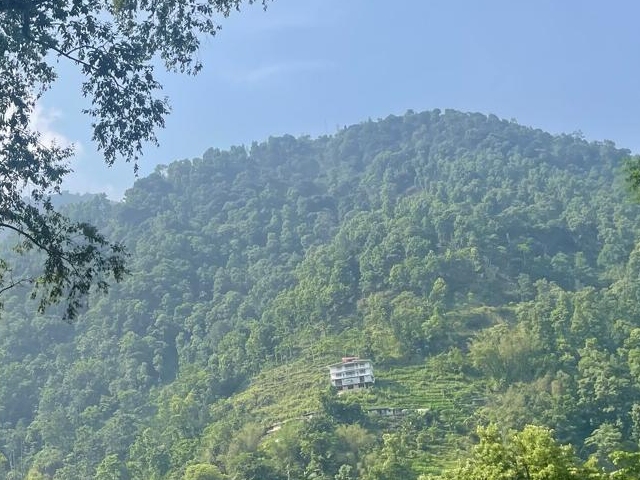
We bid farewell to Gaddigaon and embarked on our journey towards Zuluk, following Sanjay’s advice to take a shorter route via village roads, potentially saving us an hour’s travel time. This path wound through some of the most picturesque village landscapes we had encountered on our trip.
Upon reaching Rongli, the border check-post for permit verification, Rohit efficiently handled the administrative tasks, ensuring our permits were processed and obtaining a mandatory can of oxygen, essential due to the region’s high altitude and limited medical facilities. Zuluk sits at approximately 3,000 meters (10,100 feet), while Nathang Valley stretches even higher to 13,500 feet.

Driving from Rongli towards Zuluk alongside the flowing river Rangpo Chu, we passed through Padamchen, renowned for its protected forests that host a diverse array of avifauna.
Zuluk
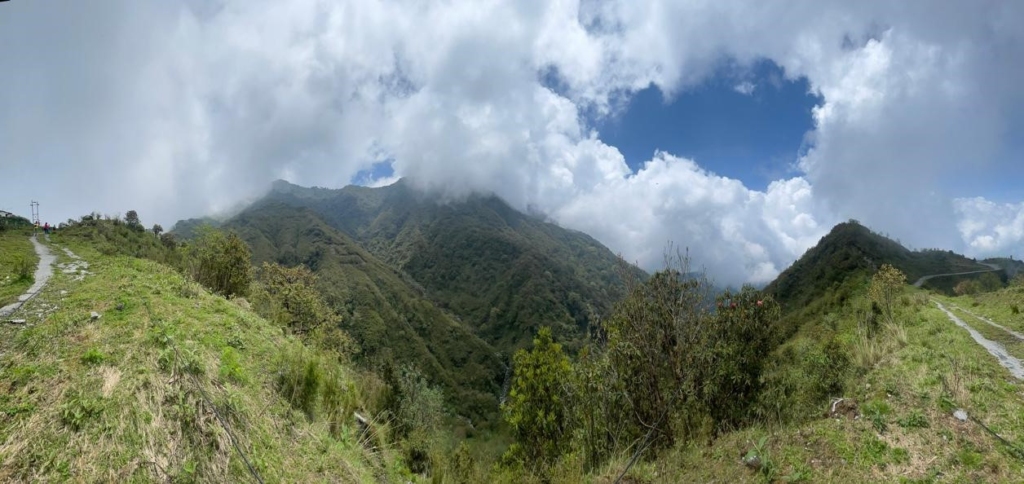
Zuluk itself, nestled near the Indo-Tibetan border and along the historic Old Silk Route leading to Jelep La, was cloaked in thick fog and clouds during our visit, obscuring the renowned panoramic view of the Kanchenjunga range that it is famed for. As we reached Zuluk the weather all of sudden turned chilly. The village appeared modest, with a cluster of buildings that didn’t immediately entice us to linger, prompting our decision to push onward to Nathang Valley in search of suitable accommodations for the night. As I reflect, probably, we should have taken a tea break at Zuluk and interacted with the locals.


Navigating numerous hairpin bends as we ascended, we passed the Thambi View Point, where the ever-changing weather alternated between fleeting moments of sunshine and engulfing clouds, denying us a clear view. Despite this, the glimpses we caught were enough to appreciate the mesmerizing landscape. Progressing further, we paused at Lungthung, situated at an elevation of about 13,000 feet, where we were treated to a partial view of the winding roads and the valley below. The locals suggested around 30 hairpin bends along the zigzagging route, we opted to soak in the experience rather than count each turn. Capturing some photos was enjoyable, yet being present in the moment was truly fulfilling.
Nathang Valley
After a leisurely break at Lungthung, we continued towards Nathang Valley, arriving after another hour’s drive. This small village predominantly serves the nearby army base, its buildings largely constructed from aluminum / tin sheets. Aside from a couple of yaks, the streets appeared quiet and devoid of bustling activity.
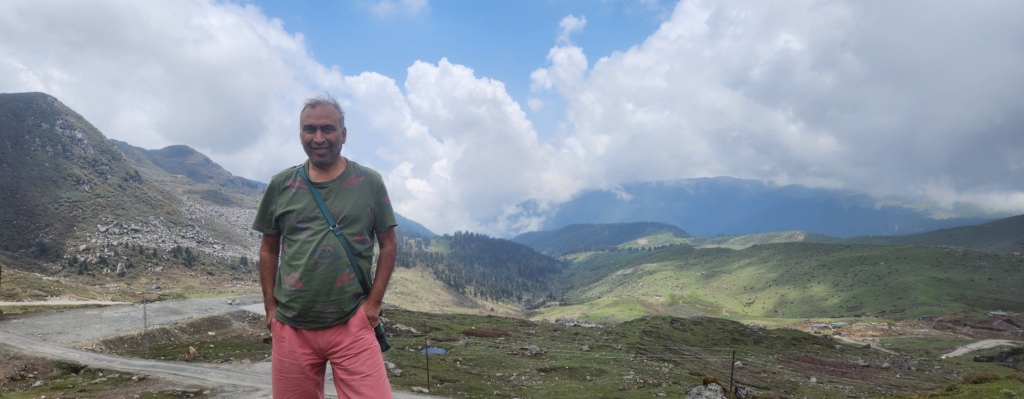
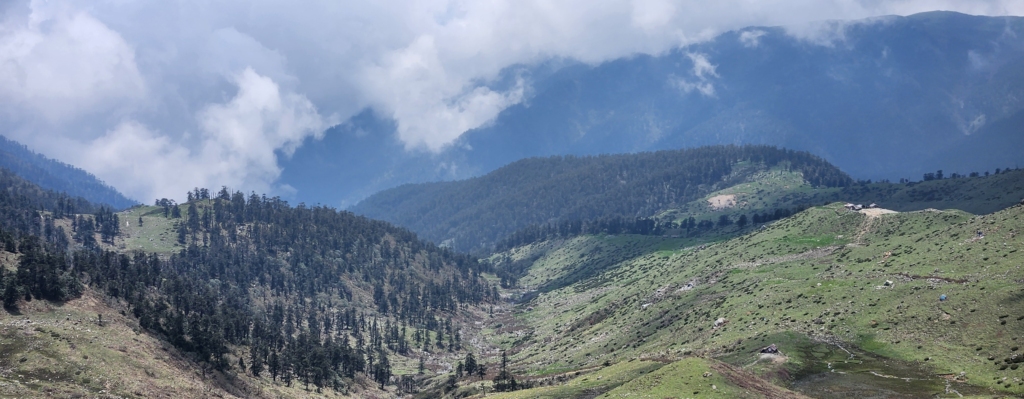
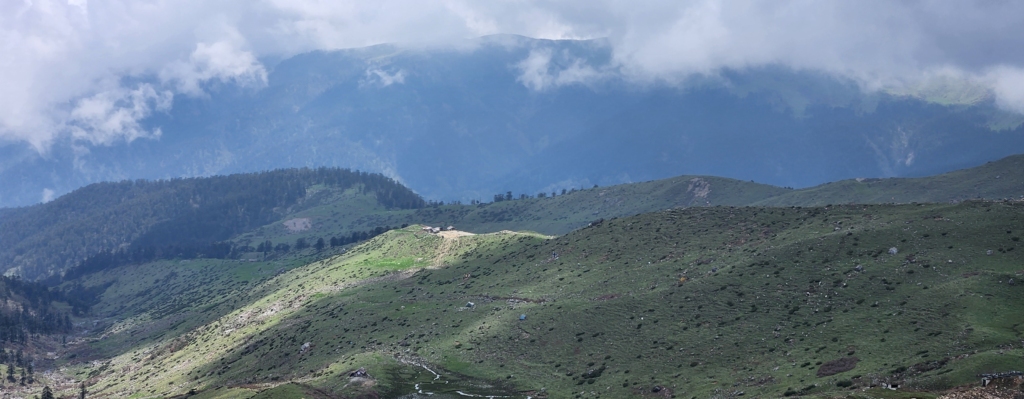
As we continued driving through the stunning landscapes, the urge to pause and immerse ourselves in the pristine surroundings overwhelmed us. We decided to halt for a while, stepping out to inhale the crisp, cold air and unwind amidst nature’s grandeur. Our only regret was the absence of chilled beer or a hot cup of Darjeeling tea to complement the serene moment. Surrounded by a few wildflowers and vast expanses of high-altitude valleys stretching endlessly before us, Nathang Valley (or Gnathang Valley) revealed itself as a high-altitude plateau devoid of trees, encircled by majestic mountains. Fortunately, the weather was clear, offering a rare opportunity to potentially catch a glimpse of Mt. Kanchenjunga, although this time around, we were unsure of the direction to the mountain viewpoint. Unfortunately, the mystic mountain peak of Kanchenjunga continued to eluded our gaze.
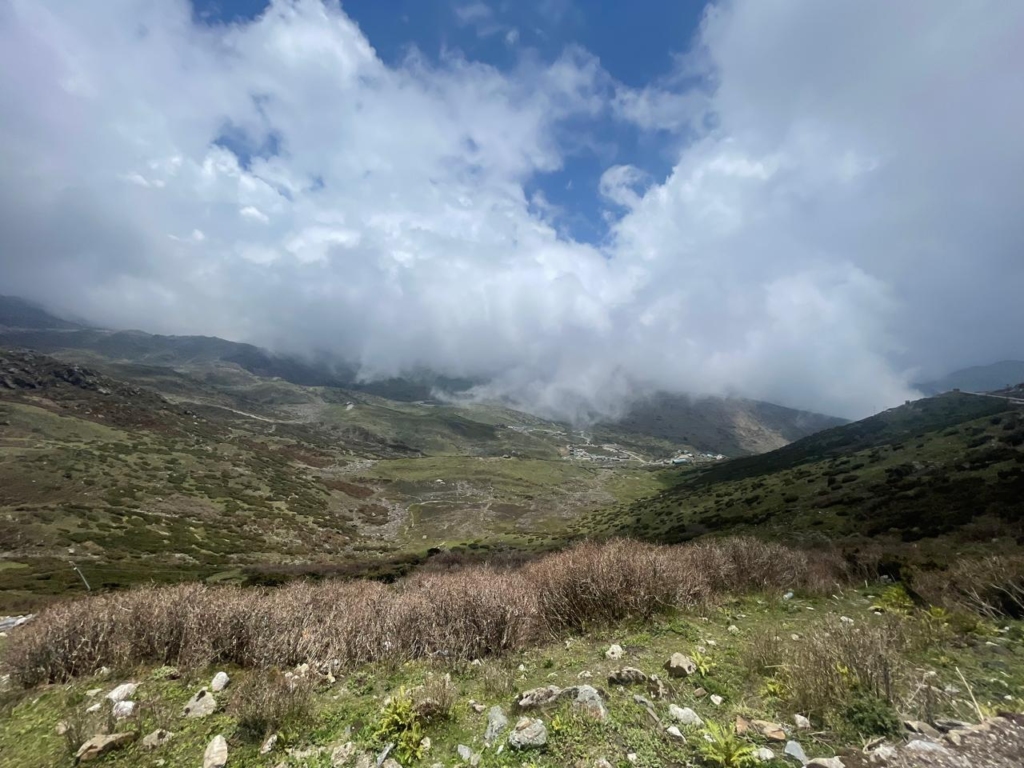
As were relaxing in the open, we heard distant sounds of army firing and shelling, presumably part of their routine exercises. Sensing it wise to continue our journey. After a brief consultation with Rohit, we collectively decided to proceed to Gangtok. Contacting Shahil, our hotel manager in Gangtok, we secured a spacious room with an additional bed for the night, ensuring a comfortable stay in the capital city.
Kupup Lake
Passing through a military zone, we caught sight of blooming rhododendron trees in various colours, feeling fortunate despite being unable to stop for closer inspection. Further along, we arrived at Kupup Lake, a breathtaking spectacle surrounded by towering mountains and valleys. Known locally as Elephant Lake due to its perceived resemblance to an elephant’s back, though we struggled to see the reference. Kupup Lake is revered as one of Sikkim’s most sacred lakes. Its tranquil, serene view offered a calming connection with nature, enhanced by the presence of several other equally picturesque lakes in the vicinity. Exploring this region thoroughly would undoubtedly require a dedicated stay of 3-4 days to do justice to its natural beauty.
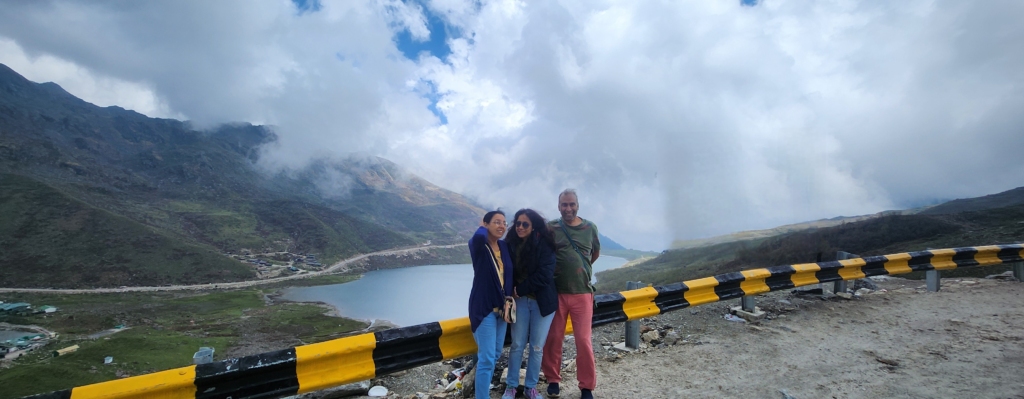
En route, we passed Baba Harbhajan Mandir, a memorial dedicated to Sepoy Harbhajan Singh of the Indian army, visited by numerous devotees annually. Many legends surround his death and subsequent cultism as a saintly figure. The temple complex includes Baba’s personal room, maintained with his daily essentials, including neatly ironed uniforms and polished boots. The polished boots is reportedly found muddy by end of each day by mysterious means. It’s believed Baba Harbhajan Singh watches over the India-China border, with even the Chinese army acknowledging sightings of a figure on horseback guarding the border at night. Stories also suggest Baba forewarns the army of impending dangers through the dreams of his fellow soldiers, ensuring their safety.
Changu Lake / Tsomgo Lake
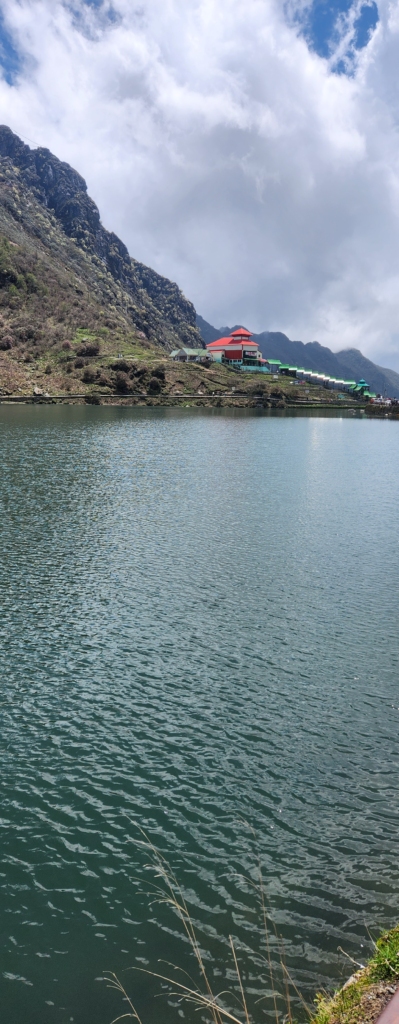
Continuing towards Gangtok, our next stop was the oval-shaped, deep blue Tsomgo Lake (Changu Lake), a mesmerizing landscape nestled amidst picturesque mountains. Highly revered by local Buddhists and Hindus alike, the lake captivated us with its natural beauty. Adjacent to the lake, a cable-car offered tourists panoramic views from atop a nearby mountain. Instead of riding the cable-car, we opted to spend some time pampering a yak. Despite its imposing size, the yak exuded a gentle demeanour, its innocent eyes captivating us. MunMun and Tazo weren’t keen on a piggyback ride, though it would have made for an unforgettable photo opportunity.



During our drive to Gangtok, Rohit shared the exciting news that the road to Dzongu had reopened, prompting him to arrange our permits for the following day. We promptly contacted our homestay caretaker, confirming our two-night stay in Dzongu. Unfortunately, due to ongoing restrictions, we had to skip visiting Lachung and Lachen.
Gangtok
By 3 pm, we arrived at our hotel in Gangtok, famished after the day’s journey. After freshening up, we strolled down the slopes to MG Road, a mere 10-minute walk from our hotel. MunMun swiftly googled and selected a restaurant on the famous MG Road. Despite Gangtok’s unexpected heat compared to our previous destinations, we thoroughly enjoyed exploring MG Road, a traffic-free promenade that adds to the city’s unique charm. Tazo and MunMun were tempted by local street shopping but decided to postpone it until our return journey.
At the beginning of MG Road, we walked into my cousin’s book-store. I introduced MunMun and Tazo to Alok, my cousin, where we caught up and had a delightful time. We agreed to catch-up for more discussion over dinner. Later that evening, heavy rain prompted us to stay indoors, causing me to regret missing the opportunity to visit my cousin and extended family. Aniket, a helpful young boy, promptly laid out an additional bed and mattress while leaving his mobile number for any room service needs. We appreciated his thoughtful gesture, realizing its value the next morning.
Our dinner order was taken care of by Ashika, a shy yet pretty young girl working during her college summer break to support her family back in their village, a couple of hours away. We just ordered a sandwich and soup. Gangtok seemed to be the only place offering meaningful employment opportunities for locals like Ashika and Aniket. Despite economic challenges, her cheerful demeanour was inspiring, reflecting the resilience of the younger generation. We shared some goodies from Mumbai with both Aniket and Ashika, appreciating their warmth and hospitality.

The next morning, we decided to take it easy, with Rohit scheduled to pick us up around 11 am.
Day 5 & 6 – Dzongu: Hideout nestled in lap of Mt. Kanchenjunga (Read More)
Day 7 to 9 – Darjeeling: Romancing with “Queen of Hills” & Shopping (Read More)
Gallery







Sukumar Jain, a Mumbai-based finance professional with global experience, is also a passionate traveler, wildlife enthusiast, and an aficionado of Indian culture. Alongside his career, which includes diverse roles in international banking and finance, he's working on a wildlife coffee table book and enjoys sculpture and pottery. His interests span reading non-fiction to engaging in social and global networking.