
Preamble – Hampi: Tale of Two Civilizations – Read More
Day 1: Hampi – Land of Boulders – Read More
Day 2: Hampi – UNESCO World Heritage Site – Read More
Day 3: More Temples & Monuments
Anjeneri Anjanadri Temple
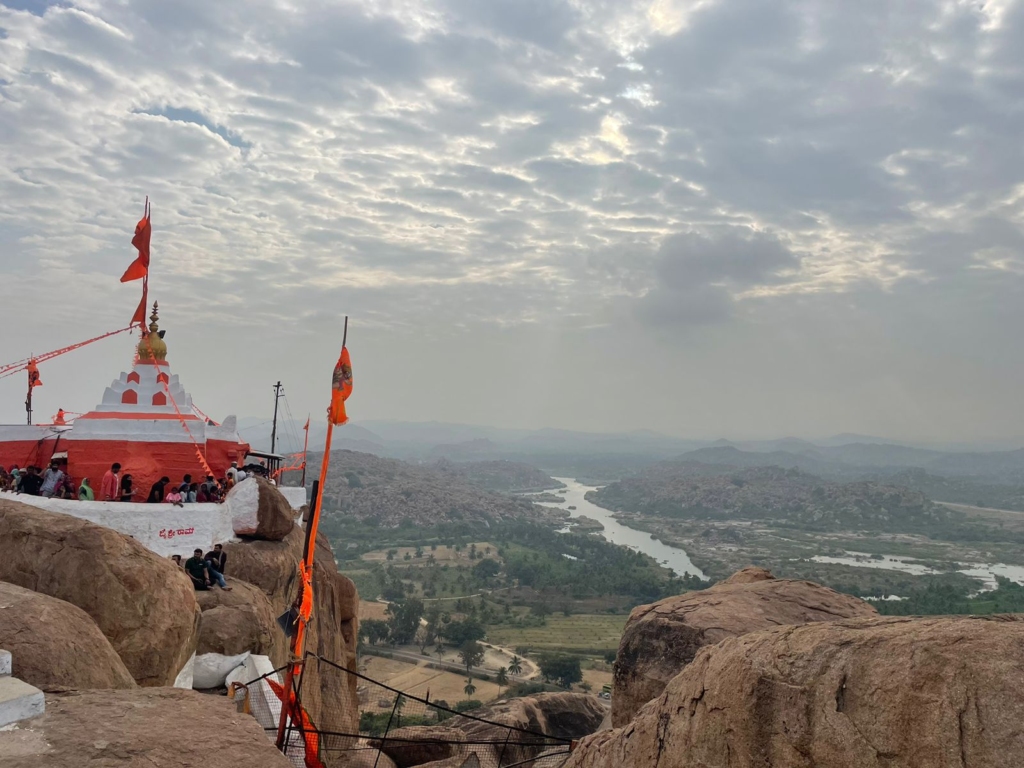
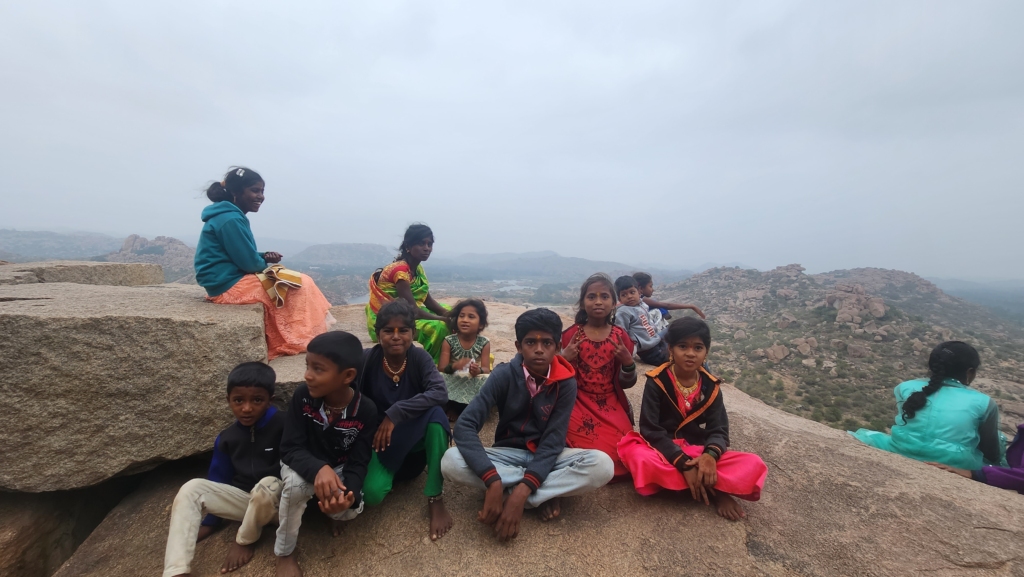
The Drs left me a message saying they were ditching the Matanga Hill trek for a visit to the Anjeneri Anjanadri Temple to get some blessings from Hanuman. Legend has it that Hanuman was born on Anjeneri Hill. The temple up there, dedicated to Hanuman, is a big draw among devotees. But lemme tell ya, you gotta climb about 600 steps to reach it – definitely wasn’t on my agenda! We agreed to meet up for lunch around Hippie Island. I managed to snag a room at the same resort the Drs were staying at. Later they shared with me some pics from their trek up the Anjeneri Anjanadri Temple.
Matanga Hill
So, bright and early the next morning, Ganesh and I set off to conquer Matanga Hill and catch that epic sunrise. I gotta admit, I wouldn’t have made it up there without Ganesh’s helping hand. The climb was a bit of a challenge, but man, the view from the top was unreal!


Thanks to the Light and Sound show, I got a crash course on Matanga Hill’s backstory. Long story short, a holy sage cursed Vali so he couldn’t set foot on the hill. So Sugriva, smart cookie that he was, took refuge there after getting the boot from Kishkindha, just to stay outta Vali’s way.
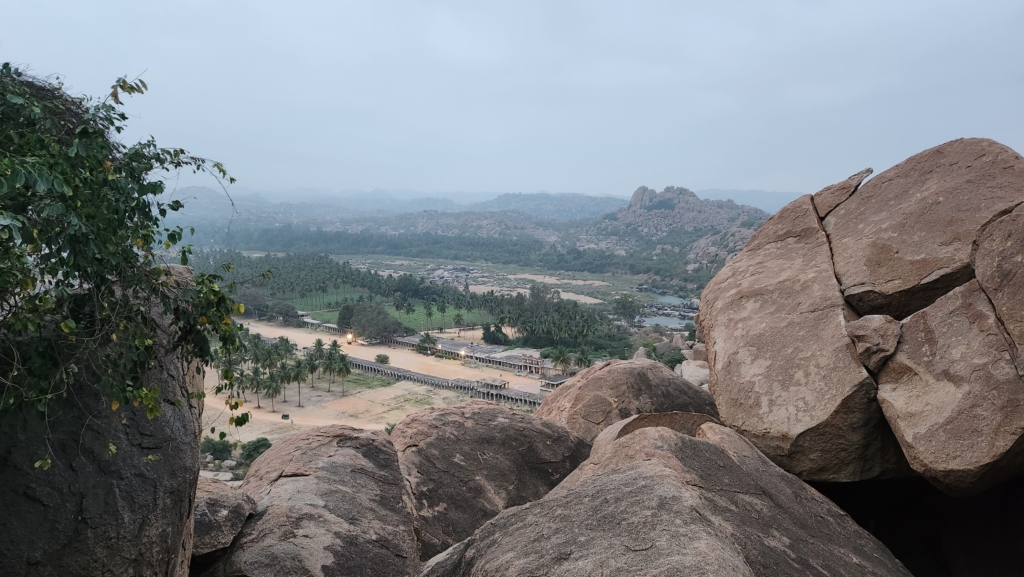
From up high, you could see the whole stretch from Virupaksha Temple to Nandi Bull. On the flip side of the hill, there was the Achyutaraya Temple with its marketplace, and the Tungabhadra River chillin’ nearby. Clouds and sun decided to play peek-a-boo, but let me tell ya, the view from the hilltop was something else.
Achyutaraya Temple and Market Complex
Achyutaraya Temple and its market street looked like they’d seen better days. But even in ruins, you could tell this place was a major hub back in its glory days. I spotted this long market street facing the crumbling Achyutaraya Temple. Both Virupaksha and Achyutaraya Temples had similar bazaar setups, with a wide road between the ruined shops for carts to roll through and for all kinds of shindigs and celebrations. Another miss on my list!

On our way back, we decided to grab some South Indian grub at a street vendor stall. Let me tell ya, brekkie was top-notch! We practically polished off everything, and the poor lady had to whip up another batch. Back at the homestay, we freshened up and thanked Lakshmi for her hospitality. She even invited me to stay longer next time – what a gem!
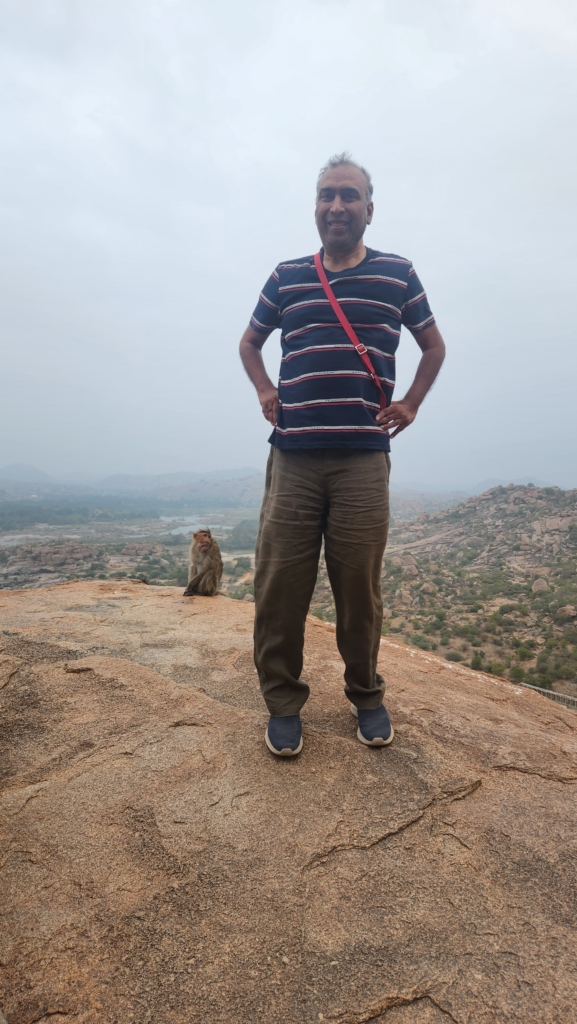


With some time on my hands before meeting up with the Drs, I decided to tick off some more monuments from my to-do list.
Lakshmi Narasimha Statue
This massive 7 metres tall monolith statue of Narasimha sitting in a yogic pose was a sight to behold. Narasimha (means “half-man, half-lion”) is fourth incarnations (avatar) of the total ten avatars of Vishnu. The intricate details, especially those bulging eyes and fierce expression, had me mesmerized. Narasimha was chilling on a seven-headed snake called Sesha.

The statue has been damaged considerably and it is said that there was a Lakshmi statue along with Narasimha, which has been destroyed totally.
Badavilinga Shivlinga
Next to Narasimha was this huge 3-metre tall shivling, with its base submerged in water. Fresh flowers adorned the top, and the caretaker told me a priest came daily to perform puja. Apparently, the water in the pond stays put all year round, thanks to some nifty underground canal system connected to the Tungabhadra River – alk about engineering wizardry!

Underground Shiva Temple
This Shiva temple was constructed below the ground level and the access to main chamber of the temple is partially submerged under water. With folks cautiously walking along a narrow ledge inside to reach the chamber holding the shivling, I decided to play it safe and pay my respects from a distance. Pretty cool architectural innovation, though!
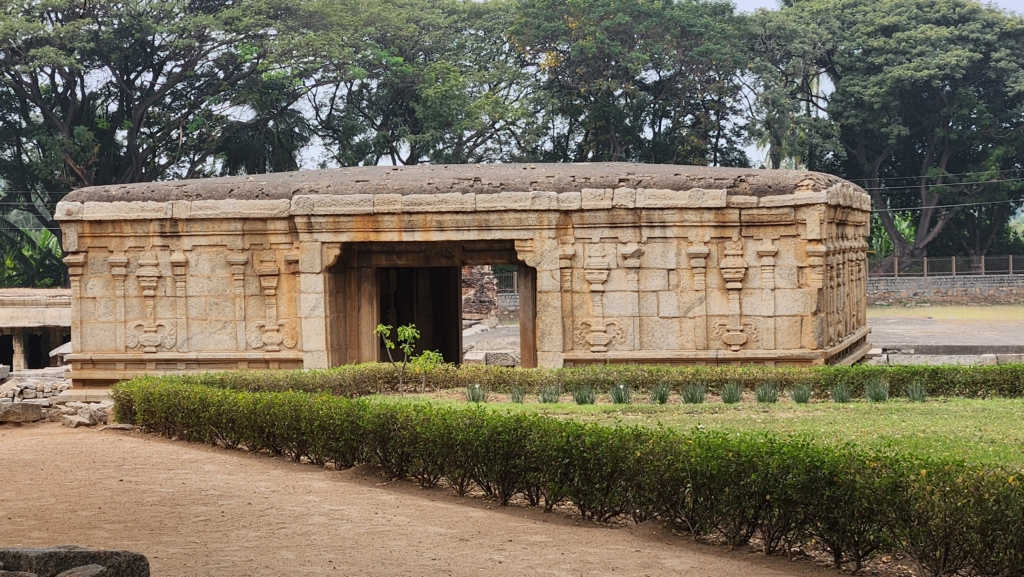
It was too dark inside to get any meaningful photographs.
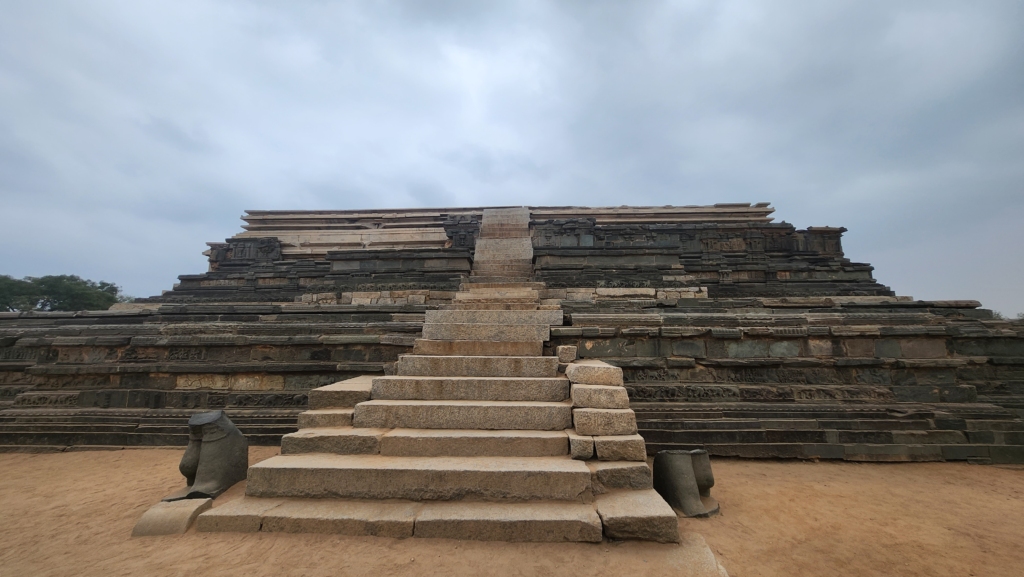
Mahanavami Dibba / Platform
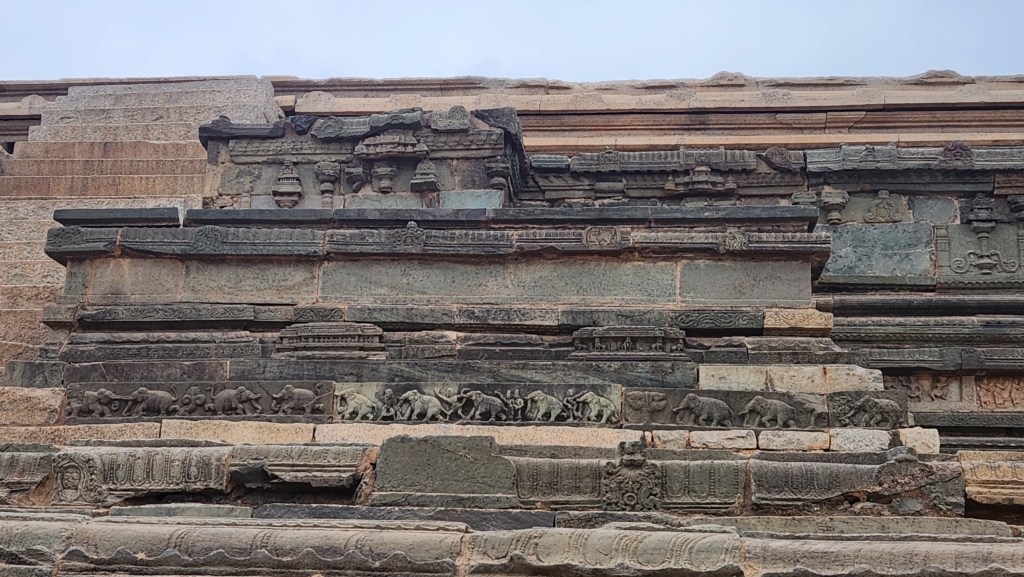
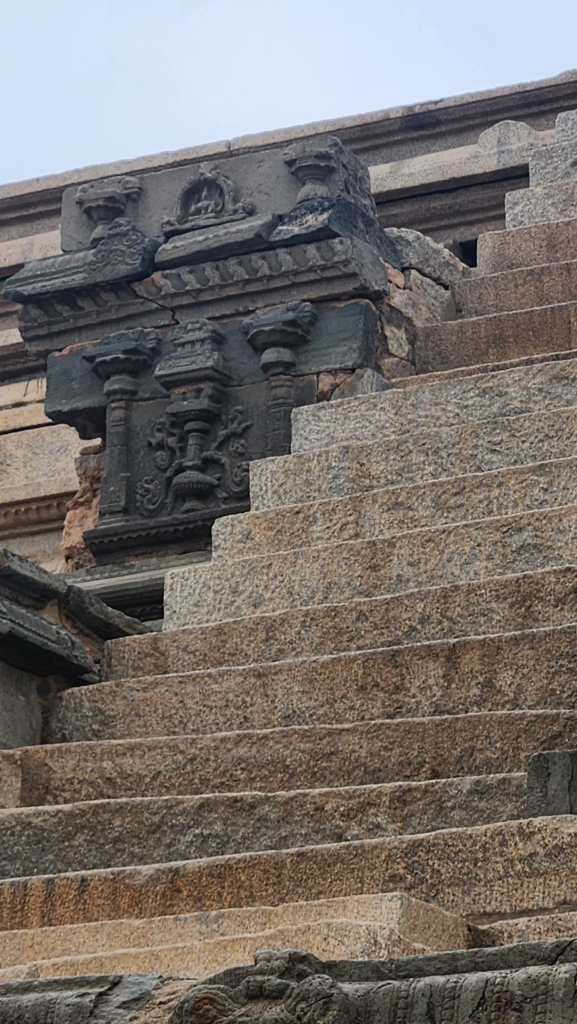
This ginormous platform, with its three ascending square stages leading to a massive square top, was a marvel of simplicity. It was probably the largest structure around, with a wooden mandapa on top that likely went up in flames during the Empire’s downfall. The intricate designs etched all over the platform had me in awe.

Black Stone Step-Water Tank
Last on my list was this step-water tank, and man, it was a beaut! I could almost picture royal mermaids lounging around in there. The tank’s design, with its five-floor symmetry and a long water channel leading to it from a distant reservoir, was simple yet elegant. The way the water sluiced through, supported by columns in places, was just genius.
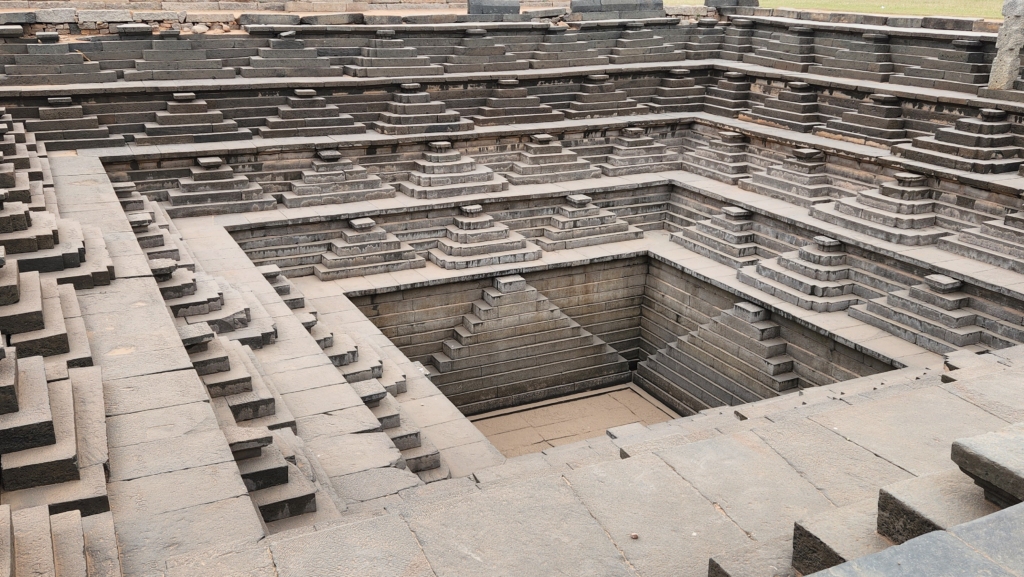
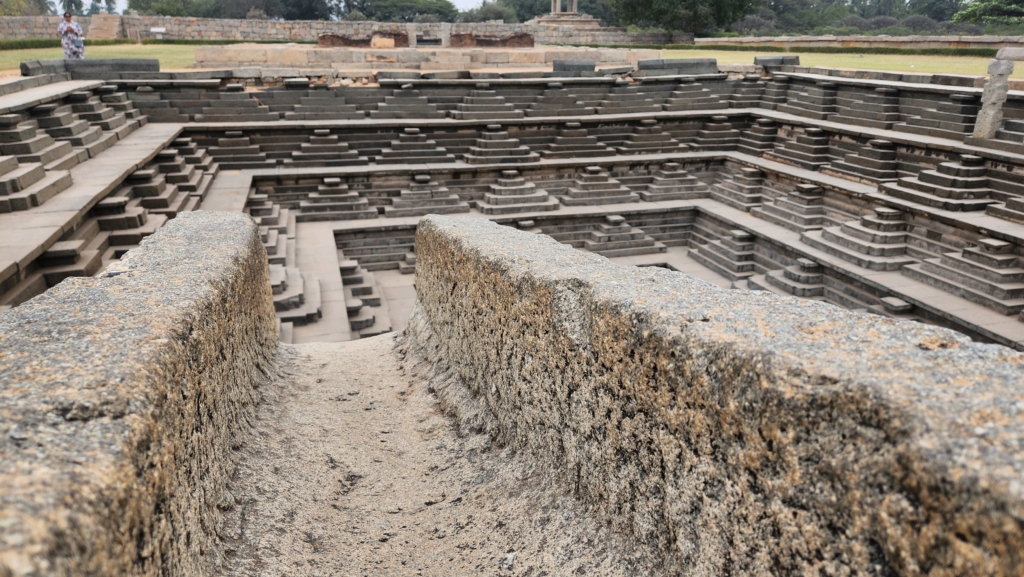
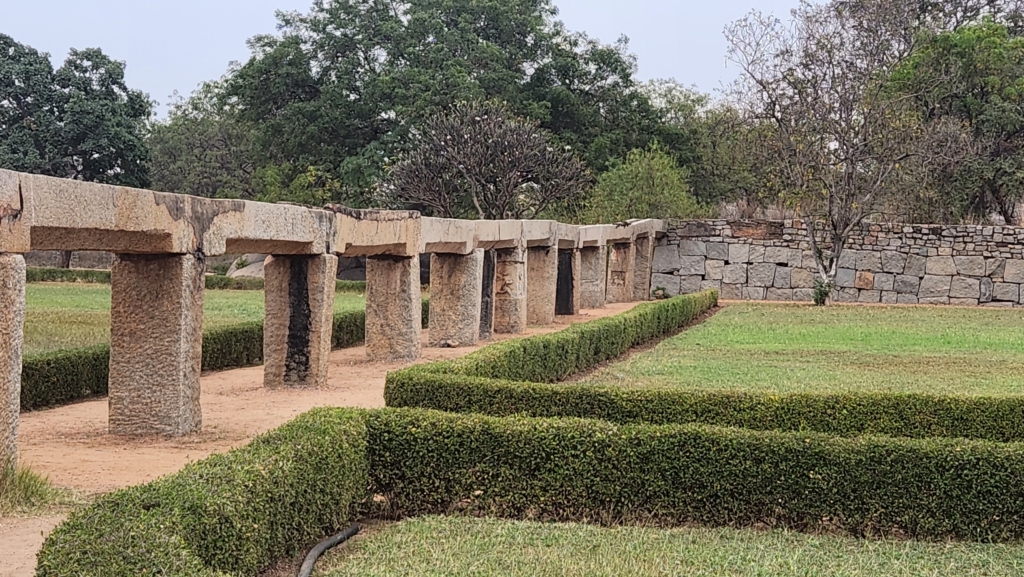
The local guide was explaining the tourists that the step-tank has been recently excavated – as late as in the 1980s. This sets we wonder, what else would be hidden under the soil of Hampi. There was a ruined temple-like monument near the step tank, but I was done for the day and had to catch-up with the Drs for lunch.
Hippie Island
Our ride from Hampi town to Hippie Island was like a postcard come to life. We passed by the Anjeneri Anjanadri Temple, swarming with devotees. There were makeshift huts offering budget stays, and it seemed like the go-to spot for digital nomads. We found the Drs waiting for us at a local joint, beer cans in hand. Even though alcohol’s officially a no-no in Hampi, the beer flowed freely. By the time we wrapped up, we were definitely feeling the buzz.
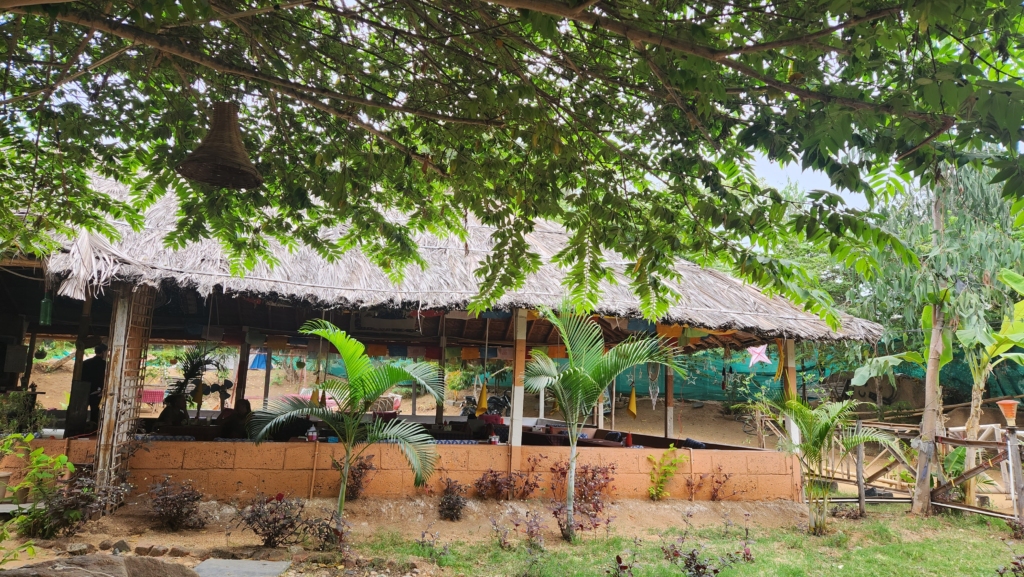
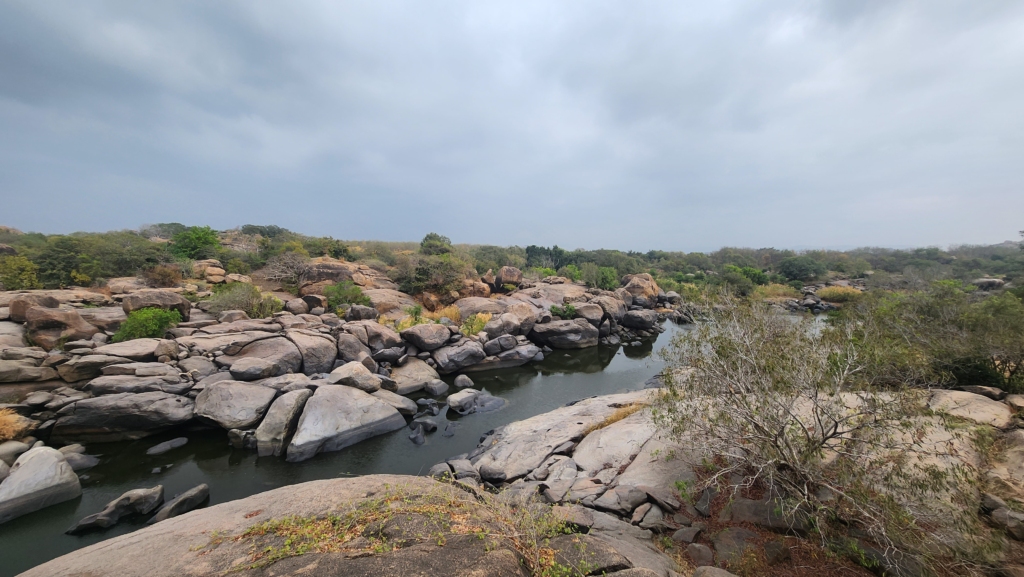
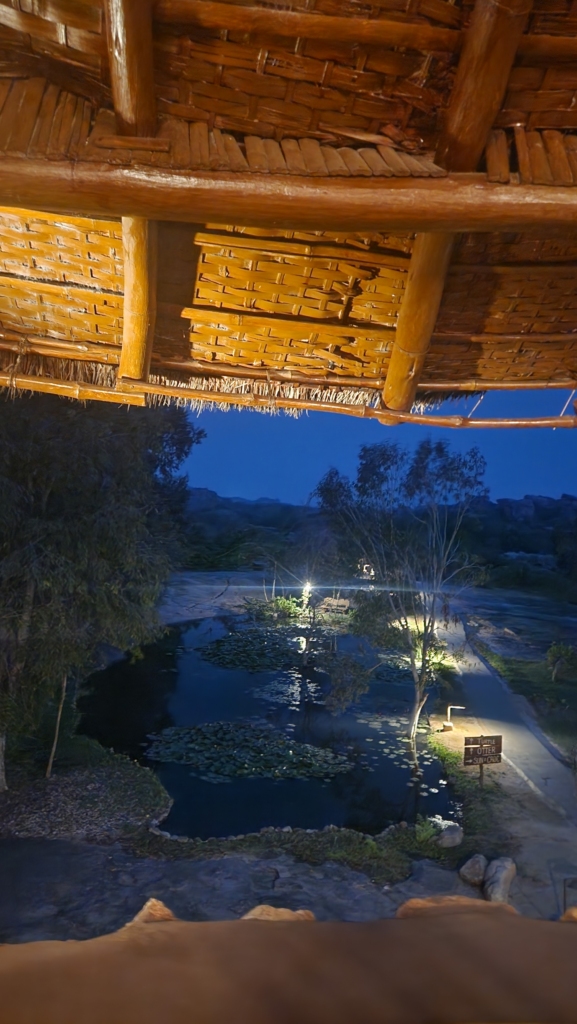
I lucked out with a stay at one of the swankiest resorts in the area, in their top-notch suite no less. My stand-alone bungalow overlooked the river, complete with a terrace and balcony. Talk about living the high life! I practically collapsed into my plush bed, but when the Drs called for an evening stroll along the river, I couldn’t resist.
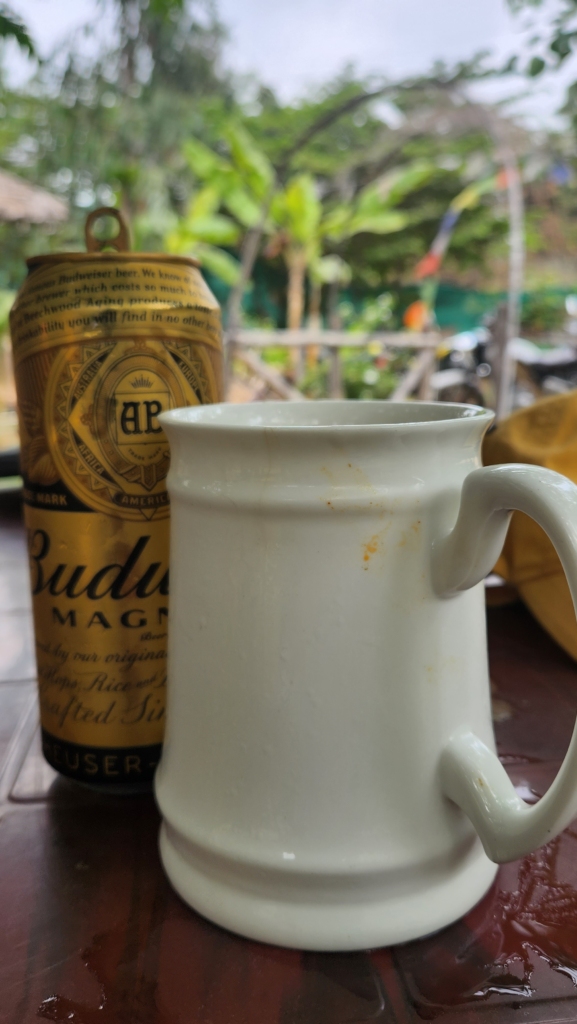

After our walk, the resort had a bonfire and barbecue going on. We washed down the excess beer with some hot rasam and finished off with a simple yogurt-rice dinner. By the time we hit the hay, it was late, but we agreed to go for a morning walk the next day.
January 2024
If you’re planning a trip to Hampi or travel through Karnataka / India, we at HappyHorizon would be thrilled to curate your holiday plans to enhance overall travel experiences. Feel free to reach out to us: connect@happyhorizon.in
Day 4: Daroji Sloth Bear Sanctuary & Sanapur Lake
Gallery
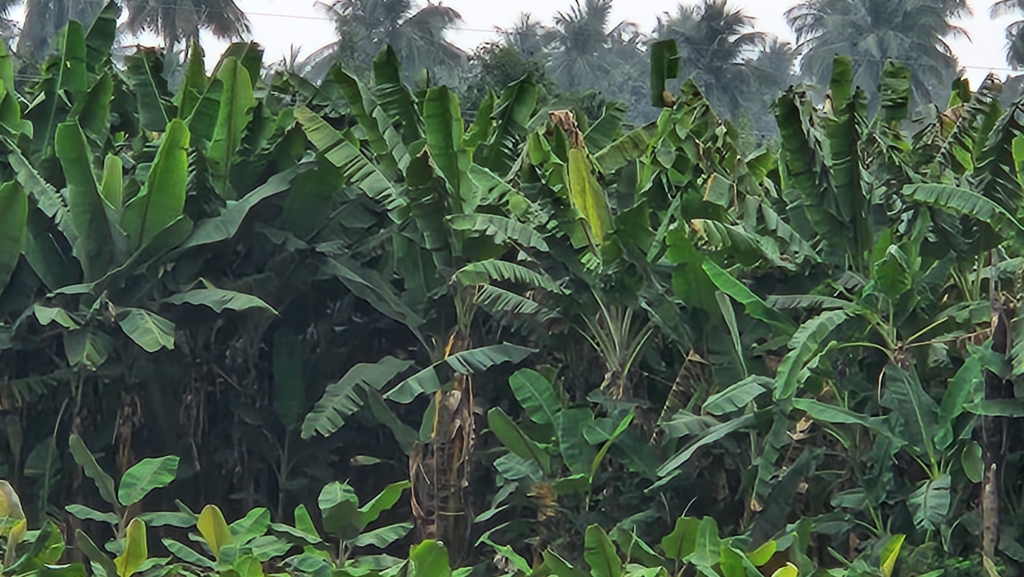



View from my room



Sukumar Jain, a Mumbai-based finance professional with global experience, is also a passionate traveler, wildlife enthusiast, and an aficionado of Indian culture. Alongside his career, which includes diverse roles in international banking and finance, he's working on a wildlife coffee table book and enjoys sculpture and pottery. His interests span reading non-fiction to engaging in social and global networking.