
Day 2 (Part 3): Ta Prohm & Dinner with Kourn – Read More
Day 3: Battambang
Siem Reap – Battambang: 165 km. / 3 hr.
Yesterday, as we wandered through the ancient, root-entangled ruins of Ta Prohm, soaking in the eerie beauty of crumbling stones embraced by giant silk-cotton trees, my guide and impromptu trip planner, Sieng, threw in a brilliant suggestion.
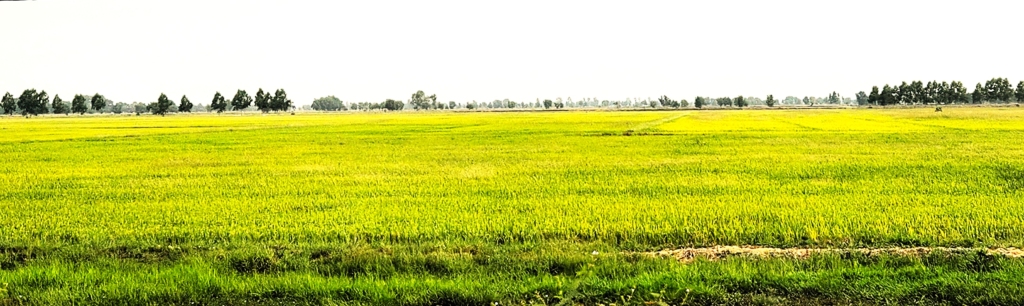
Instead of getting lost in more ruins or gliding through the floating villages of Tonle Sap, we could hit the open road, cruise past endless emerald-green paddy fields, and dive into a different slice of Cambodia’s history. The plan? A somber visit to the Killing Caves of the Khmer Rouge era, followed by something far lighter—a joyride on the famous bamboo train. He suggested we could take a road trip to Battambang.
It didn’t take much to sell me on the idea. A change of scenery, a little history, and a quirky rail experience? Frankly, I gave in to his twinkling eyes with the promise of adventure. After a bit of friendly haggling over fares, we sealed the deal. No crack-of-dawn wake-up calls either—we’d take it easy and roll out around 10 AM. Battambang, here we come!
Breakfast with Kourn
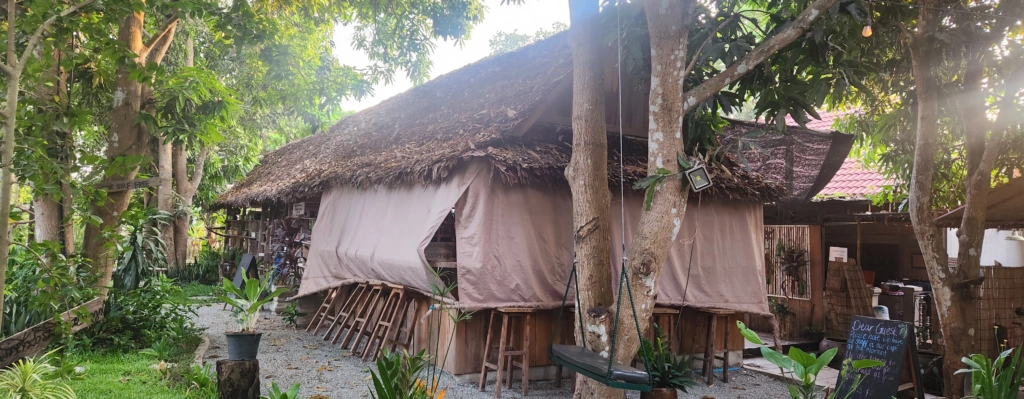
Breakfast at the homestay was simple but hearty—fresh fruits, crusty baguettes, and the rich, dark Cambodian coffee that could jolt even the sleepiest traveler into full alertness. Kourn and I picked up right where we left off at dinner the night before, diving into a conversation that stretched far beyond the morning meal.
Kourn wasn’t a follower of any mainstream religion; instead, he placed his faith in Animism—a belief system deeply woven into Cambodia’s cultural fabric. “Everything has a spirit”, he explained, his voice calm but certain. Rivers, mountains, the soil, even the trees—they all held their own energy. Some spirits, he said, were benevolent, while others needed to be appeased with offerings to avoid misfortune. I listened, fascinated, as he spoke about how modernity—especially social media—was eroding simple human values like respect.
Then came something even more intriguing. Kourn revealed that his name was just a childhood nickname, given to him to confuse wandering spirits. “Even our birth dates are kept secret,” he added with a knowing smile. It reminded me of black magic traditions back in India, where similar beliefs aimed to protect individuals from unseen forces. Perhaps these customs had travelled with Hinduism centuries ago, finding a new home in Cambodia, or did it travelled the other way. We shall never know.
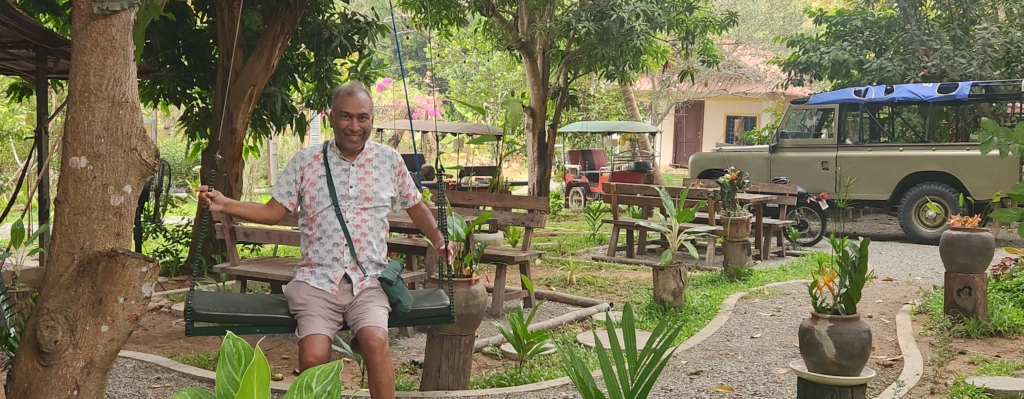
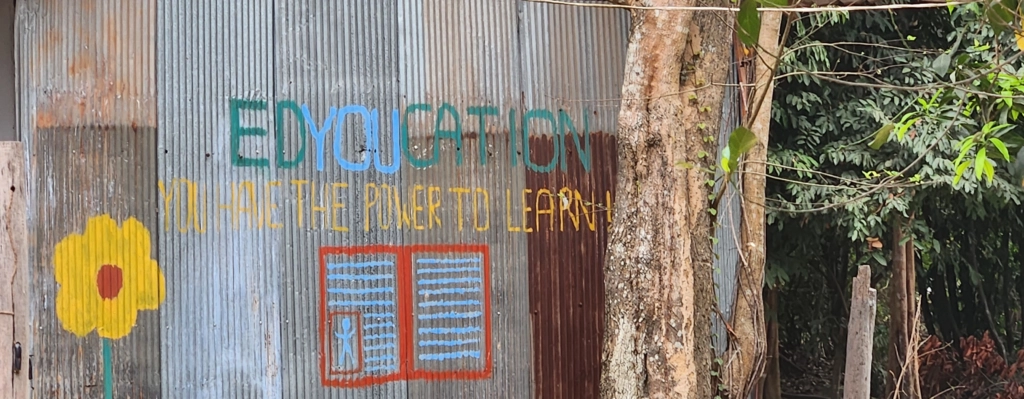
As the conversation meandered, Kourn shifted to a more grounded topic—the Cambodian economy. While Siem Reap and Phnom Penh had their fair share of prosperity, rural communities lived on the edge, struggling daily to make ends meet. Determined to bridge this gap, Kourn had founded a free education program for underprivileged children aged 6 to 18. “We started small”, he said, “but now we have 70 students—half boys, half girls”. His observations echoed my own experience with Aspire n Inspire; the girls, he noted, were generally more focused in the classroom.
His school stood on a plot of land that had once been part of his family’s dowry gift at the time of his marriage. Instead of using it for personal gain, he had built classrooms, ensuring the next generation had the tools to carve out a better future. The curriculum? Taught in English, with an emphasis on preparing students to tap into Cambodia’s biggest industry—tourism.
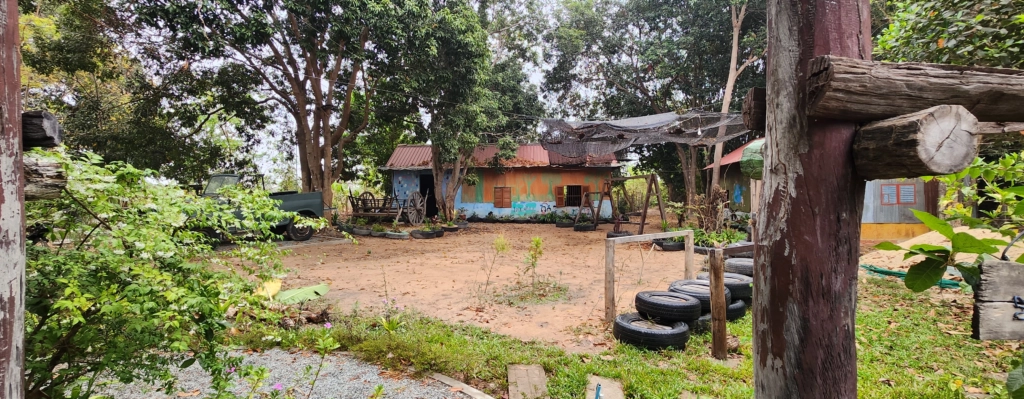
Despite his efforts, funding remained a challenge. “Twenty-five percent of our homestay income goes into the school”, he admitted, “but we often have to chip in from our own pockets.” Even so, Kourn remained unwavering in his mission. And what struck me most was his commitment to self-improvement—while teaching others, he never stopped learning himself. Fluent in Japanese, Spanish, and English, he was a walking testament to the power of education.
If I ever manage to upload videos properly, I’d love to share my interview with Kourn—a window into his inspiring journey.
With a grateful heart, I checked out of the homestay, thanking Kourn and his family for their warmth, generosity, and for offering me a glimpse into the real Cambodia—one that exists beyond the tourist brochures, shaped by resilience, tradition, and an unwavering belief in the future.
Siem Reap – City
Sieng, ever the practical one, suggested I check into my hotel first. It made sense—by the time we returned from Battambang, it would be late, and I didn’t want to risk my booking being cancelled.
But here’s where things got a little ridiculous—somehow, in a feat of supreme absentmindedness, I had managed to book two different hotels for my next two nights in Siem Reap city centre. Not only that, but they were practically staring at each other from opposite banks of the Siem River. Why? No idea. Maybe I just wanted to experience both sides of the river, quite literally.
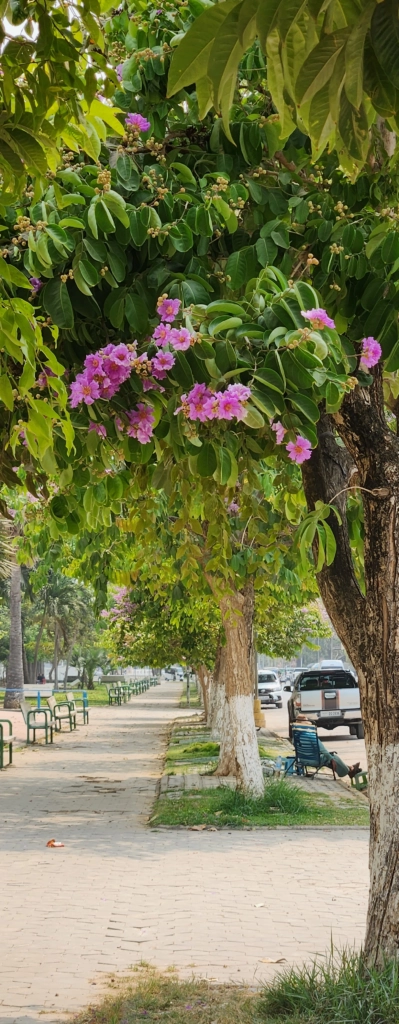
Up until now, my time in Siem Reap had been all about the outskirts—winding through jungle-covered temple ruins, navigating dusty backroads, and feeling like Indiana Jones minus the hat. But as we drove into the city proper, I finally got a taste of urban Siem Reap. The streets were lined with charming, French-influenced shophouses—ground plus one structures with rustic wooden shutters and faded pastel facades. And, in a lingering legacy of colonial rule, Cambodians drive on the right side of the road. Thanks for that, France.

Finding the hotel was a breeze for Sieng, who probably knew every alley and shortcut in town. The city itself had a sleepy vibe at this hour—either it was waking up slowly or, more likely, the bulk of tourists had already scattered towards Angkor’s ancient playground. My hotel sat conveniently close to Pub Street, Siem Reap’s infamous after-dark hub where, come sunset, backpackers and travelers morph into nocturnal creatures, hopping between bars and soaking in the neon-lit revelry.
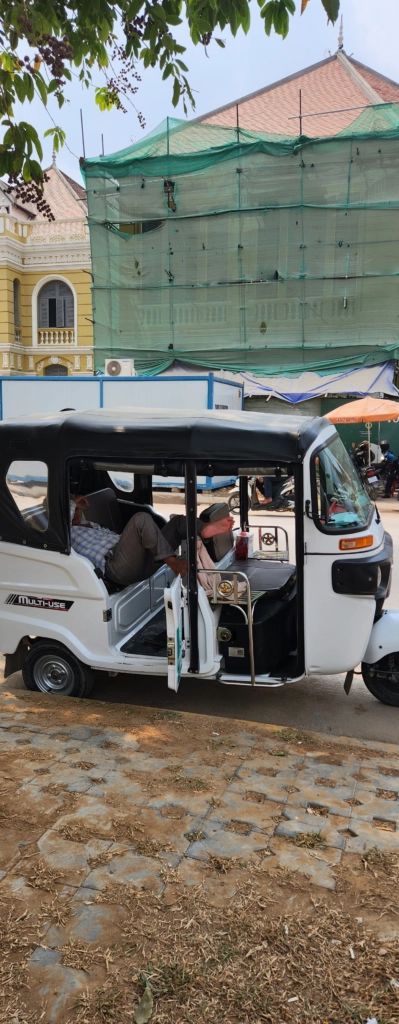
After a quick luggage drop, we hit the road towards Battambang. As we weaved through the city, Siem Reap was just beginning to stir—locals setting up shop, street vendors arranging their wares, and the occasional tuk-tuk puttering by. The only place that was truly buzzing was the local wholesale vegetable market, alive with early-morning energy. It was a chaotic dance of vendors shouting, buyers haggling, and fresh produce being hauled onto carts. Judging by the serious expressions and chef’s jackets in the crowd, I wouldn’t be surprised if most of them were resort and hotel chefs, picking up their daily supplies before heading back to prep feasts for the tourists.
With the city slowly coming to life behind us, we rolled out onto the open road—Battambang awaited.

Battambang
As we rolled out of Siem Reap, the hum of city life gradually faded into a serene rural landscape. The road stretched ahead like an inviting ribbon, flanked on both sides by vast, endless paddy fields—a sea of green that seemed to sway in unison with the warm breeze. With a view like this, we could have been anywhere in the world—Vietnam, Thailand, even India—but this was Cambodia, one of the largest rice exporters on the planet.

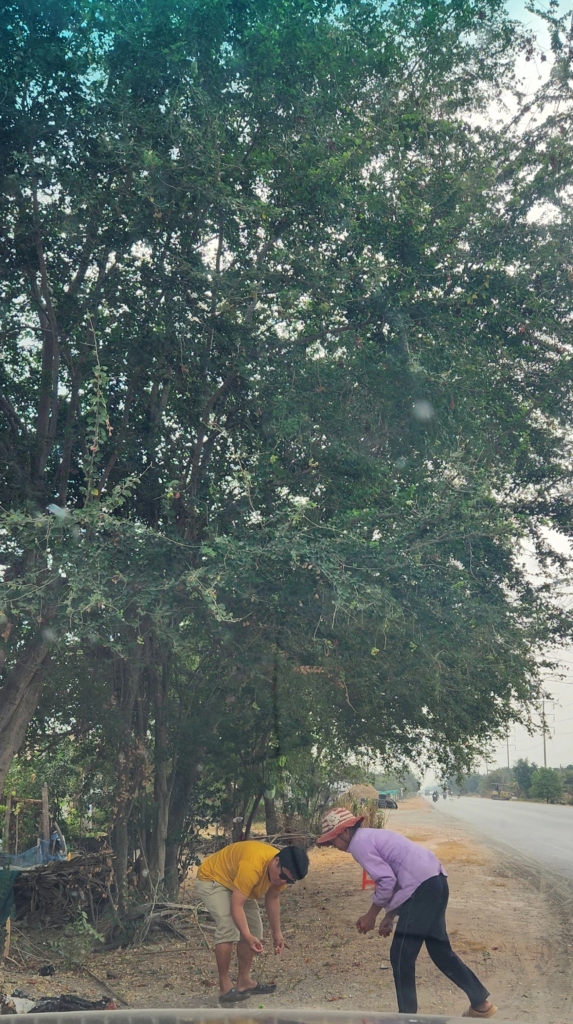
Cambodia’s countryside unfolding like a storybook around us. As we cruised along, Sieng suddenly hit the brakes and pointed excitedly to a roadside stall. A woman sat under a tree, selling Jungle Jalebi. Before I knew it, Sieng hopped out.
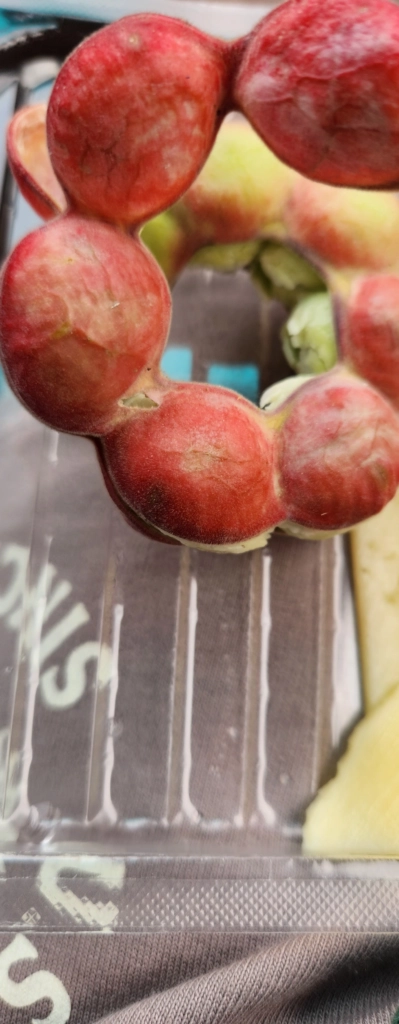
Sieng and the lady were up on their feet, plucking fresh ones straight from the tree. Sieng bought a generous stash to last 2 days.
It’s these little moments that make a road trip special—unexpected finds, simple joys, and a fruit that brings back childhood memories.
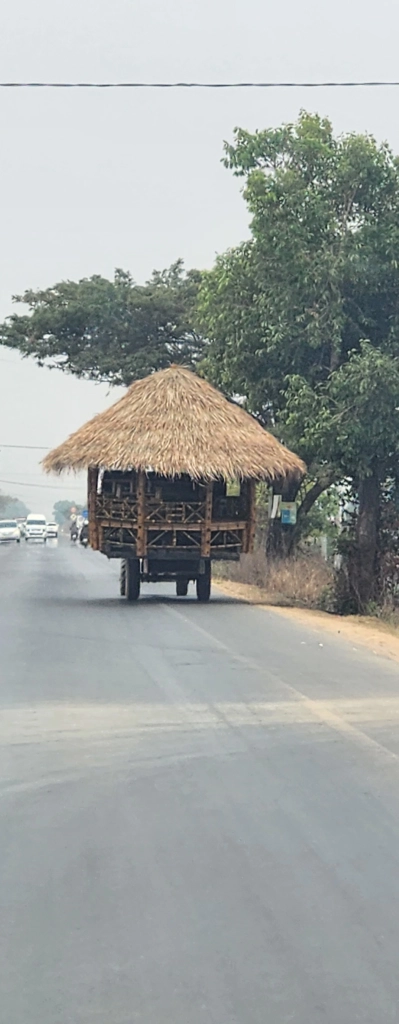
Somewhere mid-journey, Sieng casually dropped a nugget of local trivia that caught me off guard. “This area is famous for eating a certain kind of rat”, he said, as if it were the most natural thing in the world. Apparently, this was the only region in Cambodia where people dined on these rodents, and as proof, we soon spotted roadside stalls displaying roasted rats—each one splayed out in a dramatic Batman-like stance, crisped to perfection.
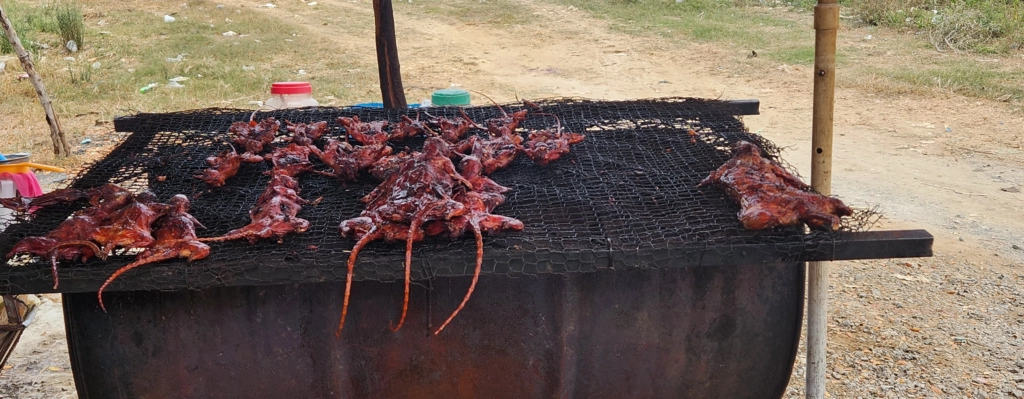
Curious but not exactly adventurous in this department, I joked that we could take a break if Sieng wanted to indulge. To my surprise, Sieng declined immediately. “Never tried it. Never been tempted either”, he said. Given that this was a guy who happily munched on all sorts of insects and exotic meats, I had to ask—why the hard no on the rats? He simply smiled and chose to stay silent. I figured some mysteries are best left unsolved.
By late afternoon, we entered Battambang, Cambodia’s third-largest city. But if I hadn’t been told that, I never would have guessed—there was hardly any traffic. Compared to the tourist buzz of Siem Reap, Battambang had a laid-back, almost forgotten charm. Sieng explained that before Angkor Wat was rediscovered and became a global phenomenon, Battambang was actually the second-largest city in Cambodia. It was only when Siem Reap rapidly developed that Battambang took a backseat.
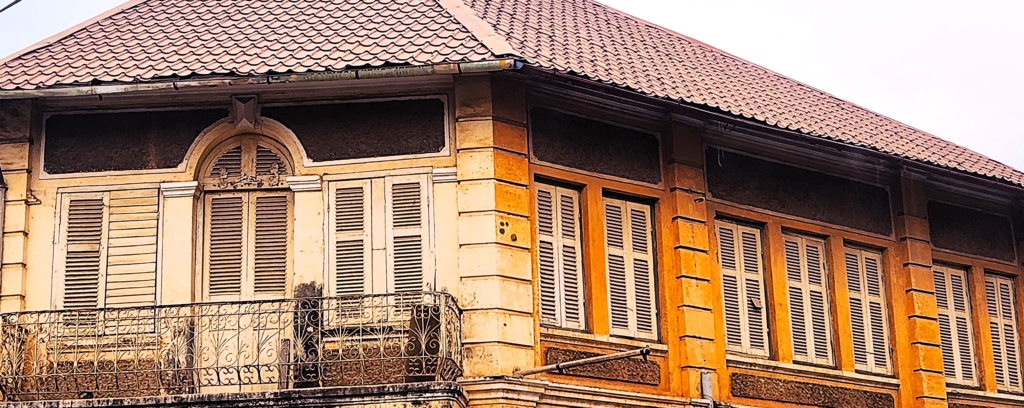
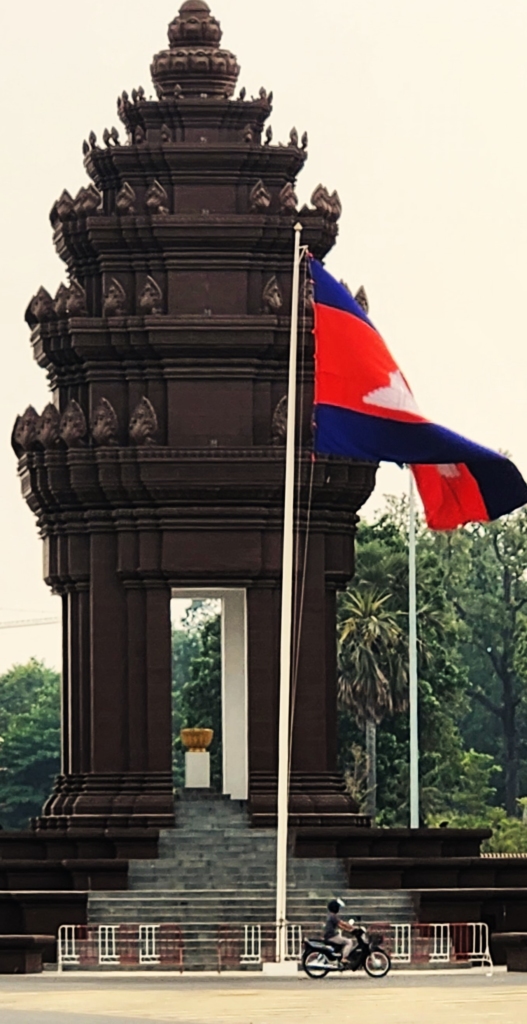
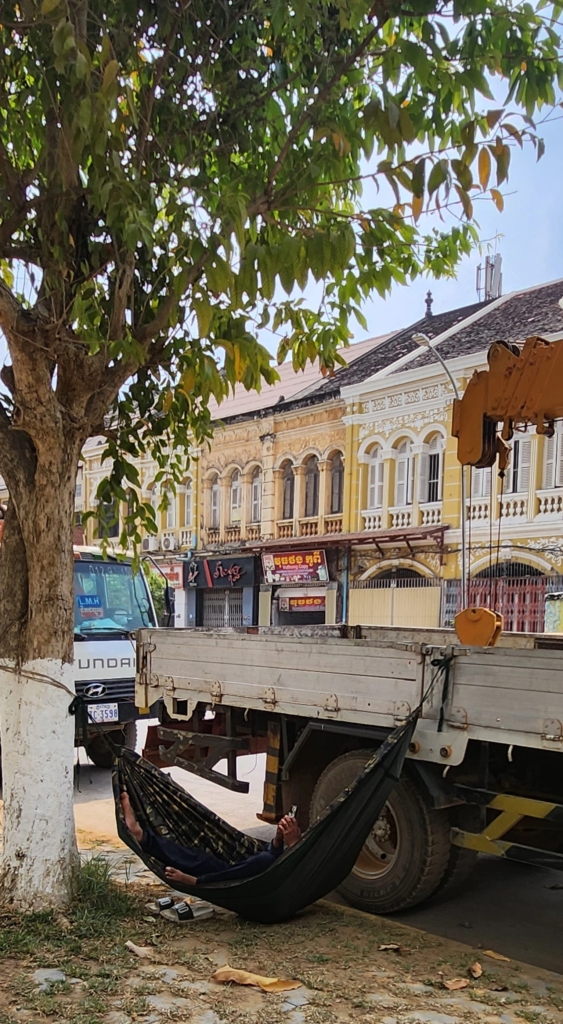
The Sangker River cut through the city, and the unmistakable touch of French colonial influence was everywhere—wide boulevards, pastel-hued buildings, and ornate balconies whispering stories of a bygone era.

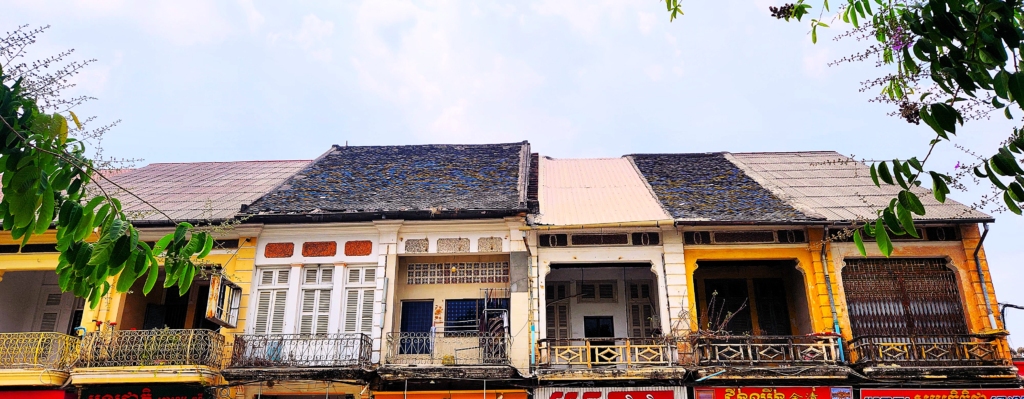
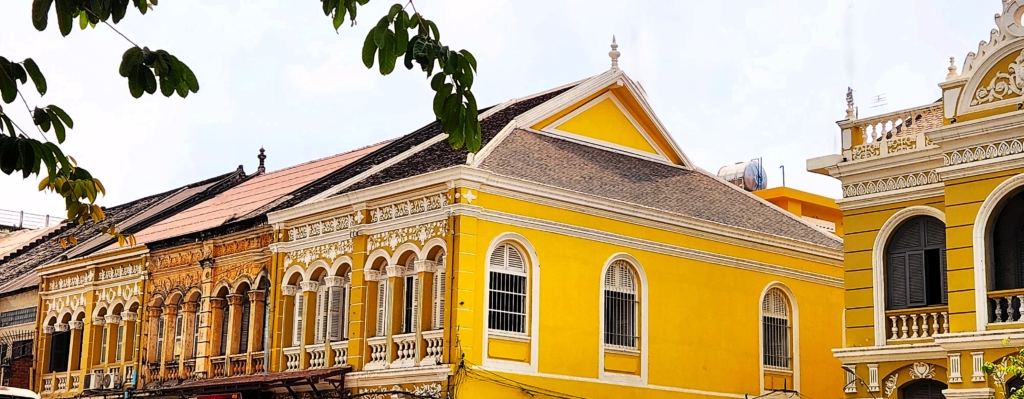
One of the city’s most iconic landmarks was the Central Market (Psar Nat), a striking example of 1930s French art deco architecture fused with Khmer design. Once a bustling commercial hub, it still stood as a testament to the city’s mercantile past, where traders once sold everything from fresh produce to fine textiles. Battambang, being just a two-hour drive from the Thai border, had long served as a key trade link between the two countries.
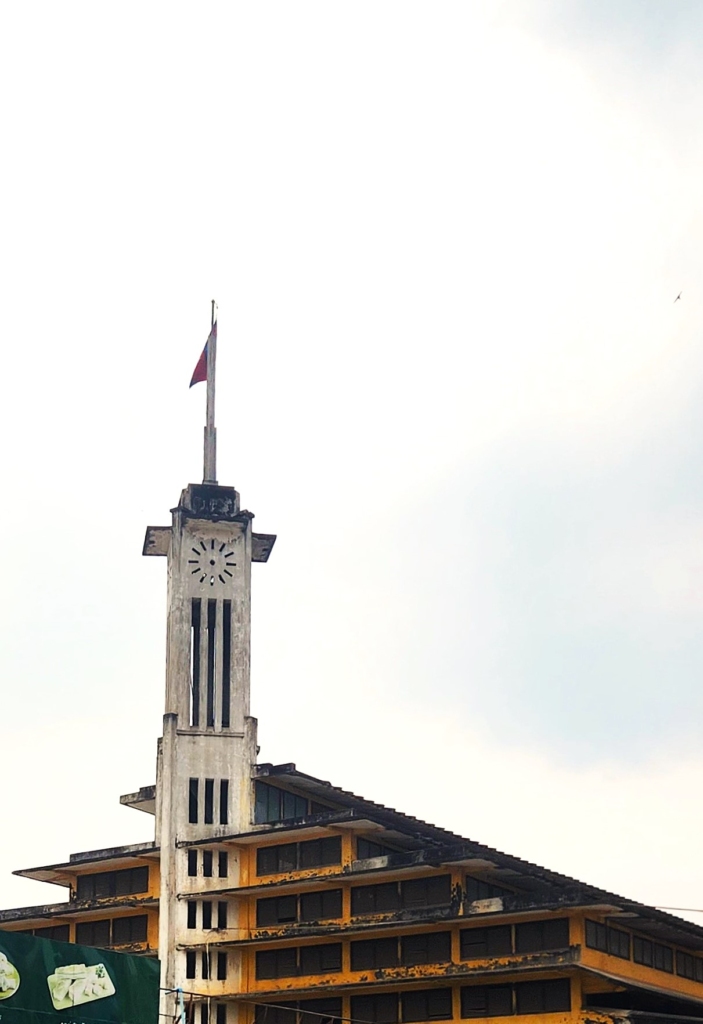
By the time we reached the market area, hunger had kicked in. We wasted no time and found a cozy pizzeria nearby. A wood-fired pizza in the heart of Cambodia? Why not. After refueling, we set off to explore the city’s main shopping street on foot.
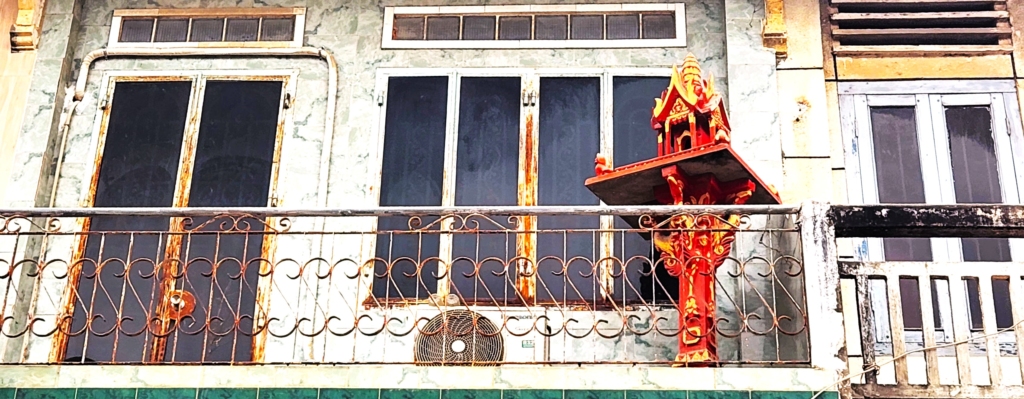
As I wandered with my camera, capturing the unique architectural blend of French and Khmer influences, something peculiar caught my eye. Almost every apartment had a small wooden artifact perched on its terrace—tiny, intricately designed structures. When I asked, Sieng explained that they were spirit houses, meant to ward off evil and bring good fortune to the residents. A charming little superstition that seemed to be woven into the very fabric of the city.
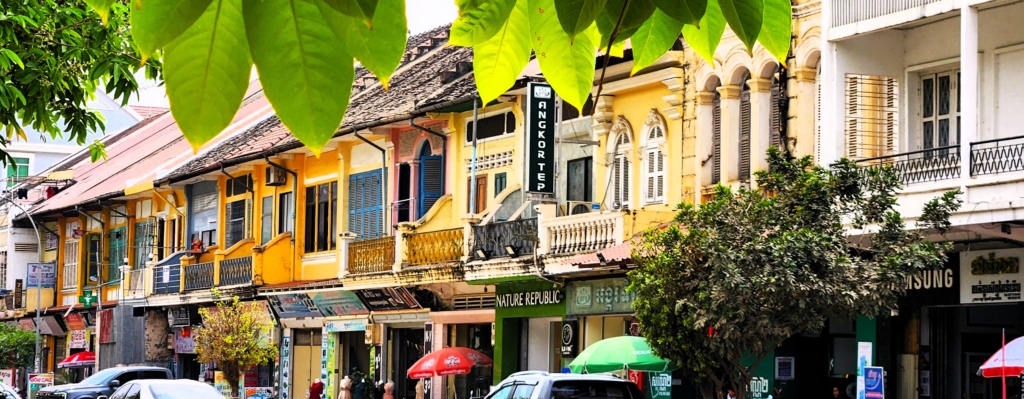
With the golden light of the setting sun bathing Battambang in a warm glow, I realized this wasn’t just a stopover—it was a place with stories waiting to be discovered.
Bamboo Train
After a leisurely stroll through Battambang’s quiet streets, we decided it was time to check out the city’s quirkiest attraction—the legendary Bamboo Train. Sieng wasn’t entirely sure of its exact location, but with a few stops for directions (and some classic Cambodian hand gestures from friendly locals), we eventually found ourselves at what seemed like an abandoned railway track. The place was eerily quiet, save for the occasional rustling of trees. No ticket booths, no long queues—just us, a railway track stretching into the horizon, and a few locals lounging nearby.

Lucky for us, we were the only tourists at that moment. No waiting, no crowds—just pure, unfiltered adventure.
Now, calling it a “train” is a bit of a stretch. This wasn’t your typical locomotive experience. Instead, we had a “norry”—a flat bamboo platform resting on four metal wheels, powered by what looked like a small genset engine. No seat belts, no handrails, no safety warnings—just a thin mat spread across the surface with a couple of cushions tossed in for good measure. The setup was simple: climb on, fire up the engine, and let the wind (and a little bit of adrenaline) take over.
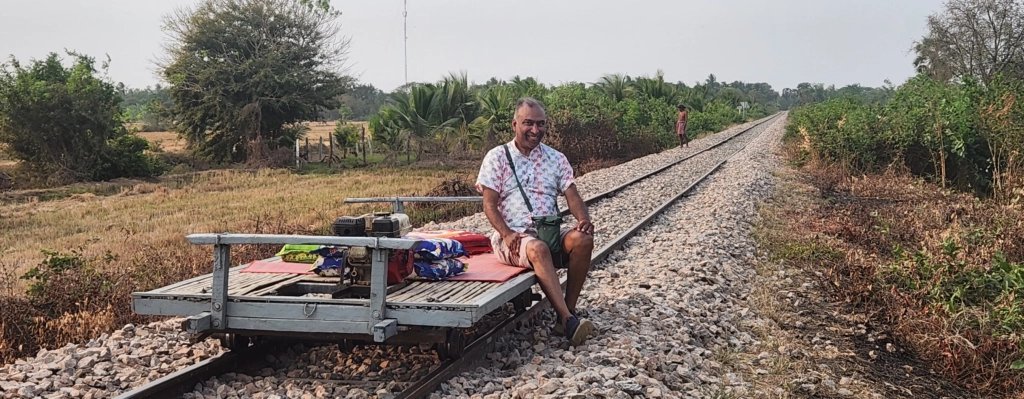
The sheer thrill of the ride wasn’t just in the speed—though, trust me, zipping through the countryside on a makeshift bamboo raft felt way faster than it probably was—but in the fact that there was only one set of tracks. Meaning? At any moment, we could come face to face with another bamboo train coming from the opposite direction. And when that happened, well… one train had to disassemble itself on the spot and clear the way for the other. No signals, no complicated railway system—just good old-fashioned problem-solving.
I asked Sieng how they decided which train had to step aside, and he just shrugged. “Maybe the one with fewer passengers?” Seemed logical enough. And sure enough, when we did meet another train head-on, our driver hopped off, casually lifted our entire norry off the tracks, let the other train pass, then plopped us right back down as if nothing had happened. Efficiency at its finest.
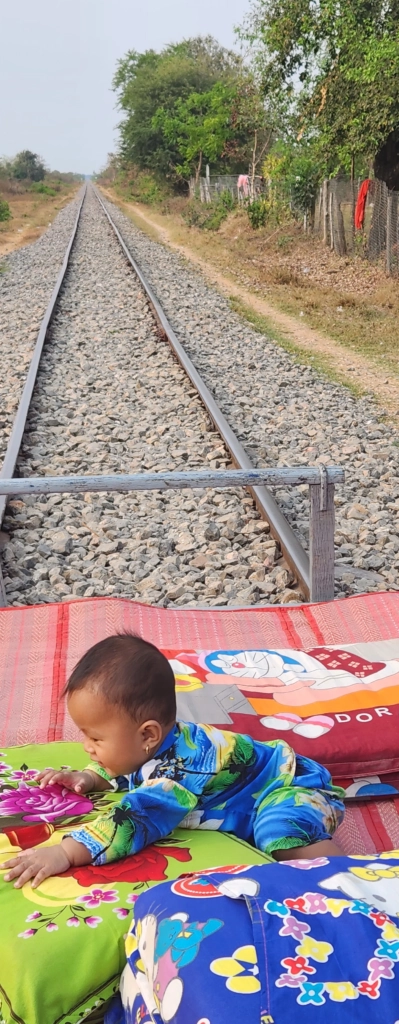
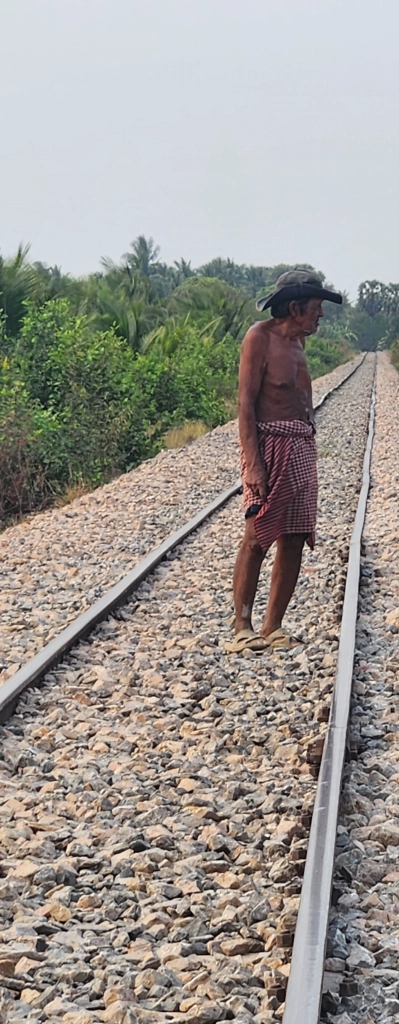
The ride was nothing short of magical. With the late afternoon sun casting a golden glow over the fields, the breeze was warm yet refreshing. The 7-km journey took us deep into the Cambodian countryside—past rice paddies, wooden houses on stilts, and even a hidden lotus pond tucked away from the world. I asked our driver to stop for a moment just to take it all in.
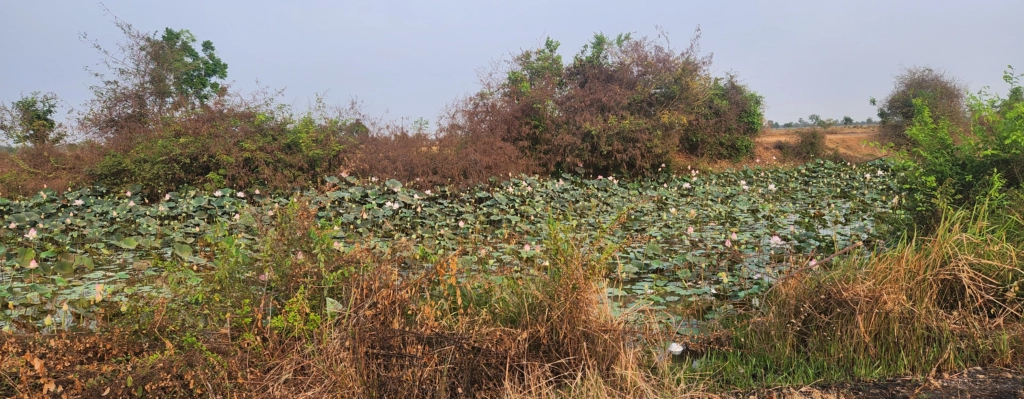
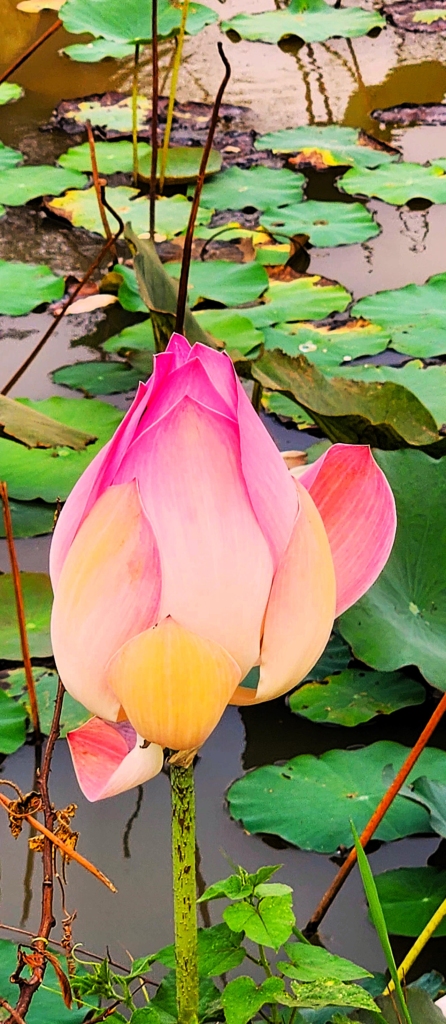
As we stood there, Sieng plucked some lotus stems and offered me a bite of the pulp surrounding the seeds. One taste and a wave of nostalgia hit me—it reminded me of Jungle Jalebi. The same fruit we had talked about just earlier during the day. The coincidence was too good to ignore.

At the end of the track, we pulled into a small rest stop—a makeshift shack where a few vendors sold cold drinks and snacks. A group of British tourists were gearing up for their return ride, chatting excitedly about the experience. While Sieng and I sipped on fresh coconut water, a little local village girl approached me, holding up a handful of colourful woven wristbands for sale.
She had the sweetest smile. I hesitated but encouraging kids to sell souvenirs instead of attending school never sat right with me. Maybe it was the right thing to do, maybe it wasn’t—I just followed my gut and politely declined. Instead, we simply exchanged smiles. She didn’t seem to mind and, before leaving, she recited a cheerful little poem in Khmer. I had no idea what it meant, but her sing-song voice was enough to make me smile back.

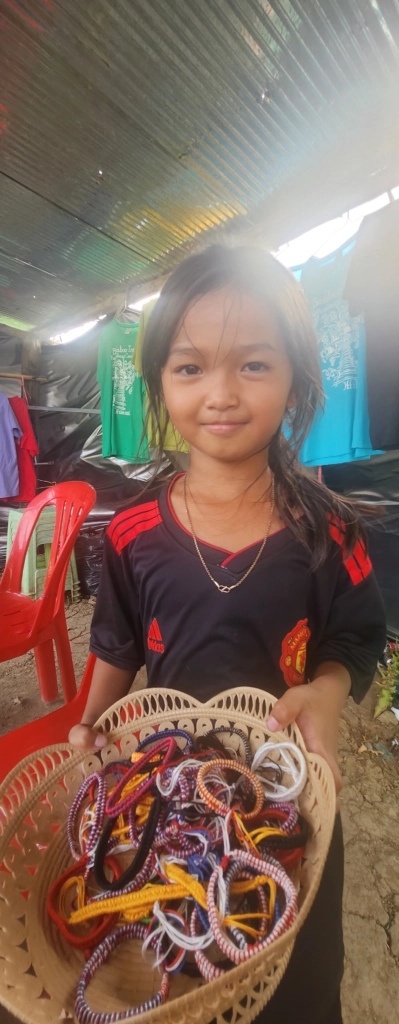
Before we hopped back on our bamboo chariot for the return ride, I handed her some snacks from my bag. No words were exchanged, no sales were made—just a fleeting, wholesome moment in the middle of nowhere.
And just like that, with the setting sun at our backs, we were off again—speeding down the rickety tracks, feeling like kids on the world’s most thrilling, offbeat roller coaster.
Killing Caves
Our next stop was Phnom Sampeau, home to the infamous Killing Caves—a grim reminder of Cambodia’s tragic past. As we drove up the hill, Sieng spoke about the horrors of the Khmer Rouge era, and I found it impossible to reconcile the contrast: this same country that once built the world’s largest religious monument for peace and harmony had also endured one of history’s worst genocides. The stories were difficult to digest.
The Khmer Rouge had executed victims atop the hill, their bodies discarded into the caves below—an unfathomable level of cruelty. Standing here, on this land where so many had suffered, felt vastly different from merely reading about it in history books. Cambodia’s past wasn’t just something to be learned; it was something you could feel in the air, in the silence, in the eyes of its people.
I had initially thought I could handle visiting the Killing Caves, to see firsthand the scars left behind by history. But as we got closer, I hesitated. Something about physically stepping into a place of such horror felt overwhelming. Sieng noticed my unease and admitted that, despite growing up in Cambodia, he himself found these places unsettling. “It sends a chill down my spine every time”, he confessed. “Some places hold too much sorrow”. For those with a strong heart, I’d still recommend visiting the Killing Caves to fully understand the depth of Cambodia’s history. But if it gets too heavy, let the bat cave offer you a moment of awe and reflection.
Instead, he suggested we wait near the caves for something more hopeful—the exodus of millions of bats that takes place at dusk.
If you have more time in Battambang, consider visiting the Pkar Slar Cave with its stunning rock formations, or the Samrong Knong Killing Field Memorial, where a stupa holds the skulls of victims—a somber yet necessary tribute to those lost.
As for me, I was grateful for the balance of history and nature. Sometimes, the weight of the past is best met with a breath of the present.
Bats Caves – Twilight Spectacle
As we reached the foothills of Phnom Sampeau, the place was already buzzing with both locals and travellers, all eagerly waiting for nature’s grand performance—the Bat Exodus.
Sieng, ever the expert at sniffing out the best spots, led us to a prime viewing location. The local restaurants had lined up plastic chairs on the roadside, strategically placed for tourists to settle in. We claimed our seats and ordered some light snacks—a small price to pay for front-row access to the show. From where we sat, we had an unobstructed view of the cave entrance on the cliff face.
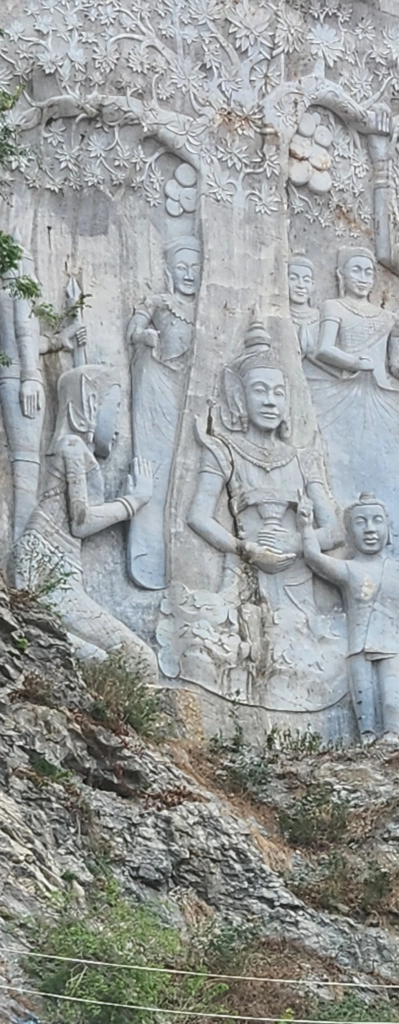
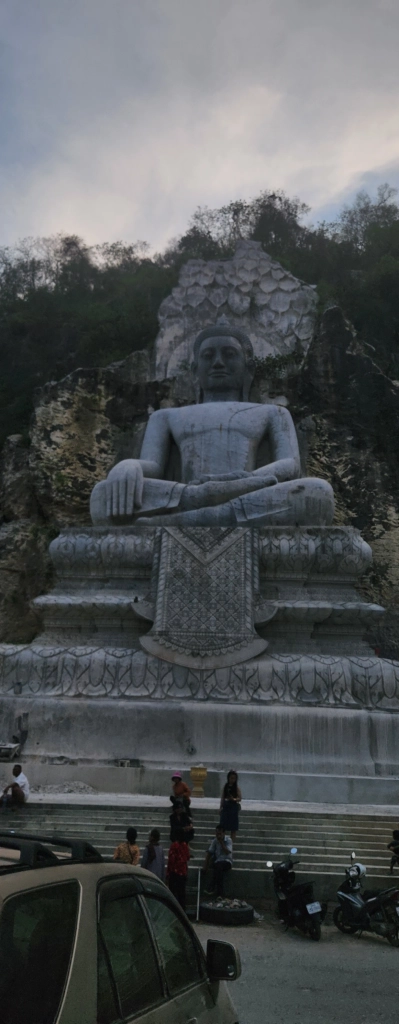
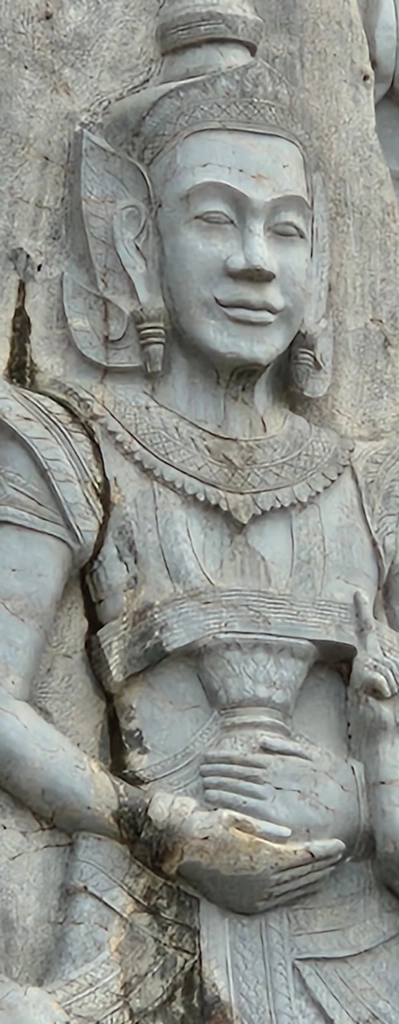
Just beside it, a large sleeping Buddha, intricately carved into the rock, watched over the scene. It was a poetic contrast—the stillness of the sculpture against the restless energy about to burst forth from the cave.
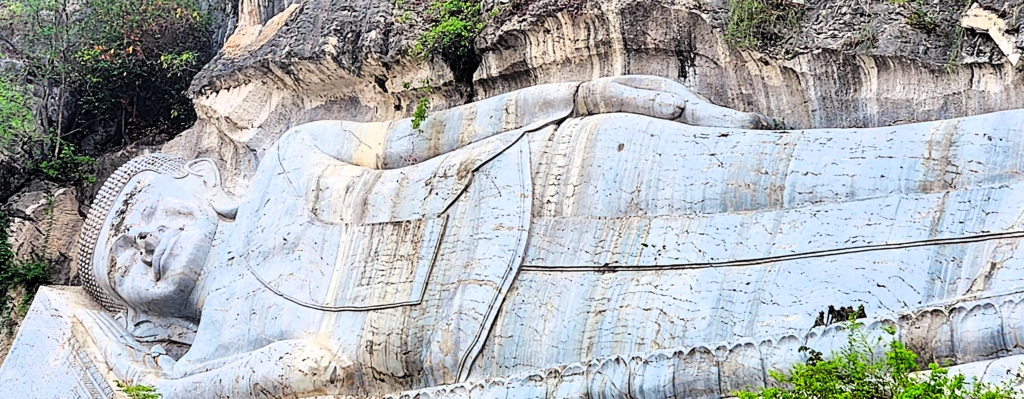
As I settled in, I struck up a conversation with John, a fellow traveller who was exploring Cambodia with his extended family. A self-proclaimed foodie, he had taken a serious liking to Cambodian street food and was happily working his way through everything available. John and his family had chosen a different travel route—cruising from Phnom Penh to Siem Reap by boat, navigating through Cambodia’s network of rivers and lakes. I had considered this option too while planning my trip, but it would have meant skipping some of the lesser-known temple complexes tucked away in the hinterlands. If you have time on your hands and are travelling in the right season (post-monsoon), this waterway journey could be a stunning way to experience Cambodia.
As we waited for the bats to make their grand entrance, John and I exchanged thoughts on our shared passion for social initiatives. He was kind enough to express interest in supporting my work with Aspire n Inspire, a small but meaningful moment in the middle of our travels.
As the sky darkened, a few bold bats darted out of the cave—scouts, perhaps, checking if their audience was ready. Slowly, the numbers swelled, and soon a seemingly endless ribbon of winged creatures emerged, twisting and turning through the the cave’s mouth, like a dark like living smoke. There were millions of them, bats filled the sky, moving in disciplined formations, each knowing exactly where to go. I was spellbound. Massive clouds of bats swirled and stretched into the horizon, their silhouette set against the fading hues of dusk. An unbroken stream that seemed to stretch endlessly into the evening sky. The sheer scale of it was mesmerizing.
It felt like a fitting balance: where one cave spoke of suffering, another symbolized nature’s resilience. We sat in silence, watching this nightly spectacle of nature. In some ways, it felt symbolic—an escape from the darkness below, a reminder that life always finds a way forward. Could they be the souls of millions murdered at the site.
Later, I learned that these were Asian wrinkle-lipped bats, a species known for their enormous colonies and their love for mosquito feasts in the rice paddies. Contrary to popular belief, bats aren’t blind—they just have a different way of “seeing” the world. And here’s a fun fact for the road: while bats sleep hanging upside down by their hind limbs, they do switch to their forelimbs when nature calls. Who knew?
The entire bat show lasts around 30 minutes, but after about 20, Sieng and I decided to leave early—a strategic move to beat the traffic.
Back in Battambang city, hunger struck again. Finding a vegetarian meal turned out to be a mini-adventure of its own, but after a few failed attempts, we finally stumbled upon a cozy little café where I settled for a sandwich and coffee. Looking back, I realized that had we not spent so much time hunting for food, we could have reached Siem Reap in time for an indulgent Indian dinner. Oh well, lesson learned. Sieng, on the other hand, had his heart set on street-side grilled chicken and made sure to stop midway for his fix.
By 9 p.m., we finally rolled into my hotel in Siem Reap. The city was alive—its legendary nightlife just beginning to stir. The temptation to step out and explore was real, but exhaustion won the battle. There was always tomorrow.
For now, a warm shower, a soft bed, and the echoes of the day’s adventures were all I needed.
March 2024
If you’re planning a trip to Siem Reap / Battambang or travel through Cambodia, we at HappyHorizon would be thrilled to curate your holiday plans to enhance overall travel experiences. Feel free to reach out to us: connect@happyhorizon.in
Day 4: Banteay Srei & Kbal Spien – Coming Soon!
Gallery

Sukumar Jain, a Mumbai-based finance professional with global experience, is also a passionate traveler, wildlife enthusiast, and an aficionado of Indian culture. Alongside his career, which includes diverse roles in international banking and finance, he's working on a wildlife coffee table book and enjoys sculpture and pottery. His interests span reading non-fiction to engaging in social and global networking.