
Day 2 (Part 2): Angkor Thom – Read More
Day 2 (Part 3): Ta Prohm & Dinner with Kourn
12 km. / 20 min.
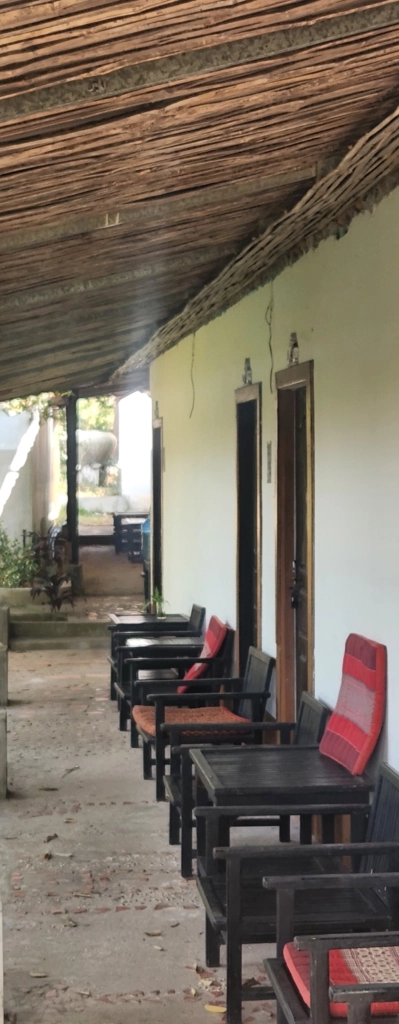
Siesta @ Kourn Homestay

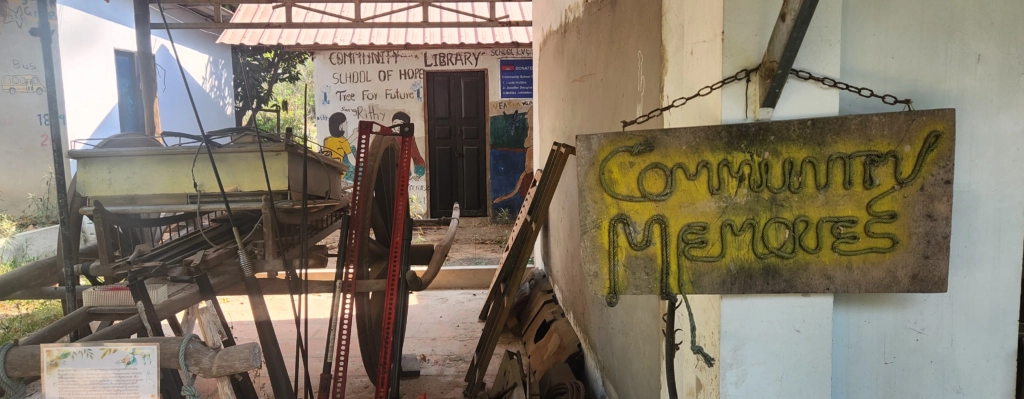
Back at the homestay, I met Kourn’s sister-in-law, a gentle and focused presence, as she crafted vibrant wristbands with threads and beads. We exchanged warm greetings, though her concentration on her art was unwavering.
Kourn, the homestay host, was out tending to personal matters, but I’d already grown to admire his commitment to his village. Kourn and his family ran a small primary school, providing free education to underprivileged children in the community.
Their selflessness was what had drawn me to stay here, away from the allure of Siem Reap’s lively Pub Street. Here, amidst the quiet countryside, every detail spoke of purpose, simplicity, and heartfelt connections.
True to plan, Sieng returned in the late afternoon, and we set off under the mellowing sun to explore Ta Prohm, the “Jungle Temple”, lying just beyond the walled city. Angkor Thom’s political mysteries still lingered in my mind as we moved forward, the road ahead promising more wonders of the ancient Khmer Empire.
Ta Prohm
About 12 km. from the bustling streets of Siem Reap lies Ta Prohm, a temple like no other. Its name, translating to “Royal Monastery”, hints at its sacred origins, yet its haunting beauty is what truly sets it apart. By the 12th century, temple complexes had evolved beyond mere places of worship – they were also sanctuaries for monks, necessitating the construction of roofed halls and communal spaces.
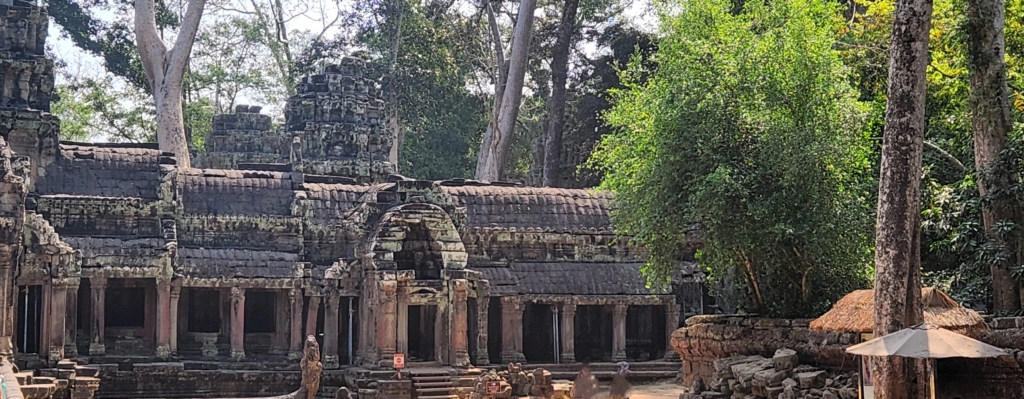
Ta Prohm, dedicated by King Jayavarman VII to honour his mother and guru, stands as a symbol of love and deep respect. Unlike the tiered temple-mountains of earlier Khmer architecture, this monastery is laid out on a single level, embodying simplicity and spiritual humility.

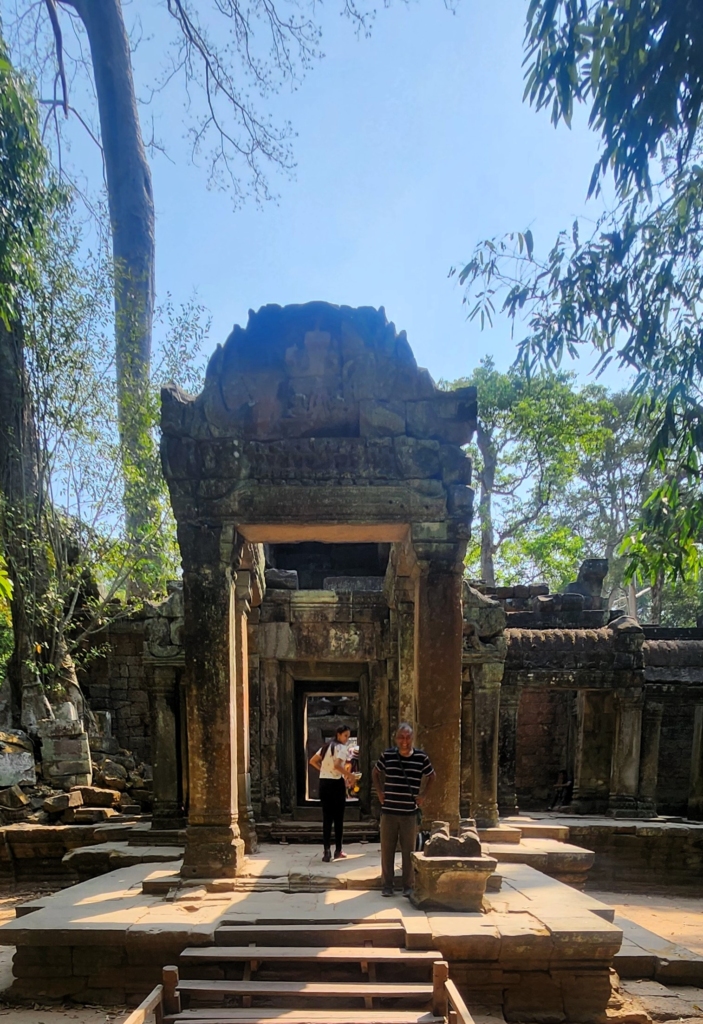
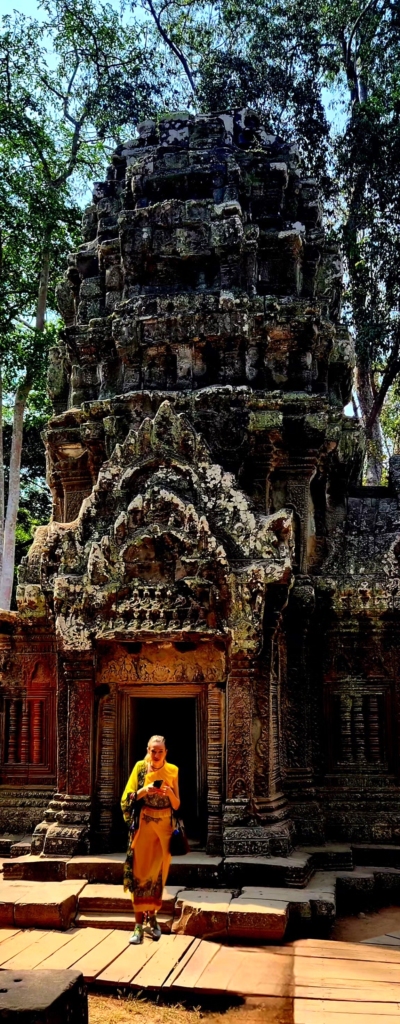
What makes Ta Prohm truly magical is its intentional dance with nature. Unlike many temples meticulously restored to their former glory, the jungle here has been left to embrace Ta Prohm, resulting in an enchanting blend of stone and wilderness. It’s as if the temple and the forest entered into a quiet truce, each allowing the other to share the limelight. The roots of towering trees spill over the walls like liquid silver, and their gnarled trunks seem to cradle the crumbling stone, as though nature itself is keeping the temple’s secrets safe.
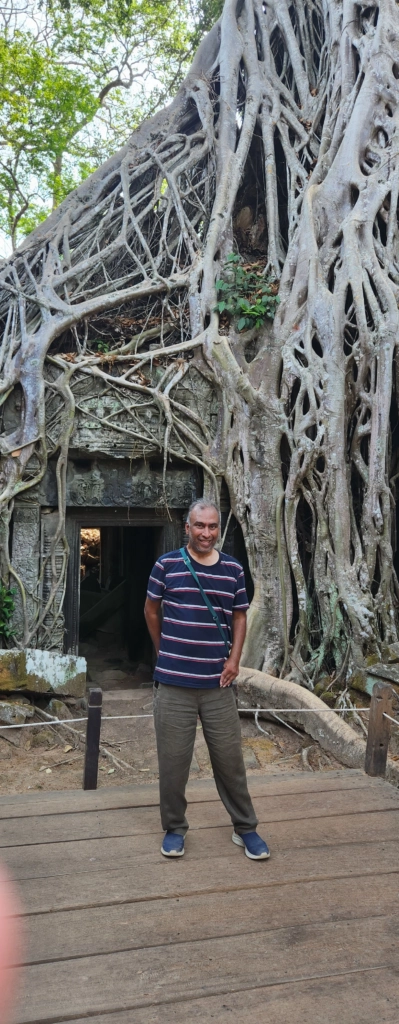
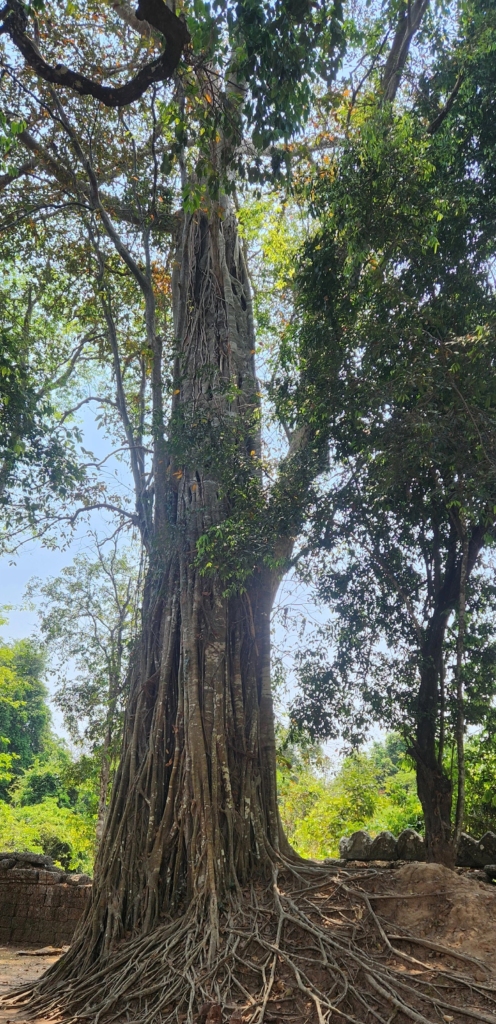

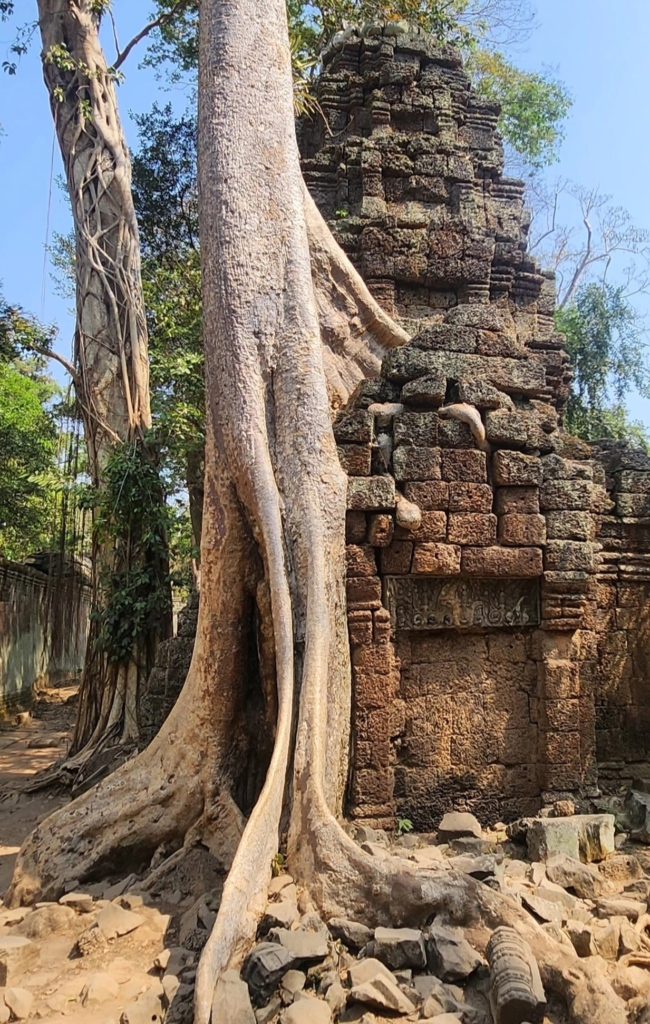

As I wandered through the complex, I was struck by the eerie beauty of the overgrowth. Dense foliage obscures the outer enclosures, while the inner courtyards, cleared of most jungle encroachments, still bear the indelible mark of nature’s dominance.
Mighty fig, banyan, and kapok (silk cotton) trees – some over 300 years old – rise imperiously from the walls, their roots sprawling like the tentacles of ancient, tree-living monster.
Trunks twist and spiral, embracing the temple’s structure in a timeless dance of destruction and creation.
They snake through pillars and passageways, weaving a tangled roof of leaves and branches above the ruins. The haunting charm of Ta Prohm grips you as firmly as its roots grip the stone, evoking a sense of timelessness and solitude.
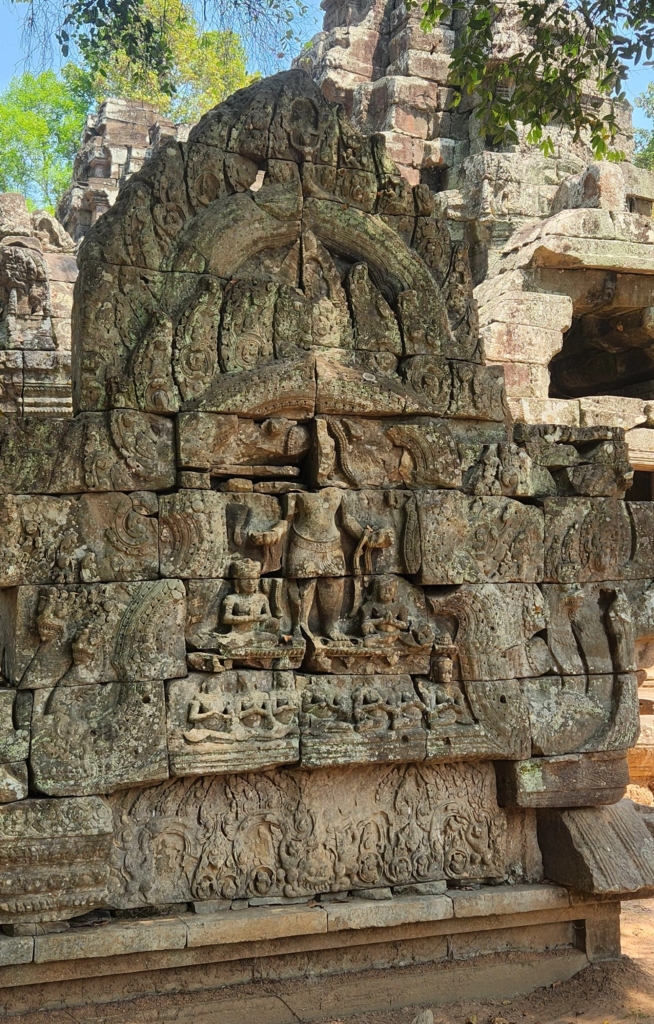

Unlike the meticulously restored Angkor Wat, Ta Prohm retains a raw and untouched aura. Walking through its corridors feels like stepping into a forgotten world. It’s no surprise that this ethereal setting was chosen as a backdrop for Hollywood’s Lara Croft: Tomb Raider, immortalizing its romantic, jungle-cloaked mystique.
A Serene Pause at Srah Srang
As twilight began to descend, we passed by Srah Srang, a tranquil reservoir framed by lush greenery. The elegant landing terrace at its edge seemed like an invitation to pause and absorb the serenity. Sieng noted that the lake is said to always hold water, a feat of ancient Khmer engineering, and is a popular spot for visitors. Though I couldn’t linger, the calm waters left an impression, a moment of stillness amid the rich chaos of exploration.
Scattered Jewels of Angkor Thom
As the day drew to a close, Angkor and their surroundings left me marvelling at the ingenuity and vision of the Khmer Empire. Each site revealed a layer of history, an echo of a world where gods, kings, and nature converged in harmonious splendour. The fleeting daylight reminded me that while no journey can capture everything, the memories of what we do experience are treasures of their own.
Sieng briefly mentioned other gems within Angkor Thom, such as Phimeanakas, a temple in the royal palace area; Palilay Temple, a smaller, shaded shrine; and Prasat Suor Prat, a series of towers whose purpose remains a mystery. Many of the royal structures, including the palace itself, were once made of wood and have long since succumbed to time, leaving behind only stone remnants to whisper their stories.
Yet, as we reached back at homestay, the haunting beauty of Ta Prohm stayed with me, its roots and ruins a living metaphor of resilience – an eternal embrace of nature and human creation.
An Evening with the Multi-Faceted Kourn
Since my arrival at the homestay, I’d only exchanged fleeting greetings with my host, Kourn, often late into the night. Determined to change that, I had promised myself a proper catch-up with him and his family over dinner.
After a much-needed rest to recharge from the day’s adventures, I joined them at the dinner table, where the warm ambiance matched the delicious aromas wafting from the kitchen.

Kourn, as it turns out, is a man of many talents – a modern-day Renaissance figure in his own right. By day, he’s a professional tour guide, adept at weaving history into compelling narratives. He also doubles as a tuk-tuk driver, navigating the bustling streets of Siem Reap with ease. At home, he’s the gracious host of this charming homestay, creating a cozy sanctuary for travellers like me. Beyond that, he’s a farmer tending to his ancestral land, a collector of vintage art preserving Cambodia’s cultural legacy, and a social entrepreneur dedicated to uplifting his local community.
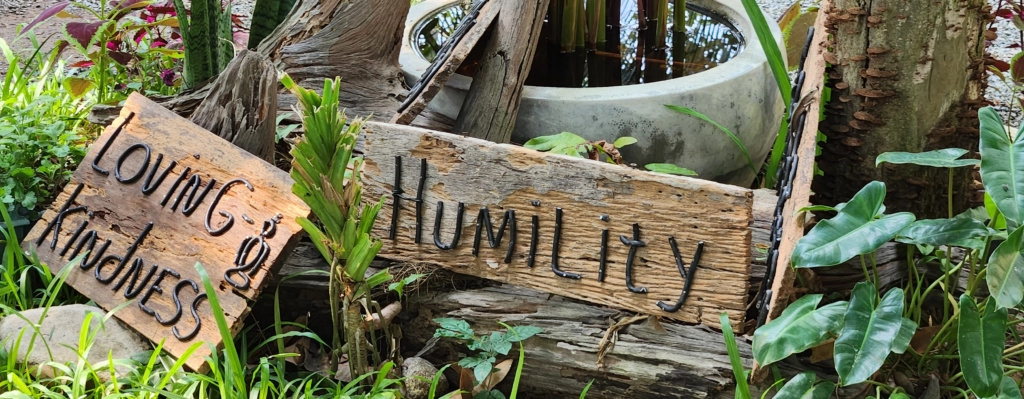
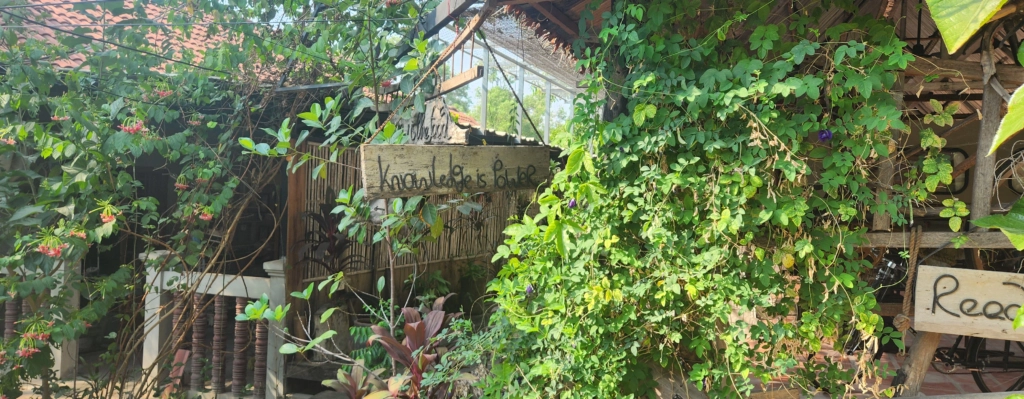
As he shared stories of his endeavours, I couldn’t help but feel a deep sense of admiration. His ability to juggle these roles with such grace and humility was inspiring. Here was a man deeply rooted in tradition yet forward-thinking, seamlessly blending his personal passions with a purpose to serve others.
Dinner that evening wasn’t just a meal – it was a window into Kourn’s vibrant world, a world shaped by resilience, creativity, and an unshakable sense of purpose. Over plates of delicious, home-cooked Khmer food, I felt a connection to this remarkable host. His story wasn’t just inspiring—it was as rich and layered as the ancient temples I had explored earlier in the day, proving that sometimes, the most extraordinary legacies are carried not in stone but in spirit.
As the evening grew late, we bid each other goodnight, promising to reconnect over breakfast the next morning. There was so much more to learn about Kourn and the rich tapestry of Cambodia through his stories.
March 2024
If you’re planning a trip to Siem Reap or travel through Cambodia, we at HappyHorizon would be thrilled to curate your holiday plans to enhance overall travel experience. Feel free to reach out to us: connect@happyhorizon.in
Day 3: Battambang – Read More
Gallery

Sukumar Jain, a Mumbai-based finance professional with global experience, is also a passionate traveler, wildlife enthusiast, and an aficionado of Indian culture. Alongside his career, which includes diverse roles in international banking and finance, he's working on a wildlife coffee table book and enjoys sculpture and pottery. His interests span reading non-fiction to engaging in social and global networking.