Day 1: Razdan Pass – Read More
Day 2: Gurez Valley
The following morning, as the first rays of the sun gently caressed the landscape, I stepped out of my tent around 8:30 am. Time in this realm seemed unhurried, and everything unfolded at a leisurely pace.

After some time, Iqbal emerged, and I asked about the nocturnal canine chorus that had intrigued me the night before. With a smile, Iqbal explained that the dogs often barked at night when brown bears descended from the mountains to catch fish from the river or scavenge for leftover food. A chill ran down my spine, and suddenly, I understood why Irfan had insisted on zipping the tent fully closed.
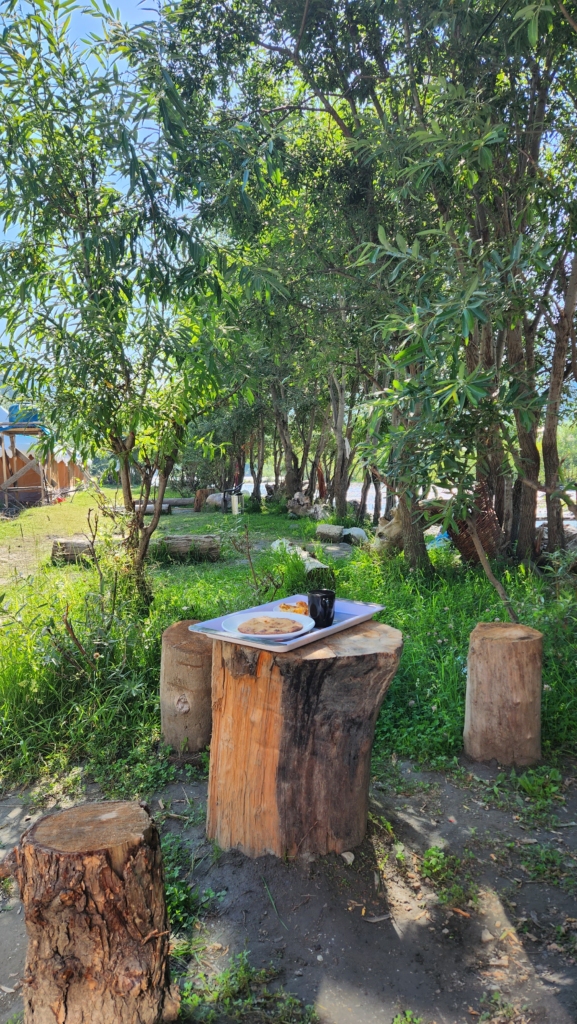
As the morning unfolded, the tantalizing aroma of breakfast wafted through the air. Iqbal, a master of his craft, efficiently handled the culinary preparations. Over the next three days, I converted a serene spot behind my tent, beneath the protective embrace of a tree, I relished my breakfast in the tranquillity of nature.
Residing alone on the campsite, with his family situated in a village outside Gurez. I was delighted to have made his acquaintance. Over the next three days, a camaraderie blossomed between us.
Even today, he occasionally calls, saying, “Sir ji, apki yaad aa gayi thi” (Sir, I remembered you).
Although brief, these calls make me yearn for his mischievous smile and heartfelt conversations. What I cherish most is his willingness to take a small risk, akin to stealing an extra run on the cricket pitch. Witnessing friends engage in sports over the years, I’ve formed a theory – the way a person plays on the sports field reflects their personality and approach to life.
Danish arrived as scheduled, inquiring about my travel plans for the next 10 days. Danish is a positive and chirpy young man, he is a local Gurez boy nurturing dreams of running for election at some point in his life. During our drives, particularly around the Bandipora district, he recognized most of the people on the way and stopped to exchange greetings, proudly calling them his future “vote banks”.

Habba Khatoon Peak

As we departed from our resort, our first destination was the majestic Habba Khatoon peak, a mere 15-minute drive from our resort. On our journey to Habba Khatoon, Danish wove a tapestry of tales, the threads of which were intertwined with the mystic mountain’s essence. I had anticipated there would be a compelling narrative tethered to this majestic peak, and Danish did not disappoint.
The enchanting story unravelled around a captivating local village girl, Zoon (meaning “Moon” in Kashmiri). Later bestowed with the endearing moniker Habba Khatoon. She, under the spell of Sufism, composed and sang soulful romantic melodies.
The king of the region, Yusuf Shah Chak, during his passage and was immediately ensnared by her melodious voice and beauty. Love blossomed swiftly, leading to their marriage.
King Yusuf, backed by a formidable army well-versed in navigating the mountainous terrain, had successfully fended off numerous Mughal attacks. Legend has it that Mughal King Akbar, seeking a truce, invited Yusuf for negotiations but instead treacherously arrested him upon arrival in Delhi. Zoon, steadfast in her belief, awaited her love’s return, wandering aimlessly around the peak, singing her heart’s lament.
Zoon, yearning for purpose, she graciously requested for shelter and to serve the venerable sage, dwelling in the embrace of the peak.
The sage was enchanted by Zoon’s haunting melody that carried the weight of her sorrow. A sacred pact was forged between the sage and Zoon – a pact that draped Zoon’s existence in an ethereal veil. She agreed all her movements outside his hut were to be carried out in the sanctity of discretion.
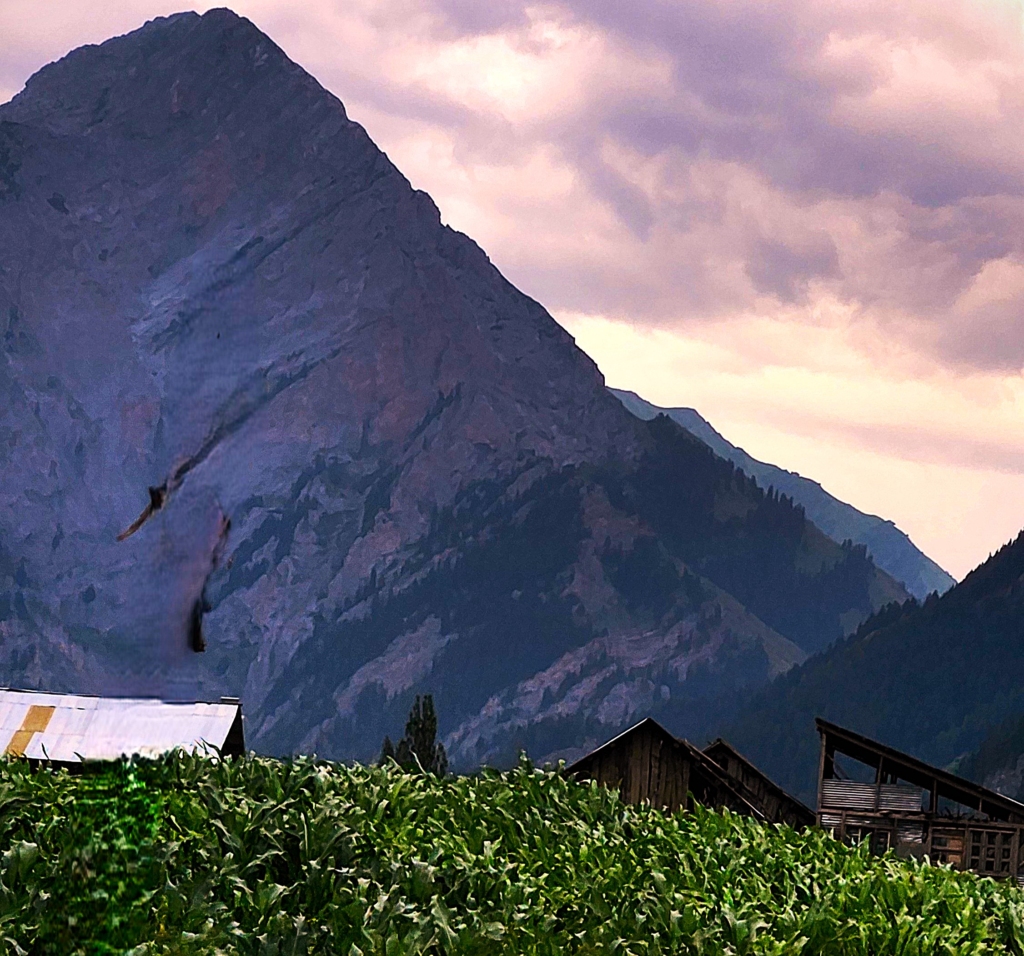
Zoon, would serve the sage with daily chores in his ashram during the day light and would weave through the shadows of the night, descending to the banks of the river Kishanganga. There, in the hushed solitude, she would draw water to fill her pot. In this secluded haven, where the whispering winds played audience to her melancholic melodies, she sought solace for the love that had slipped away like a gentle breeze.
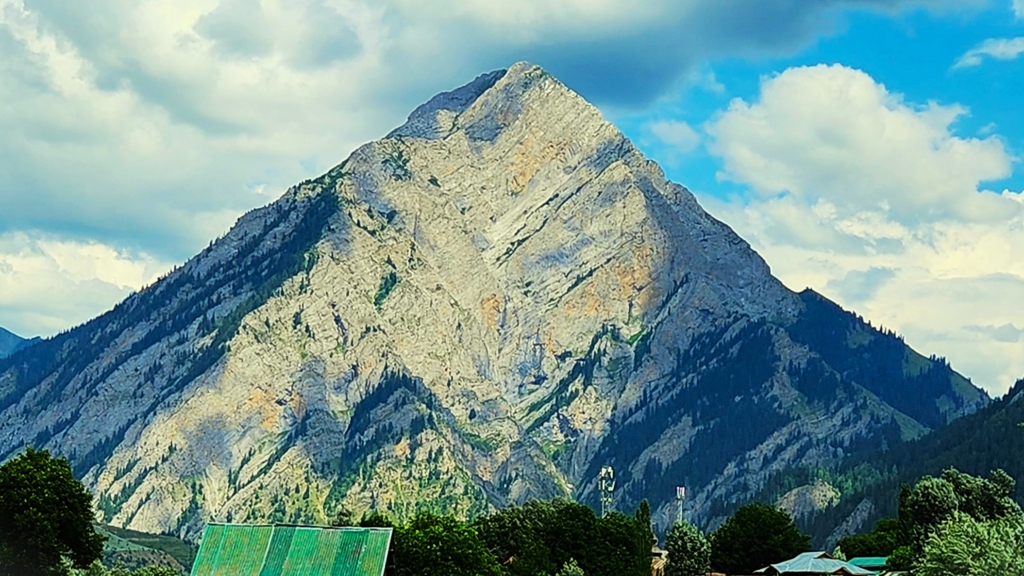
One fateful night, an enigmatic stranger found refuge near the mystic peak. Zoon’s sweet, sorrow-laden serenade caught his attention. The celestial notes guided him, a magnetic force drawing him closer until he stood at the very spot where Zoon, like a spectre of lost love, replenished her vessel. As Zoon, veiled in the obscurity of night, prepared to leave, the stranger, captivated by her ethereal presence, asked – “Who are you, Khatoon?” Before the question could fully unfold, the delicate pot slipped from her grasp, meeting the earth with a gentle thud. In an instant, Zoon dissipated into the cool night air, leaving behind a shimmering spring – an everlasting testament to the poignant tale of love etched into the heart of Habba Khatoon peak.
Since that enchanted night, a sacred pilgrimage beckons those drawn to the enchanting lore of Gurez. Visitors, like ardent lovers of the heart’s bittersweet ballads, make a pilgrimage to the very spot where the pot touched the earth. In the tender embrace of this sacred spring, they pay homage to the melancholic love story of Habba Khatoon, forever etched into the mystic mountain.
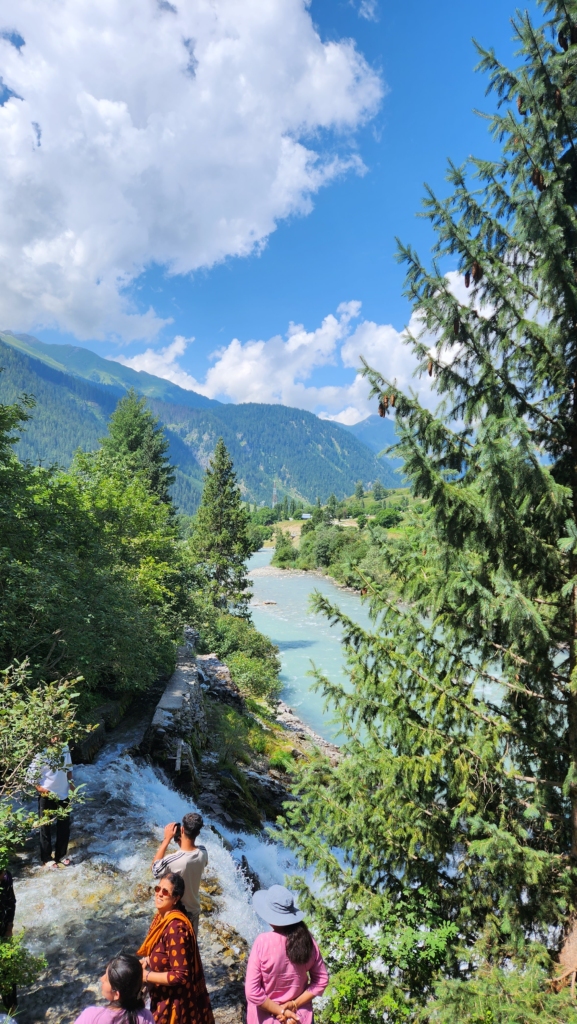

Upon reaching the base of Habba Khatoon peak, we traversed a brief footpath. There, we encountered a mesmerizing sight – an abundant spring, flowing vigorously from the base of the mountain. We indulged in its pure, cold sweetness, urging others to carry their bottles to savour this natural elixir. The water, originating from the barren mountain, eventually merge with the river Kishanganga. Its continuous, rapid flow throughout the year, devoid of any other streams, seemed nothing short of miraculous.
In Kashmiri, the spring is commonly referred to as “Chasama,” and throughout my entire journey across Kashmir, I preferred water sourced from local Chasama over bottled water. The local spring water possessed a superior taste and perhaps a richer mineral composition, offering a unique local flavour. While cautioning against venturing too close to the spring’s mouth, I observed a group of lively middle-aged women from Bangalore. We exchanged notes on our Kashmir itineraries and bid farewell.
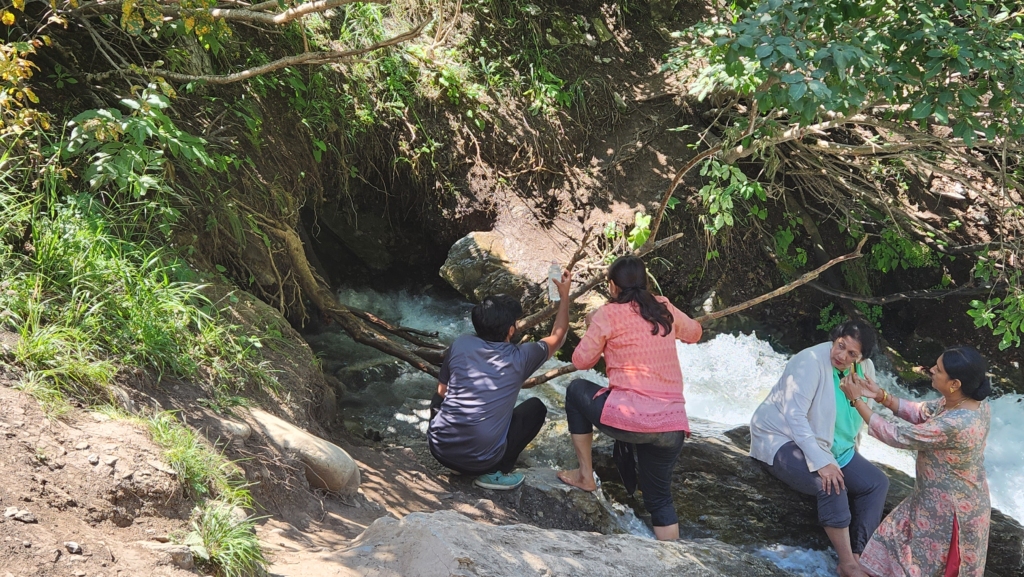
Curious about the peak’s nomenclature, I asked Danish. He shared various versions of Zoon’s past, one suggesting she was initially married to a local villager named Habba before King Yusuf walked into her life. Perplexed, I wanted to question the tradition of a woman being identified by her husband’s name, especially when the love and affection were not reciprocated. Life can be unkind, and I found myself contemplating the intricacies of these stories.
Unable to verify the complete truth, I chose to embrace Danish’s narration, preserving Zoon’s love for King Yusuf untarnished. To me, Habba Khatoon peak remained a magnetic force throughout my stay in Gurez, drawing one into its realm of nature, beauty, love, and purity.
Dawar Town
Post our visit to Habba Khatoon peak, Danish guided me through Dawar town. The primary old market of Dawar boasted wooden structures, with one-storey, with some old houses featuring intriguing carvings on the outside panel of the walls. The main road housed shops on the ground level and residences above, accessible through entrances covered with cloth curtains. Notably, the old wooden houses had a small rounded bulge on the ground floor, serving as toilets – a testament to the residents’ early commitment to cleanliness and sanitation.

I observed Grameen Bank, operated by J&K Bank, as the prevalent banking channel across my journey, and the physical conditions of these branches raised questions about their usage. I pondered whether the shift to online transactions or infrequent banking needs contributed to their seemingly neglected state.

During a casual inquiry with Danish about the banking habits of local residents, he mentioned that as per their religious practices, any interest earned on the bank deposits was returned to the bank – an arrangement I didn’t delve deeper into at the time.
Lunch brought us to a hotel opposite the Dak Bungalow, owned by one of Danish’s friends. Danish, upon receiving his non-vegetarian dish, would relocate to adjoining table, a peculiar behaviour that remained unexplained.
Post lunch, Danish dropped me off at the resort, promising to return around 4 pm for an evening tour of the town.
As I settled under the tree and relishing quiet moment, a group of spirited families from Srinagar, arrived at the campsite. Curious to gather more information, I enlisted the help of a young kid from their group, uncovering details about their arrival and stay. The arrival of the families brought an additional layer of vibrancy to the campsite.
Khandiyal Top

Scheduled as promised, Danish arrived at the resort in the evening, accompanied by his brother, Dawood. The youngest among the brothers, Dawood, with a diploma in IT, expressed a tentative interest in pursuing a corporate career. Our trio embarked on an exploration of the valley, making our way to the tent park located just before the town.
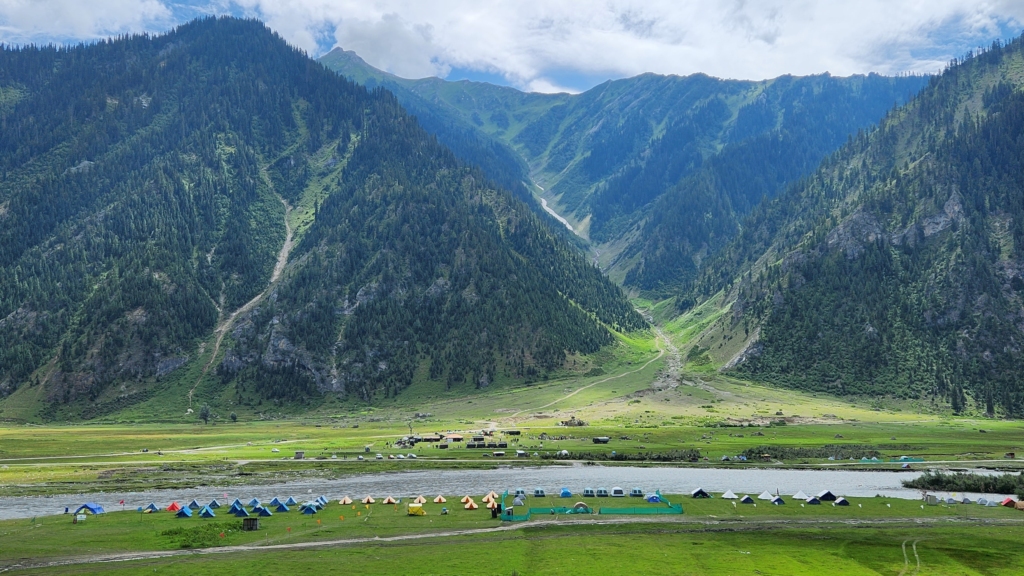
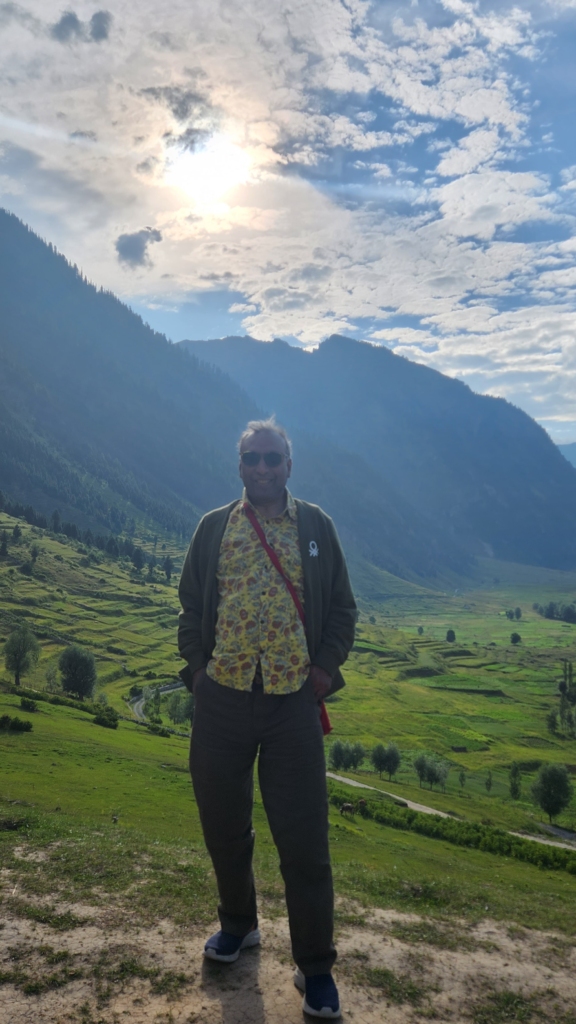
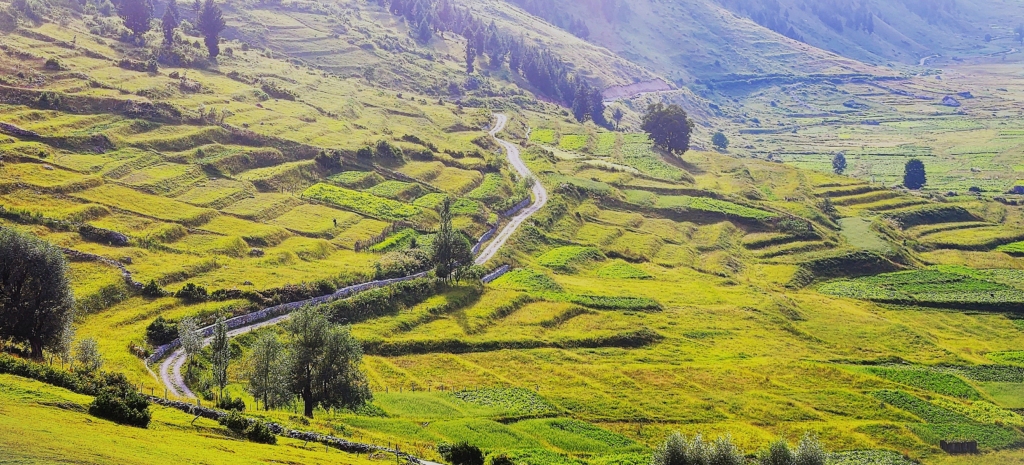
Upon arrival, the tent park, we found a few chairs arranged by the riverbank for us to revel in the warmth of the sun and relish the serenity around. The river flowed carelessly beside us, cows and horses grazed in the meadows, and sparrows sang their melodic couplets. The blue sky, green meadows, and the music in the air created a perfect canvas for relaxation. The scene was nothing short of idyllic, urging a desire to spread a bedsheet and succumb to a peaceful nap.

After spending 30-45 minutes in bliss, we proceeded to our next destination – Khandiyal Top. It’s a small hillock from where various trekking trails start delving deep into the forest beyond two or three layers of mountains. Dawood, having recently embarked on such a trek, shared photographs that resembled a heavenly place. My yearning to undertake such treks added another entry to my ever-growing to-do list.


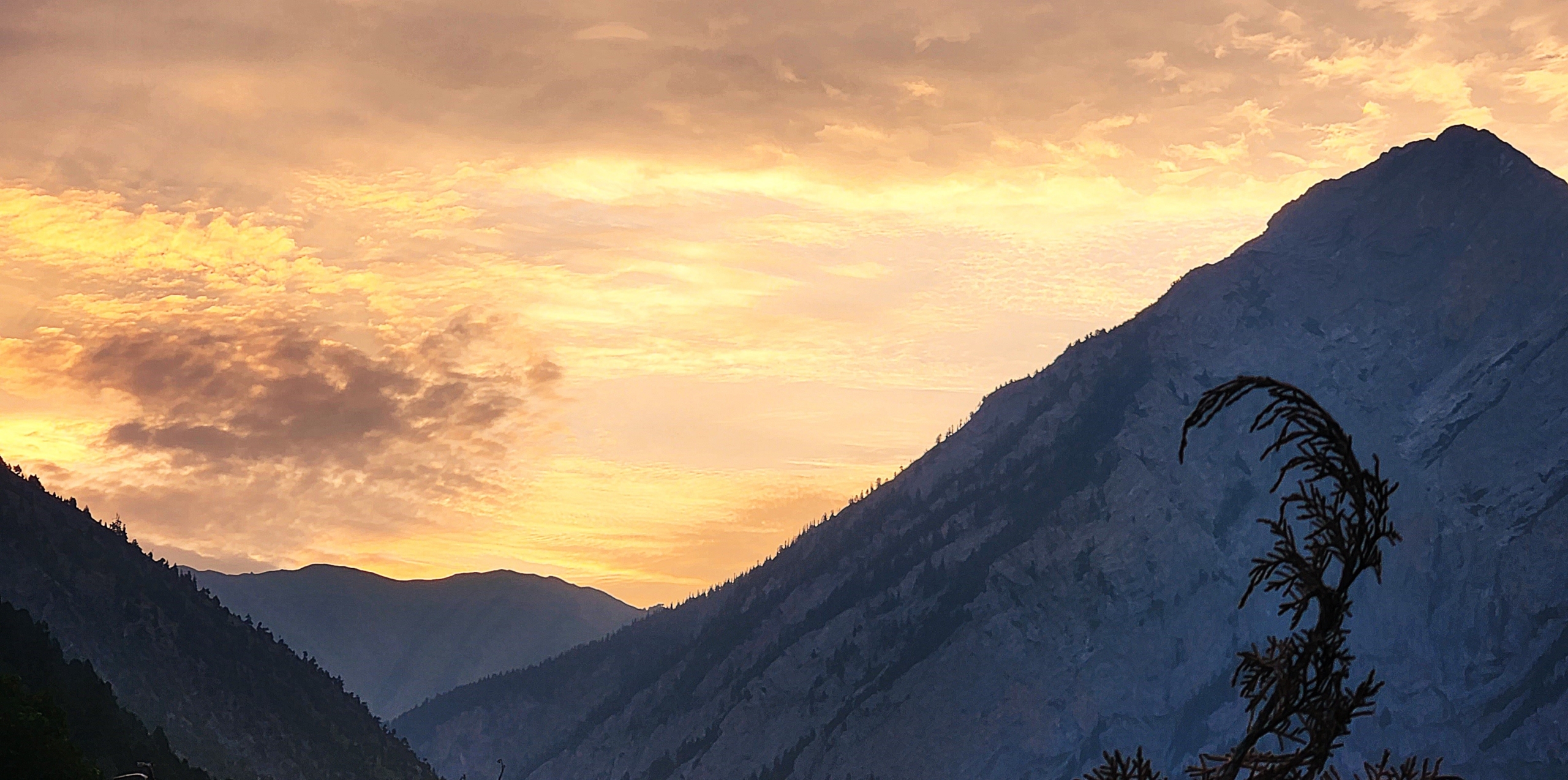
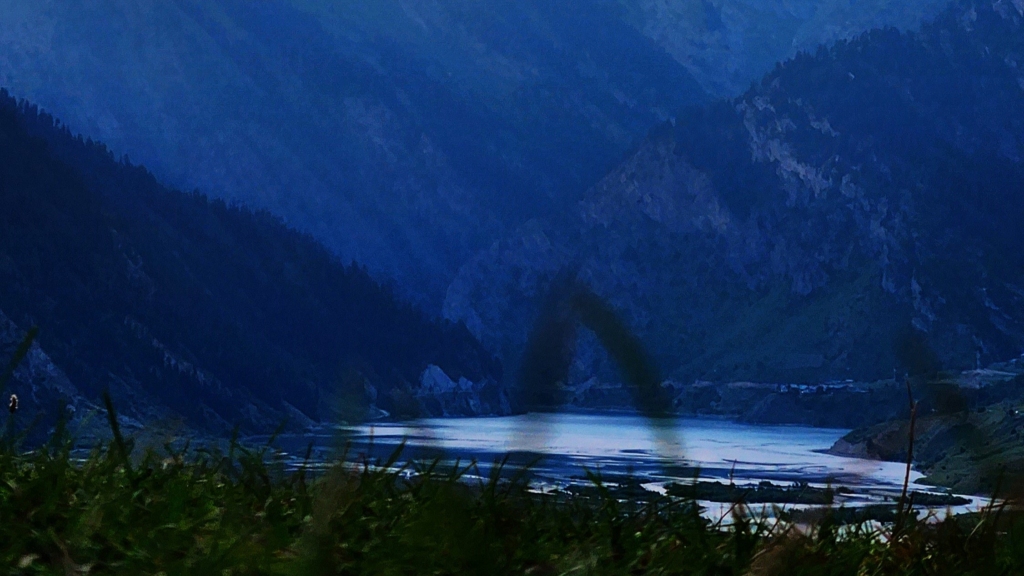
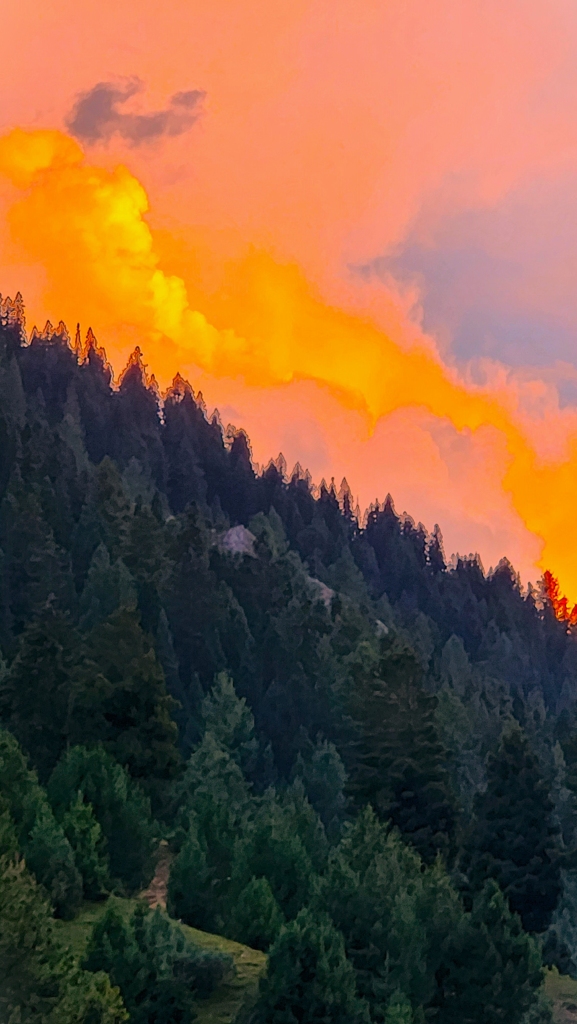
The panoramic view from Khandiyal Top of the entire valley with the river merging into the lake as the sun set – a spectacle cherished as a sunset point. Although a few clouds adorned the sky, the beauty of the scene captivated our senses.


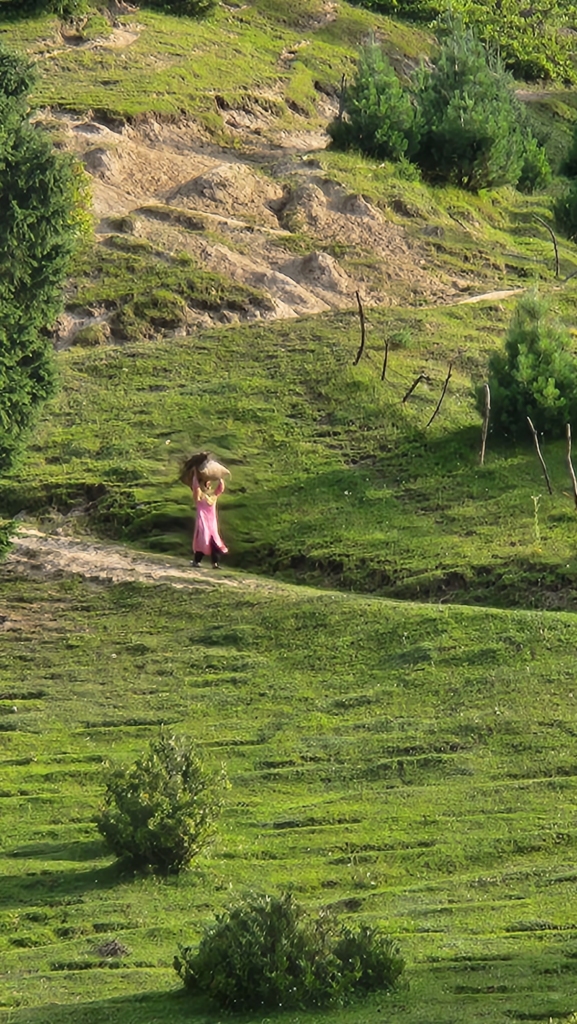
The meadows were alive with activity as cows contentedly muzzled the grass, and amidst this rural scene, a local farmer ferried soil in his colourful tractor. A young lady gracefully carried a bunch of dried woods from the forest to her home. The woods, neatly tied and held above her head, framed her as she descended the slopes with an air of elegance. She occasionally paused to wipe the sweat from her face, a small yet essential respite from the daunting task under the scorching sun. I pursued her with my camera, wishing to capture not only her labour but also the intricacies of her life – the size of her family, the dinner plans for the evening, and more. Amidst these simple yet significant activities, I revelled in the carefree moments of life. As we immersed ourselves in nature’s beauty, the local residents continued their daily lives.
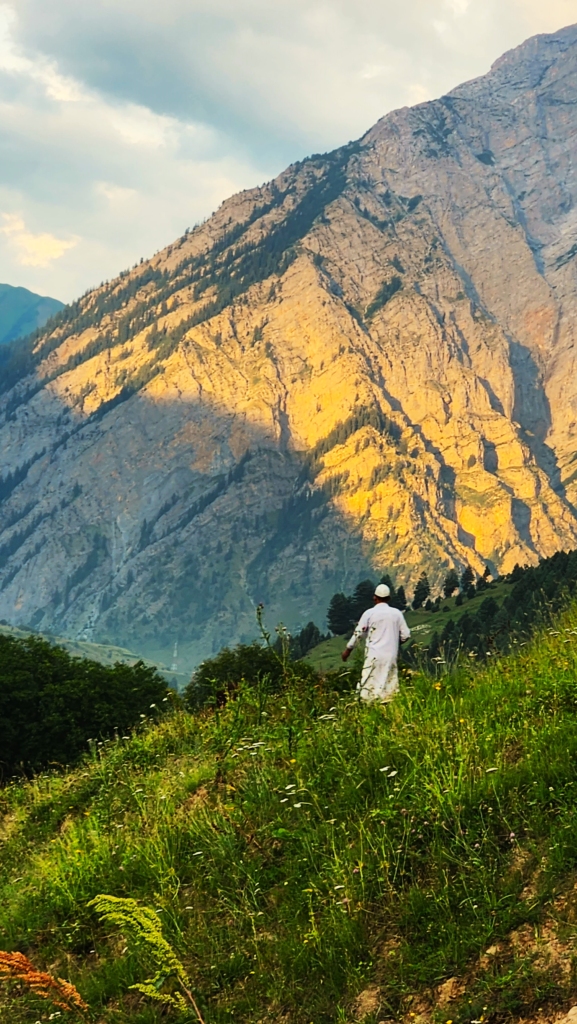
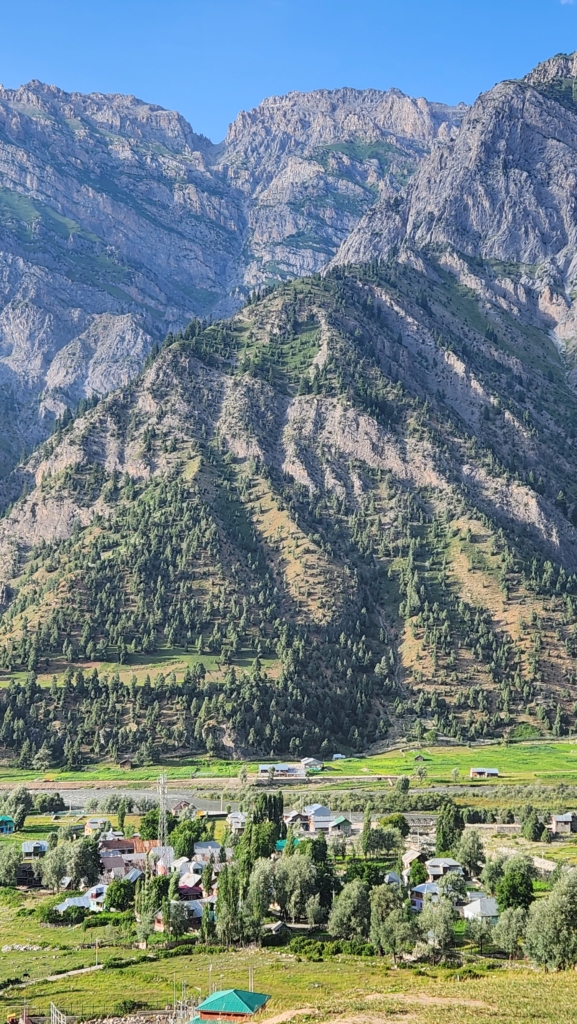

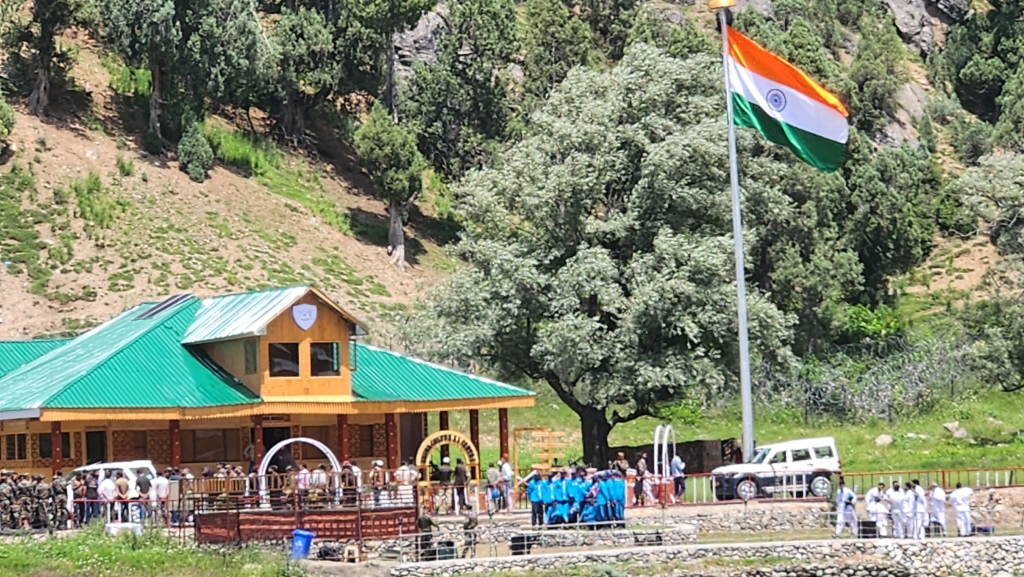
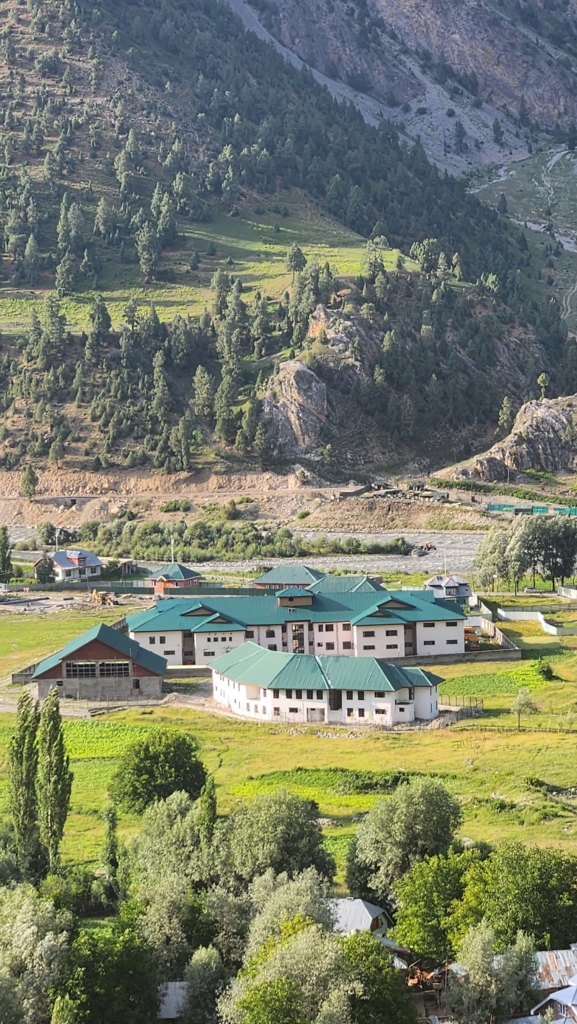
On the far right, a newly inaugurated museum building proudly displayed the Indian flag, fluttering high against the backdrop of the scenic view. In this LOC border town, the Indian national flag adorned every significant place, evoking a deeply patriotic sentiment uncommon in city life.

Jashn-e-Gurez

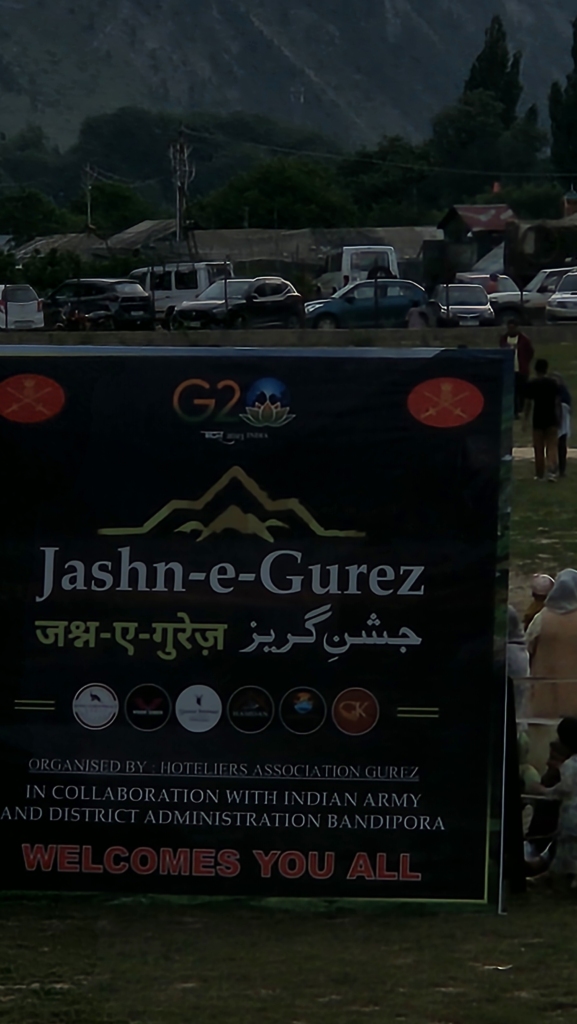
As the sun dipped behind the mountains, we bid farewell to Khandiyal Top and headed to Log Hut Café for an evening snack. However, our plans took an unexpected turn when Zeeshan called Danish, directing us to the local stadium, where the Gurez Festival – Jashn-e-Gurez – was in full swing.
Jashn-e-Gurez – an annual celebration sponsored by the Indian Army. The festival was already underway, and the entire town had gathered at the stadium. Introductions unfolded as Danish presented me to his yet another brother, Shakeel – a young lad in his mid-20s. More on him later; first, the Gurez Festival.
The music resonated loudly, making decent conversation challenging. As we transitioned towards the festival stage, a simple raised platform nestled in the heart of nature, the right side reserved for men and the left for women, we traversed a world infused with the spirit of the ongoing Gurez Festival. The ground space between the stage and the VIP podium held promise for captivating artist performances.
As we progressed towards the performance stage, sudden encounter with a middle-aged policeman added an unexpected twist to the evening.
With Danish’s exchange of pleasantries in Shina, the policeman seized my elbow, declaring, “Aap humaare mehmaan hain”. Despite the eloquence, being escorted by the police invoked a sense of trepidation.
He escorted me to a special area called the VIP podium, and there was an empty chair waiting for me. It made me feel uneasy. The Chief Guest, a commanding Brigadier flanked by the District Collector, presided over the ceremony. The awkwardness was palpable as a fellow attendee, sitting upright beside me, hesitantly inquired, “Aap idhar ke nahi dikhte hai”. Once I clarified my status as a passing tourist, a sigh of relief swept over him. Despite the regal treatment, I discreetly shifted a couple of rows behind as the event unfolded.
I was in Kashmir not merely to witness natural beauty but to experience the spirit of Kashmir.
The festival, a modest setup with high-pitched music, flashing lights, and an enthusiastic compere from Srinagar, showcased diverse performances. The script, peppered with interesting shayaris, added charm to the proceedings. From Zaakir’s Sufi-laced songs to a local Gurezi girls’ traditional dance, the stage came alive with talent.

A Bollywood-based flute artist, added the quintessential Bollywood touch. Although the organizers thoughtfully placed a carpet to prevent dust from rising into the air, the girls dancing group seemed unprepared for it. The carpet curls disrupted their fluid dance movements. Unfortunately, my fears materialized when one of the girls tripped during the performance. Nevertheless, she skill-fully regained her composure, eliciting cheers from the supportive audience. The festival exuded a vibrant spirit. The playful sight of two young babies captivating each other in the front row diverted my gaze.
Log Hut Café

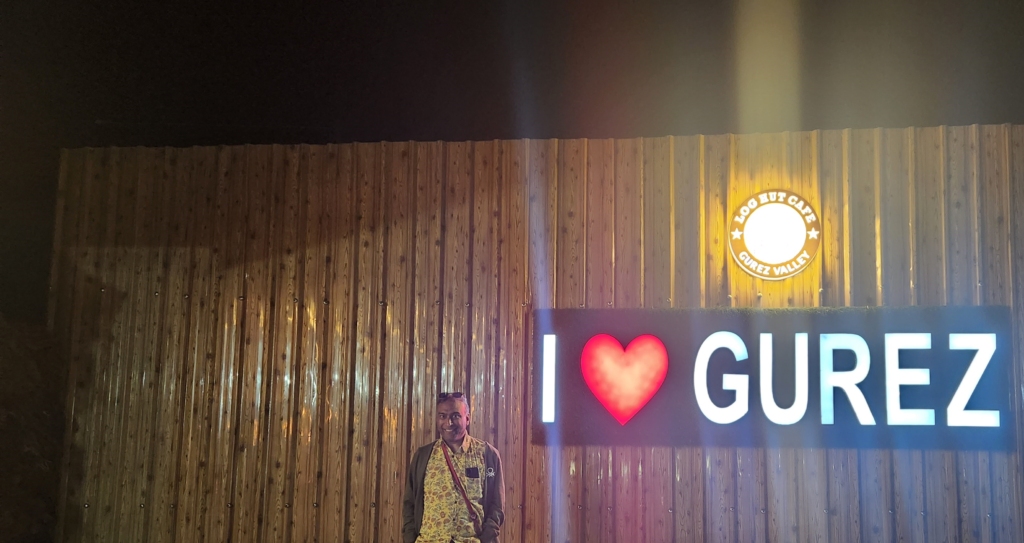
After spending an hour, we left Gurez Festival. Danish and I decided to head to Log Hut Café for dinner, the clock had already struck 8:30. One notable military-run establishment was the Log Hut Café in Dawar, adding a unique flavour to the culinary landscape.
The café, managed by jawan’s on a roster basis, stood out for its reasonable rates and delectable food. Conversations with the serving jawan’s revealed tales worth listening to, providing a glimpse into their lives.
I highly recommend to visit the Log Hut Café in Gurez. The hospitality extended by the serving jawan’s was a bit overwhelming for the consciousness to fully grasp. Limited menu options led to a quick sandwich and cold coffee, and afterward, we retired to the resort. Danish confirmed our plans for the next day’s journey into Tulail Valley, the last Indian village of Chakwali on this side of the border with POK.
Upon reaching the resort, the three sisters’ family, seemed more captivated by the artistry of crafting exotic dishes than venturing into the scenic landscapes. Throughout their two-day stay, it appeared their only excursion was to Habba Khatoon, just a delightful 15 minutes away. Though they warmly invited me to partake in the dinner, I playfully quipped about being vegetarian. Meanwhile, the children played joyously, and I shared cookies and chocolate fudge with them – a small gesture to spread joy in the remote corners of the country.
Expressing fatigue, I bid them goodnight and retired to my tent. Irfan jokingly asked about the tent zipper. I suggested leaving it open with a chair blocking the entrance. As the lights dimmed, the laughter of playing children still serenaded the night. Soon, I drifted into a peaceful slumber.
The resort settled into a nocturnal rhythm. The mid-night ritual unfolded, marked by barking dogs and the glow of Habba Khatoon and the adjacent mountain peak. Despite the cloud-covered night, the picturesque landscape held an allure that tempted me to venture towards the riverbank. However, the fear of brown bears restrained my nocturnal exploration. The silent night in Gurez unfolded its own poetic charm, leaving me to imagine the serenity of the river flowing in the moonlight.
If you’re planning a trip to Gurez Valley or explore Kashmir, we at HappyHorizon would be thrilled to curate your holiday plans to enhance overall travel experiences. Feel free to reach out to us: connect@happyhorizon.in
Day 3: Tulail Valley – Read More
Gallery






Sukumar Jain, a Mumbai-based finance professional with global experience, is also a passionate traveler, wildlife enthusiast, and an aficionado of Indian culture. Alongside his career, which includes diverse roles in international banking and finance, he's working on a wildlife coffee table book and enjoys sculpture and pottery. His interests span reading non-fiction to engaging in social and global networking.