Preamble: Hampi – Tale of Two Civilizations – Read More
Day 1: Hampi – Land of Boulders – Read More
Day 2: Hampi – UNESCO World Heritage Site – Read More
Day 3: Hampi – Arts, Architecture & Engineering – Read More
Day 4: Daroji Sloth Bear Sanctuary & Sanapur Lake – Read More
Day 5: Koppal, Aihole & Pattadakal
Vineyard @ Koppal
Hippie Island – Vineyard @ Koppal: 75 Kms. / 2 Hrs.
We kicked off our day bright and early from Hippie Island. Stepping out of my cozy cottage, I couldn’t help but be wowed by the local scenery. The resort nestled right amidst paddy fields with mountains in close proximity.
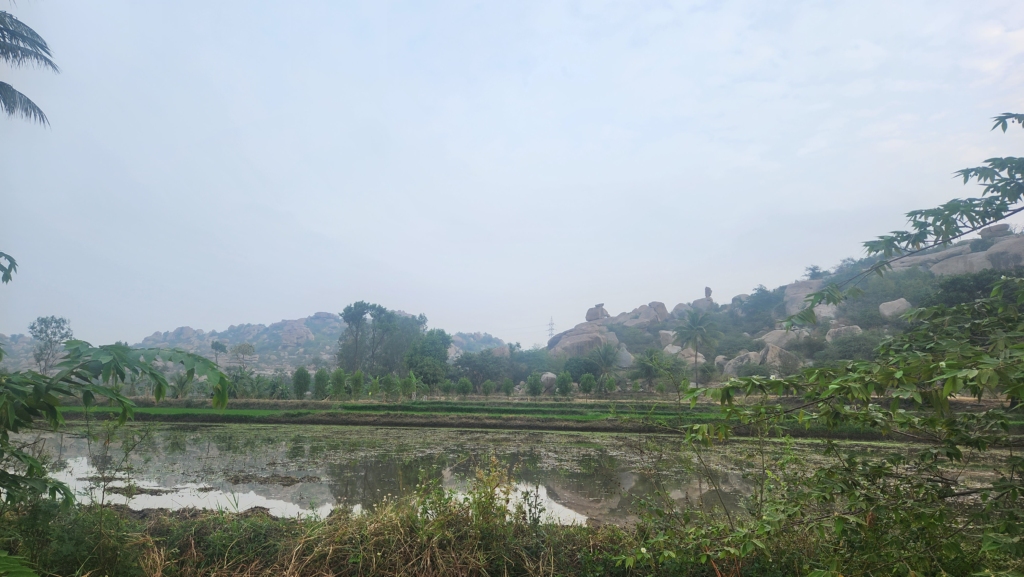
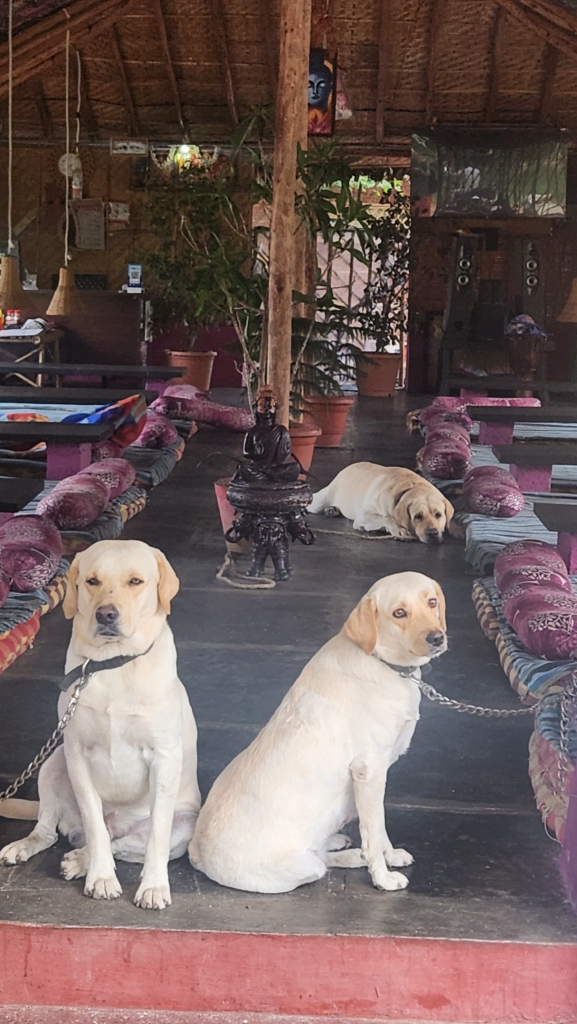
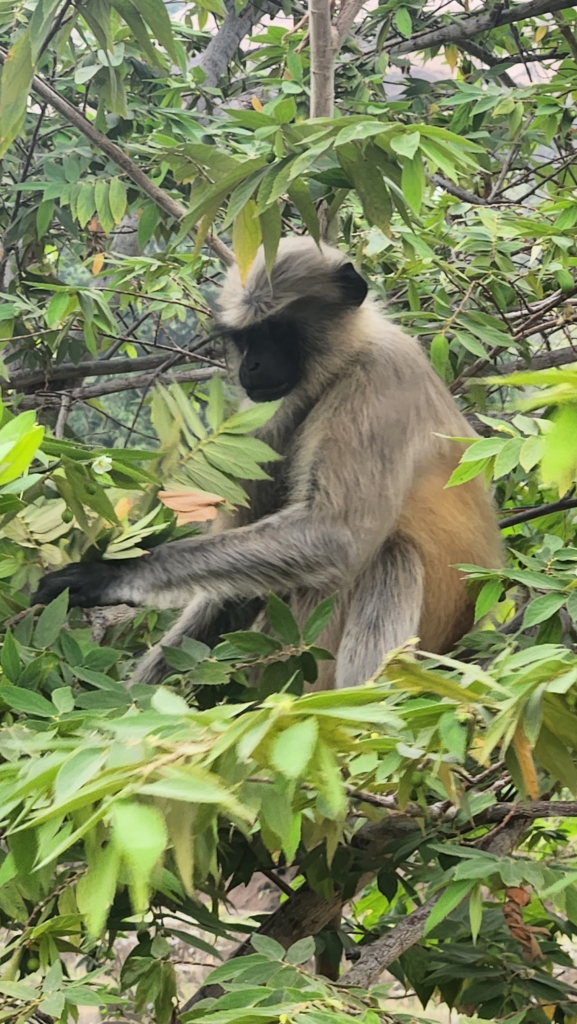
I couldn’t help but notice the wild world coming to life – the chirping birds and a lone langur enjoying his morning snack while the rest of the world, both human and canine, were still snoozing away. I secretly wished I could extend my stay just to soak in more of that serene vibe.
We grabbed some freshly made dosas and idlis near Anjanadri Temple, where we devoured freshly made dosas, idlis and fresh filter coffee. Let me tell you, dosas straight from the griddle are nothing short of divine! After a bit of a tussle with Google Maasi’s directions, we finally got back on track after a detour of 20 kms.
Next up on the agenda was a thrilling exploration of vineyards and learning the intricate art of wine-making. Naidu, the vineyard’s estate manager, graciously guided me through the fermentation tanks and barrel cellar and process of making both white and red wines. Surprisingly, the equipment needed for wine-making is quite minimal. Did you know the skin of black or purple grapes gives red wine its their luscious hue and unique flavour? With a chuckle, he revealed the secret of squeezing out every last drop of goodness from those skins, yielding a bonus 10% to 15% more wine. Now that’s what I call a fruitful endeavour and I definitely didn’t argue with that!
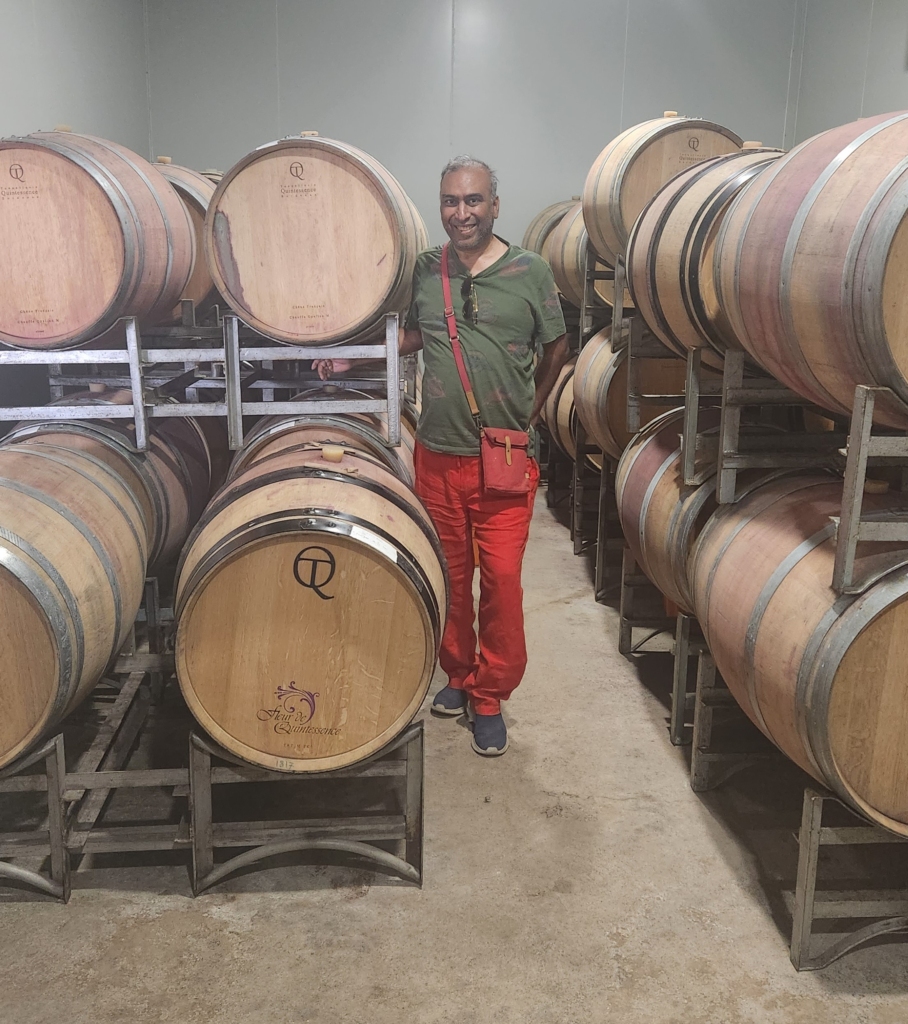
As we delved deeper into the process, Naidu enlightened us on the crucial role of oak barrels in red wine ageing, noting that these barrels have a lifespan of 3 to 4 cycles. Ageing, he emphasized, is the unsung hero behind the smooth taste and nutty notes of red wines. It was fascinating to learn that some fine wines age gracefully in bottles for years before making their grand debut in the market. He explained the simple yet crucial decisions involved in red-wine making, like whether to keep stems in the fermentation process to tame the tartness. White wine-making, in comparison, seemed like a walk in the park.

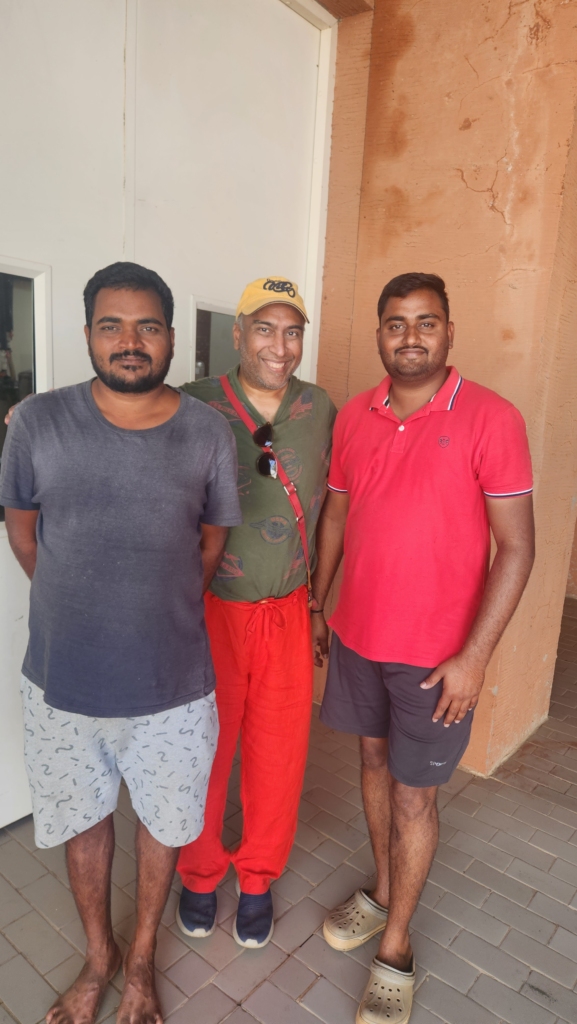
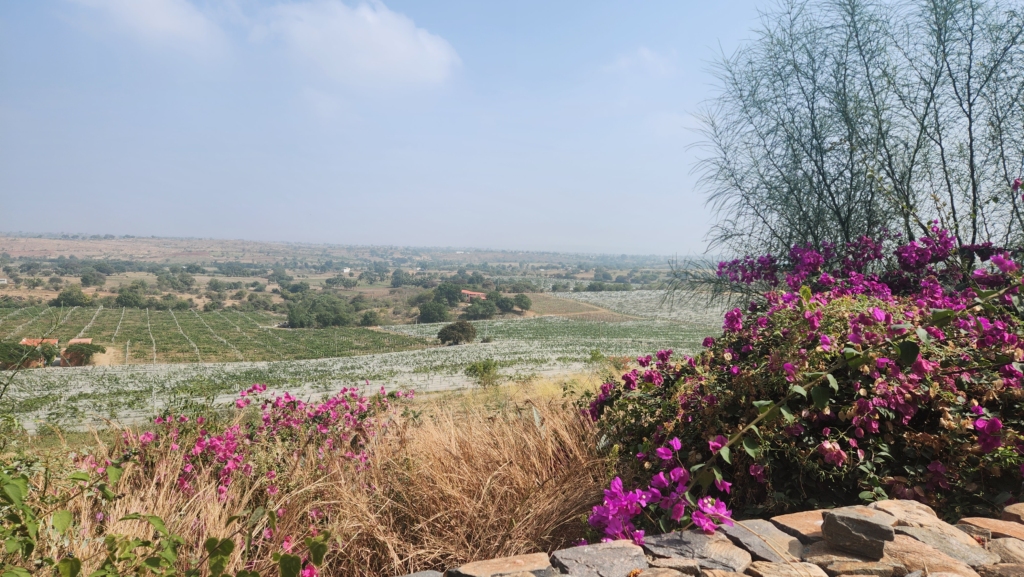
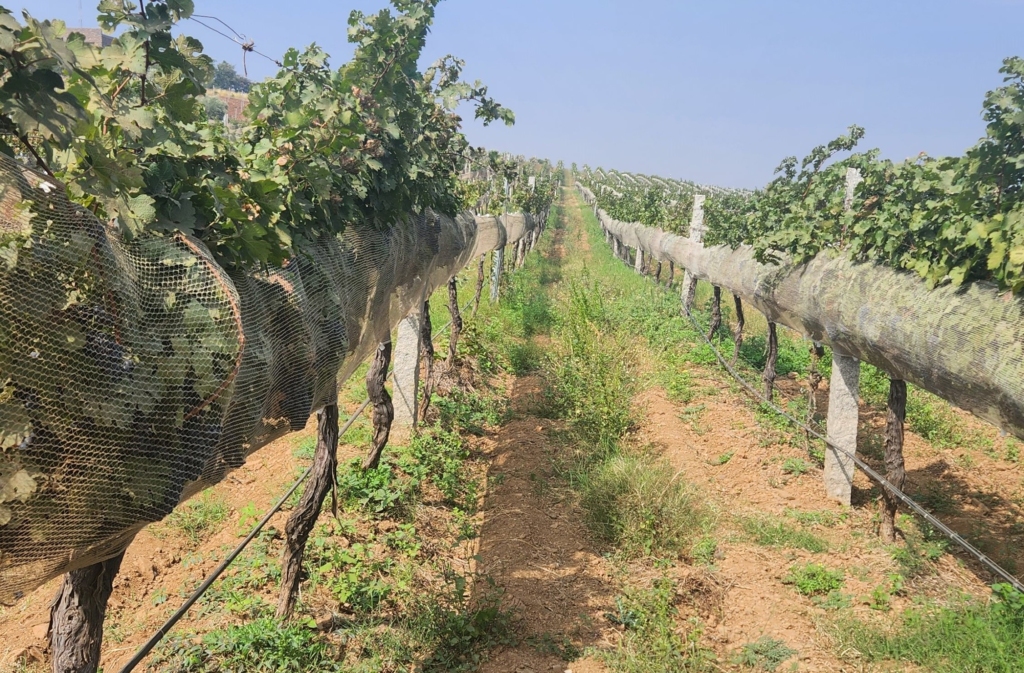
Just when I thought I’d mastered the art of wine-making and walked out of the building, I stumbled upon the vast vineyards owned by the estate, spanning over 100 acres, with about 50 acres currently in bloom. Naidu’s wisdom about the timing of grape harvests struck a chord, reminding us that it’s not just about plucking grapes but understanding their ripening rhythm. The black grapes take their sweet time to ripen compared to white ones. We even tried our hand at inspecting grapes like seasoned sommeliers.

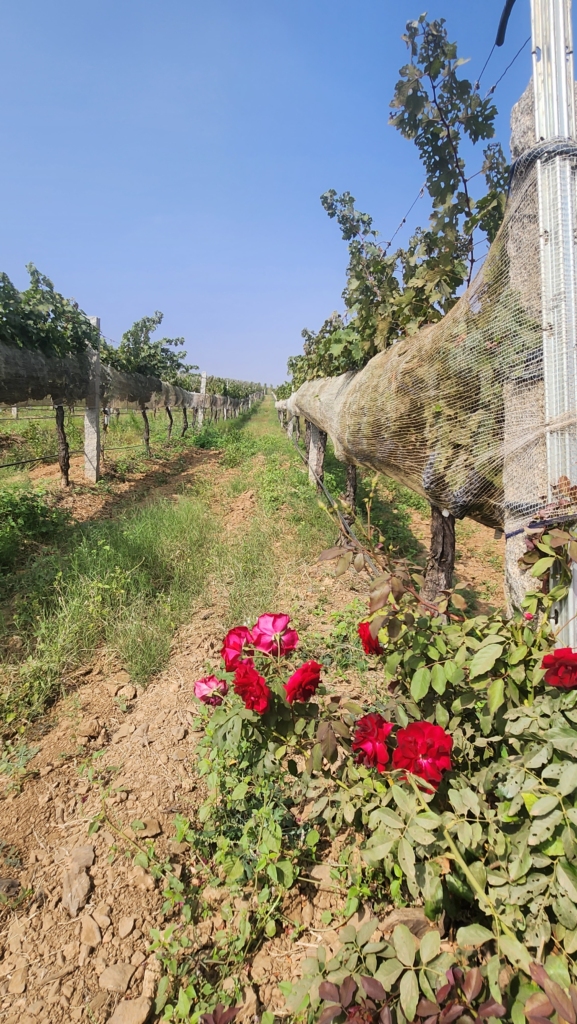
I was particularly intrigued by the rose plants strategically placed at the start of each row and drumming sound. Naidu winked and let out their trade secret – rose plants are very delicate and any virus / pest attack on them served as an early warning systems against any threats to the vines. The surprise drumming session by local villagers was to keep pesky birds and animals at bay. Talk about a wild way to end the day with innovative pest control!
As we wrapped up our vineyard adventure, we were treated to a surprise delightful wine-tasting session overlooking the sprawling vineyards, turning it into a moment of pure relaxation amidst the green oasis of the Hampi Hills. I felt like I was on cloud nine. Oh, how I yearned to extend my stay and bask in the aromatic embrace of the vineyard. Now I get why the rich and famous snag up wine estates!


As we bid adieu to Naidu, I couldn’t resist snagging some bottles of their exquisite red wines, graciously discounted by the man himself. And as we departed, Naidu humbly shared that their wines had clinched major global awards!
Pro Tip: So, if you’re a red wine aficionado in need of some quality wines, hit me up – I’ve got the insider scoop straight from the vineyards!
Aihole
Koppal to Aihole
75 kms. / 2 Hrs.
As we set off from the vineyard, our journey to Aihole hit a few bumps along the road. Those road signs sure know how to disappear when you need them the most! Even Google Maasi seemed seemed to be scratching her head and as lost as we were! Even the locals in Koppal weren’t too sure about Aihole. Ganesh started to wonder if we were even heading to the right place! After a bit of a struggle and a scenic route through sleepy villages, we finally cracked the code and found our way to Aihole.

Aihole is like a time machine, with most of its temples dating back to the 7th to 12th century. They’re like a melting pot of Hindu, Buddhist, and Jain cultures! Back in the day, the Chalukya Kings even set up their first capital in Aihole. Along with nearby Pattadakal, Aihole was like the Silicon Valley of ancient architecture, buzzing with creativity and new ideas.
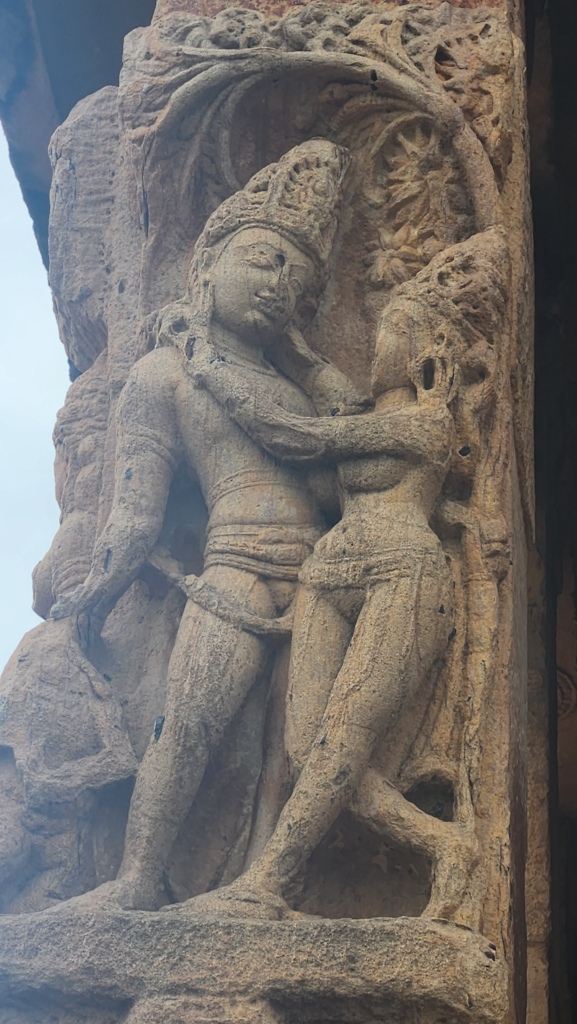
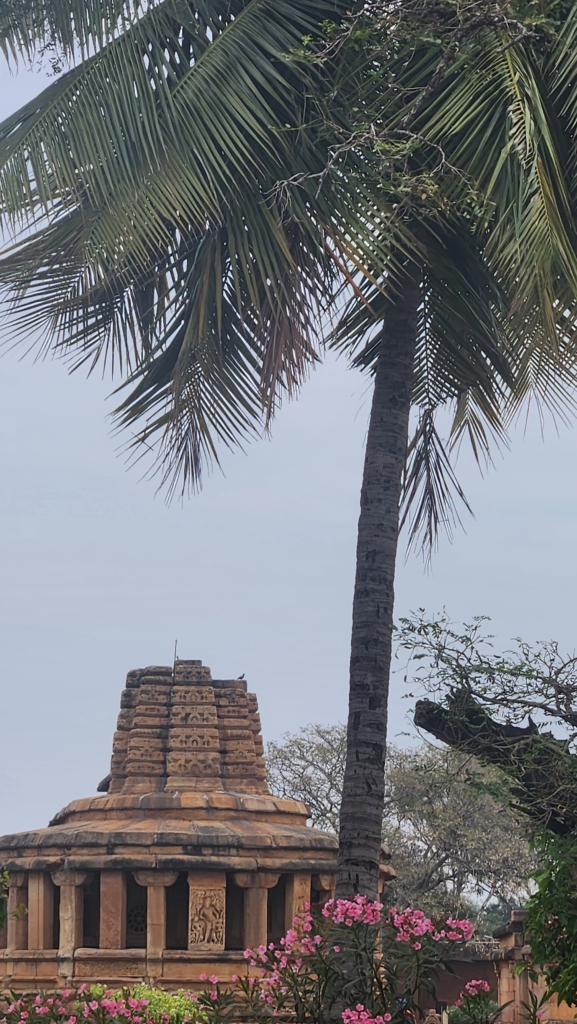
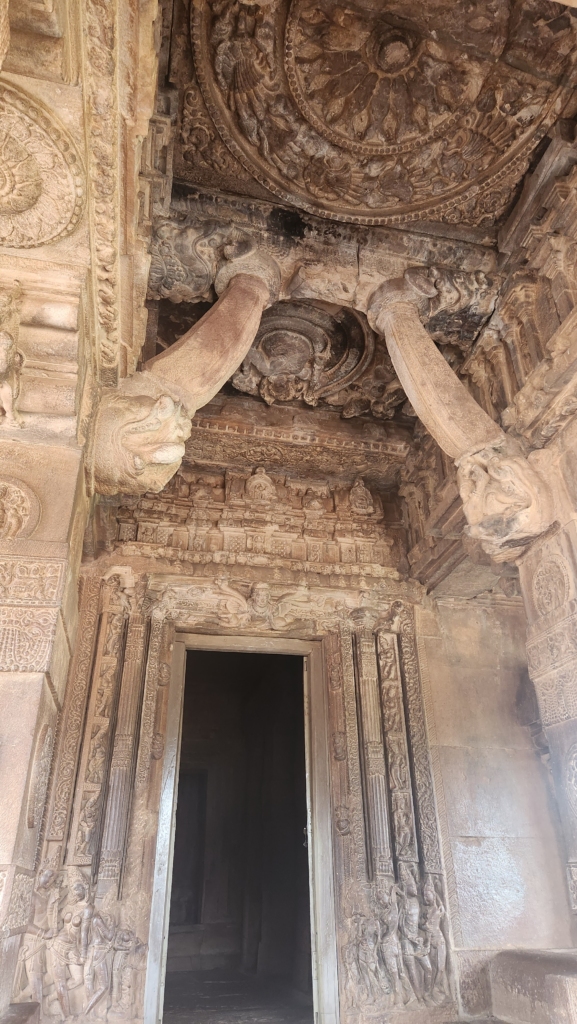
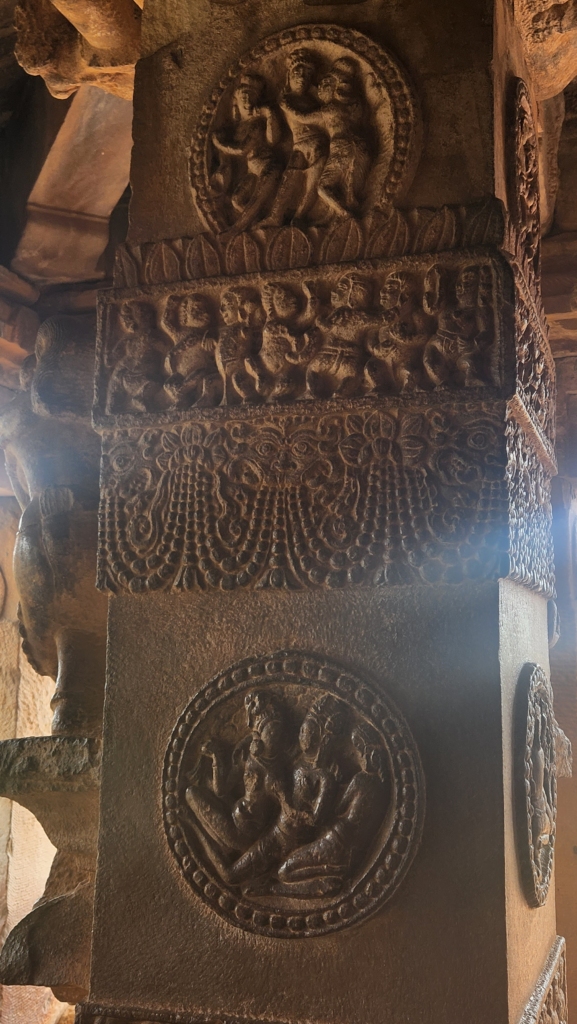
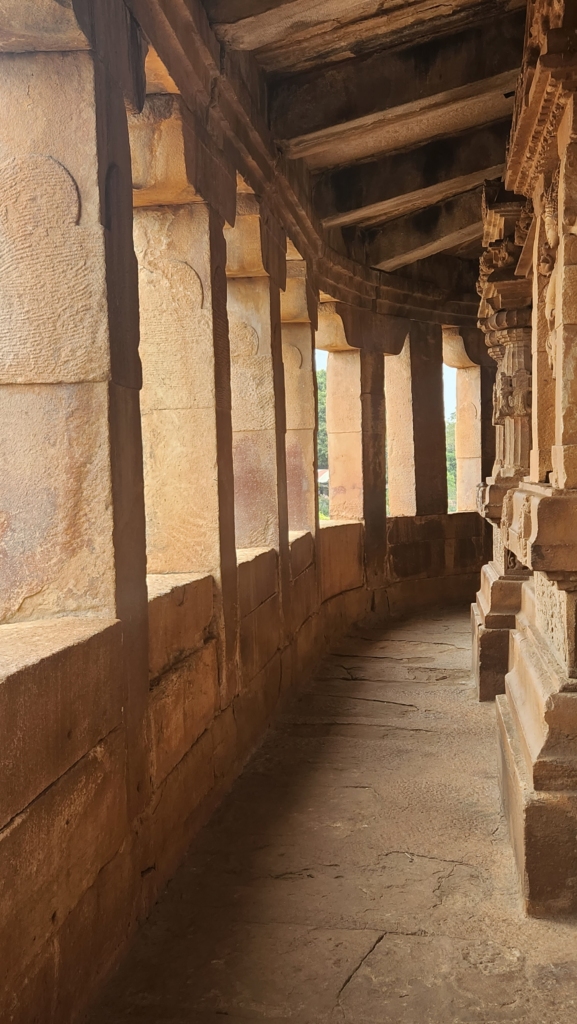
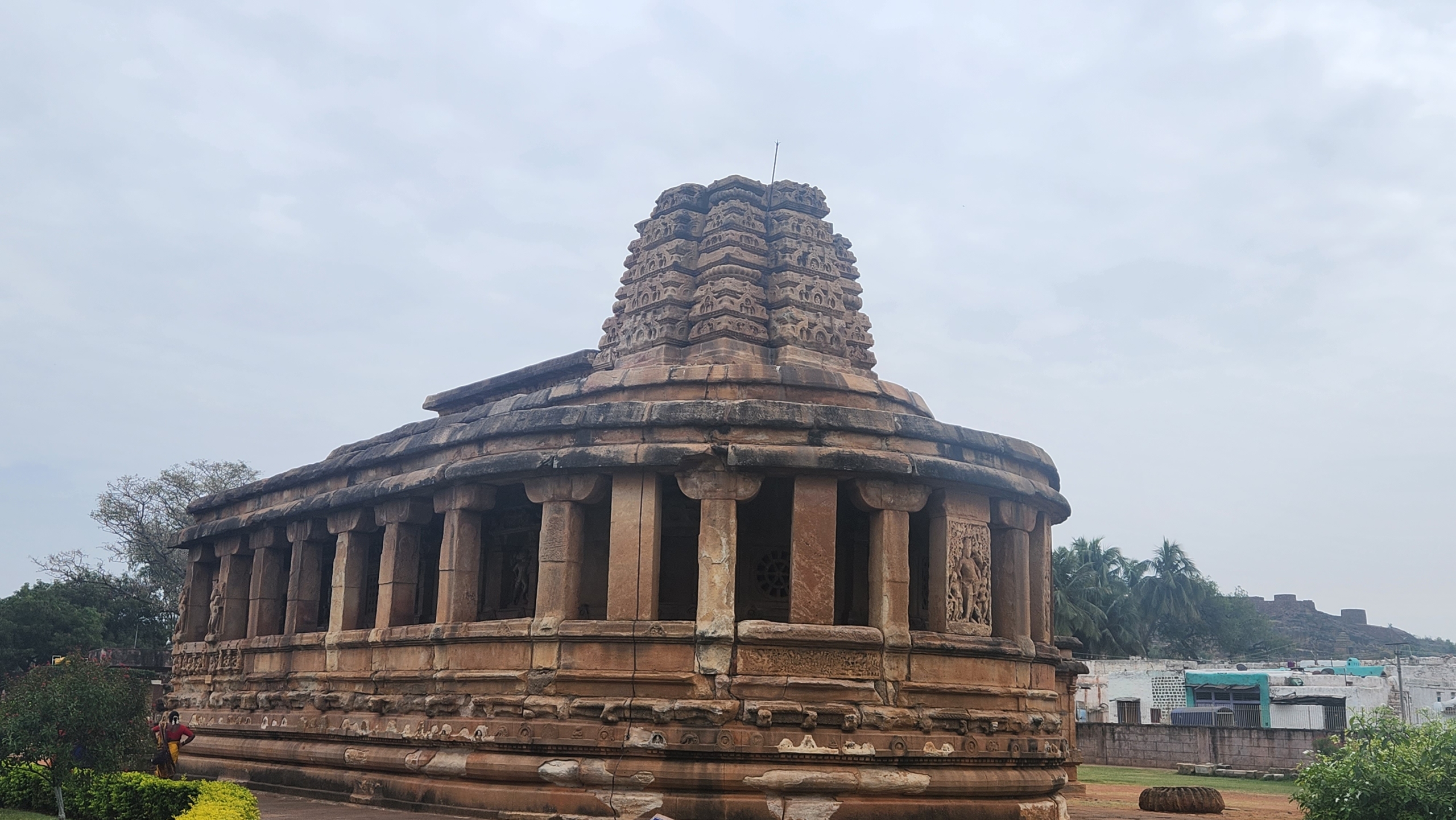
Once you’re in the temple complex, it’s like stepping into a treasure trove of history and art. The temple structures are like magnets—you just can’t resist exploring every nook and cranny! The star of the complex is the Durga Temple. It was originally dedicated to the Sun God! No one knows why the name changed, but who cares when you’re surrounded by stunning carvings of gods and scenes from the Mahabharata? Inside, you’ll find stunning carvings of Shiva, Vishnu, Harihara, Durga, and more.
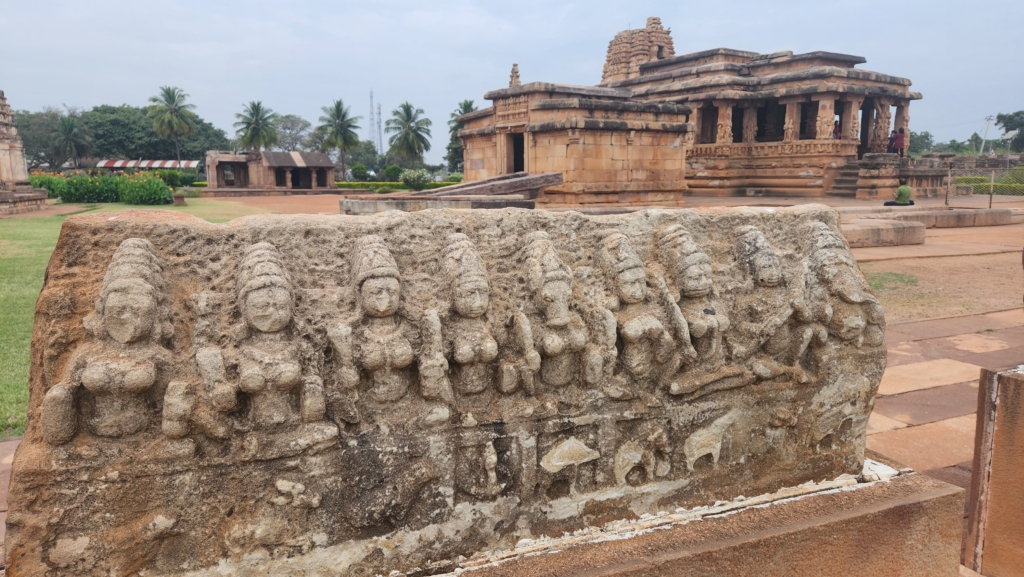
The temple itself is shaped like an elephant’s back, and it’s got this cool ambulatory thing going on that makes you feel like you’re wandering through history. A peristyle cool feature creates a walkway around it and even give off Old Indian Parliament House vibes. I’ve never seen a temple quite like it – talk about impressive architecture!
The whole temple complex is a treasure trove of ancient wonders, each one with its own story to tell. There’s even a step-well near the Durga Temple, but unfortunately, it’s off-limits to us tourists now. And don’t even get me started on the museum, packed with cool stuff dug up from the area.
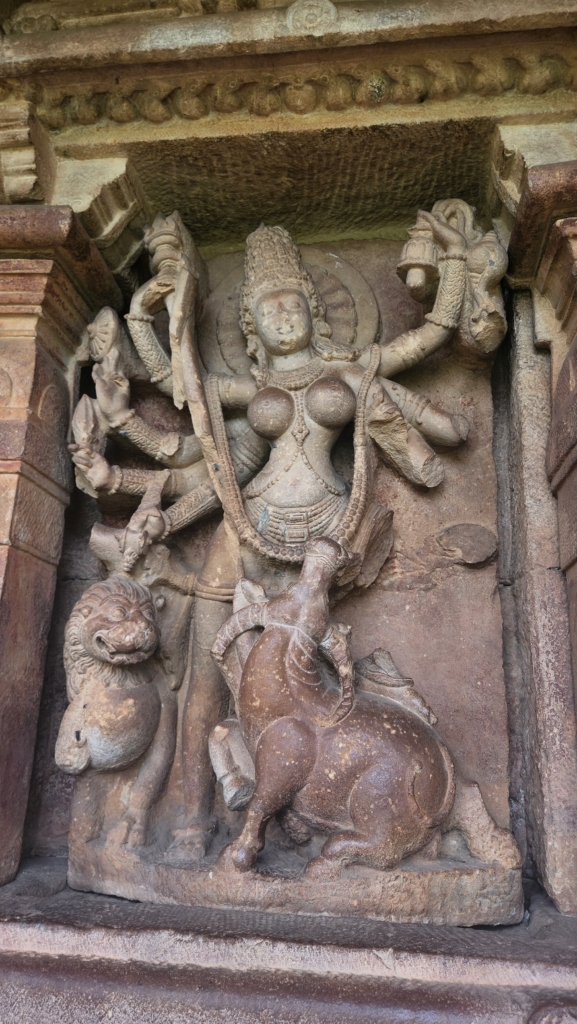


Trust me, it’s worth it for the history buffs and selfie enthusiasts alike. You won’t regret it!
Pro Tip: If you’re planning a trip to Hampi, do yourself a favour and add a couple more days to check out Aihole, Pattadakal, and Badami.
Pattadakal
Aihole to Pattadakal: 50 Kms. / 30 Mins.
After our Aihole adventure, hunger struck with a vengeance! Unfortunately, the food options outside the temple weren’t exactly calling our names. Ganesh’s face said it all – he was not keen on risking his taste buds with the local stalls. So, we settled for some refreshing sugarcane juice and decided to hold out for something better on our way to Pattadakal. The stretch between Aihole and Pattadakal was like a scenic postcard come to life, with little hills dotting the landscape. Luckily, the journey wasn’t too long, and soon enough, we arrived at Pattadakal.
Once we arrived in Pattadakal, our stomachs were growling louder than a temple bell. Luckily, we stumbled upon a cozy roadside eatery that Ganesh insisted was our jackpot, and I wasn’t about to argue. It was run by the most delightful couple you could imagine. As you entered this place felt like home away from home. The lady was busy making fresh bhakaris right at the entrance, while her husband juggled everything else – taking orders, serving food with a smile, you name it. Their two kids added to the chaos, running around like little whirlwinds. The food was simple but oh-so-delicious, and I’m not sure if it was the grub or their warmth that made us eat like there was no tomorrow. When Ganesh asked for some ghee, the man brought out a whole bowl, enough to last us a lifetime!, leaving it on our table without a second thought. It was clear that for these folks, serving up good food was more important than anything else. Talk about hospitality with a capital H! We couldn’t thank them enough for their hospitality, so we decided to pay it forward by treating their kids to some sweets.
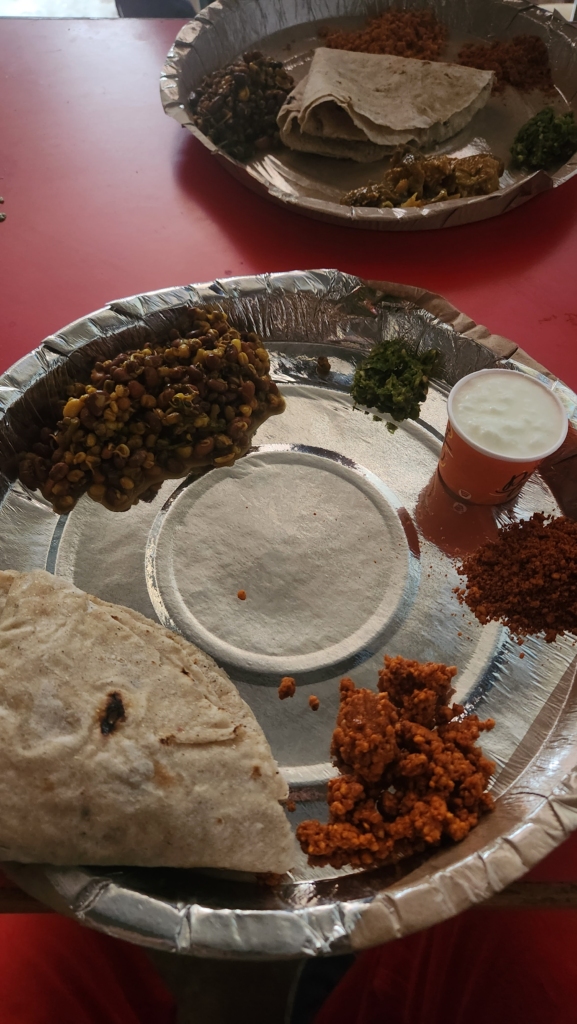

As we bid farewell, I couldn’t resist asking the husband if we needed a guide for the temple complex. His response was simple yet profound, it floored me: “Sir, it may be a small amount for you, but it’s a good day’s wage for a guide. Go for it.” Talk about clarity of mind! Our guide, Krishna, was a walking encyclopedia of Pattadakal’s history. And when I mentioned the names Ganesh and Krishna, it was like being in the company of two Hindu gods – how cool is that?
His first words about Pattadakal being a UNESCO World Heritage Site caught me off guard – I had no idea that this place had such a prestigious tag! It got me thinking about what makes this place so special. Aihole blew me away, and it wasn’t even a UNESCO site yet! So, what secrets did Pattadakal hold to earn such an honor? I was itching to find out. This leg of our trip was a last-minute addition, but I was glad I made it.
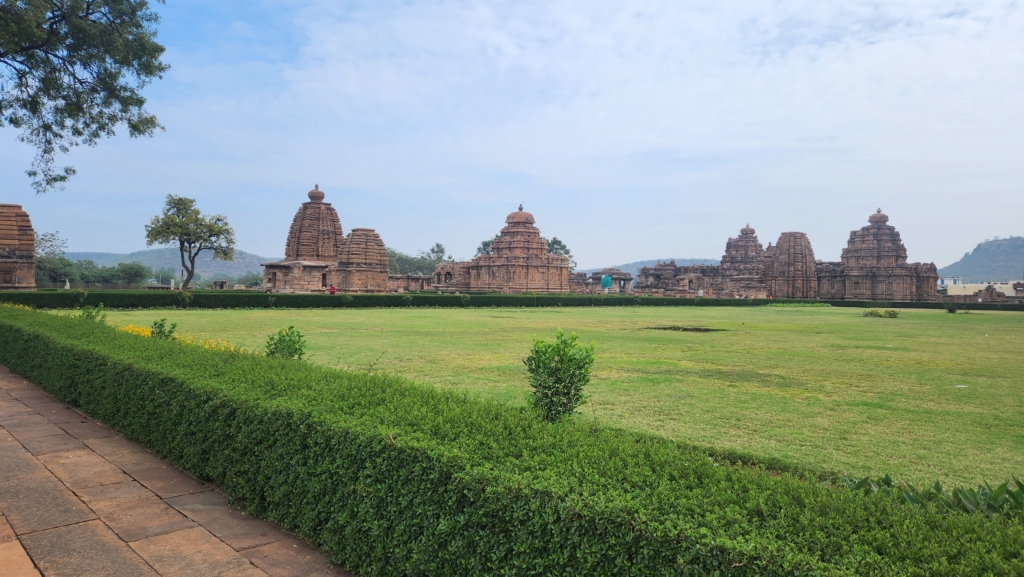
As Krishna guided us through the temple complex, he pointed out the majestic Malaprabha River flowing nearby, framing the temple complex beautifully. Pattadakal, nestled on the river’s left bank, was like a jewel set amidst red sandstone mountains. Turns out, the area was once known as Raktapura, the “Red City“, thanks to its iron and manganese-rich soil giving everything a fiery hue. Who knew geology could be so fascinating?
Krishna told us that about 10 temples were built in this complex during the 7th to 8th century by the rulers of the Chalukya dynasty, possibly during the reign of King Vijayaditya / Vikramaditya. He pointed out that these temples were all dedicated to Lord Shiva. As we explored the complex, I couldn’t help but admire each monument and sculpture for its unique beauty and grace. The vibrant sculptures of Pattadakal gave us a glimpse into the society of that era.
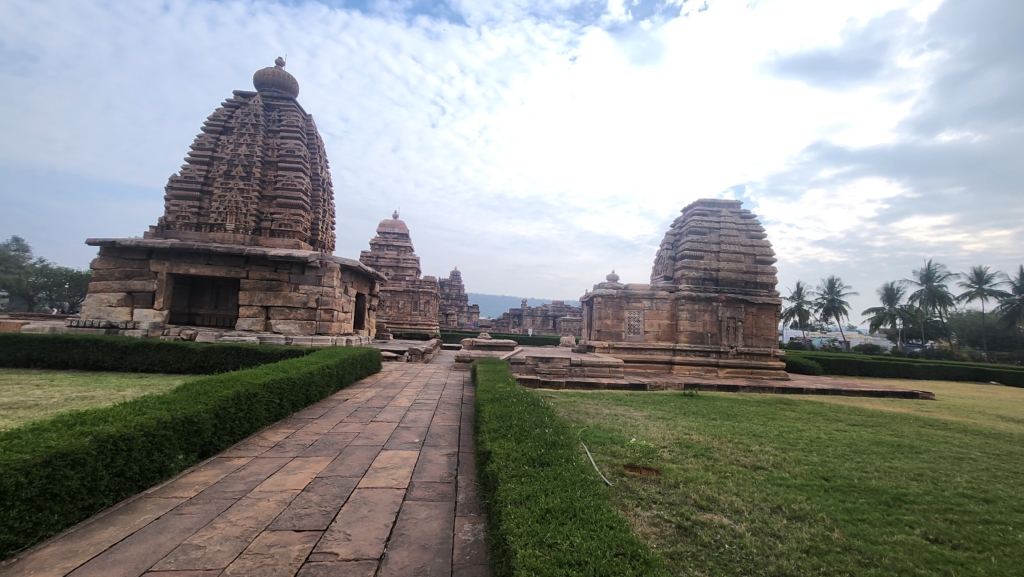

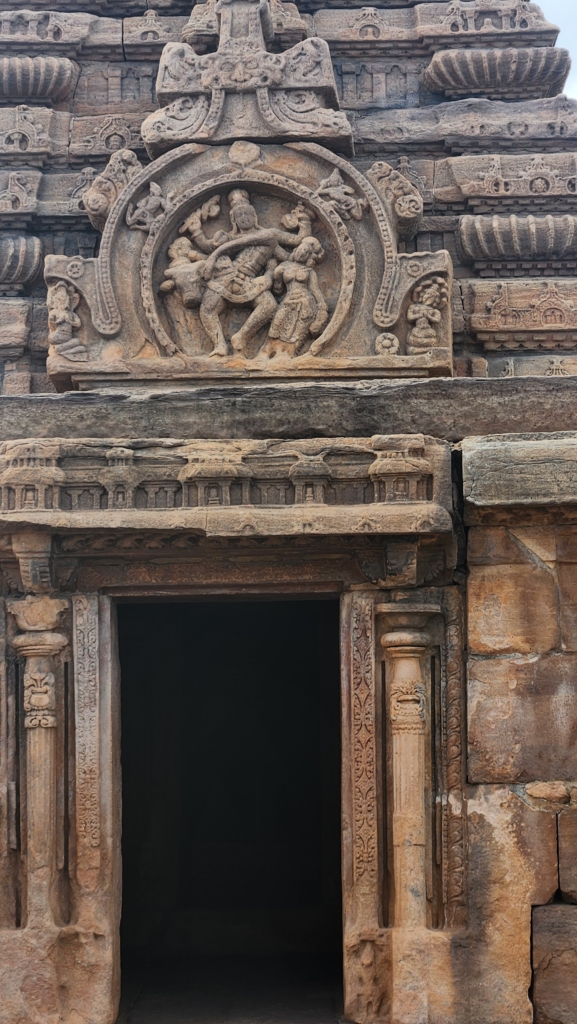
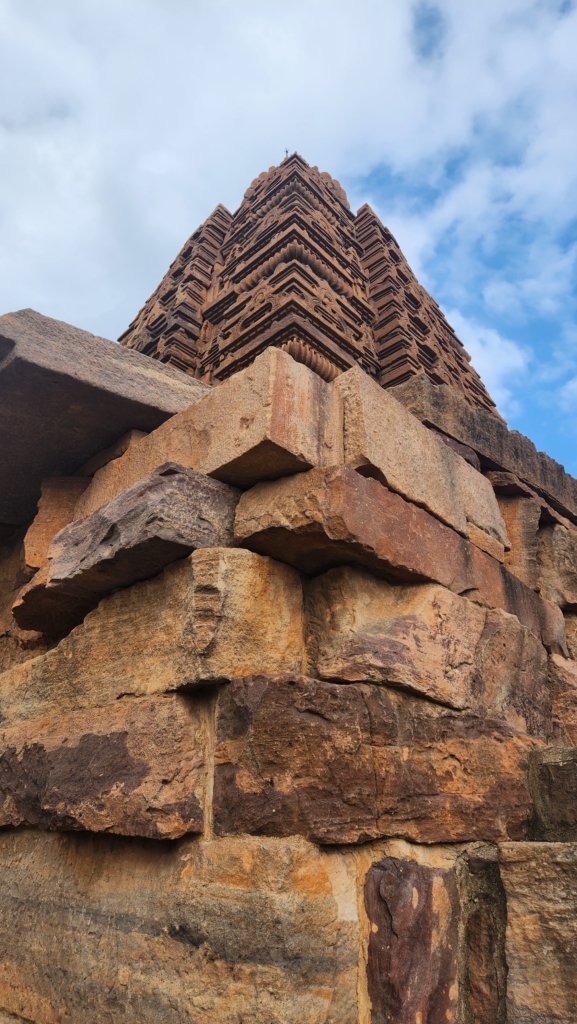
Besides the decorated temples, we also came across several stone idols and statues of various sizes scattered around the temple grounds. Krishna explained that these semi-completed collections led historians to believe that this place could have been like a “laboratory of Indian temples” – the ancient equivalent of a temple-building boot camp. Budding sculptors would come here to hone their craft before heading out across the land to build temples far and wide. Even though the complex sits up high, away from flood danger, the architects built the temples on even higher platforms just to be safe. As we strolled through the temple maze, it hit me – I’ve never been this up close and personal with architecture before! I felt like I was getting a crash course in architecture. Big thanks to Krishna for being our tour guide extraordinaire.
Now, while I’m not particularly religious, but I’m all about tapping into that higher power / energy wherever it may be. I began to understand the significance of temples in ancient times, especially in the context of their architecture from the 7th century. These temples weren’t just places of worship; they were central meeting points for the community – they were like community centres where folks came together to pray, chat, and probably gossip too! It’s mind-blowing to think that these ancient structures are a testament to people’s unwavering faith and dedication, showcasing their collective efforts to create something beautiful and elegant.
Krishna dropped some temple trivia on us, explaining how Pattadakal showcases two different temple styles from ancient India – one from the north, one from the south. He demonstrated the architectural styles and differences using drawings on the ground. The complex housed four temples of each style, along with the Papanatha Temple, which blended both styles. The artisans back then were like ancient architects with a dash of mad scientist, fearlessly mixing and matching styles. Now, I won’t bog you down with all the architectural jargon, but let’s just say Krishna’s stick diagrams were on point!


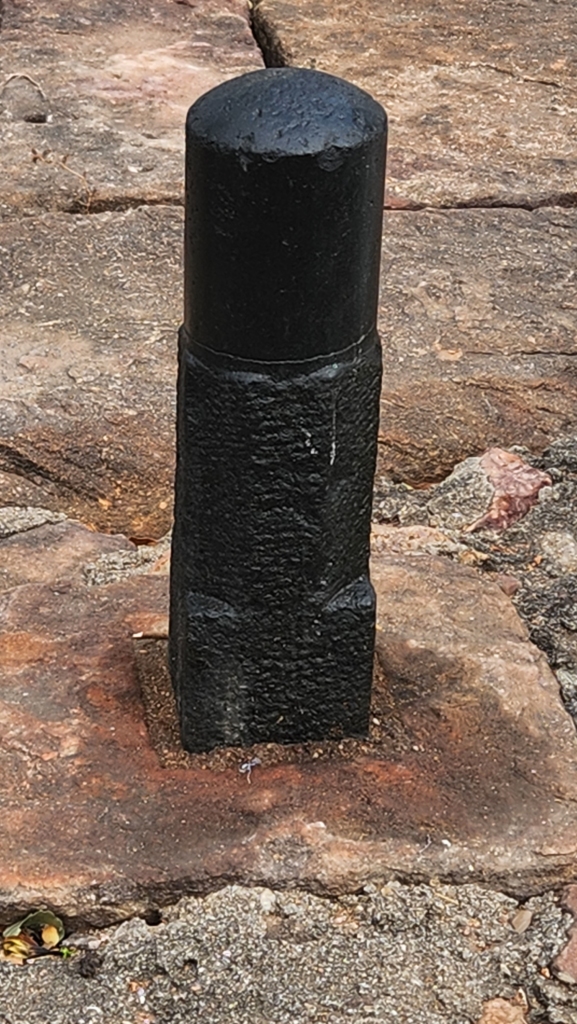
Now, let’s talk shapes. The stupi atop these temples got me thinking – why squares, circles, and octagons? Turns out, they’re not just pretty shapes – they’re packed with symbolism!
Picture this: a square at the bottom for Brahma, the “Creator” – with four heads. His four heads represents the four Vedas and are pointed to the four cardinal directions;
an octagon in the middle for Vishnu, the cosmic “Protector” with eight arms i.e. Ashtabhuja. The objects held by Vishnu in his eight arms collectively embody the principles of cosmic order, righteousness, and spiritual enlightenment; and a spherical topper for
Shiva, the ultimate “Destroyer”, representing the formless and limitless i.e. Nirakar / Nirgun. Mind. Blown.
The Virupaksha Temple is like the Beyoncé of the temple complex – it’s the largest in the complex and dedicated to Shiva! And let me tell you, this place is dripping with jaw-dropping sculptures inside and out. The walls and pillars are like a blockbuster movie, starring in lighter note, Shiva doing his mythological dance to Ravana pulling off some serious heavy lifting – Mt. Kailasha. Krishna told us that the Kailasha Temple at Ellora Caves was modeled after this temple, while the Virupaksha Temple itself was modeled after the Kailasanatha Temple at Kanchipuram.
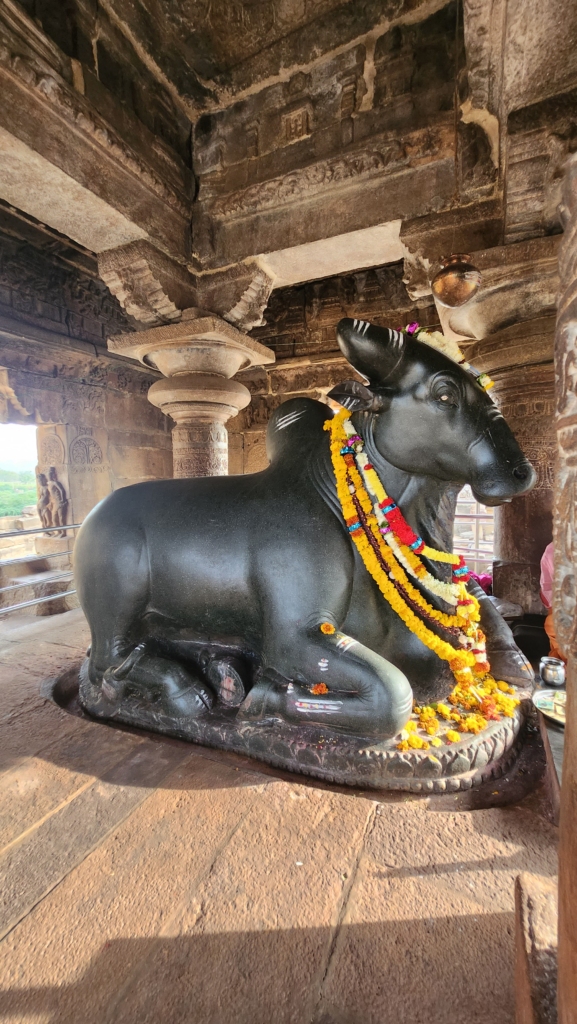
We admired the Nandi-mandapa and the colossal Nandi sculpture made of black granite. And just next door is the Mallikarjuna Temple, basically the Virupaksha’s twin, except slightly smaller. But wait, there’s more! Inside the complex stands this epic octagonal pillar, carved out of a single stone and boasting a Sanskrit inscription in not one, but two scripts! Talk about leaving a mark in history.
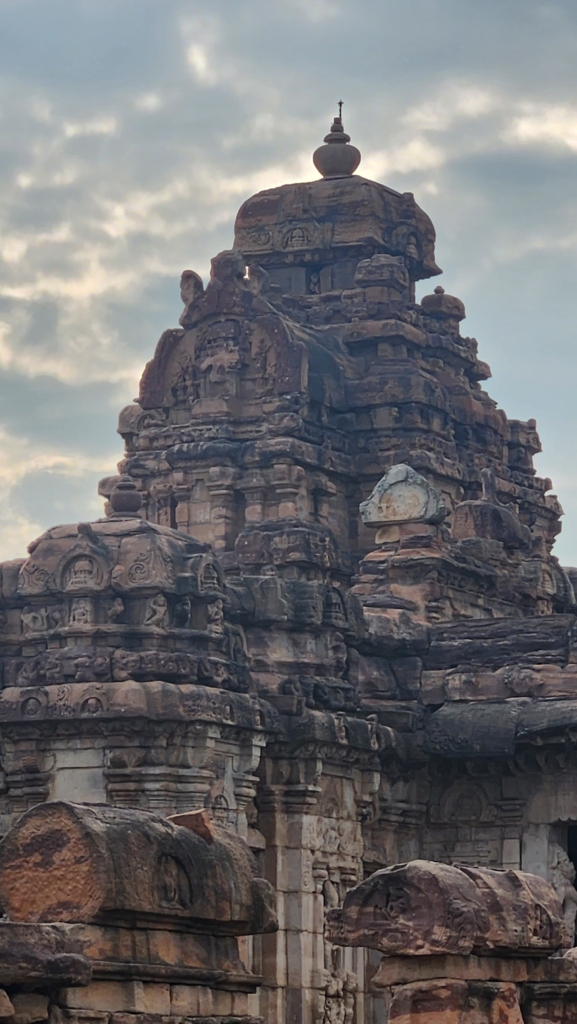
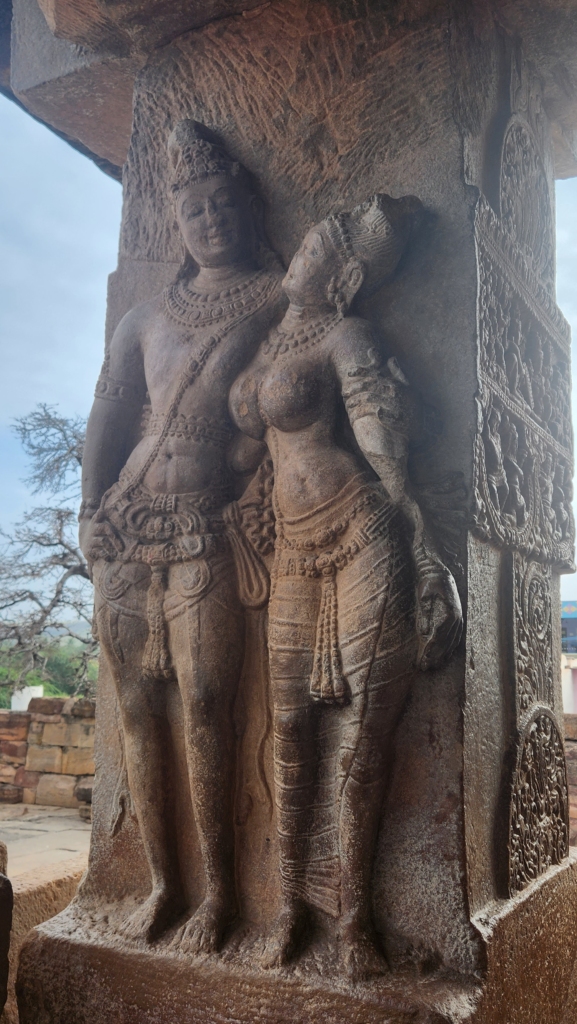
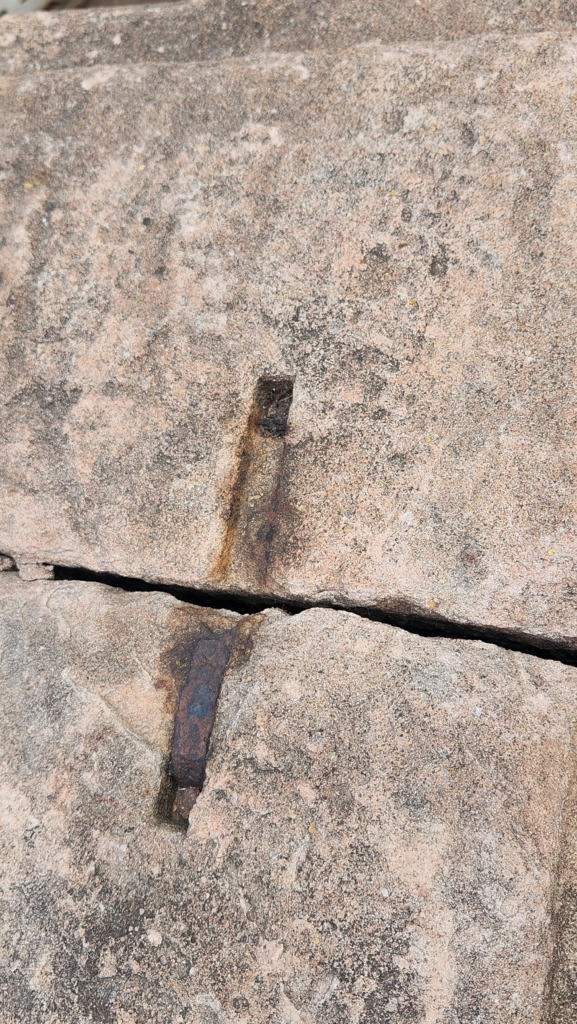
Krishna showed us how the stones were clamped together with iron brackets, a testament to the ancient engineering skills. The brackets were hidden away so well that you’d never spot them unless some sneaky stone decided to play peekaboo. Every nook and cranny of this temple complex was like a crash course in ancient wisdom, making me hope that somewhere out there, all this knowledge is safely stored away so we don’t have to start from scratch.


We gave Krishna a big thank you for being our wise guide, like the mythological guide – Krishna from the Mahabharata. Philosophically speaking, he was our guiding light through this temple adventure!
Badami
Pattadakal to Badami: 25 Kms. / 30 Mins.
Phew, after our epic tour of the Pattadakal temple complex, I was totally pooped! We had an early morning start, clocked in some serious mileage on the road and temple hopping.
We had to reach Badami quickly because we didn’t have a hotel reservation for the night. By the time we arrived in Badami, it was getting dark. Luckily, we found a hotel recommended by Krishna, and it had the last available room. Talk about living on the edge! We had an early dinner at the hotel and went to bed. The next day, I had another early morning start followed by a marathon journey back home, first by road to Hubli and then by air to Mumbai. Ah, the life of a wandering tourist – never a dull moment!
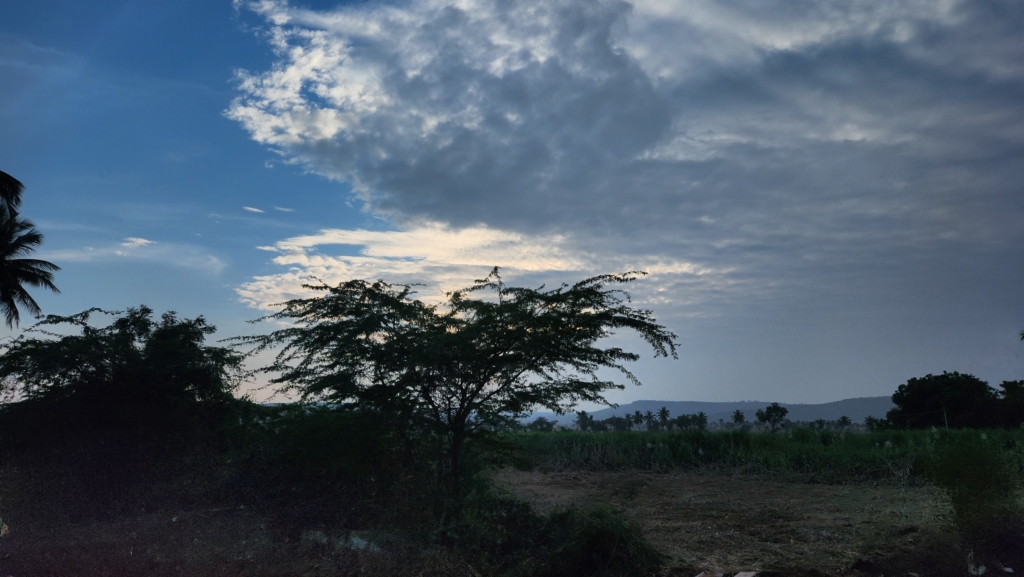
We wasted no time, had a quick dinner at the hotel before crashing into bed for some well-deserved sleep.
January 2024
If you’re planning a trip to Hampi or travel through Karnataka / India, we at HappyHorizon would be thrilled to curate your holiday plans to enhance overall travel experiences. Feel free to reach out to us: connect@happyhorizon.in
Day 6: Badami
Gallery
Sukumar Jain, a Mumbai-based finance professional with global experience, is also a passionate traveler, wildlife enthusiast, and an aficionado of Indian culture. Alongside his career, which includes diverse roles in international banking and finance, he's working on a wildlife coffee table book and enjoys sculpture and pottery. His interests span reading non-fiction to engaging in social and global networking.