Kashmir! Ek Kuudrat ka Karishma – Read More
Day 1: Srinagar to Gurez Valley
Srinagar Airport – Dawar, Gurez Valley (via Bazipora – Lawador – Athawatoo): About 150 km. / 5 hr.
Landing @ Srinagar
Just a day before departure, a small hitch had cropped up with my taxi arrangement. Danish – my soon-to-be friend, guide, driver, companion, and philosopher – had booking conflict for the first day. In his place, he arranged for a substitute driver, Tarik, to pick me up from the airport and drive me to Gurez Valley.
The day of my flight dawned early, with a 6 a.m. departure scheduled from Mumbai to Srinagar. A three-hour journey later, I landed in the Valley a few minutes ahead of time, having spent most of the flight blissfully asleep, as if the universe was ensuring, I was well-rested for the adventure ahead.
Here’s the thing about Srinagar Airport – it’s a sensitive zone, and any taxi picking up passengers from the terminal requires a access pass, which the driver has to secure in advance. Therefore, always clarify your taxi pick-up plans. Speak directly to the driver a couple of days in advance, and make sure they understand your expectations. It will save you a lot of last-minute stress and inconvenience.
We finally set off around 9:30 a.m. Srinagar was just waking up. The streets were still quiet, save for the occasional CRPF personnel stationed every few hundred meters – a scene I assumed was due to the ongoing Amarnath Yatra, as we were on a common route. But once we left the suburban fringes of Srinagar, the security presence vanished, and the road opened up to the beauty of the valley.
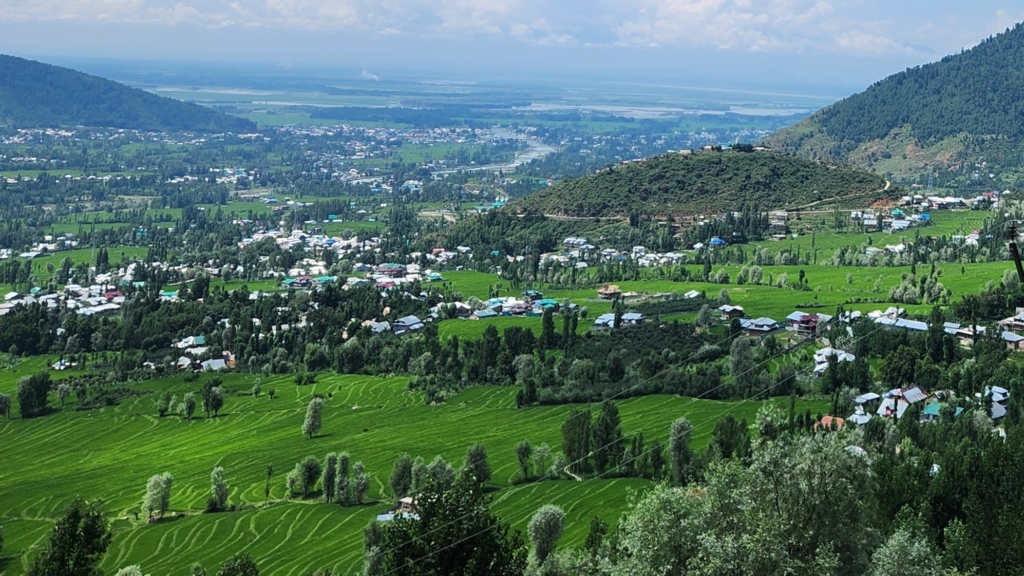
Kashmir Valley (especially around Srinagar) is watched over by an intricate web of security forces – the Indian Army, J&K Police, and the CRPF. Their roles and jurisdictions were a puzzle I couldn’t quite decipher. But locals, seemed to know exactly how to navigate these forces. What struck me most during my trip, was the respect the locals have for the military. There may be grievances about politics or the state of affairs, depending on who you speak to, but there’s an unspoken reverence for the soldiers. And while political conversations are inevitable, I tend to steer clear – politics is a mirror with too many curvatures, distorting depending on which angle you look from.
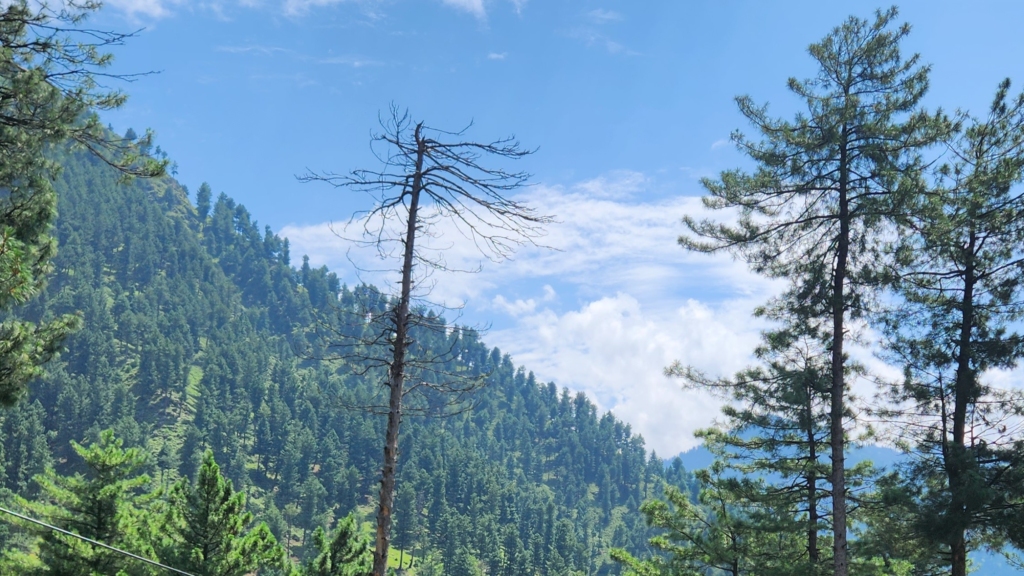
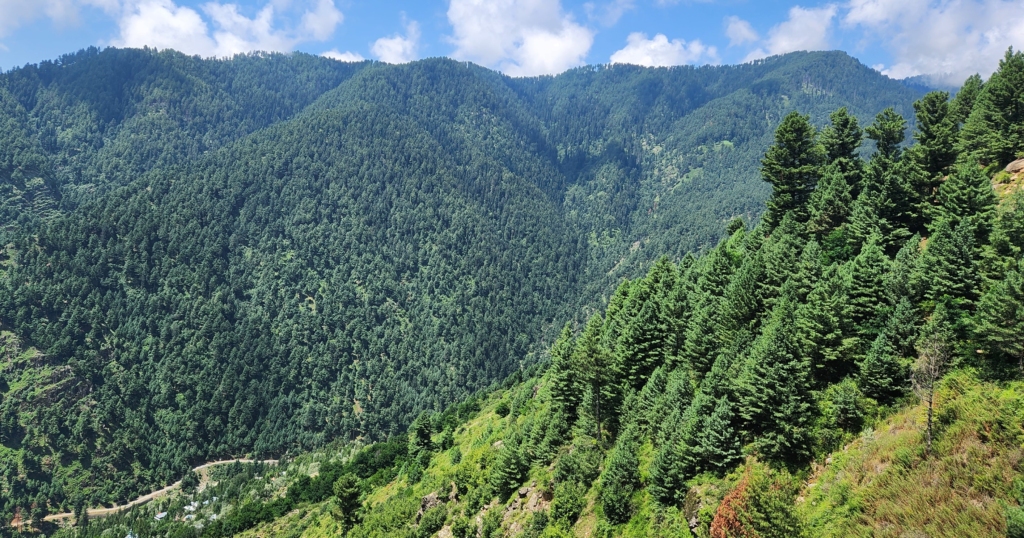
As we made our way toward the Gurez Valley, we passed through some breathtaking landscapes. On the way, Wular Lake came into view, stretched out like a glistening jewel from an altitude. It was a sight impossible to miss. I stepped out of the car and took a deep breath. The sheer serenity of the moment was humbling. Wular Lake, in all its glory, was the first of many reminders that this land, despite its complexities, remains one of the most breathtaking places on Earth. A few quiet minutes by the lake was enough to restore my energy. The road ahead beckoned, and with it, the promise of discovering more of Kashmir’s hidden gems.
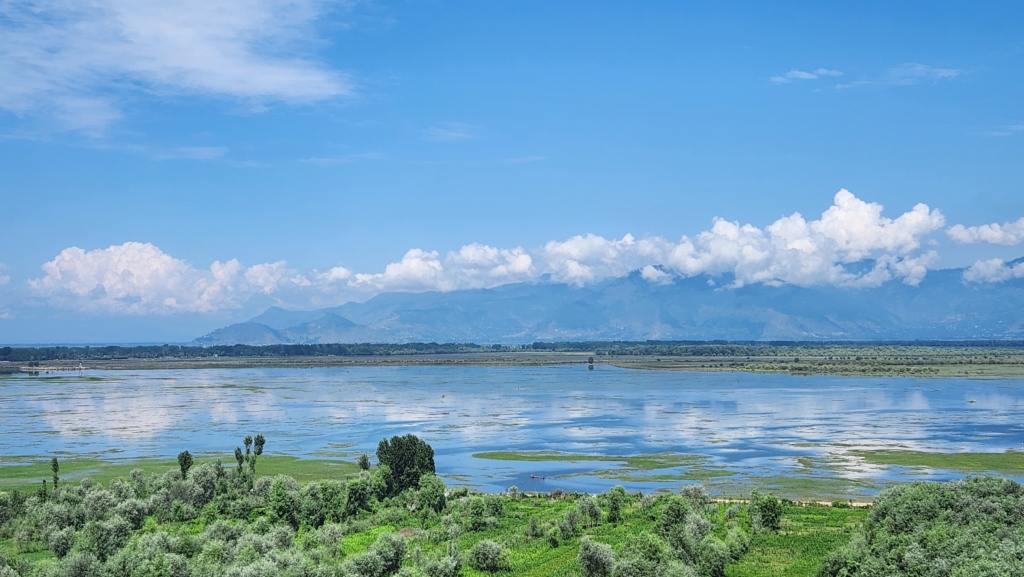
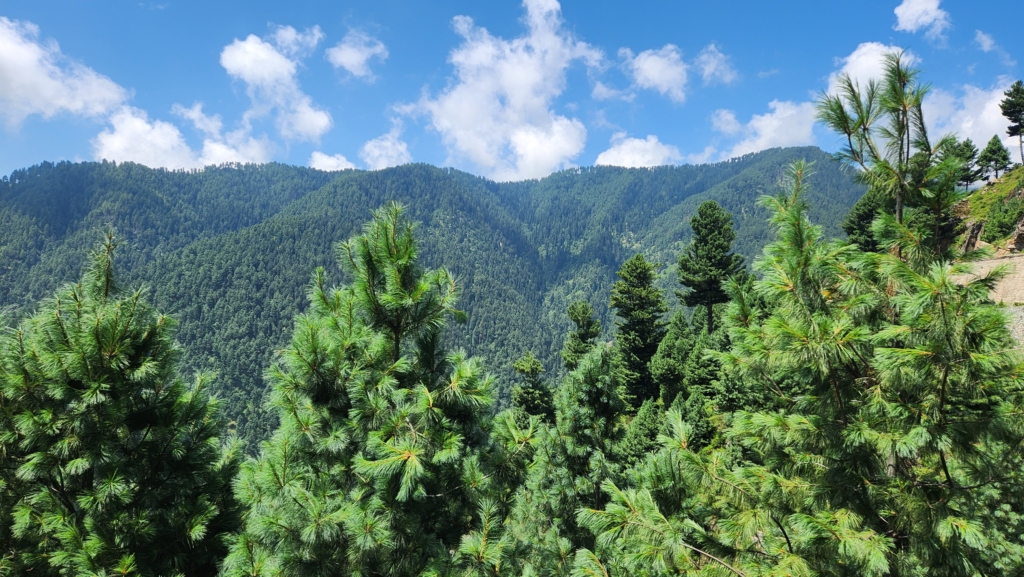
More on Wular Lake later. Some of the other touristic attractions on the route are Haramukh Peak and Naranaag. Please allow for additional days, if you decide to take these deviations. Staying overnight at Athawatoo before heading to Gurez Valley looks tempting, but personally, I think it’s an overrated stopover, and a direct dash to Dawar (Gurez Valley) is recommended.
There are couple of dhaabas just before uphill starts towards Razdan Pass; luckily, I was carrying some theplas with me. We took the pit stop we got was just before the start of Razdan Pass and had some much-needed refreshments – tea and egg omelette sandwich. Since the infrastructure is very basic, the call of nature has to be in the open behind the trees, so moderate how much liquid you consume, based on your comfort.
Tea in this part of the world comes in two forms – “Namkeen” and “Lipton”. Lipton is our regular tea with sugar and milk. Now the local variant is called Namkeen; yes, they add salt to tea instead of sugar. The very thought of having salt in my tea was very weird. I never gathered enough courage to try Namkeen chai during my entire trip. I regret it – maybe next time. Local residents have their personal regime on chai. Some always have Namkeen chai, some have their first cup of the day as Namkeen chai, and the rest is followed by Lipton. Some have Namkeen chai along with their smoke puff; otherwise, they drink Lipton. Some drink Namkeen with their girlfriends; otherwise, they prefer Lipton. Combinations and their rationale are interesting. Some link Namkeen chai to Ayurvedic benefits, etc.
Anyways, back to dhaabas – The tea stall owner was all smiles and courteous gentlemen. My assessment was that he was a local herdsman / tribal. My bill came to something around Rs. 40, and I handed him Rs. 100 currency note. He was very apologetic for not having the change and asked me if I wanted something else for the trip. I asked him to keep the change and treat his kids with sweets. He was very upright and suggested that I should stop on my way back and take the change from him. He handed over to me a piece of paper with his name with his mobile number. I intentionally binned the paper as we left. I was totally impressed by his consciousness that what is not his cannot be kept by him.
Razdan Pass
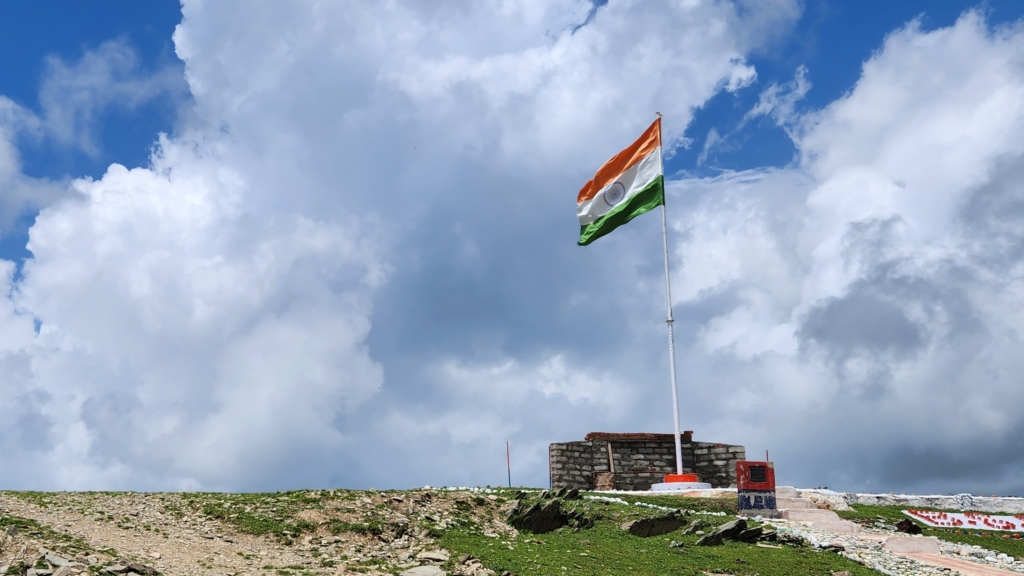
What can truly be expressed about Razdan Pass? No abundance of photographs or videos can encapsulate the breathtaking beauty of nature at Razdan Pass.
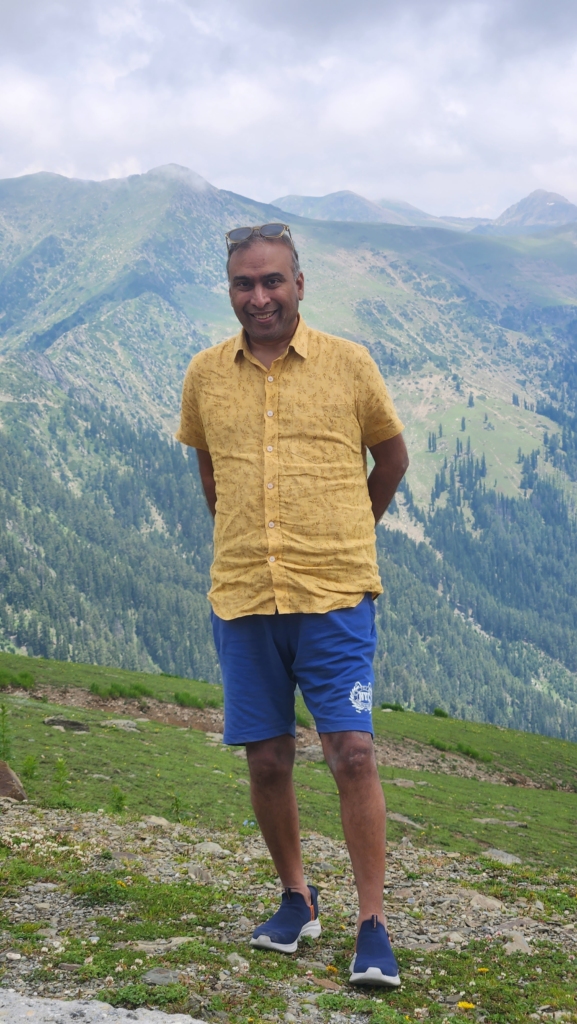
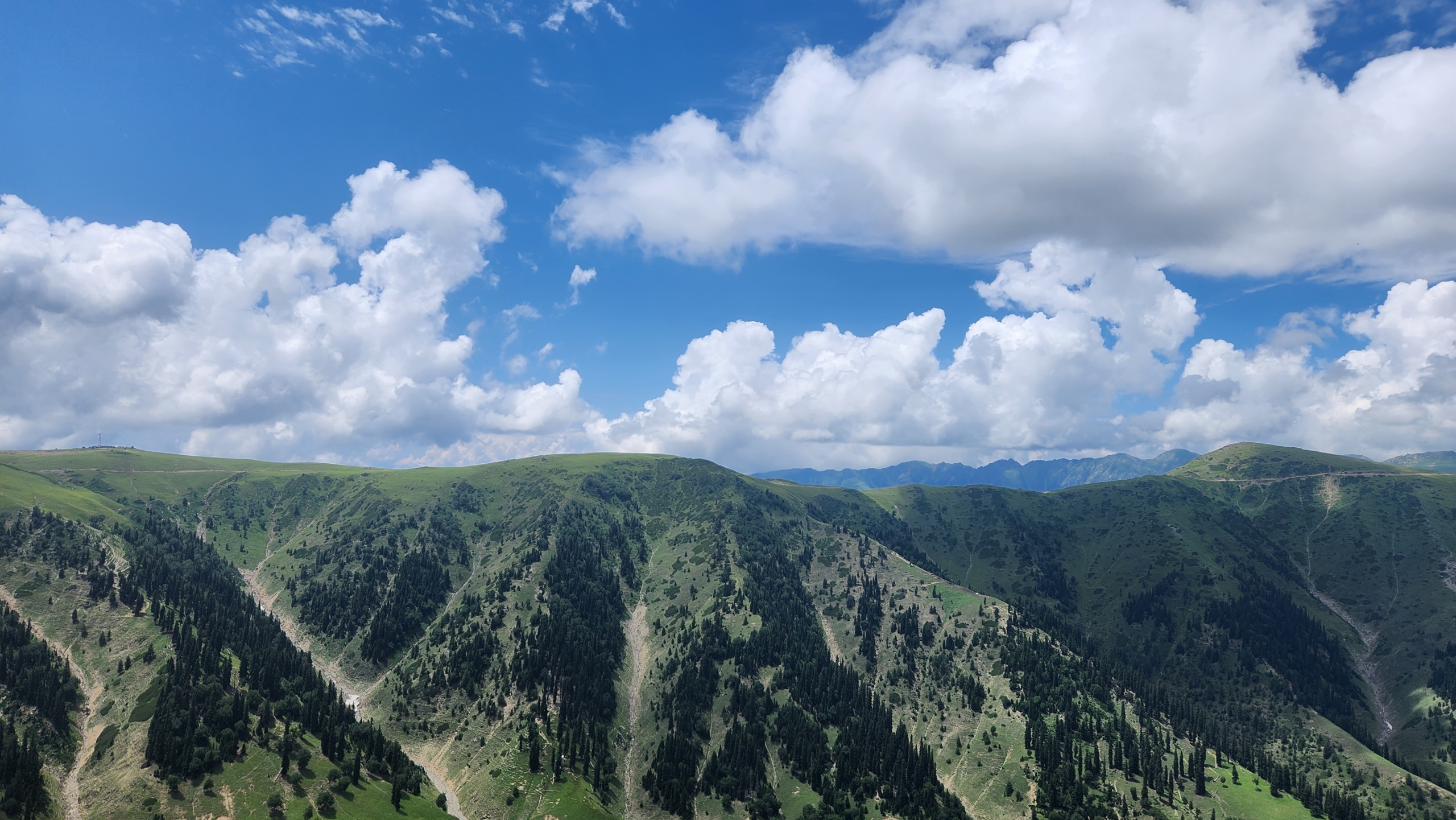
Each season unfolds a unique facet of this enchanting landscape. In the embrace of August, the entire topography adorned itself in lush greenery, embellished with delicate wildflowers along the roadside. The azure skies pirouetted with clouds, orchestrating a dance to the melodies of the wind.
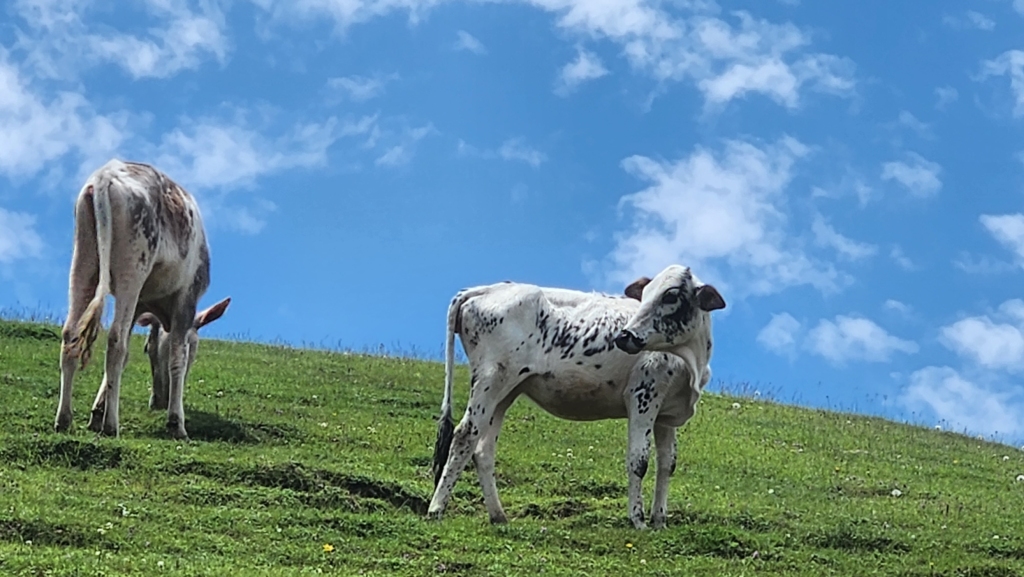
Cows and sheep grazed leisurely, and shepherds endeavoured to guide their flocks. The air, imbued with a refreshing freshness, whispered the tales of the mountains. This cobbled road, reaching a sublime height of ( 11,700 ft), remains elusive throughout the year. It’s whispered that post-October / November, a thick blanket of snow, about 6 feet deep, descends upon this pass.
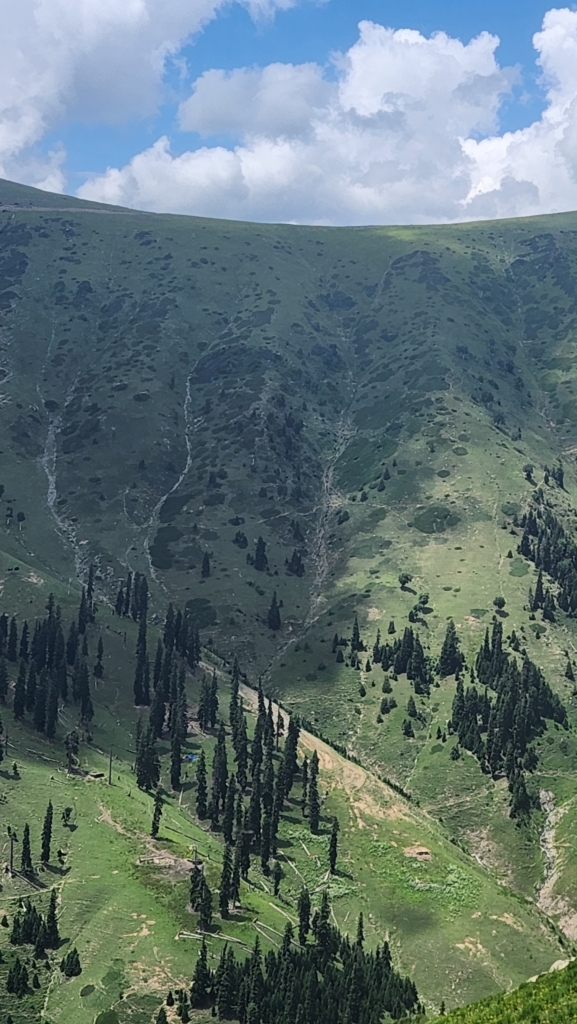
Virtually all residents beyond Razdan Pass descend to their winter havens in Bandipora, the District HQ of Gurez Valley. To address any winter emergencies for the locals, the Government orchestrates scheduled helicopter services from Bandipora / Srinagar to Gurez and back during these 3-4 winter months at subsidized fares. Perhaps an aerial round trip to Gurez would be a splendid venture if one could secure a place to stay and dine. The Pass reawakens in February / March, dictated by the whims of the prevailing weather conditions.
In my perspective, this topography beckons to be explored at least twice, across two seasons, to witness the transformation of this captivating bride donning two distinct bridal gowns — one adorned in a verdant green long lehenga and the other veiled in a resplendent white gown.
The fluttering Indian flag atop the lofty mast at Razdan Pass invokes a cascade of emotions. It’s not just a sight; it’s a symphony of pride and honour that resonates through the heart. In the proximity of the border, Gurez Valley hosts an army base camp where Indian soldiers stand resilient through the biting winters. A salute, heartfelt and deep, is dedicated to their unwavering commitment!
As you gaze upon their shacks, standing as sentinels at the crossroads guarding the passes, a sense of compassion envelops you. Luxuries we take for granted in the city become elusive for them — no hot water, limited access to electricity, open washrooms, and more. Yet, amidst these challenges, they maintain an unwavering vigilance. My morning walks provided opportunities to converse with these valiant military personnel. Their modest acknowledgment that they are merely fulfilling their duty, earning a salary for the same, always instilled a sense of pride. It reminded me that we are shielded by resilient soldiers who safeguard our borders, enabling us to lead peaceful daily lives. In the bustling city, these sacrifices often go unnoticed. Therefore, visits to the border area are imperative to gain a profound perspective on their hardships and our comforts.
Beyond Razdan Pass, a series of checkpoints awaits, each demanding a glimpse of your identity documents. My Aadhar Card emerged as a steadfast proof at every checkpoint during the entire expedition. Among these, the last checkpoint holds paramount importance. Here, they bestow upon you a token, a key to be guarded and later submitted upon your return. Presumably linked to your declared days’ sojourn in Gurez, these tokens are not to be taken lightly. Please do not over stay in Gurez Valley than declared at check-point. An occasional jest warns that losing one may tether you to Gurez indefinitely. Recent media reports hint at the unfolding of this route up to Drass — an adventurous road ride, a missed opportunity that adds an extra layer of intrigue to the journey. While waiting for security clearance at the check-post, a charismatic young man with an infectious smile dashed to my side of the car. He was genuinely apologetic for missing something, a surprising encounter in a new land, especially from someone constantly saying, “Sorry, Sorry, Sorry”. This was the introduction of Danish into my journey.
Danish, carrying some Mumbaikars, back from Gurez to Srinagar, was the reason he couldn’t make it to Srinagar Airport to pick me up that day. Apologizing for the last-minute schedule changes, he sounded sincere, and his infectious smile left no room for distrust. Danish assured he’d be back in Gurez by 9 am the next day, “at my service” for the remaining 10 days of the trip. His parting words, “bye, see you Sir tomorrow,” echoed as he swiftly returned to his car. My conversation with Danish was mostly one-sided; I nodded along to his statements. Meanwhile, Tarik rejoined the car after completing check-post formalities.
A brief conversation in their local language ensued between Danish and Tarik, with Danish instructing Tarik more through speedy hand gestures than words. Intrigued, I later asked Tarik about their conversation. He revealed that Danish was explaining the exact location of the resort where I needed to be dropped off. It felt like being a DHL parcel in transit. Up to this moment, I wondered if Tarik was aware of my drop-off point, a question I didn’t dare to ask him.
The day had begun at 3 am, and the journey, though long, had been pleasant. The allure of an unexplored road trip lies in the mystery at every turn. Despite my desire to become a savvy modern traveler with every travel app, I find joy in leaving a few things open-ended, allowing for surprises and hidden gems. The charm of a road trip to a remote, unexplored location lies in the fact that even Google Maasi is often confused. It’s a departure from the predictability of visiting landmarks like the “Taj Mahal” or staying at the “Taj” anywhere. Consider visiting the “Taj Mahal”; the amount of information available online about landmarks and directions is overwhelming. On the contrary, navigating to one’s stay in Gurez Valley, without ay assistance, requires a different level of intuition.
Northern Kashmir, predominantly a Muslim religious community. During the trip, I discovered that apart from Hindi, three main languages are spoken in Gurez Valley – Shina, Kashmiri, and Urdu. Among these, Kashmiri is considered the most challenging to master. Despite spending 10 days with Danish, I couldn’t decipher the language he spoke with people. His adaptability in charming individuals, coupled with his fluency in all three languages, left me in awe. Even Tarik, a local boy from Gurez Valley, conversed in all four languages, highlighting the linguistic diversity of the region.
Kishanganga
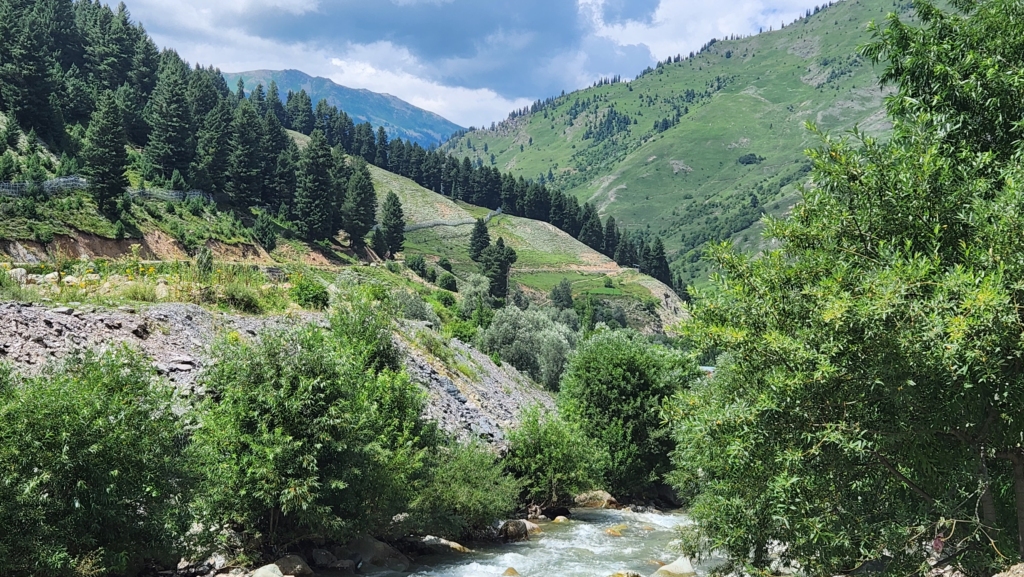
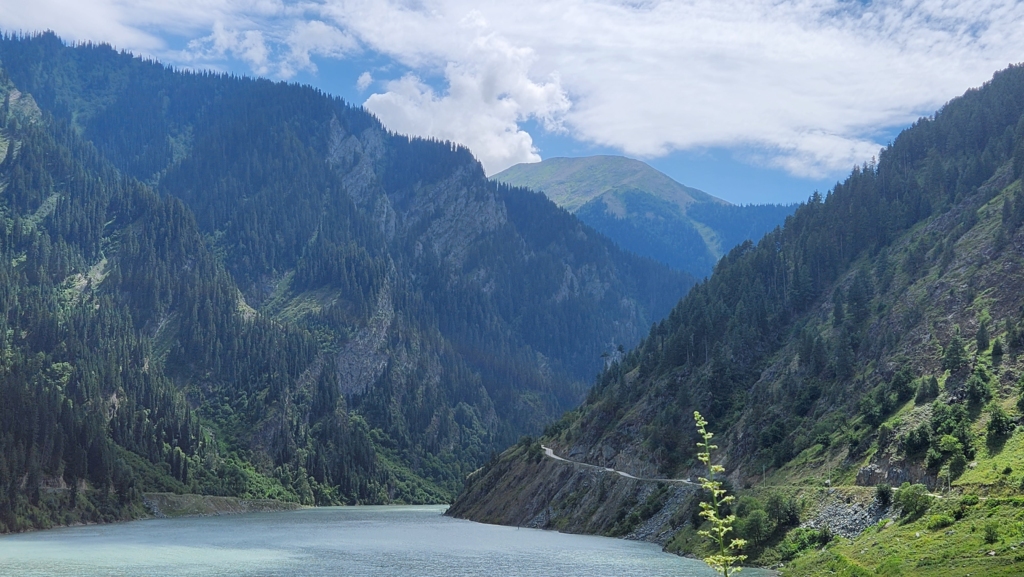
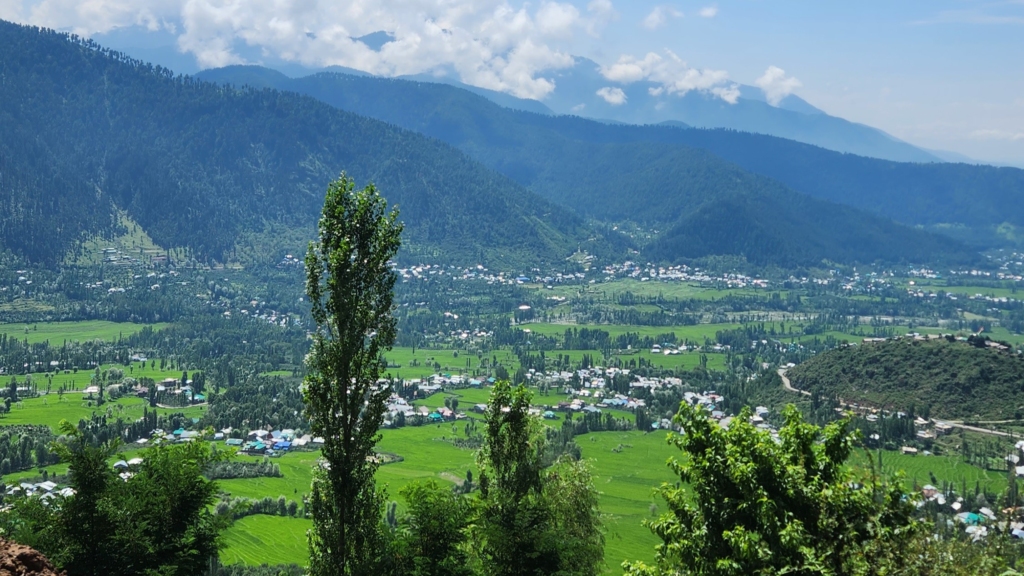
As you descend from Razdan Pass and approach Dawar, a gentle river emerges. Initially, you notice a river flowing alongside the road, and suddenly, a vast lake-like formation appears. This lake owes its existence to the run-of-the-river 330 MW Kishanganga hydroelectric dam. The soil composition and tranquillity behind the dam transform the Kishanganga river water into an exotic pale green colour, perhaps partly due to the reflection of the surrounding greenery. The formation of the lake is breath-taking and irresistibly calls for a roadside break. The river water shimmers with sunrays reflecting off it, creating a beauty meant to be captured for eternity.
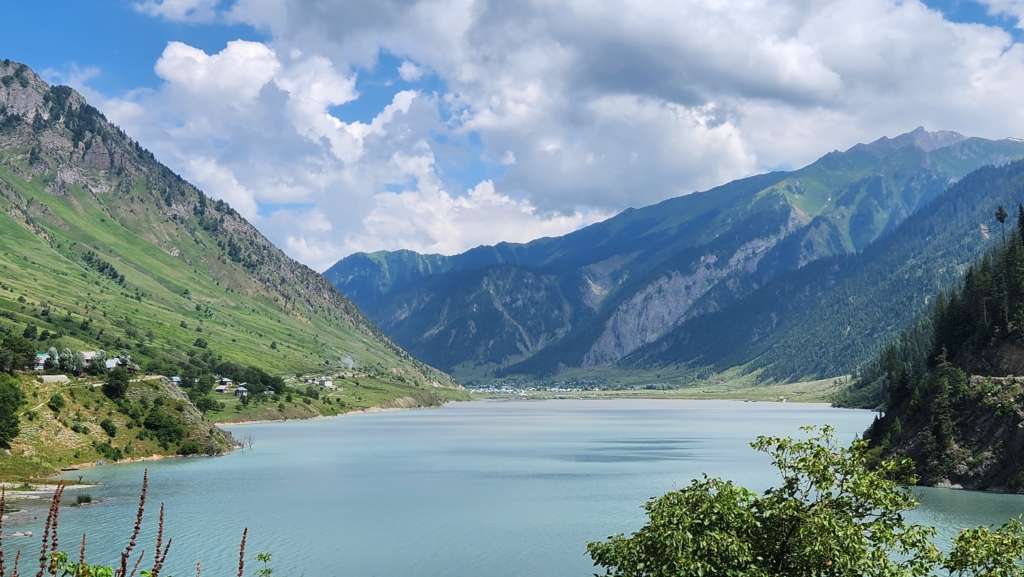
You could spend hours admiring the lake and the surrounding hills. The Kishanganga river follows an interesting inter-region flow, originating near Sonamarg, flowing northwards into Gurez Valley. Several glacial streams originating from across the Pakistan Occupied Kashmir (POK) border merge with Kishanganga near Gurez. After the dam, the river enters POK near Bagtore, re-enters India near Keran, and eventually flows into POK somewhere near Tangdhar. Known as Kishanganga in India and Neelum in POK, the river merges into Jhelum near Muzzaffrabad in POK.
Dawar
While planning this trip in Mumbai, I initially believed that Dawar and Gurez were distinct towns, prompting the question of whether to book my stay in Dawar or Gurez. Dawar serves as an administrative town, where all tourists stay, and post-Razdan Pass, the entire region is referred to as “Gurez Valley”. However, even as you enter Dawar, the welcome dashboard at the town’s entry declares, “Welcome to Gurez!” The names Dawar and Gurez are often used interchangeably, a liberty I’ll also take.
In the valley, nobody uses the name Dawar; it’s probably reserved for government departmental procedural paperwork. Dawar, situated on the banks of Kishanganga, is a small town with a few tourist hotels, still developing its tourism infrastructure. Booking your stay in advance is advisable, as Gurez has gained popularity in the tourist circuit. Local tourists from Srinagar and nearby towns throng Gurez Valley over weekends. Staying in Dawar town is recommended, especially for families, to avoid remote campsites and any sense of spookiness. With the influx of tourists, various tented campsites have emerged, some operated by locals aiming to make a quick income, merely by putting up tents. Tented accommodations along the banks of Kishanganga cater to those with an adventurous spirit and physical fitness.
Camping @ Gurez
Upon entering Dawar, a signboard for my resort caught my eye, reassuring me that we were headed in the right direction. Passing through the town market and crossing another bridge back to the right banks of the river, Tarik effortlessly guided me to the resort. Bid farewell to Tarik, and that was the last I saw of him. During the journey from Srinagar to Gurez, Tarik had managed to extract Rs. 500 from me, a part of the story I feel hesitant to narrate. Consequently, I skipped tipping Tarik.
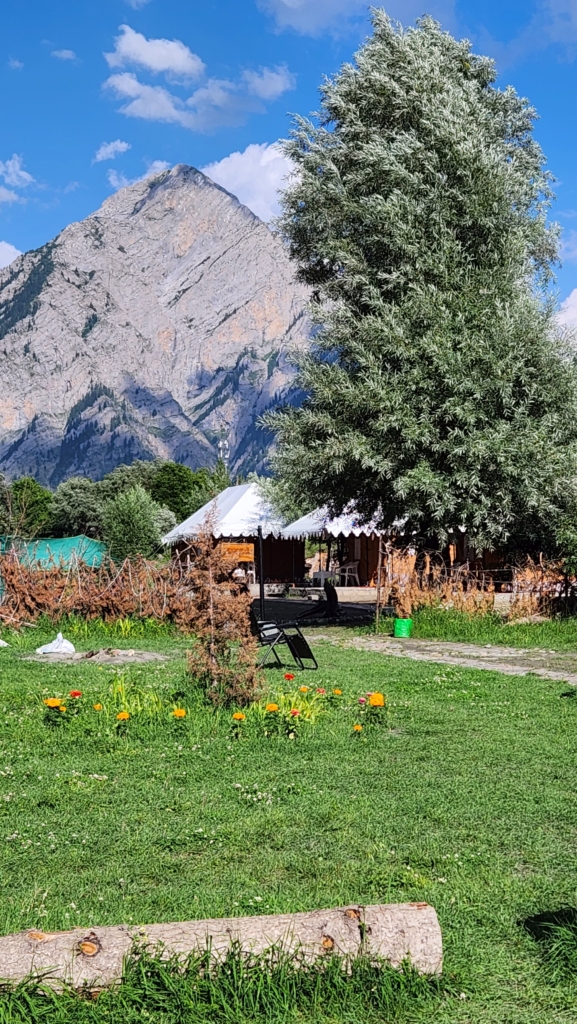
As we reached the resort gates, two young boys came running out to greet me and introduced themselves. One of them, Irfan, was the manager of the resort, while the other, Shahil, handled my luggage. The boys led me into the premises and directed me to my tent – “Patal Wan” turned out to be a good choice, conveniently close to the kitchen and dining area. The resort, situated on the banks of the enchanting river Kishanganga, is cradled between two majestic mountain ranges on either side. The left bank’s mountains are draped in lush greenery, a striking contrast to the barren but intriguing mountains on the right, adorned sporadically with crops and trees.
The arid landscape begins just beyond a small patch of agricultural fields, creating a remarkable juxtaposition. A delightful delta forms behind my tent, sculpted by the gentle flow of the river. Completing the picturesque scene are a solitary hammock and a small log bridge connecting the property to the delta. Underneath the makeshift bridge, the river flows calmly, its waters shallow and its current gentle, while on the other side of the delta, the river asserts its strength with a robust flow.
Exhausted after a long day, I was equally famished. As Shahil placed my luggage in the tent, I inquired if I could get something to eat. Irfan suggested I rest while he would summon the cook to take my food order. Delighted with the personalized service, I appreciated the attention. As soon as I hit the bed, I dozed off. After about 45 minutes, my stomach craved sustenance. Uncertain if the cook had visited and left upon seeing me asleep, I stepped out to assess the situation. Irfan and Shahil were basking in the sun in the garden. Inquiring about the cook, I learned he was sleeping. Unsure how to react, I realized that in this new tourist spot, hospitality might take time to reach acceptable metro city standards. Wondering when the cook would wake up, I asked Irfan. Shahil offered to prepare some tea and toast, which I accepted delightfully and added a small instruction: please make it “Lipton”. Seated with the two lads, I sipped my Lipton chai, engaging in conversation to glean insights into the local culture and discover activities in and around Gurez.
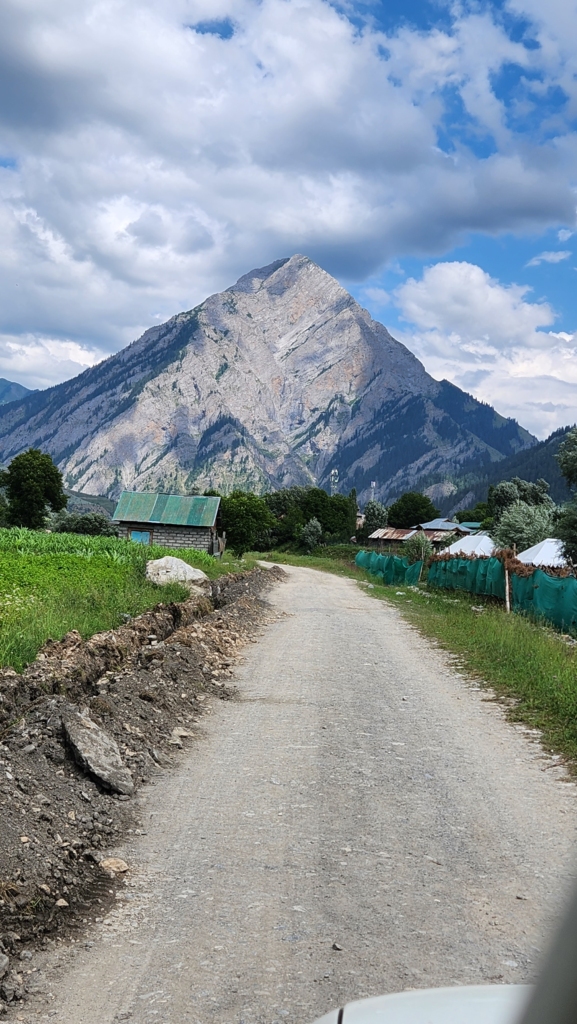
Irfan gestured towards a near-perfect pyramid-shaped mountain. Standing tall at about 13,000 feet, it was a nearly barren yet magnetically attractive peak. “That’s Habba Khatoon” he explained. This magnificent mountain had captivated my attention as we approached the resort, positioned directly in my line of sight as I alighted from the taxi. Its allure was undeniable, prompting everyone to inquire about it, irrespective of prior knowledge of its folklore.
Post-chai, I had no inclination to step out and explore the town further for the rest of the day. I simply wanted to bask in the birdsong, the river’s local flute-like melody, and the cool breeze. A cold beer would have been perfect, but alas, Gurez doesn’t retail alcohol – bring your own stash. Opting to continue chatting with Irfan and Shahil, I discovered that Irfan was Danish’s brother. Zeeshan, their first cousin was the owner of the resort. It was all in the family. Irfan had a charismatic smile, visible when he chose to express it.
After a while, the cook, Iqbal, strolled over, stretching himself in all directions. Courteously, he greeted me and inquired about my ride to Gurez and if I desired anything to eat or drink. I appreciated his considerate nature and requested an early dinner followed by an early night. He gave me a thumbs up. As there were no other guests, the four of us continued chatting. Their curiosity about Mumbai, my family, solo travel, my health, and why I was single led to a delightful exchange of information. Some of their questions emanated from sheer innocence. Inquiring about their evening routine without guests, Iqbal revealed they played cricket. Suggesting a cricket match that evening, they eagerly agreed, and the small patch of open land behind my tent became the impromptu cricket pitch. Shahil swiftly dashed to the market to purchase two new balls. A flat bat cut from a single piece of hard wood served as the crude but sturdy cricket bat. Finding a spot close to the riverbank, I sat on the chair and became the leg-side umpire for the match.
The pitch was rough, a dustbin at the batsmen end served as stumps, and a foldable stool was established as stumps at the bowlers end. Each player had two overs to play, and the rules were simple – hitting the ball beyond the resort boundaries would be declared out. Far-off marks were set as boundaries for fours and sixes.
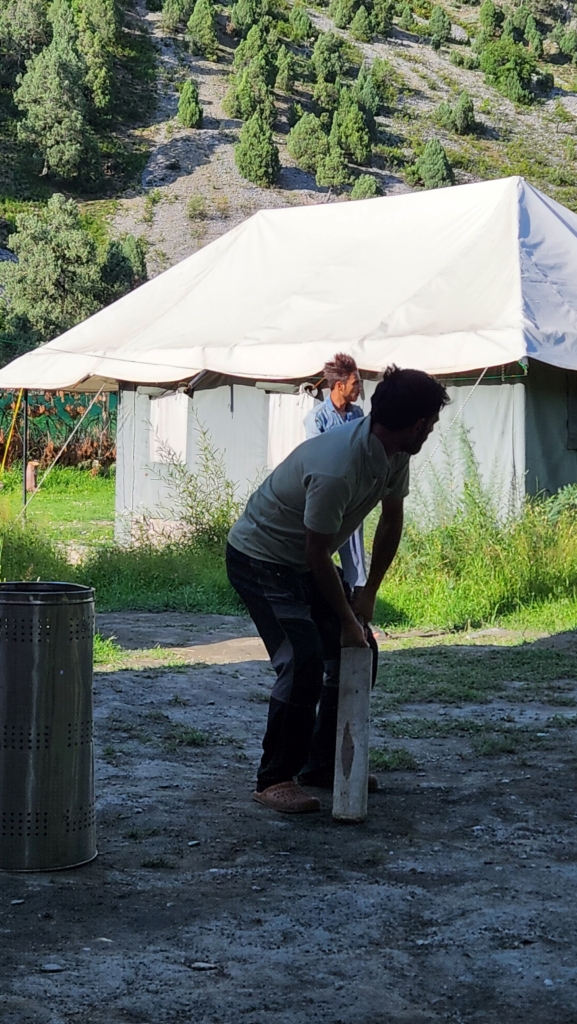
Irfan showcased a Virat-like form, while Shahil had a swift bowling action. Iqbal often found himself caught between the pitch and running out. Whether it was the agility of Irfan and Shahil or Iqbal’s leisurely pace, as an audience, it didn’t matter; all that mattered was the sheer enjoyment of the moment.
After two rounds of the game, Zaakir and Hussain, local boys, joined in, forming two teams for a four-over match. Shahil, being the weakest player, was allowed to play from both sides – a rare benefit of being perceived as weak. The game unfolded with competitive spirit and countless hilarious moments.
I could hardly contain my laughter, and my cheeks and stomach were in pain. It was a cricket match like no other, played with camaraderie and sportsmanship.
As the cricket match concluded with the encroaching darkness, Iqbal hurried to the kitchen to prepare dinner, and I joined Zaakir, Hussain, and others for another round of chit-chat. Zaakir and Hussain, close friends, chose to stay back in Gurez to promote local culture instead of pursuing more lucrative careers elsewhere. Both Zaakir and Hussain took it upon themselves to educate me about local traditions, cultural heritage, and historical roots. They referred to the local Gurezians as Dadri, who spoke Shina, their traditional language. The Dadris originally hailed from the Gilgit region.
We delved into local issues – how young boys and girls were leaving Gurez for better prospects, with government jobs being the only alternative to tourism. Agriculture, mostly cultivating rice, potatoes, and rajma, was meager. A variant of cumin, known as kala jeera, grew on the surrounding mountains, and annually, the government permitted locals to collect the wild kala jeera. Zaakir and Hussain also lamented the high demands and status-conscious nature of local girls, attributing it to the advent of mobile phones. However, they were optimistic about the increasing education and employment opportunities for local girls. They invited me to attend a musical concert the following day, where Zaakir was set to perform local traditional spiritual songs.
A simple vegetarian dinner followed in the newly built building that housed staff quarters and the kitchen on the ground floor, with a dining area on the first floor – cozy, with four to five tables for the guests.
Gurez receives electricity between 8 pm and 5 am, and very few hotels have generators. Critical activities, primarily charging electronic devices, need to be planned accordingly. Don’t anticipate luxuries in the tent; but my tent could comfortably accommodates three people with one double bed and one single bed. The tent is spacious, devoid of any claustrophobic feeling. The toilet is clean, and the bathroom boasts a constant flow of water. After plugging in my mobile charger, I was ready to call it a night. Irfan ensured the electric mattress was functional, and as he zipped the tent entrance fully down, I requested him to leave it slightly open for emergency access. Though hesitant, he complied and bid me goodnight. I slept soundly, resembling a baby.
I might have woken up once during the night for a restroom visit. Summoning enough energy to step out of the tent, I observed the surroundings – it wasn’t entirely quiet. In the hush of the night, a little distance from the mountain base, not far from my tent, I could hear a couple of dogs barking persistently. Puzzled about what could disturb them so much at midnight. I glanced around; the sky was cloudy, devoid of any stars. I hoped the weather would remain favourable for the next few days, free from any form of cloud bursts like those in Himachal or Uttarakhand in the previous few weeks. The mountain opposite my tent reflected the moonlight it could gather – I named it “Ghost Mountain.” Feeling tired and uninterested in investigating the cause of the dogs’ discomfort, I returned to bed, only to wake up a bit late the next morning.
Gar firdaus, bar ruhe zami ast,
hamin asto, hamin asto, hamin ast
As the great poet Amir Khusrau wrote that “If there is paradise on this earth, it is here, it is here, it is here”.
If you’re planning a trip to explore Kashmir, we at HappyHorizon would be thrilled to curate your holiday plans to enhance overall travel experiences. Feel free to reach out to us: connect@happyhorizon.in
Day 2: Gurez Valley – Read More
Gallery
Sukumar Jain, a Mumbai-based finance professional with global experience, is also a passionate traveler, wildlife enthusiast, and an aficionado of Indian culture. Alongside his career, which includes diverse roles in international banking and finance, he's working on a wildlife coffee table book and enjoys sculpture and pottery. His interests span reading non-fiction to engaging in social and global networking.