Day 8: Hanle – Read More
Day 9: Umling La
Pallas Cat
At 5 a.m., excitement pulsed through the cold air as we set out to catch a glimpse of the elusive Pallas cat. My mind, conditioned by past wildlife adventures in tiger sanctuaries, expected a rugged jungle trek. But Hanle itself was already remote, with nothing but barren hills and stretches of land, where even the vegetation barely reached a foot in height. So imagine my surprise when, after just a five-minute drive, Kaisang parked near a lush green field – a rare sight in this desolate landscape.
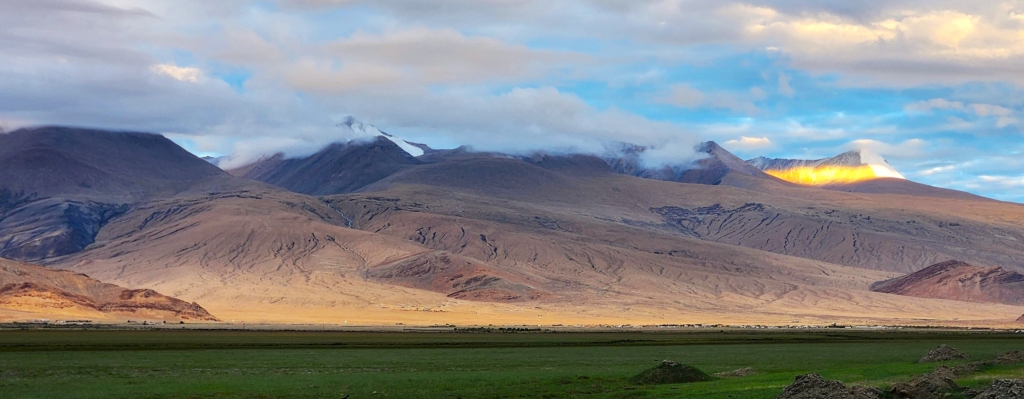
Kaisang was rounding up a few more clients. Once gathered, we quietly made walked our way towards a small hillock. Though the boys’ excitement made it hard to keep things truly silent. That’s when I met Hira, a man who had returned to Hanle after a 20-year gap. I was instantly intrigued, imagining what it must have been like for him to traverse the unforgiving roads from Leh to Hanle decades ago. Surrounded by wildlife photographers with their imposing lenses, I felt proud to be in such august company.
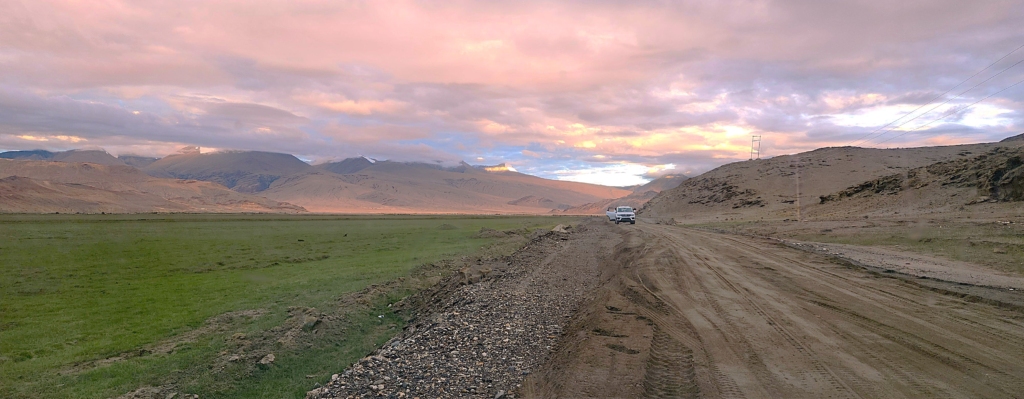
I was in Hanle for two days, while these seasoned photographers were staying for five, hoping to catch glimpses of wildlife like the pallas cat, sand fox, bharal, or, if luck allowed, the snow leopard – though it wasn’t the season for that mystical creature. Kaisang, with his practiced eye, scanned the hillock with binoculars, eventually spotting three tiny kittens huddled together on the edge. The photographers sprang into action, carefully positioning their equipment for the best shot, adjusting for the sun’s angle.
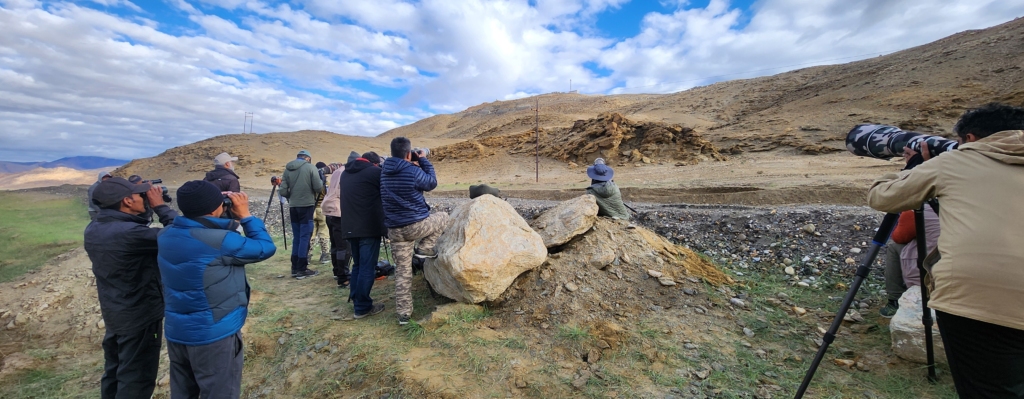
Kaisang explained that the mother Pallas had likely left her kittens while she ventured into the fields to hunt. The kittens, only a couple of months old, sat obediently, their dense grey fur glistening in the early light, watching the fields for their mother’s return. Suddenly, they all dashed towards the fields, sensing movement in the distance – likely the mother. We could see a flicker of movement, but she stayed hidden from view. Realizing their mom wasn’t coming back yet, the kittens retreated to their perch.
Pallas cats, though the same size as domestic cats, are far more elusive. They shelter in rock crevices, and unlike their domestic cousins, they don’t meow – they remain the stoic recluses of the wild. After an hour, we left the kittens waiting for their mother and returned to our homestay, ready for the next leg of our adventure – Umling La.
Photi La
Kaisang mentioned that there were a couple of ways to reach Umling La, each offering a different taste of adventure. Naturally, Danish was quick to opt for the well-tarred route. This path meandered by the quaint Milk Way Café, adding a brief moment of charm. The road itself was a serpentine stretch of zigzagging turns, slowly climbing in elevation. But Danish’s spirit of adventure was hard to contain.


Unable to resist, he veered off the smooth tarmac, tackling the mountain’s rough, barren surface, bypassing several hairpin bends with reckless glee. We both relished the thrill of the climb, but that little escapade was enough to satisfy our wild streak. Soon after, we returned to the safety of the tarred road – just us and the vast, empty highway. Forty minutes later, we reached Photi La, perched at an altitude of 18,124 ft. A modest milestone proudly proclaimed it as the 6th highest motorable pass. We couldn’t help but feel a sense of accomplishment, having already ticked off several of Ladakh’s iconic “La’s” on this epic journey.
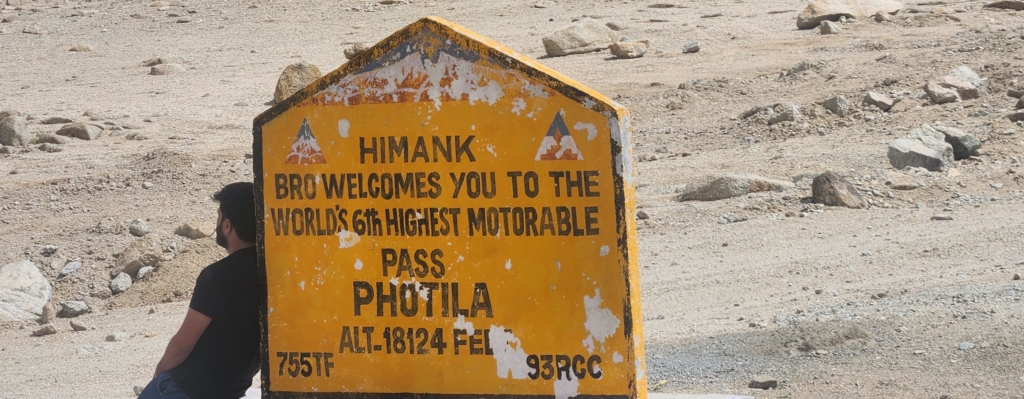
After soaking in the panoramic views of snow-capped peaks and breathing in the crisp mountain air, we pushed onward towards Umling La.
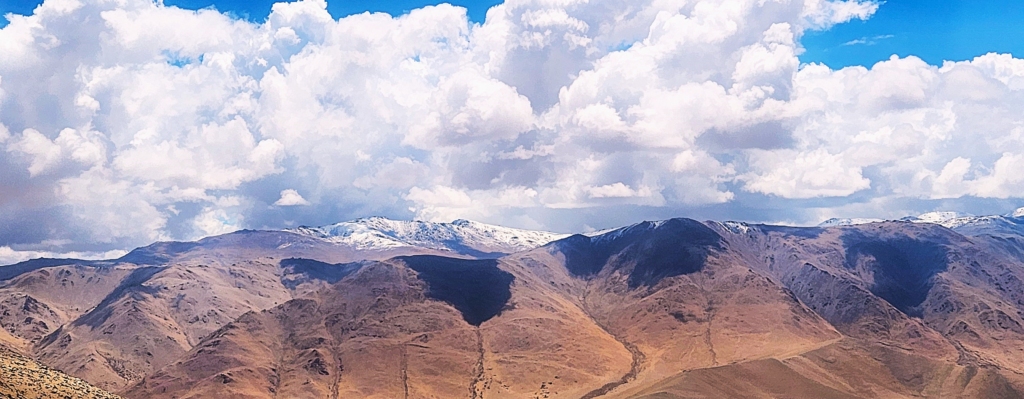
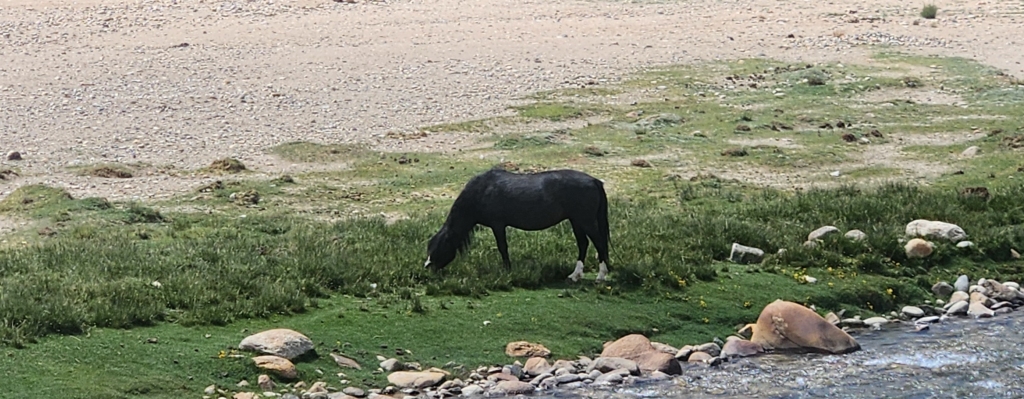
Descending from Photi La, we passed a serene stream where yaks and horses grazed peacefully, watched over by the true “King of Solitude” – the majestic Kyang. This solitary figure stood guard, keeping a watchful eye on the herd, a sight that perfectly embodied the stark, quiet beauty of this remote region.

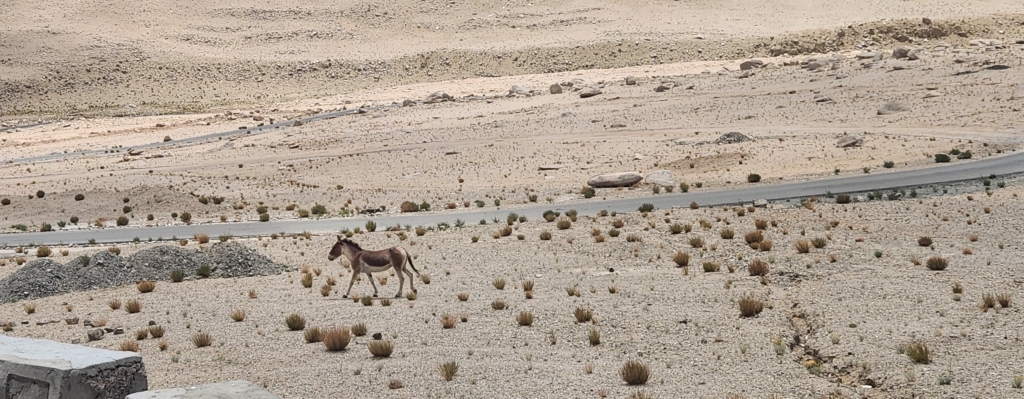
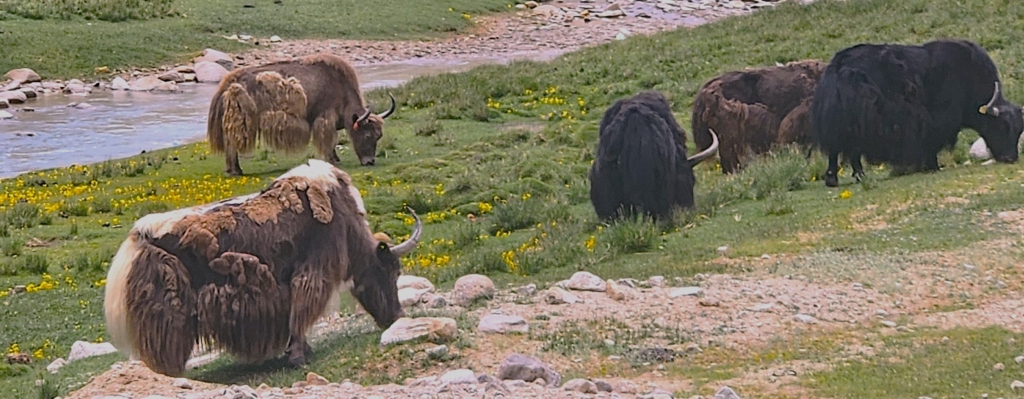

A little further along, we reached a junction where the road from Koyul intersected. I couldn’t help but wonder about the alternate route I had once considered from Loma.
But after chatting with locals, it seemed we made the right choice avoiding that diversion at Heena at Thangra Valley.
Finally, we arrived at Chisumle – the gateway to Umling La. There was a small café here, its humble presence marking the last touch of civilization before the great heights ahead.
In hindsight, I regretted not stopping for a quick break there, both on the way up and back. Something about those little places always holds an understated charm.

Umling La
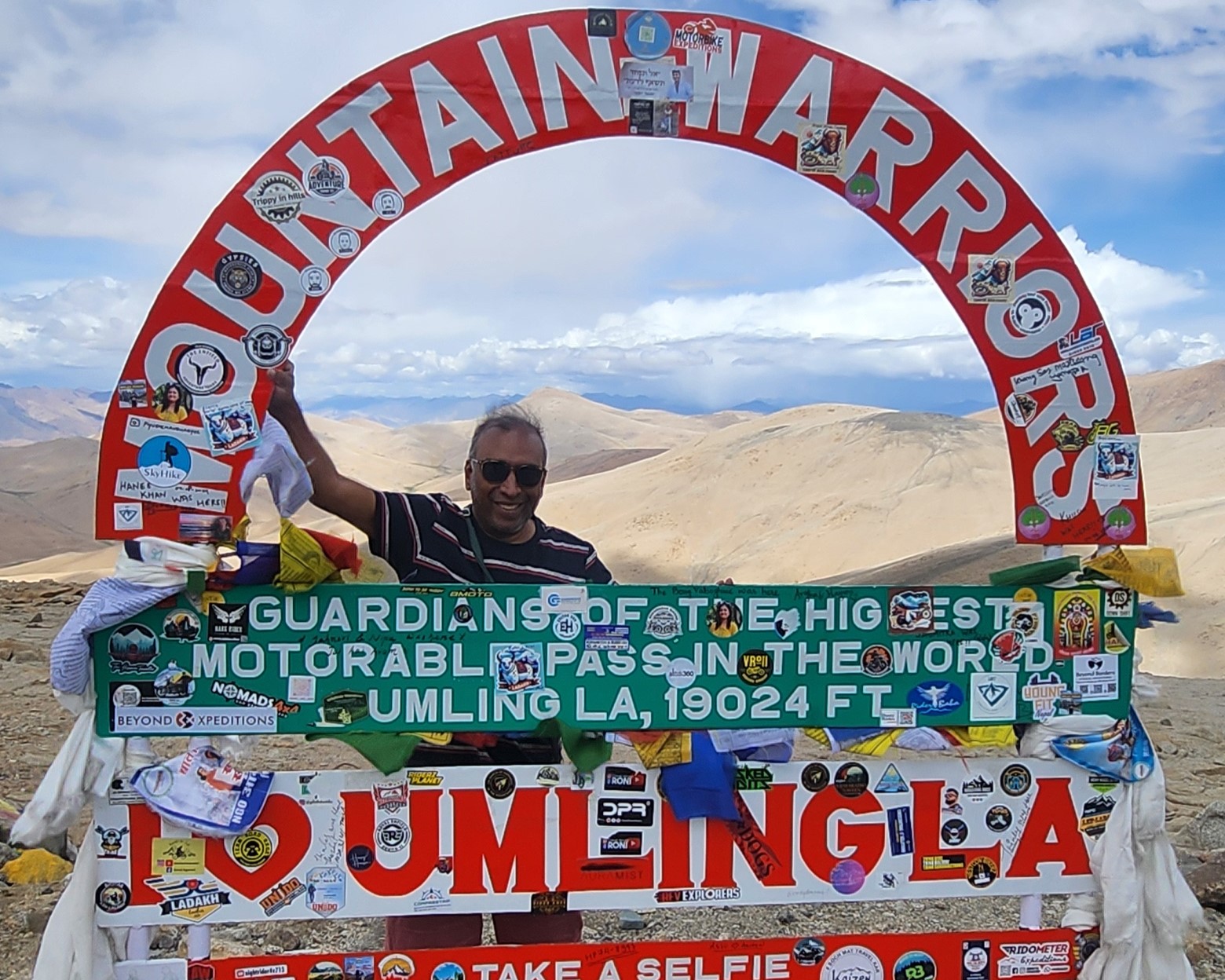
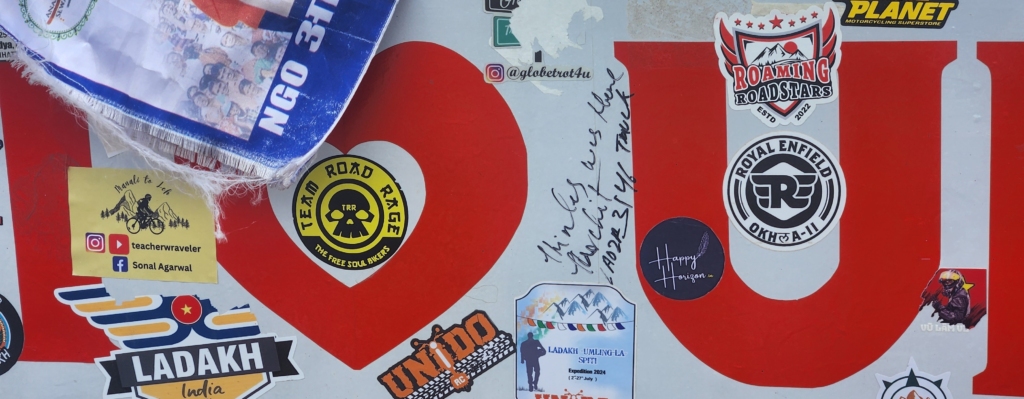
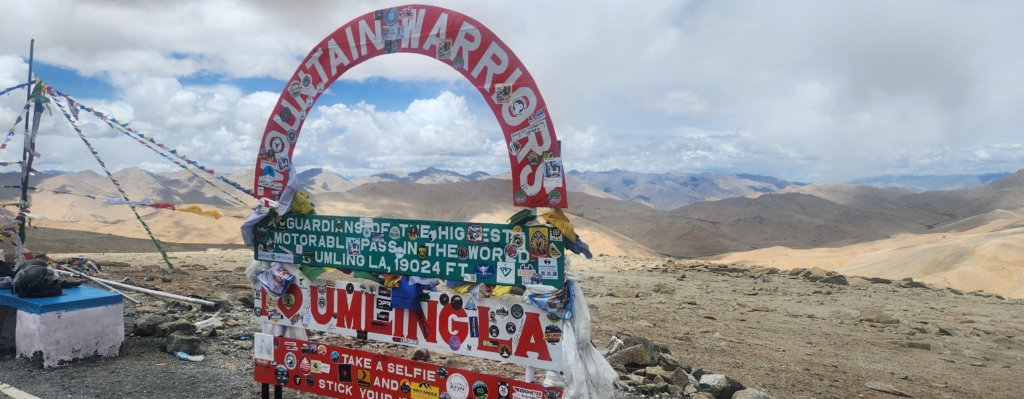
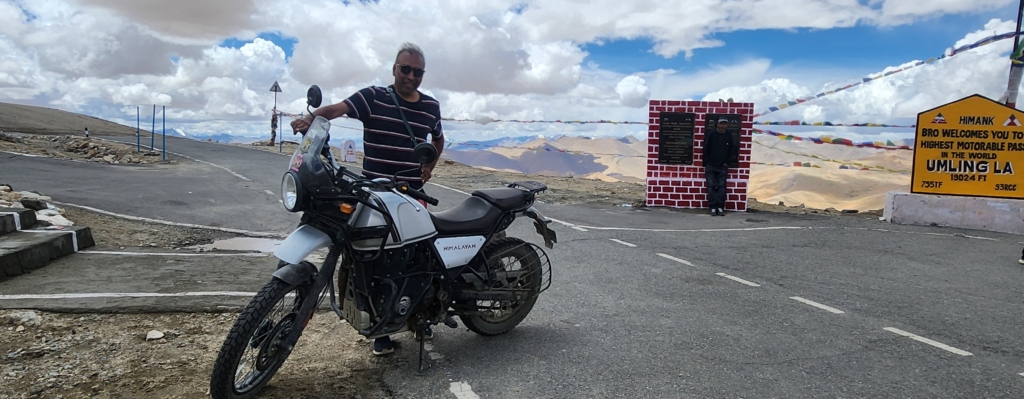
Finally, we reached the world’s highest motorable pass – Umling La, standing tall at a breathtaking 19,024 ft. The feeling was surreal, like standing on top of the world. For someone like me, who would never trek to the ABCs or EBCs, this felt like an achievement on par with those legendary climbs. At the summit, we met the same group of five bikers we’d chatted with at the Observatory the previous evening. Over a steaming cup of tea at a small café, we shared stories and soaked in the moment.
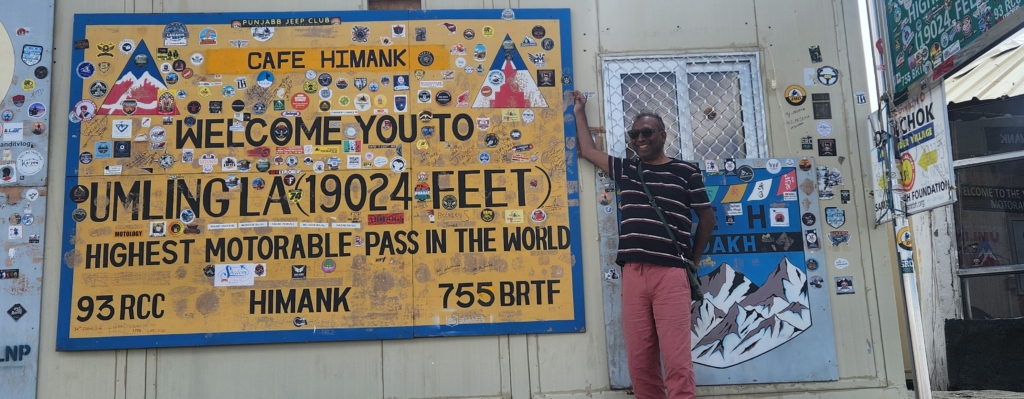
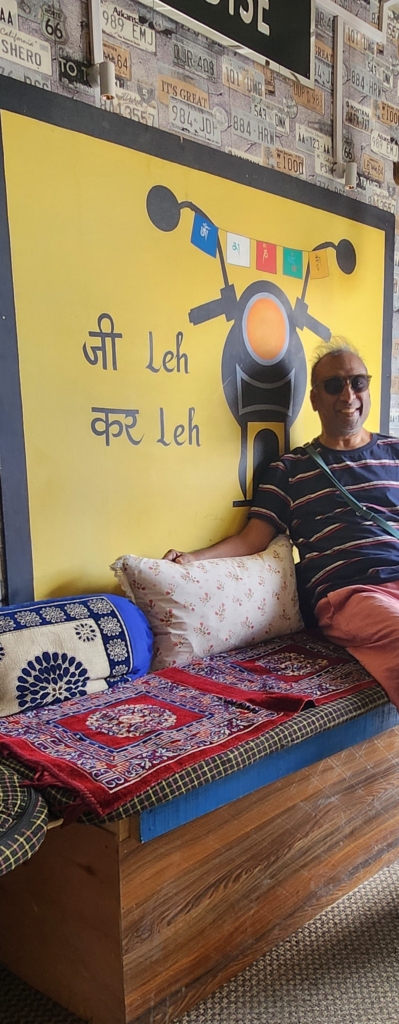
The buzz at the café was about Umling La’s reign as the highest motorable pass being short-lived. Word had it that the Mig La, soon to connect Likaru to Fukche in eastern Ladakh, would surpass it, with a pass soaring to 19,400 ft.
Downhill from Umling La, about 50 km. away, lay the border village of Demchok, where the Indus River crosses into India. Though the allure of exploring that last village was strong, we decided to head back to Hanle instead.
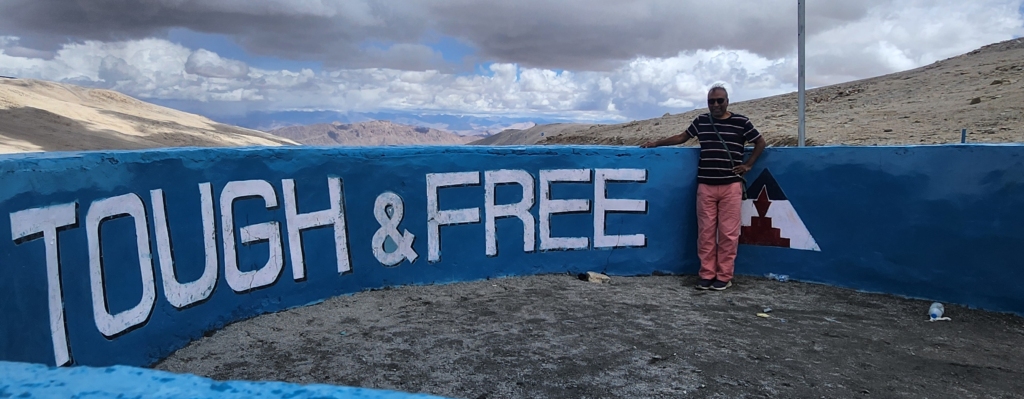
On our return, fortune smiled upon us as we encountered a herd of bharal attempting to cross the road. I couldn’t help but count my blessings – spotting these elusive creatures in the wild felt like a stroke of pure luck. There were about six or seven bharals, including three little ones. As our car approached, they stood frozen, their remarkable camouflage blending them into the rocky surroundings. Bharals rely on stillness and their slate-grey coats to evade danger. After what felt like an eternity, the leader of the herd, satisfied we posed no threat, signaled the others to cross. It was a scene to be cherished – a fleeting but beautiful moment.

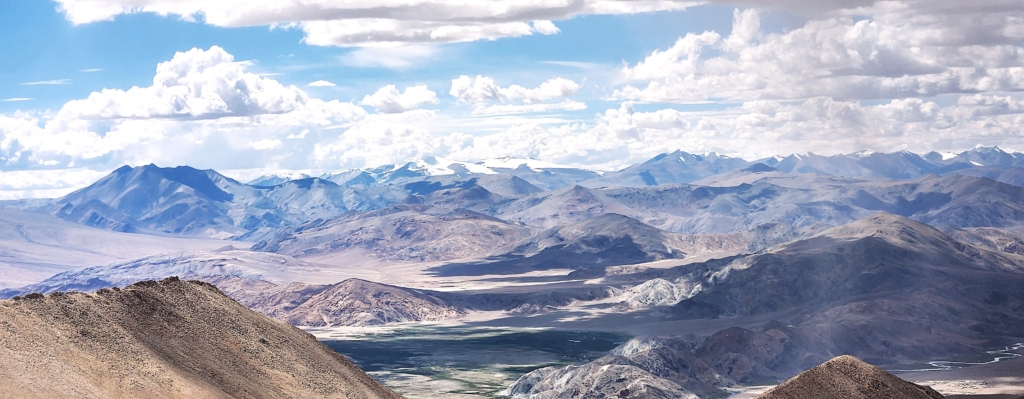
Danish, utterly captivated, followed the herd up the hill. I had to call him back before he disappeared into the hills of Umling La forever! Later, Kaisang explained that bharals are also known as blue sheep, owing to a bluish sheen on their otherwise grey coats. Though I tried to recall if I’d seen any such hue, it escaped me in the magic of the moment.

Hanle Village
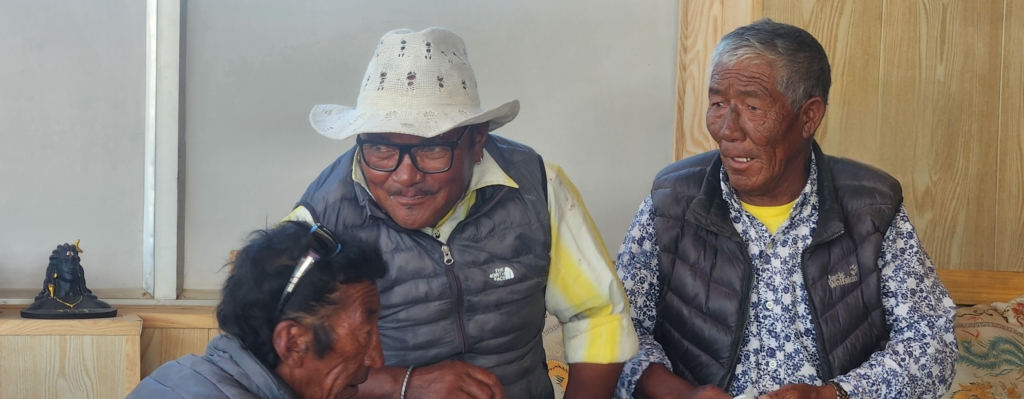
On our return to Hanle, we chose the well-paved tar road, avoiding any more offbeat adventures for the day. The call of a tea break beckoned us to the Milky Way Café. As we settled in with our cups of tea and coffee, a group of locals at the next table was deep in an intriguing, intense discussion. We decided not to interrupt them but couldn’t help noticing how they made for a perfect, candid photo opportunity.
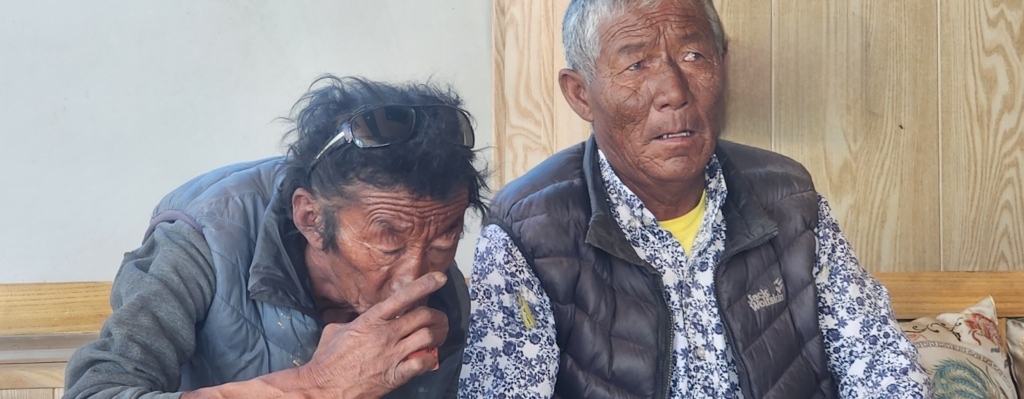
Back at our homestay, I found myself relaxing in the lounge when Kaisang’s kids burst in, full of life and energy. His daughter and son had just returned from school and were eager to chat. They peppered me with questions about where I’d come from and begged to see my travel photos. In turn, I entertained them with wildlife snapshots from my journey, and they delighted me with local songs and dances. We had a great time bonding.

Just then, Kaisang’s wife entered with a young German traveller – Saabi. Kaisang’s wife only spoke Ladakhi and Hindi, with the occasional “Hello” and “Thank you” in English. Saabi, needing to check into her room, was a bit lost in translation. I stepped in as an impromptu interpreter, bridging the gap between the two. It reminded me of my time in Turtuk when I translated the Yabgo dynasty story for our American friends. This new-found role as a translator was unexpectedly fun!
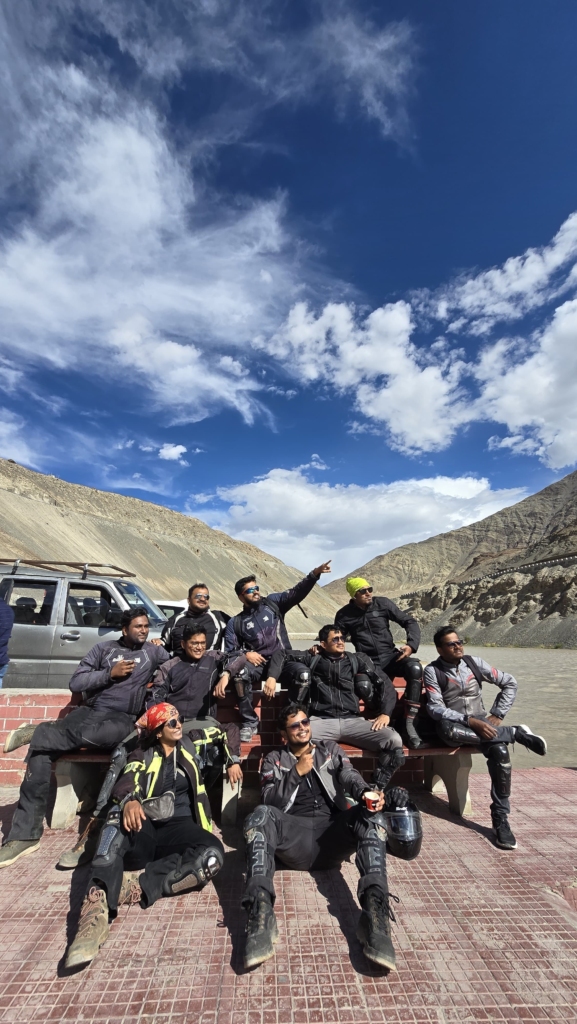
As it turned out, Saabi had pre-booked her stay with Kaisang earlier in the day, but he had forgotten to inform his wife. With that sorted, she joined me in the lounge, sharing her remarkable story. At 25, Saabi had been solo-traveling across Ladakh for the past five days on a rented 500cc motorbike.
That day, she had journeyed from Pangong Tso on her own and had met a group of bikers at Rezang La who helped her confirm her stay with Kaisang. One of the bikers wanted to take his time riding, so Saabi sped ahead to make sure she secured her room at the homestay before dark. She had quit her job in Frankfurt and had an exciting new assignment lined up in Bern, Switzerland, but not for another month. I couldn’t help but admire her courage and the freedom she embraced on this incredible journey.
I was especially impressed when she shared how she had navigated the challenging Shyok route, which we’d been warned was damaged by an overflowing river. I’m still not sure how she managed it or the risks she might have taken, but her determination and grit were undeniable.
An hour later, the group of bikers Saabi had met earlier checked in. They were a spirited bunch hailing from different corners of India – Satish, a young entrepreneur from Chennai, a couple from Bengaluru who ran a bakery-centric business, and others from Mumbai, Delhi, and beyond. Their energy and passion for adventure left me in awe.
Milky Way Galaxy
As night fell, the sky began to clear, and we were all holding our breath, hoping for a glimpse of the Milky Way. After an early dinner, we set our alarms for midnight, ready to witness nature’s cosmic wonder.
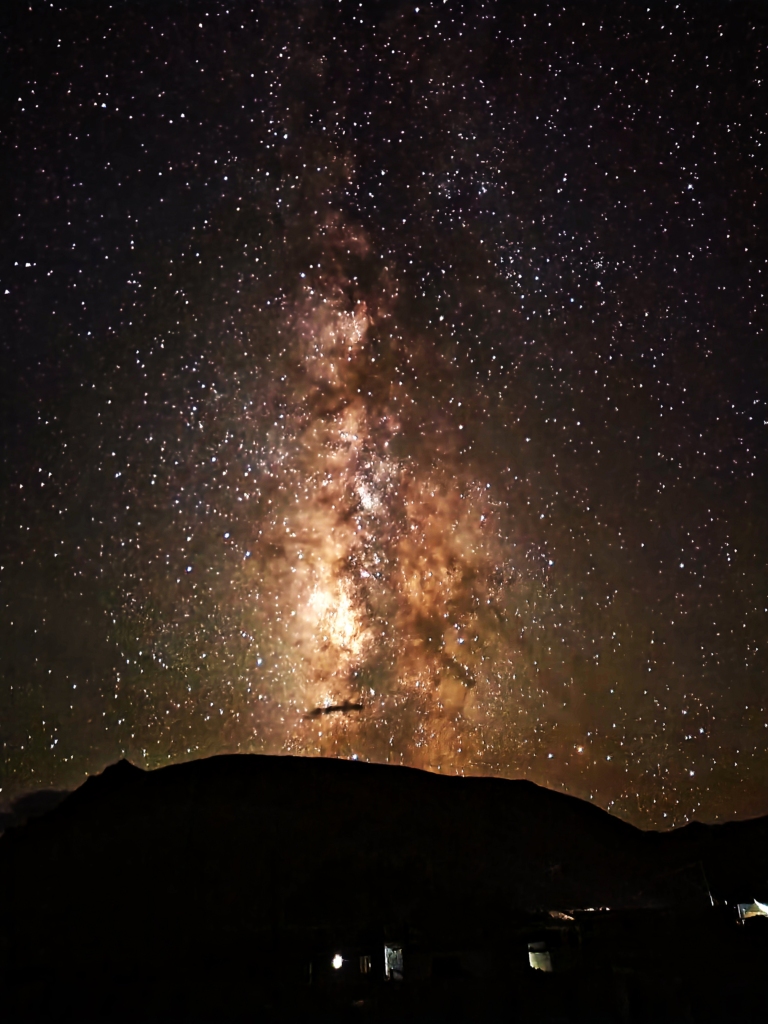
When the alarm rang, I sprang out of bed, rushed to the terrace, and found myself face-to-face with a breathtaking sight – a galaxy sprawled across the night sky like a giant river of light. The Milky Way, with its endless expanse of stars, moved slowly from the horizon, a reminder of just how vast and wondrous the universe truly is.
Standing there, I marveled at the hundreds of billions of planetary systems (with about 4,000 recorded solar systems with planets) in our galaxy alone. NASA estimates there are at least 100 billion galaxies in the observable universe, and suddenly, the scale of it all made me feel wonderfully insignificant. The stars, the falling meteors – it was as if the universe was putting on a grand show just for us. The sky felt so close, and for a brief moment, I understood the quiet, humbling beauty of being part of something so vast.
As I lay beneath the vast, dark sky, the Milky Way shimmering above me like a celestial river, Rahi Masoom Raza’s words floated through my mind:
safar meñ niiñd aisī kho gaī
ham na so.e raat thak kar so gaī
These philosophical lines translate to: “In this journey, I lost sleep in such a way, I didn’t sleep, but the night, tired, fell asleep instead”. The poet reflects on a restless journey where sleep eluded the traveller, yet the night itself seemed to grow weary and “fall asleep”.
The imagery conveys a sense of exhaustion and an emotional depth, suggesting that the traveller was too consumed by thoughts or experiences to rest, while time (the night) moved on and came to an end on its own.
I couldn’t help but feel how perfectly these lines captured the moment. Here, in the raw stillness of Ladakh, beneath a universe so infinite, that elusive joy – the one we all chase in the corners of our souls – felt almost within reach. Raza’s words, like the galaxy itself, seemed to stretch across time, reminding me of the profound simplicity in just being, and in embracing the beauty of the journey.
August 2024
If you’re planning a trip to Umling La or explore Ladakh, we at HappyHorizon would be thrilled to curate your holiday plans to enhance your travel experiences. Feel free to reach out to us: connect@happyhorizon.in
Day 10 (Part 1): Puga Valley – Read More
Gallery


Sukumar Jain, a Mumbai-based finance professional with global experience, is also a passionate traveler, wildlife enthusiast, and an aficionado of Indian culture. Alongside his career, which includes diverse roles in international banking and finance, he's working on a wildlife coffee table book and enjoys sculpture and pottery. His interests span reading non-fiction to engaging in social and global networking.