

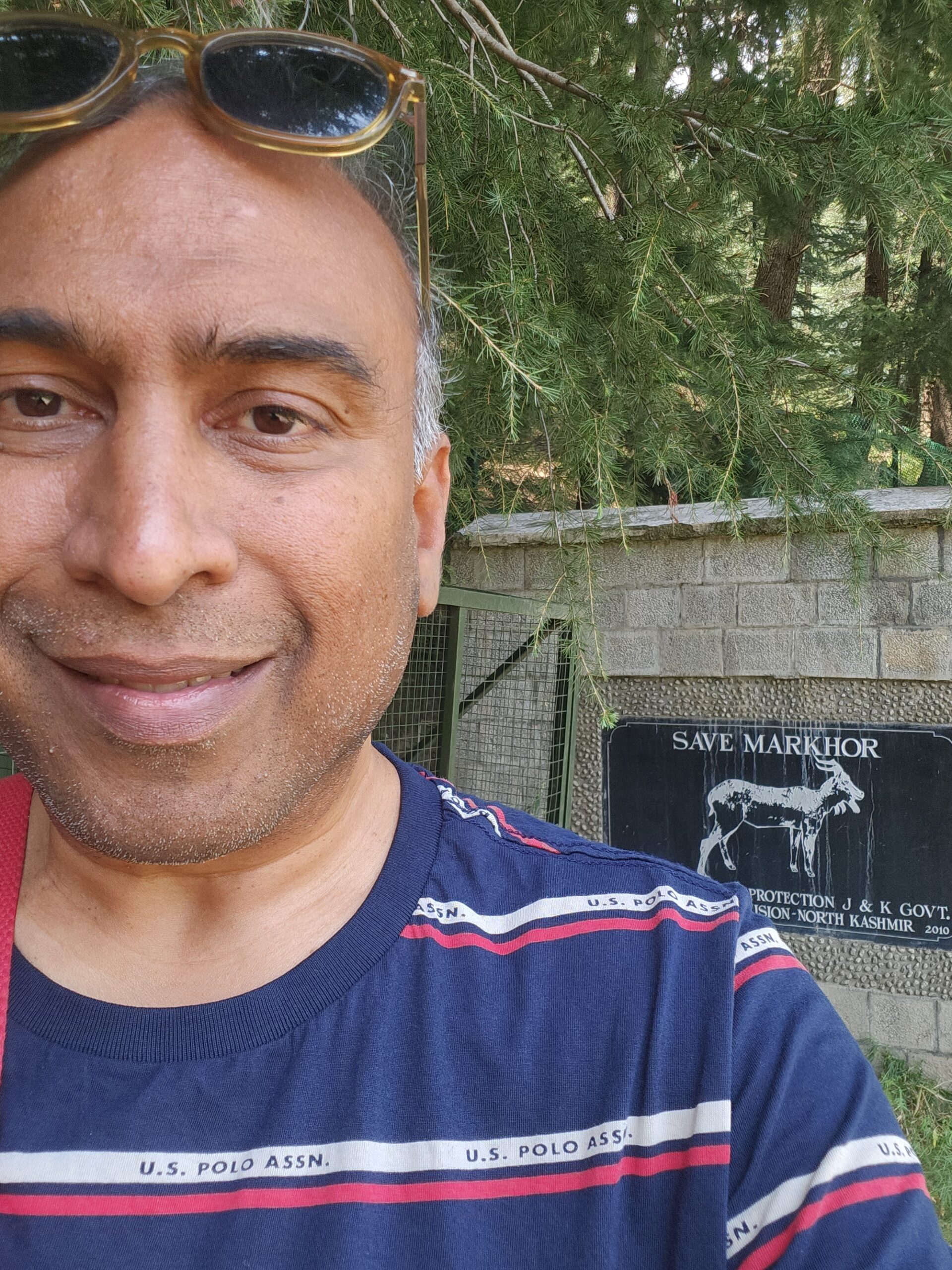

Julley!!! Ladakh – Coming Soon!
Day 1: Mumbai – Srinagar – Zoji La – Drass – Kharboo – Kargil
Srinagar – Kharboo: 175 km. / 5 hr. / Altitude: 9,500 ft.
Background
As I mapped out my journey through the breathtaking landscapes of Ladakh, I connected with Mubarak, the eldest son of Mohammed Ali, through social media. With genuine warmth, he extended an invitation for us to savour a traditional lunch at his village home and discover the hidden charms of Kharboo.
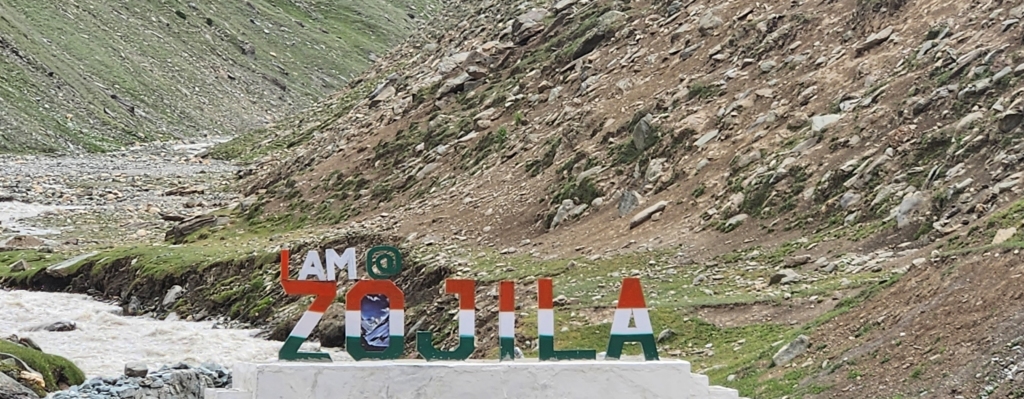
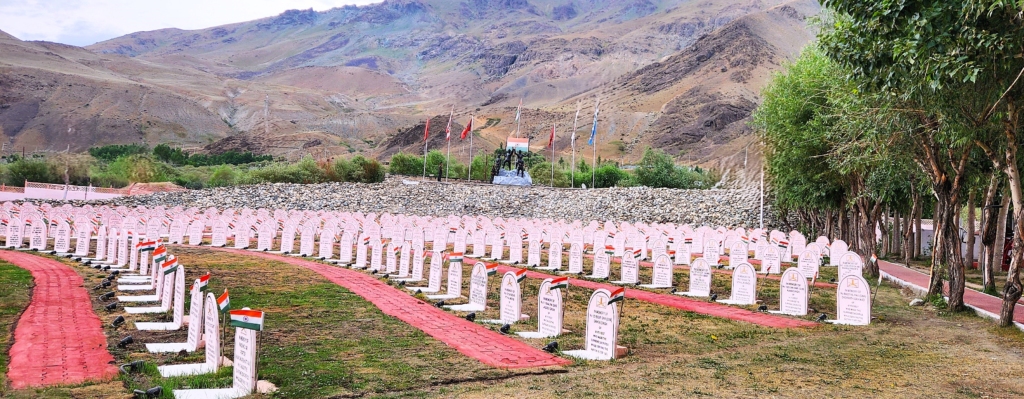
Our journey from Srinagar towards Kargil, via Zoji La and War Memorial at Drass, was a constant reminder of the lofty Himalayan mountains, where nearly every spot in Ladakh soars to an altitude of at least 9,000 ft. above sea level.
Kharboo is a quaint village perched at an altitude of around 9,500 ft. located about 25 km. from Kargil, gracefully hugging the banks of the Drass River.
As we approached Kharboo, I was bubbling with anticipation, eager to dive into the rich tapestry of village life.
Without the clear navigation guidance from our gracious host, Mohammed Ali, we might have easily missed the turn-off. Danish voiced his scepticism about this adventure as we navigated the narrow, unpaved paths winding through the stark hills. Upon our arrival, Ali awaited us at the end of the village road, ready to envelop us in a warm hug and heartfelt welcome. After parking the car, we set off on a brief trek through a serene forested area, crossed a charming bridge over a babbling stream, and wandered through lush paddy fields before reaching Ali’s home.
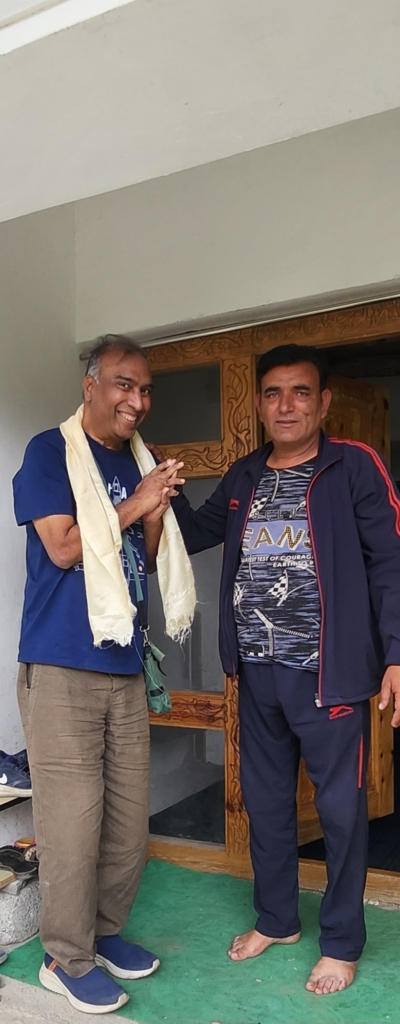
He welcomed us to his house by draping a white scarf, known as a Khatak, around our necks – a traditional Ladakhi custom, which gestured warmth and respect. It was heartening to see how this Tibetan tradition of welcoming guests has endured over the years, bridging the distances from Ladakh to Sikkim.
The Family
Ali warmly introduced us to his family and offered a brief tour of his cozy home. We met his wife and three of his children – one son and two daughters. Although in total, Ali has five kids; his eldest son, Mubarak, is carving out a career in the hospitality industry in Kargil, while his second son proudly serves in the Indian Army.

With our appetites growing, we made our way to the kitchen. Ali’s wife was bustling about, putting the finishing touches on a warm, freshly cooked lunch. The children eagerly helped to set the table with traditional plates, bowls, glasses, and spoons, infusing the atmosphere with a sense of anticipation.
Ali’s wife had prepared a delightful local vegetarian feast, featuring “yo tikki” – a thick, roasted flatbread made from barley flour – alongside wheat chapaati, rajma dal, and a beautifully simple saag.
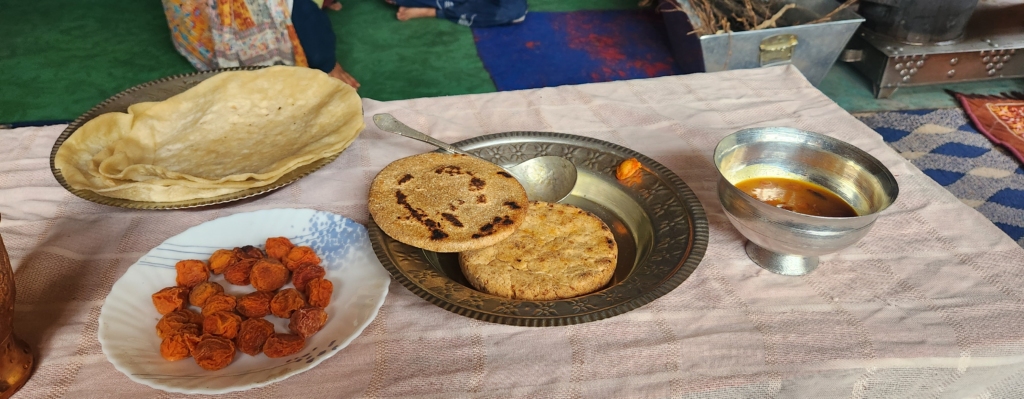
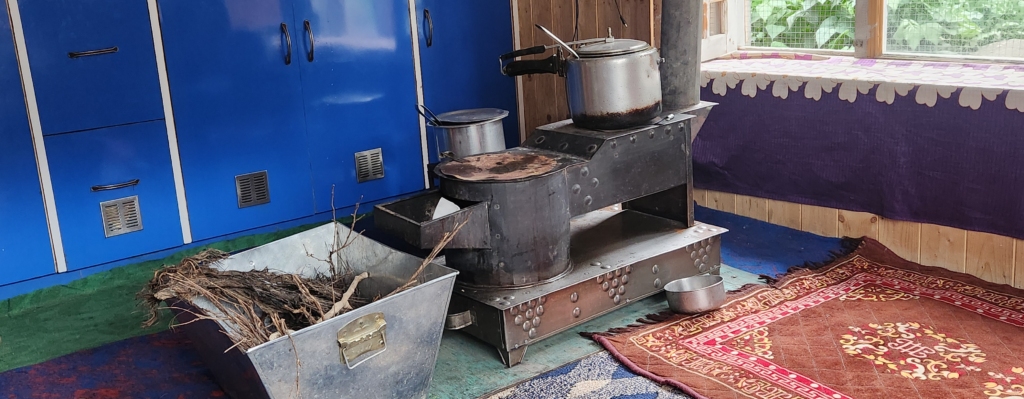
She shared insights into their cooking methods and how they source their ingredients. Noticing our interest, she quickly whipped up another dish, roasting local millet in a bhukari and serving it with rich, fragrant ghee. With LPG cylinders yet to reach the village, the family still gathers wood to fuel their fire.
The family shared that their staple foods consist of grim (a loose-grained barley variety) and wheat. Their meals typically feature thick grim or wheat bread, paired with a hearty broth made from dried or fresh turnips, cabbages, and pulses. The discussion inspiring a deeper appreciation for nutritious, locally sourced ingredients in our own lives. On special occasions and festive days, the menu expands to include succulent chicken, tender mutton, and fragrant rice, all lovingly prepared with ghee – a true luxury in these high-altitude realms.
Each dish was a revelation, and we devoured every bite, savouring not just the flavours but the love that went into the meal. It struck me that it was their warmth and hospitality, more than the food itself, that made the experience truly delightful.
As we enjoyed our meal, conversation flowed effortlessly. I reflected on how the simple act of sharing a meal can forge strong connections and provide profound insights into one’s tradition and culture.
The kids were eager to delve into my life back in Mumbai – asking about my family, home, and travels. Their curiosity was particularly piqued by my wildlife adventures and my trip to Dubai. As I scrolled through my photographs, the kids were quick to recognize the iconic Burj Khalifa and a sleek Lamborghini. I was delighted not just by their recognition but by their impeccable pronunciation of the car’s brand name. It’s astounding how mobile network coverage and social media apps have woven the world closer together. With a playful grin, I jokingly offered Ali’s youngest son a spin in the Lamborghini if he would introduce me to his girlfriend. To my surprise, he outrightly refused! The other kids erupted in teasing, encouraging him to seize the chance instead of protecting his girlfriend, and we all burst into laughter.

As we engaged with the family, I was captivated by the genuine smiles adorning their faces, a beautiful reflection of their simplicity and the joy they felt in our presence.
Just as we were about to leave the kitchen, Ali’s wife surprised us with a delightful local sweet made from dried apricots soaked overnight. In Ladakh, apricots – locally known as “Chuli”, hold a special place in the hearts of the locals. Throughout my journey, I marvelled at the fertile landscapes of otherwise deserted Ladakh, draped in apricot trees heavy with golden, velvety fruits. Fresh apricots grace the market from July to September, and the sheer abundance makes it challenging for farmers to sell their entire harvest each season. It’s no wonder apricots are processed for value-added products or sun-dried to preserve their sweetness.
Kharboo – The Village
Ali then offered to guide us on a tour of the village. As we strolled along, he shared that Kharboo is divided into four mohallas (hamlets).
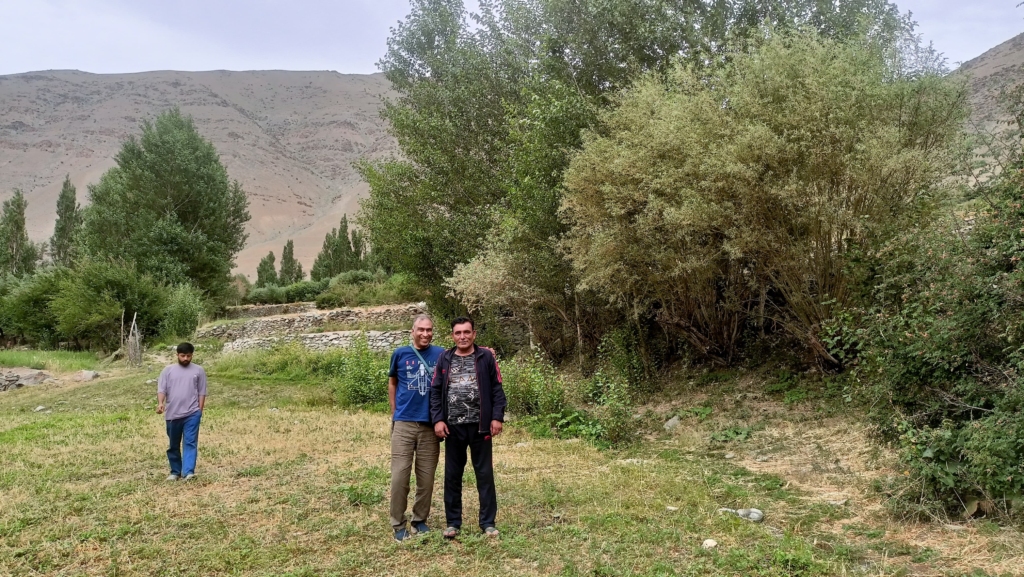
As we delved into the village’s rich history, Ali revealed that before partition, Kharboo was part of the Gilgit-Baltistan province. This connection means that the people of Kharboo, much like the natives of Gilgit, are members of the Dard community.
The primary language spoken in Gilgit-Baltistan is Shina, an offshoot of the Dardic linguistic group, which also finds its home in the Drass and Gurez Valleys of India. Ali pointed out that since Shina is written in Urdu script, Urdu has also woven itself into the fabric of daily life in the village. Post-partition, Kharboo uniquely became the only place in Ladakh exclusively inhabited by Shina speakers. This revelation piqued Danish’s interest; hailing from the Gurez Valley, he identified with the Dard community and spoke Shina fluently. A bond formed between Danish and Ali, and from that moment on, they conversed effortlessly in their shared language for the rest of the day. During our time in Kashmir, Danish had remarked that the Shina-speaking population often sees themselves as socially superior, laying claim to a distinguished heritage.

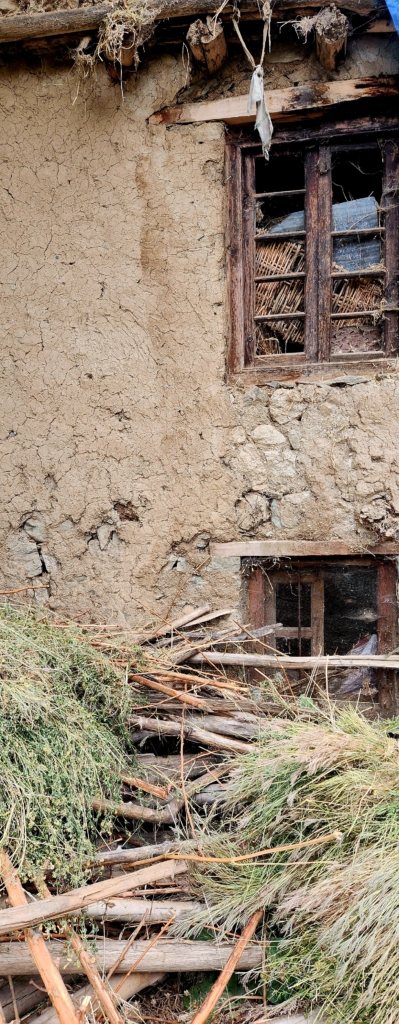
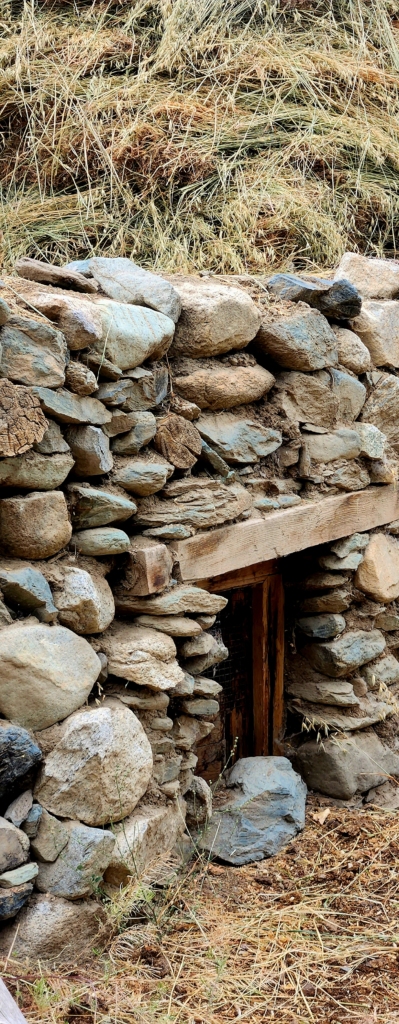
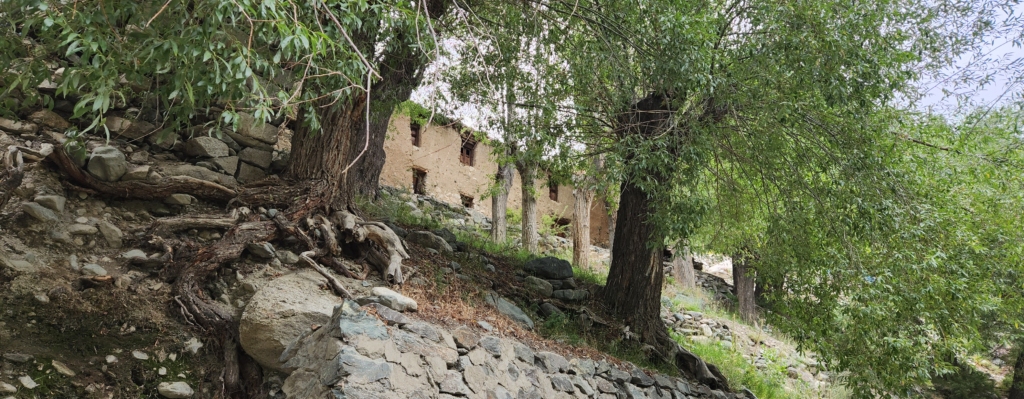
Most of the houses in Kharboo resembled traditional “kacha” dwellings – low, mud-constructed, and topped with flat roofs. The walls, crafted from stones plastered with clay, provided a rustic charm, while Ali’s home stood out as a modern, double-storey marvel amidst the landscape.


As the conversation turned to a more sensitive topic of religion, Ali explained that all the villagers are Muslim, belonging to either the Shia or Sunni sects. He noted that relations between the two groups are remarkably cordial, with a shared experience of joys and sorrows. Unlike many other regions in the subcontinent, they maintain similar social customs and often enter into matrimonial alliances among themselves. Reflecting on the village’s harmonious atmosphere, I couldn’t help but wish that the entire country could embrace such traditions, transcending the divides of caste and religion.
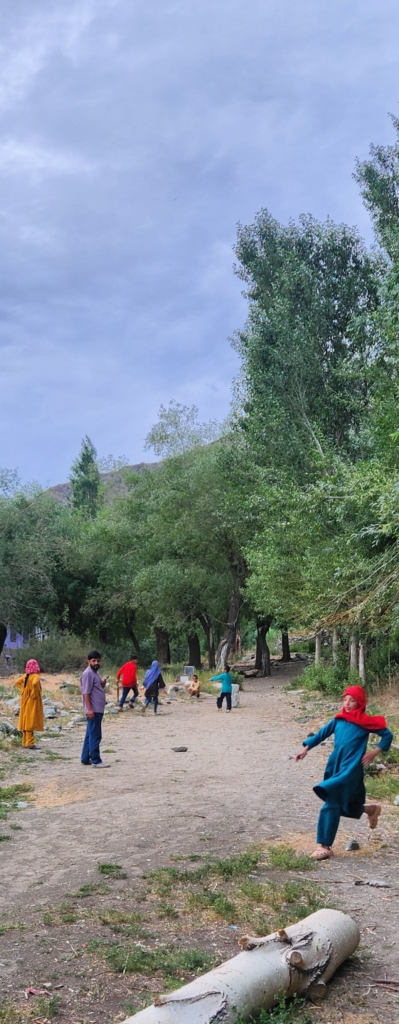
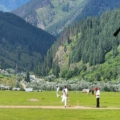
It wasn’t long before we encountered a lively group of local children – boys and girls alike – caught up in a spirited game of cricket.
Tempted by the allure of chocolates, I invited them to join our walk. They eagerly led us to their school, sharing snippets of their daily lives in the village. Their dreams spilled out in a mix of excitement and ambition: some aspired to join the army, while others longed to become pilots and explore the world. After a delightful stroll, the children eventually returned to their unfinished game, though a couple of them chose to continue exploring with us.
I noticed that the girls, however, remained shy, hesitant to voice their aspirations. Ali shared that many girls in the village don’t pursue higher education, as doing so would mean relocating to Kargil or Leh. Instead, they often find themselves immersed in farming and managing household responsibilities. Fortunately, early marriages aren’t a common practice here.
He then delved into the village’s marriage traditions, illuminating the customs surrounding the Nikkah ceremony. The priest outlines specific conditions that will govern the marriage bond. These stipulations include the groom’s promise of jewellery, clothing, and other gifts of a value commensurate with the family’s economic status, as well as a cash payment known as ‘Mahr.’ The ceremony is infused with spirituality, accompanied by the recitation of Quranic verses related to marriage, followed by heartfelt prayers for the couple’s future happiness.
With a twinkle in his eye, Ali promised to invite me to his children’s weddings, expressing a preference for his sons to marry within the village. I couldn’t help but chuckle, hoping Mubarak is reading this! It seems I have weddings lined up in both J&K and Ladakh. Meanwhile, Danish is diligently saving for his own wedding, set for next year.
Juniper – the State Tree
As we meandered through the village fields, I was captivated by the natural beauty and distinctive topography surrounding us.

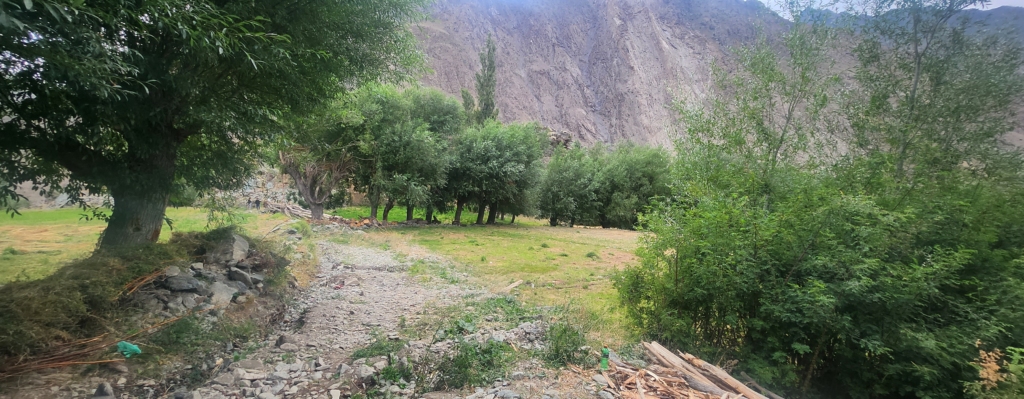
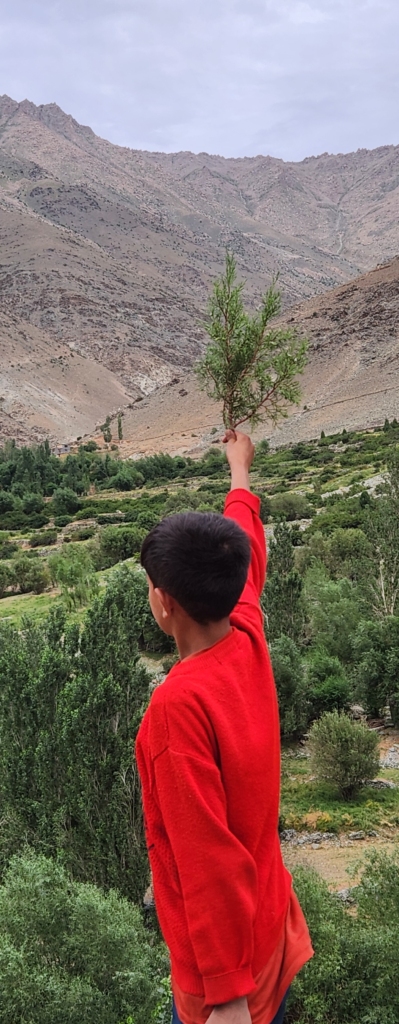
Ali pointed out the local flora, which mainly consisted of resilient Juniper and Safeda trees. Recently, the Juniper tree was honoured as the State Tree of the Union Territory of Ladakh.

In the rugged, rocky valleys of this high-altitude paradise, the evergreen Juniper stands as a striking landmark – truly unique in its surroundings.
In Ladakh, locals often use Juniper twigs to adorn stupa structures, and its aromatic branches are burned as incense. The berries of the juniper are prized for their medicinal and nutritional benefits. Remarkably, Junipers can self-prune, shedding branches to ensure their survival, and their sap boasts rot-resistant properties. Yet, despite their hardiness, Junipers face challenges in regeneration, with low seed viability and lengthy dormancy periods hindering their growth.
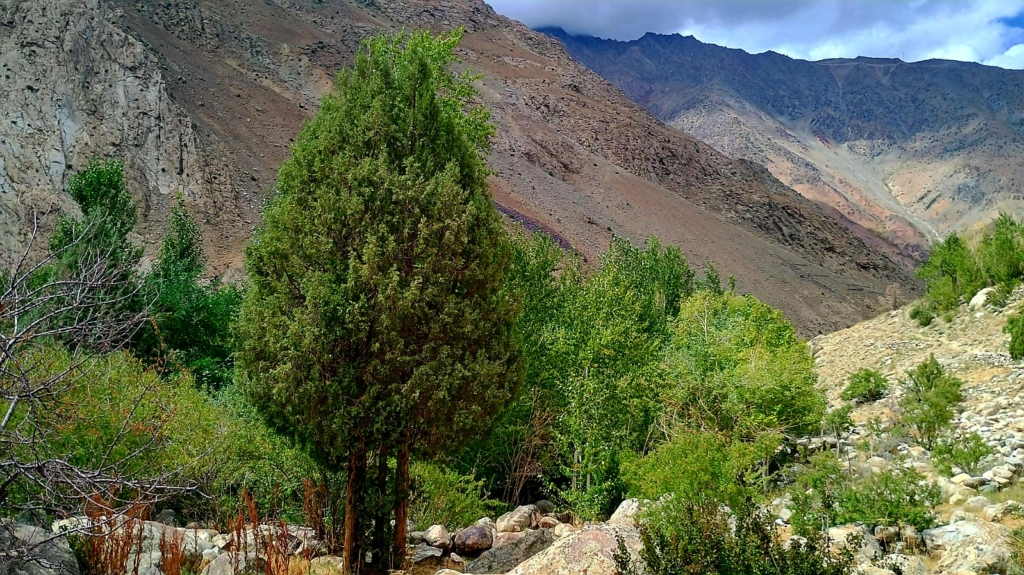
Ali lamented the significant decline in the number of Juniper trees in the village, a consequence of rampant tree felling. He explained that this deforestation may have played a role in a devastating avalanche that struck the village a few years back, bringing destruction to homes and causing heartbreaking loss of life.
The Fort
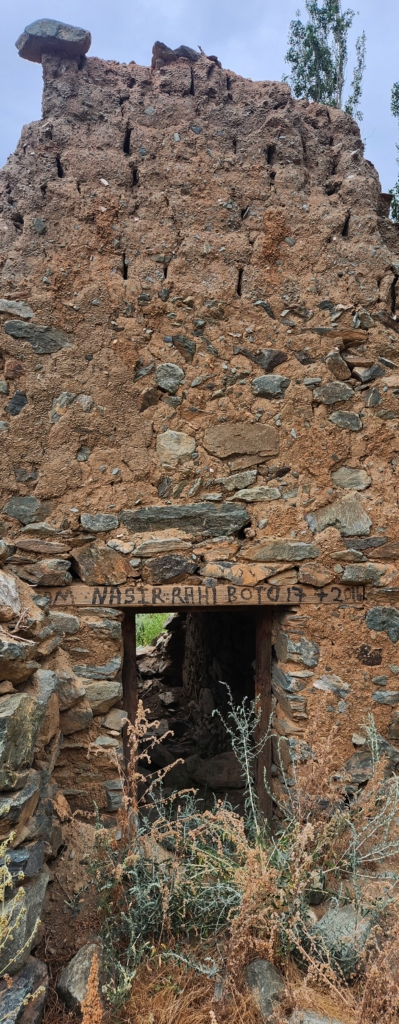
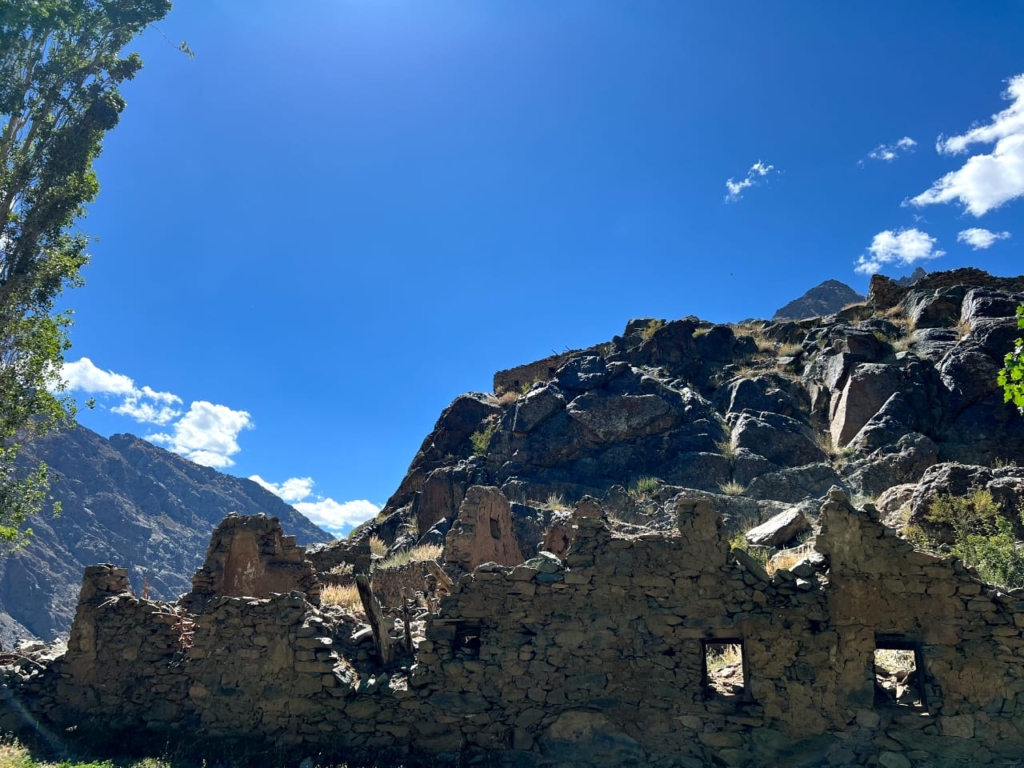
Wandering through the remnants of the village, we came across several houses that had been abandoned, their structures crumbling beyond repair. Former owners had painted their names on the door frames, a poignant reminder of the lives once lived there and ownership to the property.
Ali regaled us with a captivating legend about the name “Kharboo,” which is said to be a fusion of two Shina words: “Khar” meaning “fort” and “Boo” meaning “small”. Over the years, the village adopted the name Khar-Boo, or Kharbu.
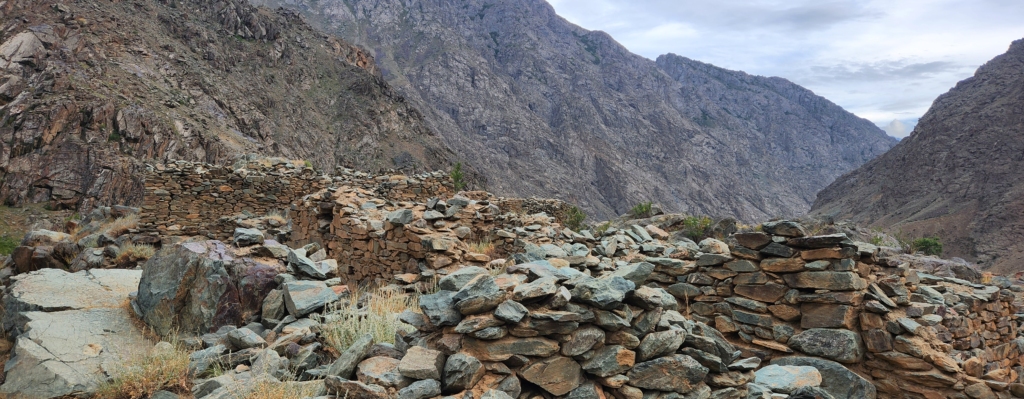
As we ventured beyond the village, Ali pointed to a small hillock in the distance, noting that in ancient times, a fort perched atop that very hill. Intrigued by this rich history, we decided to explore the ruins of the fort.
Ali revealed that due to strategic location of Kharboo, the king of Baltistan is said to have garrisoned the fort at Kharboo with soldiers and appointed a ‘Kharpon’ or Governor to administer the border area. The Governor or the Chief of Kharboo resided in the fort.
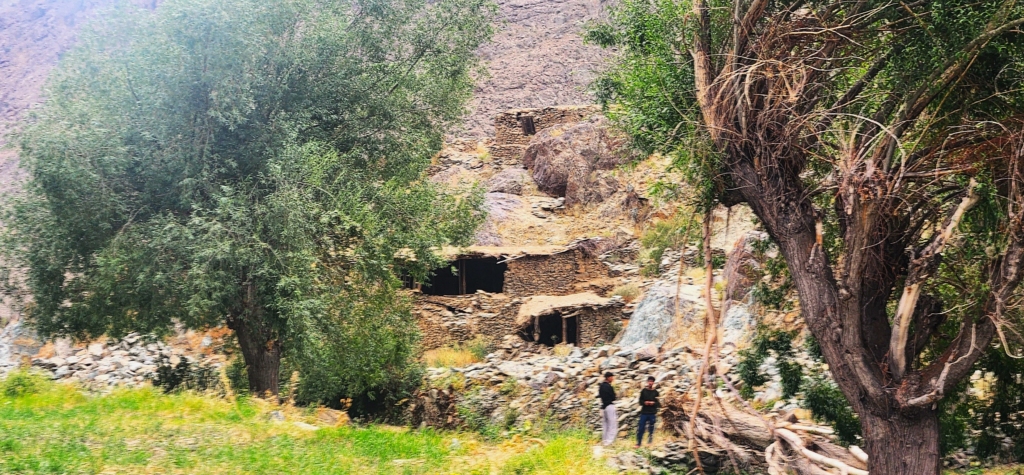
As we ascended the hillock, we were greeted with a breathtaking panoramic view of the surrounding landscape. The fort’s strategic location had clearly been chosen to keep a watchful eye for any intruders. From our lofty perch, the Drass River snaked alongside the mountains, and the entire expanse of the village unfolded before us.
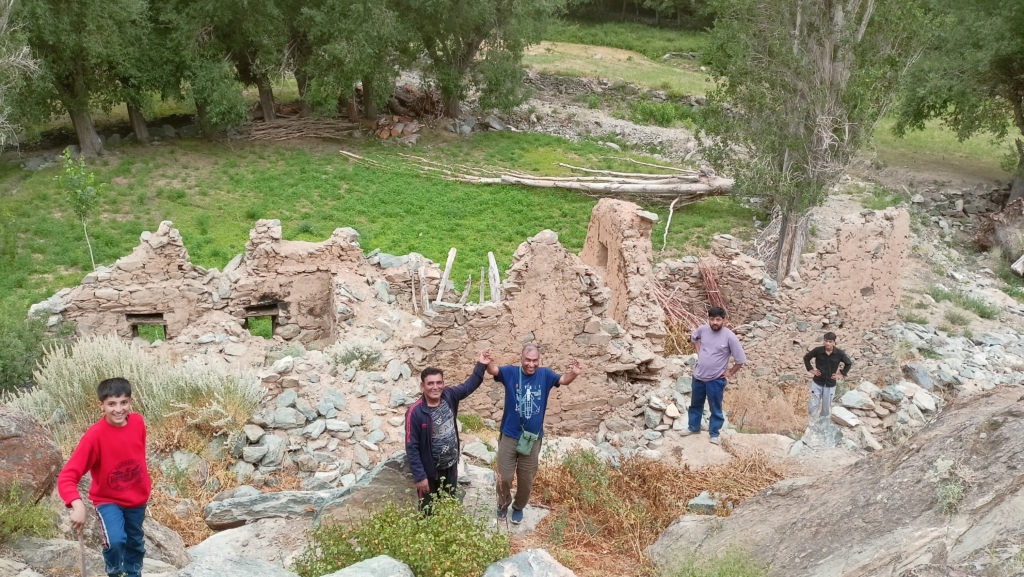
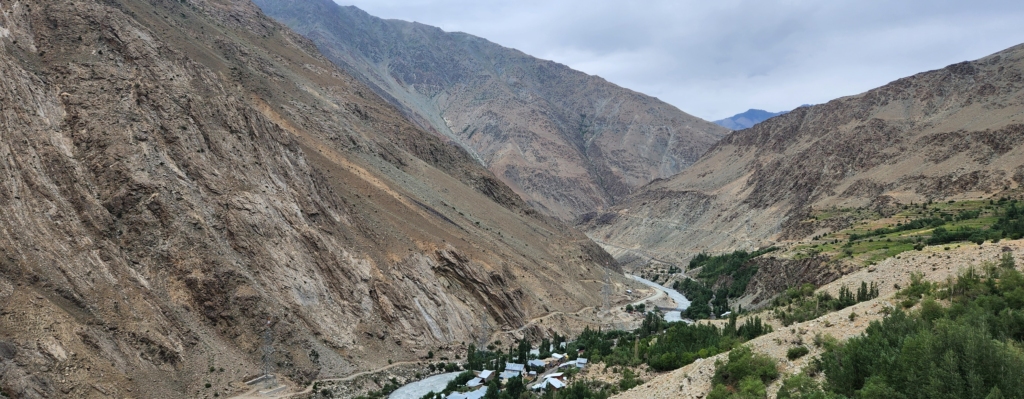
We lingered atop the hillock, immersed in discussions about what village life might have been like in ancient times. For a fleeting moment, I felt like a king surveying my realm, captivated by the beauty and history that enveloped me. As the sun dipped lower in the sky, casting golden hues across the landscape, we knew it was time to make our descent back to the village.
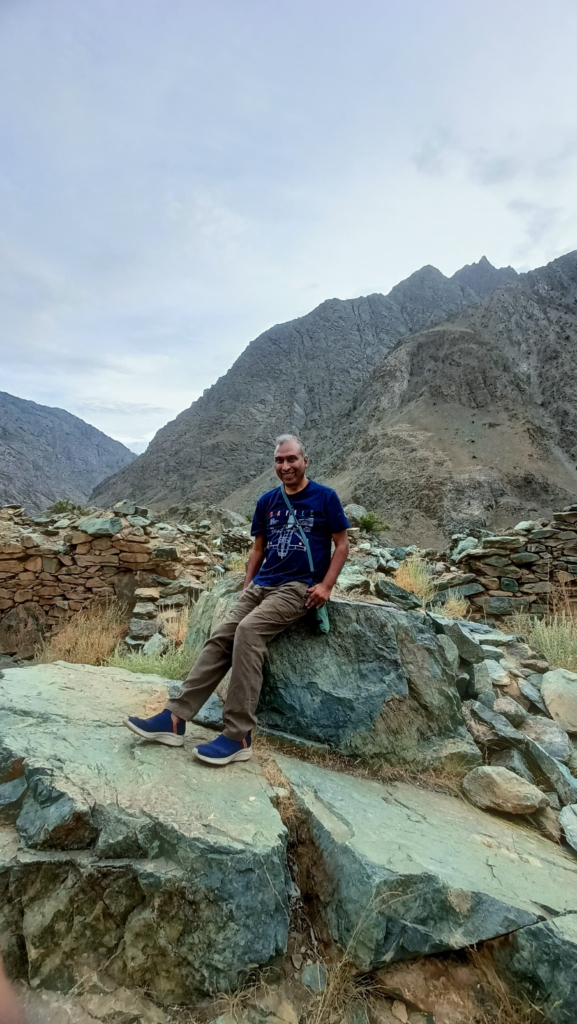

ik pahaadee pe main baitha raha der tak
shauq se dekha karoon aisa bhee manzar na tha
Mhd. Alvi said that “I sat on a mountain for a long time. I didn’t even have the chance to watch it with interest”
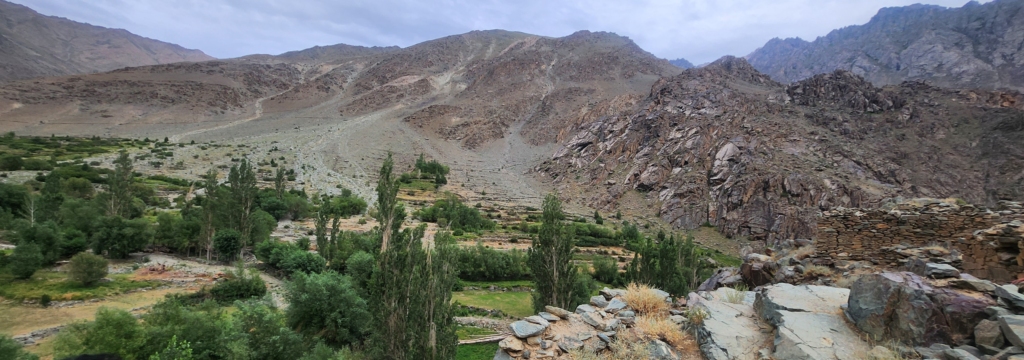
Ali teased me to join him on a two to three day adventure – the Ganiyat Trek, to experience the true essence of the region. He painted a vivid picture of the trek journey beginning from Kharboo along the Drass River, with our first night spent camping at Ganiyat. He enticed my adventurous spirits by describing the chance to stargaze and cook meals by the riverbank, promising it would be an unforgettable experience. The next morning, we would traverse the stunning Kharboo Traiyian mountain range, surrounded by a tapestry of wildflowers and, if fortune smiled upon us, we might even catch a glimpse of elusive snow leopards and ibex among the peaks. Our trek would conclude in the charming village of Minjee, a fitting end to our adventure.
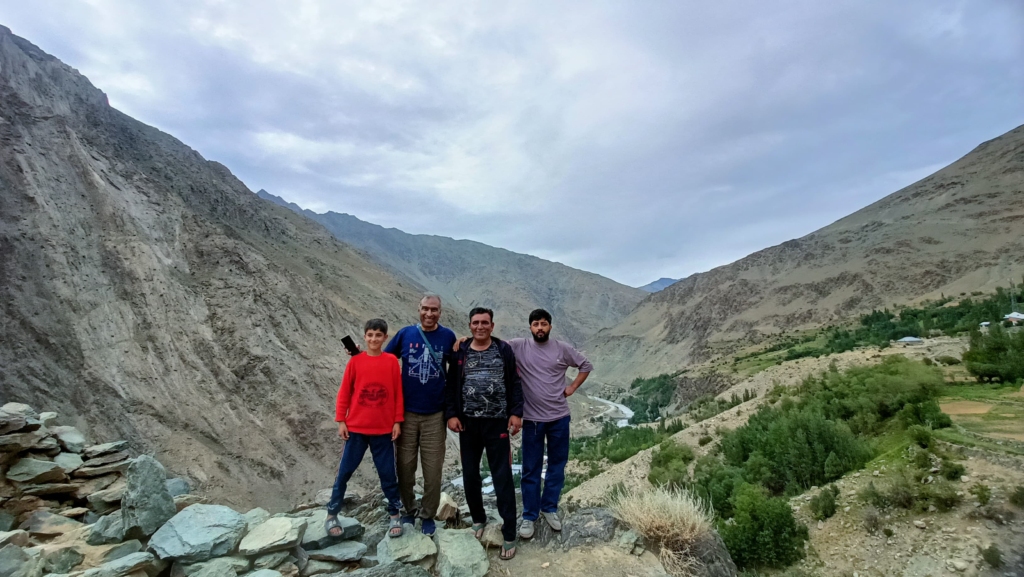
As we made our way back to the village, Ali invited us to enjoy some namkeen chai – a salted tea that’s a beloved staple in the region. Prepared using a unique local method, the tea leaves are seasoned with salt, then churned with butter until it transforms into a rich, thick liquid. We expressed our heartfelt gratitude to Ali and his family for their incredible hospitality and for sharing a slice of their life in Kharboo.
As you travel through Ladakh, you’ll encounter several quaint villages like Kharboo, perched high in the Himalayas. Yet, their true charm and beauty lie in the warmth of their residents.
If you’re planning a trip to Kargil or Ladakh, don’t miss the chance to stop by Kharboo and meet Ali and his family – I can’t recommend it enough!
A stroll through the Kharboo village offers a captivating glimpse into traditional life, showcasing local customs, crafts, foods, and daily routines that are often overlooked in today’s fast-paced world. And if you have an extra few days, the Ganiyat Trek awaits, promising a truly memorable adventure.
August 2024
If you’re planning a trip to Kharboo or explore Ladakh, we at HappyHorizon would be thrilled to curate your holiday plans to enhance your travel experiences. Feel free to reach out to us: connect@happyhorizon.in
Day 1: Drass – Read More
Gallery




Sukumar Jain, a Mumbai-based finance professional with global experience, is also a passionate traveler, wildlife enthusiast, and an aficionado of Indian culture. Alongside his career, which includes diverse roles in international banking and finance, he's working on a wildlife coffee table book and enjoys sculpture and pottery. His interests span reading non-fiction to engaging in social and global networking.

1 Comment
Mubarak Hussain
Hello Sukumar jain jee
“I want to express my heartfelt gratitude for featuring my village and sharing my story in your article. Your dedication to highlighting our community and its unique aspects truly makes a difference. Thank you for your hard work and commitment to showcasing the beauty of our culture. It means so much to us!”