


Day 6 & Day 7 (Part 1): Siachen – Read More
Day 7 (Part 2): Merak
Siachen – Leh – Chang La – Durbuk – Merak: 380 km. / 9 hr. / Altitude: 13,800 ft. (Pangong Tso)
Daulat Beg Oldi (DBO)
As we began our journey back from Siachen Base Camp (SBC) to Khalsar, my heart still yearned for the adventure that lay further north – Daulat Beg Oldi (DBO), the northernmost motorable point of India. Nestled in the Depsang Plains of Ladakh at a dizzying altitude of 16,700 ft, DBO is a destination that few travellers experience. Located about 80 km north-east of SBC, it lies cradled within the mighty Karakoram Range, just 30 km shy of the legendary Karakoram Pass.

The Depsang Plains, an expansive high-altitude desert, is one of the most isolated regions in Ladakh, stretching into Aksai Chin. Yet, DBO is rich in history, once a pivotal stop on the ancient trade route that connected Ladakh to the Tarim Basin, now part of Xinjiang, China. For those drawn to the mysteries of the far north, the allure of DBO is undeniable – remote, timeless, and etched into the annals of history. However, the region remains elusive to civilians – due to government’s access restriction.
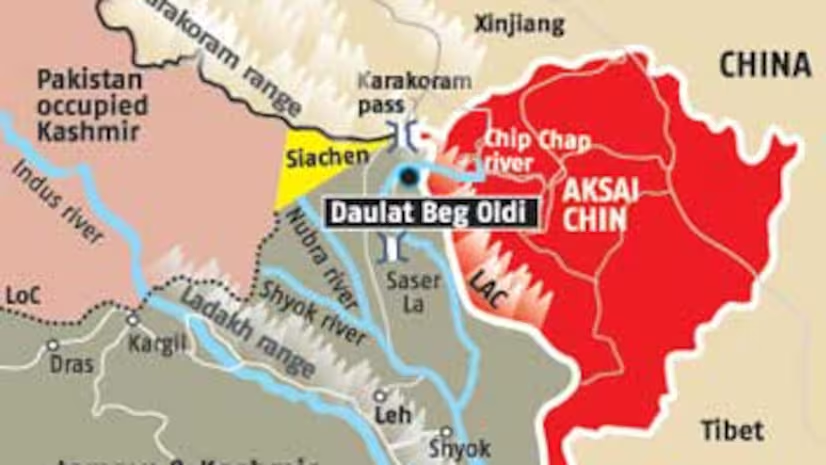
As we paused near Sasoma, contemplating our route to DBO, a local shared some exciting news. A 130-km. stretch of new road is currently under construction from Sasoma, winding its way through the remote Saser La, Brangsa, and Gapshan towards DBO. Once completed, it will provide a thrilling new route to DBO from Nubra Valley – a gateway I eagerly await and more importantly to be opened for civilian travellers like myself. While there is an existing access road to DBO from Durbuk that passes through significant areas like Galwan, Hot Springs, and Gogra, the region’s recent conflict means civilian access is still restricted.
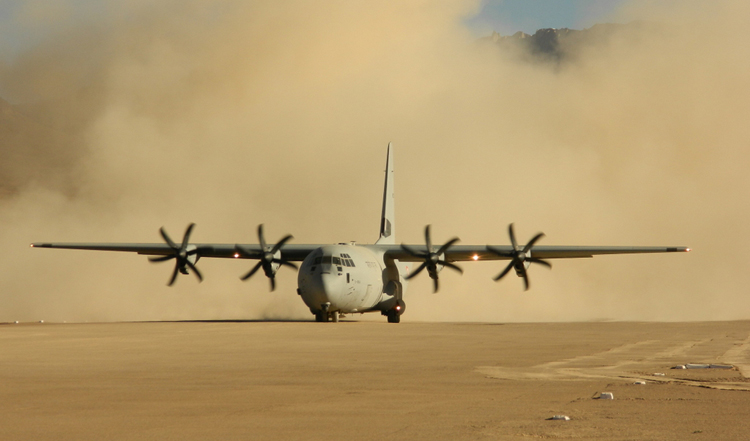
Having ventured this far, the thought of exploring Depsang Plains and reaching DBO tugs at my restless spirit. I’m convinced that only by standing amidst these rugged landscapes can one truly grasp the immense historical and geopolitical weight the region holds. DBO isn’t just a far-flung point on the map; it’s a place where history, strategy, and adventure converge.
As fate would have it, the road towards Shyok had caved in, derailing our original plan. If not for that, we could have shaved off a precious two hours on the way to Merak and indulged in a breathtaking drive along the Shyok River, tracing the contours of Aksai Chin. That journey, with its raw, untamed beauty, would have been a memory etched in every turn of the wheel. Alas, for now, it’s a road not taken – but one that calls to me for a return someday.

Interestingly, DBO holds a name steeped in history, as it translates to “the lord of the state died here” in an ancient local dialect. This intriguing title is believed to reference the death of a high-ranking noble or royal figure in this remote, unforgiving landscape. The name itself adds an air of mystique to the region, hinting at the ancient stories and historical events that have unfolded in these far-flung, windswept plains. Just a speculation – did Genghis Khan die here?
Aksai Chin
The frontiers of the battlefields, such as Aksai Chin and the surrounding regions, tell stories not only of geographical boundaries but of power struggles, historical treaties, and the rugged spirit of those who inhabit these harsh landscapes. As I journeyed through Ladakh, I became acutely aware that every twist and turn on these remote roads is laden with history – a history that’s shaped the very definition of borders we see today.
Aksai Chin, a vast, barren plateau of immense strategic importance, has been a contested region for decades. The area came under Chinese control in the 1950s, dramatically shifting the borders of Ladakh. The current de facto border, known as the Line of Actual Control (LAC), serves as a fragile line separating India’s Ladakh region from China’s annexed Aksai Chin.

But the LAC is not a historical boundary – it is a consequence of modern-day conflict, diplomacy, and the tense relationship between these two powers. The evolution of these borders is a complex tale, shaped by colonial treaties, post-independence ambitions, and strategic maneuvering across the world’s highest battlefields. Stay tuned for a deep dive into this unfolding narrative, where the mountains and deserts hold secrets of ancient trade routes, forgotten kingdoms, and modern-day skirmishes.
This is just the beginning. Am working on a more comprehensive story titled – “Frontiers at the Border: Where Invisible Lines Shape Nations and Tell Their Stories”.
Stay tuned, and don’t forget to Subscribe for updates! There’s so much more to unravel.
Decision at Khalsar
As we rolled into Khalsar, we topped off the fuel tank, gearing up for the long stretch ahead. The attendant, a local with a wealth of road wisdom, casually mentioned an alternate route to Pangong via Wari La. This road, he explained, would eventually merge before Chang La, bypassing Leh altogether. While the prospect of skipping Leh sounded tempting, he cautioned us against it – rough roads, he warned, would make the journey just as long, with no time saved in the end.

Still, I found myself drawn to the idea of Wari La. The allure of exploring a new, less-travelled route, with the promise of fresh vistas and Ladakh’s rugged beauty, tugged at my adventurous side. Danish, on the other hand, wasn’t as keen – he’d been driving tirelessly and preferred to stick with the familiar. I let him have the final say, and as we passed the diversion for Wari La, we decided to keep it simple and head straight for Merak via Leh.
We rolled into Leh by 3 p.m., and Danish, was eager for lunch. I, on the other hand, wasn’t feeling the hunger pangs, so I left the culinary decision entirely up to him. His craving? “Kashmiri Wazwan” – a multi-course feast fit for royalty, with its rich, meat-heavy courses. In Kashmiri, “waz” translates to ‘cook’ and “wan” to ‘shop’.

But luck wasn’t on Danish’s side. Most restaurants were closed for the afternoon siesta, and those that were open had already run out of stock. Undeterred, Danish refused to settle for anything less than “Wazwan”. After about an hour of fruitless searching, his patience and hunger – finally got the better of him. In the end, he resorted to buying a few fruits from a roadside vendor, a far cry from the lavish meal he had envisioned, but enough to hold him over for the rest of the journey.
It was a day of missed routes and missed meals, but that’s the charm of road travel – unexpected turns, small frustrations, and the constant pull of the open road ahead.
Chang La
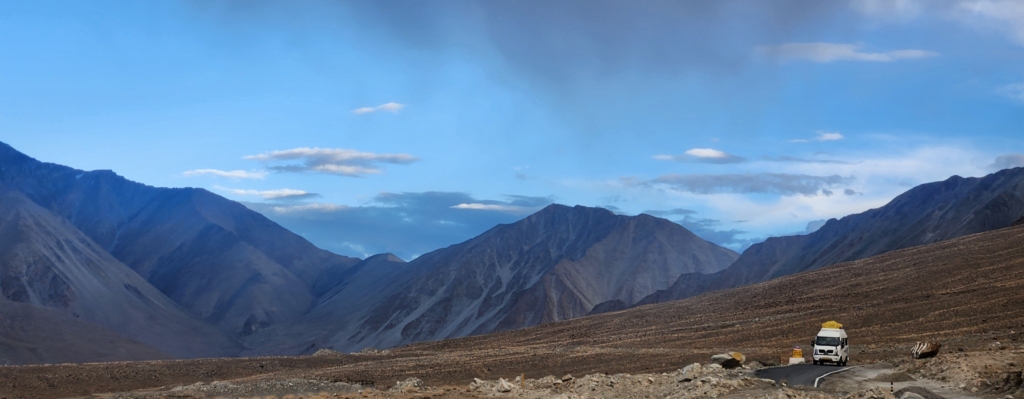
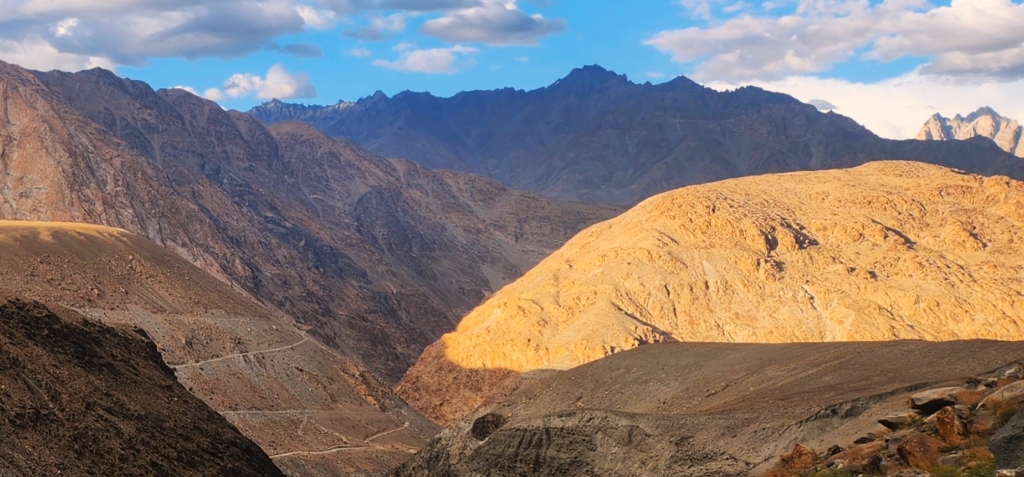
Chang La, perched at a staggering altitude of 17,688 ft, is one of the highest motorable roads in the world, second only to the legendary Umling La. The ascent to Chang La proved to be more challenging than the famous Khardung La, with its steep inclines and narrow, winding paths testing both driver and vehicle. Reflecting on the road ahead, I couldn’t help but think that perhaps taking the Wari La route would have been even tougher. In hindsight, the decision to go via Leh seemed like the wiser choice.
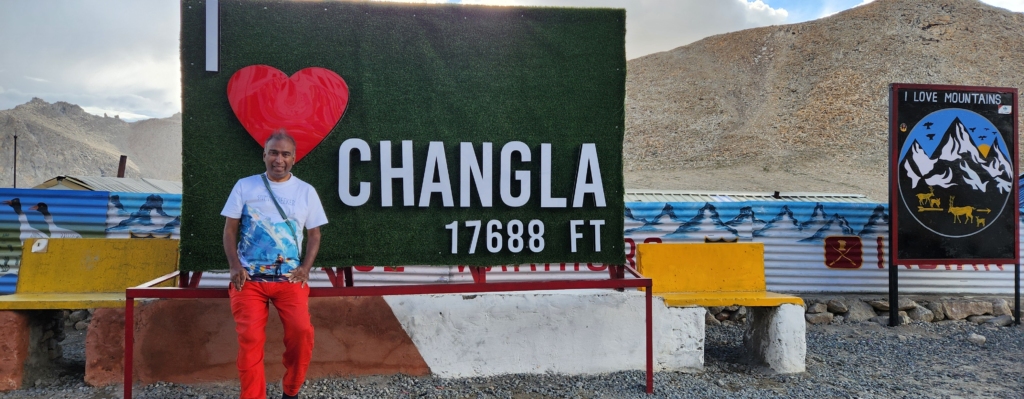

As we began our descent from the windswept heights of Chang La, two military personnel flagged us down, requesting a lift to the next base camp. It felt like an honor to offer them a ride. They were part of a larger contingent on a movement from Ladakh to Rajasthan, but their vehicle had broken down, and they were heading back to their camp to fetch spare parts. Despite the unexpected hiccup in their journey, their spirits remained high. They were on a mission, determined to rejoin their brothers in time to celebrate a special occasion – the 25th birthday of a fellow soldier.
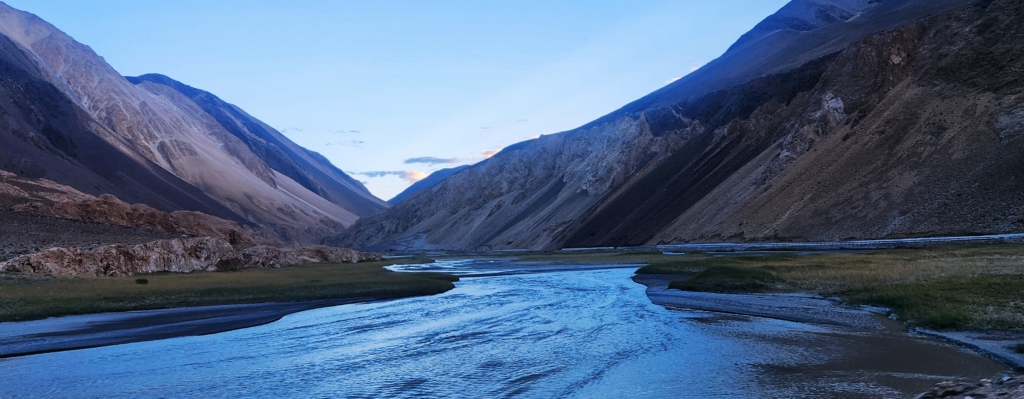
Sharing the road with these men, hearing their stories, and witnessing their camaraderie was a humbling reminder of the resilience and sacrifice woven into the fabric of Ladakh’s rugged terrain. For a brief moment, we were part of their journey, just as they were a part of ours, bound together by the ever-changing, unpredictable roads of the Himalayas.
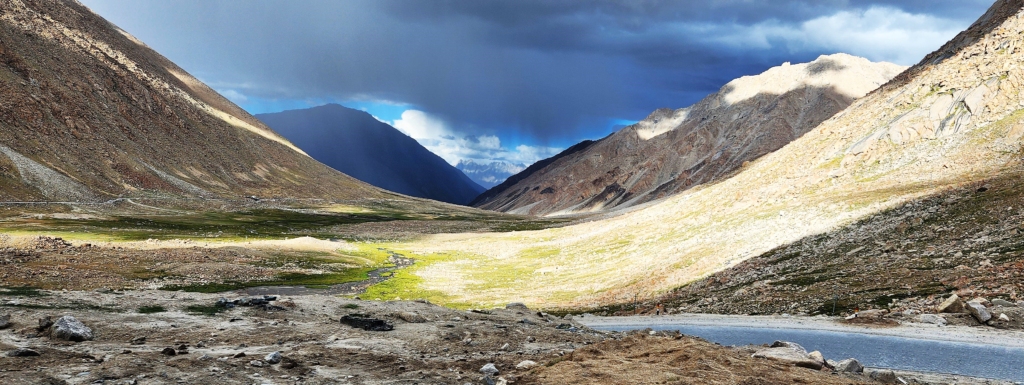
Durbuk
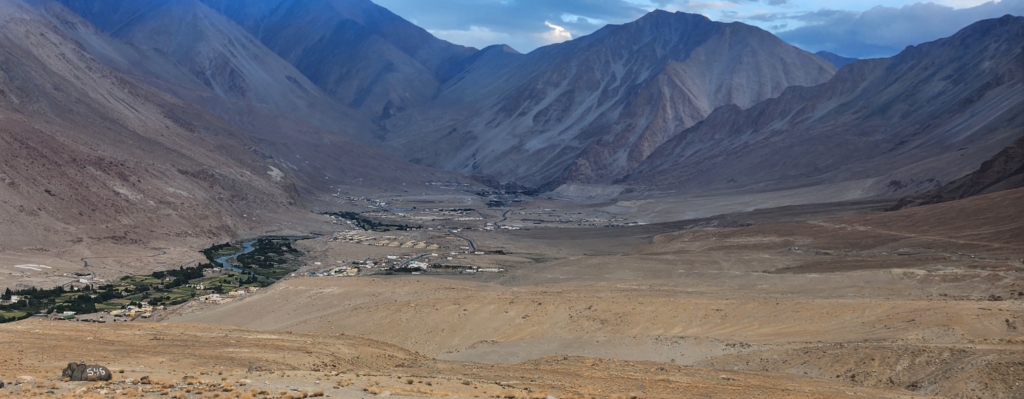
We dropped our newfound army friends at Durbuk, a quiet village nestled at 12,500 ft, just before the enchanting Tangste Valley.
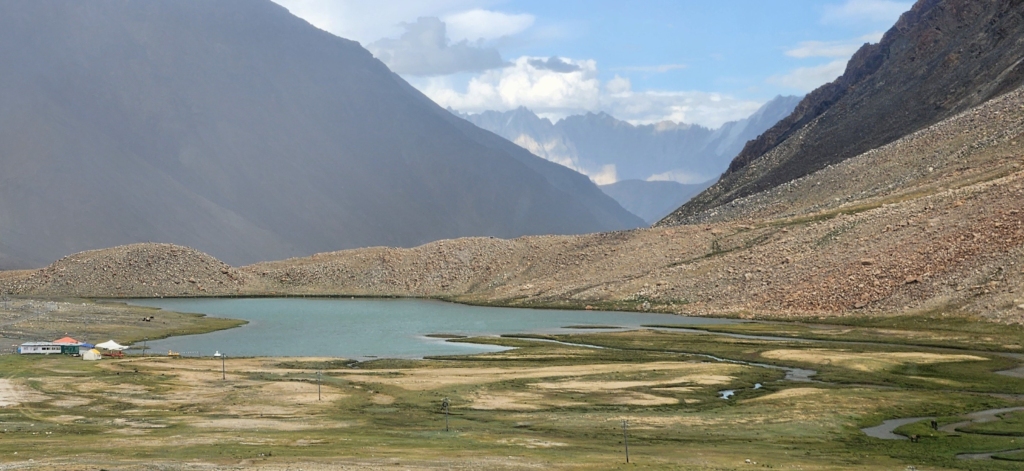
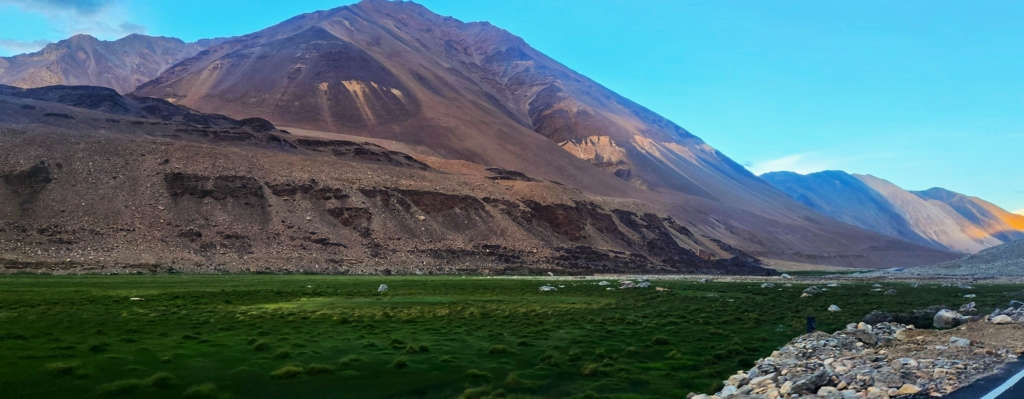
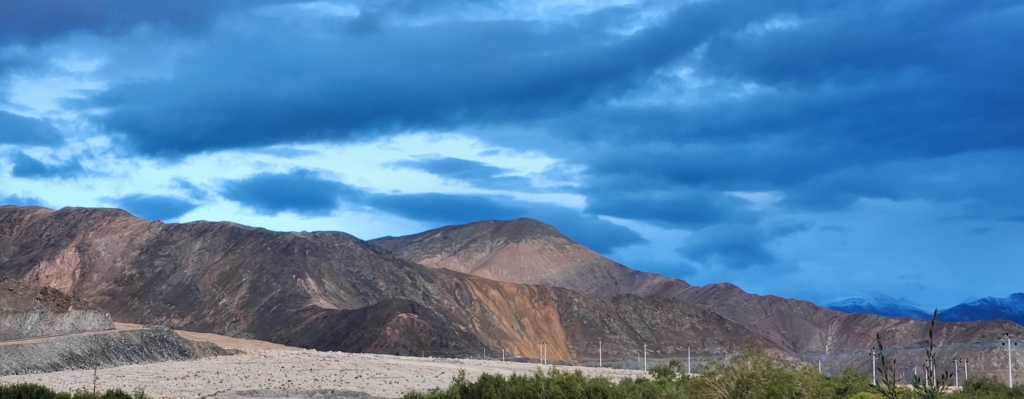
As we continued on, the sky darkened slightly, and a soft drizzle began to fall, dusting the rugged landscape with a refreshing coolness. Out of nowhere, a delicate rainbow arched, a fleeting but perfect moment of colour against the barren hills. We took it as nature’s way of welcoming us into the ethereal embrace of Pangong Tso.

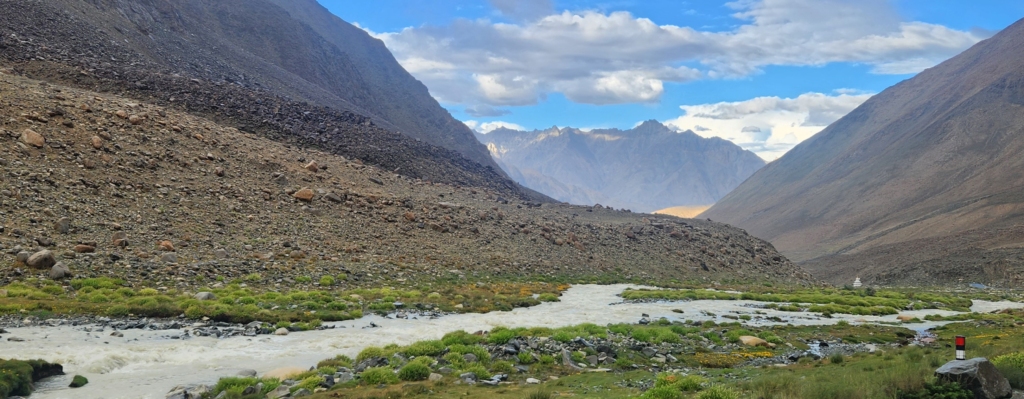
Along the way, we passed a few local villagers, their Pashmina sheep grazing peacefully against the backdrop of the valley. Black, hairy yaks meandered through the fields, a quintessential part of Ladakh’s landscape. Interestingly, the yaks here were noticeably slimmer compared to their bulkier counterparts we’d seen in Sikkim, perhaps better adapted to Ladakh’s harsher, more arid terrain. The sight of these hardy creatures, grazing in the shadow of towering peaks, reminded me of the timeless bond between the people, the land, and the animals that thrive in these high-altitude wildernesses.


With every mile, we drew closer to Pangong Tso, feeling a sense of excitement and peace at once, as the beauty of Ladakh unfolded in ways only the road can reveal.
Pangong Tso
As we drove through Durbuk, the first glimpse of Pangong Tso took my breath away. The lake’s surreal beauty shimmered before us, though I knew my mobile camera couldn’t capture its true essence. According to Google Maasi, our homestay in Merak was still an hour away, but anticipation pulsed through the air.


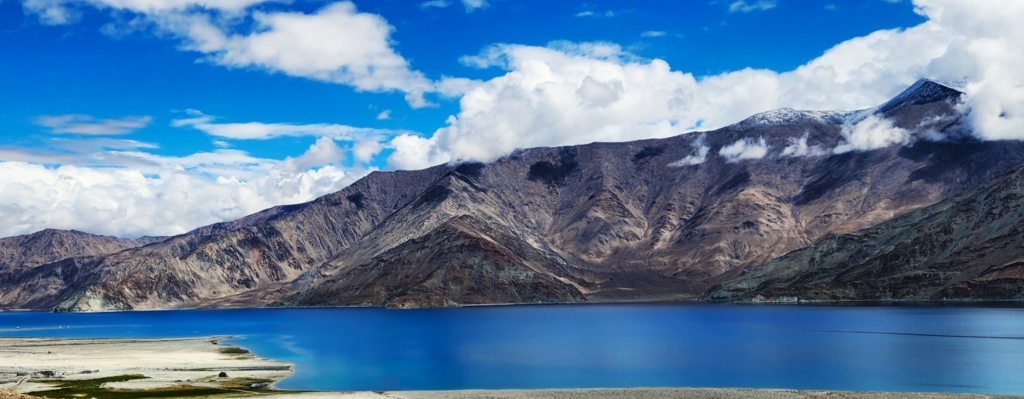
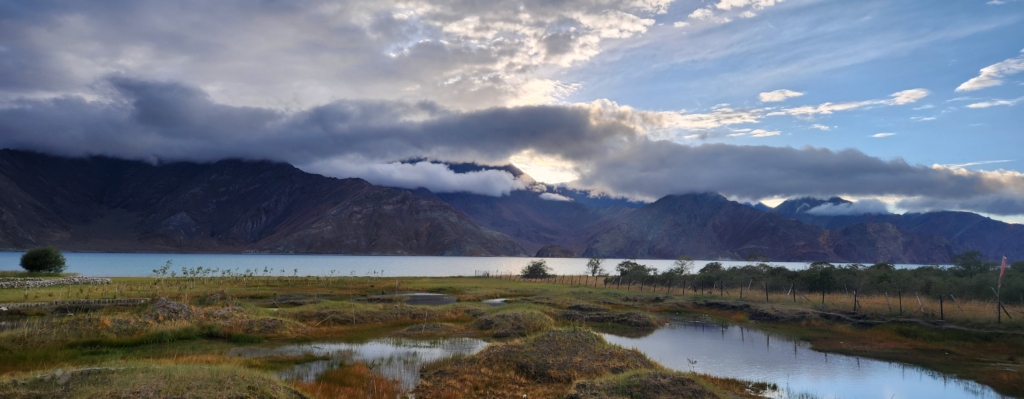
Arriving at the banks of Pangong Tso, we were greeted by an endless expanse of London Blue water that seemed to stretch into infinity. I’d heard from fellow travellers that the lake’s colours could shift dramatically – from azure to soft blue, green, and even grey – depending on the season and time of day. Its mesmerizing turquoise waters have captivated tourists for decades, especially since the film 3 Idiots showcased its stunning landscapes. Today, the evening light cast an indigo blue hue over the lake, blending seamlessly with the approaching dusk. It was a delightful conundrum – whether the sky was mirroring the lake or if the lake was echoing the sky; they seemed to mirror each other in a beautiful dance.


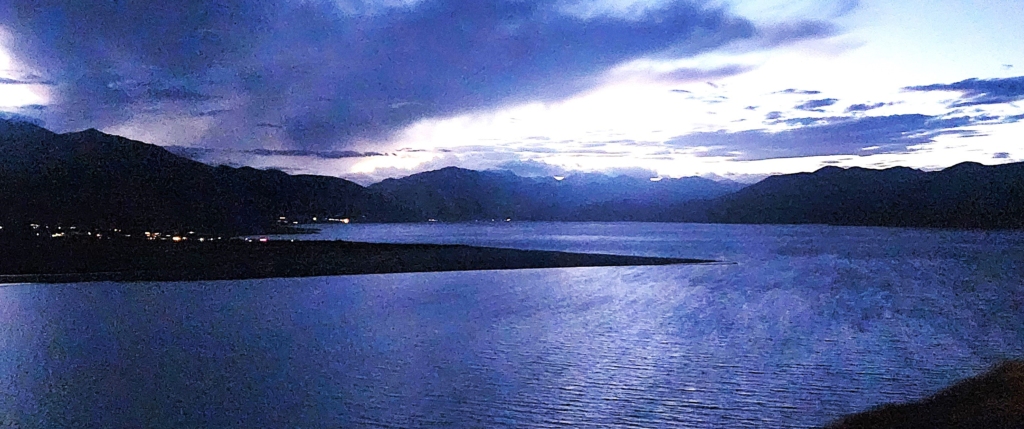
At an altitude of 13,800 ft, Pangong Tso translates to “high grassland lake” in Tibetan. As we entered the region, the sun was poised to dip behind the mountains.
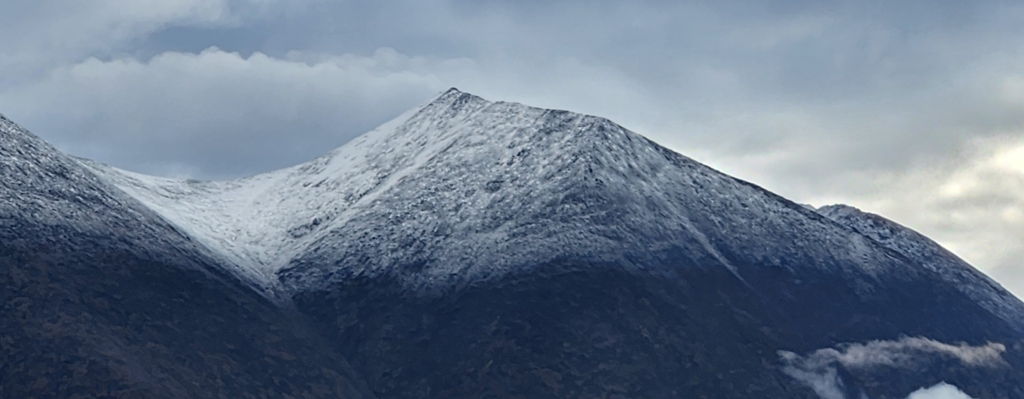
I felt a pang of regret for being an hour late to fully soak in its tranquil beauty.Danish, visibly weary from the long day’s drive, was focused on the road ahead. The barren mountains surrounding the lake formed a stunning backdrop, their layers of color contrasting beautifully with the deep blue waters, while the last remnants of snow clung to the mountain peaks like a delicate Pashmina shawl.

On our side of the lake, several villages lined the road, offering a variety of accommodation options for the growing number of visitors. The area has transformed into a bustling settlement to cater to the influx of tourists, though fortunately, August wasn’t peak season. The recent closure of the Shyok road had also reduced the flow of travellers. For those of us on tight itineraries, the opportunity to revel in the lake’s timeless beauty was fleeting. I found myself yearning for a deeper connection with this enchanting place.
Luckily, the other side of the lake remains untouched by development, preserving its pristine charm. As I gazed out over the shimmering waters, I felt a profound appreciation for the untouched wilderness that lay before me – a reminder of nature’s ability to inspire awe and wonder.
Suddenly, darkness enveloped us, and reaching our homestay became our top priority. Sonam, our host for the night, had given clear instructions to follow the main road all the way to his house. In Merak, there’s no mobile network, so we were relieved to find our homestay without a hitch. Nestled in a cozy nook, Sonam’s family welcomed us with open arms, having prepared a delightful spread for dinner.
Sonam’s new house, with its four bedrooms, stood adjacent to his old home, where the kitchen and dining area were located. I must say, Sonam’s wife was an exceptional cook. Behind their home sprawled a large agricultural field that she tended to diligently. The next morning, Sonam needed to hurry to Leh for his weekly grocery shopping; he also had a winter house there.

After the meal, we gathered outside under the vast open sky, the cool breeze wrapping around us as we delved into local tales about Pangong Tso. The clouds hung overhead, dashing our hopes of capturing the Milky Way yet again, but the serenity of the moment made up for it.

Sonam shared fascinating insights about the lake, revealing that it stretches over 130-km. in an “S” shape. He pointed out that the LAC runs through the lake, with more than 50% of its area now lying in the Aksai Chin region. Interestingly, due to the natural topography, water from Pangong Tso doesn’t drain into any rivers; it sits enclosed within a bowl, nourished by the melting snow from the surrounding mountain ranges. As I pictured the lake on a map back in Mumbai, I realized that its volume is likely distributed fairly equally between Ladakh and Aksai Chin. The total area of the lake spans about 700 sq. km. – comparable to the vast Siachen Glacier. Having driven along the lake for roughly 30 km. and only covered a fraction of its expanse, I could now appreciate the sheer enormity of Siachen Glacier.
Not Every Lake Dreams To Be An Ocean
Blessed Are The Ones Who Are Happy With
Whom They Are
These lines written by Mehmet Ildan: “Not every lake dreams to be an ocean” suggests that not all things or people aspire to be something bigger or different; they are content with their current state. The follow-up, “Blessed are the ones who are happy with whom they are”, reinforces this idea, highlighting that true happiness comes from self-acceptance and finding contentment in one’s own identity and circumstances, rather than constantly striving to be something else.
In essence, the message is about the beauty of being satisfied with who you are, without the pressure to conform to external expectations or comparisons.
Sonam continued, explaining that like Pangong Tso, most lakes in Ladakh are saline, although various theories abound regarding their salinity. He mentioned that during the colder months, the lake freezes completely, allowing people to walk across its icy surface. Pointing to a faint light flickering in the distance across the lake, Sonam casually remarked that it marked the Aksai Chin area, which had been annexed by China. I suspected he was spinning a tale to spark our curiosity, as the border felt quite distant. But maybe he was right – there was only one way to find out, and that would have to wait for another adventure.
The evening air was thick with intrigue, history, and beauty of Pangong Tso, creating a perfect backdrop for a night filled with stories that transcended the mere act of travelling.

As the conversation turned to the recent India-China conflict, Sonam elaborated on the mountains lining across the lake, which slope down to the shores and form spurs known as “fingers.” He mentioned there are eight such fingers along the lake, areas that remain sensitive along the LAC. Because the LAC is a notional line and not formally agreed upon by either country, disputes frequently arise over military patrol positions. With a twinkle in his eye, he shared spicy stories that only a local would know, giving us a glimpse into the complex tapestry of history and tension that envelops this stunning region.

As we prepared to retreat to our rooms, a petite woman emerged, limping slightly as she searched the night sky for stars and the Milky Way. We exchanged greetings, and she introduced herself as a South Korean citizen. Earlier that day, she had twisted her ankle while wandering along the lake, and we felt a pang of sympathy for her. Despite her discomfort, she had managed to bandage her injury with resilience.
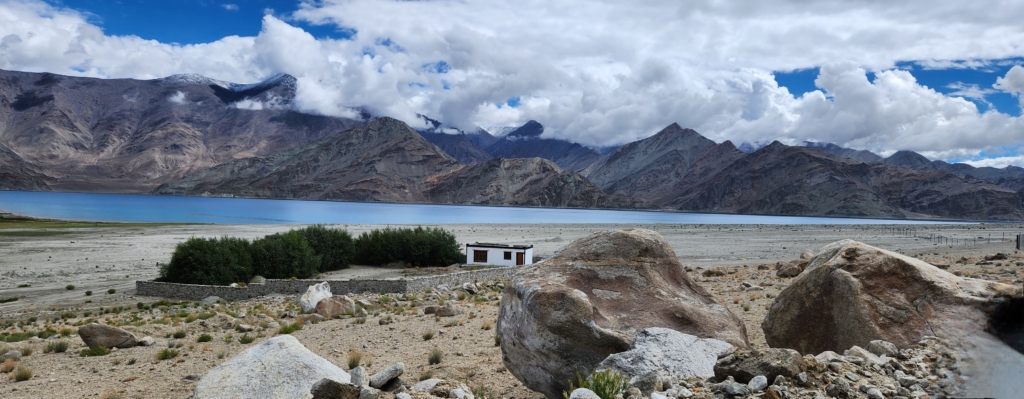
She was a social science teacher at a government school in Seoul and shared that 3 Idiots was a beloved movie back in Korea, appreciated for its heartfelt story and humour. Her sole purpose for visiting India was to see Pangong Tso and capture a photograph sitting on famous ‘bum seats” to share with her students. She wanted to convey the film’s message through her photos, blending her travel experiences with a modern teaching approach. I admired her noble intent – using trending social media content to inspire her students was a clever and relatable method.
Exhausted from the day’s adventures, we decided to call it a night, planning to explore Pangong Tso at dawn. Before parting ways, we wished her well on her return journey.
Day 8 (Part 1) – Pangong Tso
I awoke early to a chilly morning, the village still wrapped in deep slumber. Here, mornings don’t truly begin until around 7 am. Eager to embrace the tranquillity of the landscape, I set off on a long walk along the road, ready to witness nature playing with its vibrant colours. The birds had already started their day, flitting about in search of their morning prey.
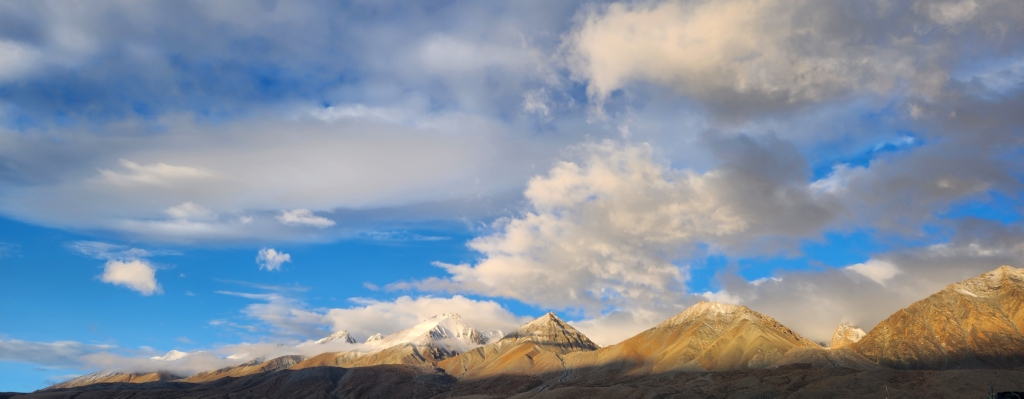

Right in front of our homestay lay a government-owned orchard, while behind us stretched lush agricultural fields, which eventually gave way to the majestic mountains, their peaks dusted with a light layer of snow. Unlike the jagged terrains of Nubra Valley, the mountains here were smoother and more rounded, likely much younger than the Saltoro and Himalayan ranges. The waters of the lake seemed indecisive, contemplating which gown of color to wear for the day. As the sun played peek-a-boo with the clouds, the mountains cast gentle reflections on the lake’s surface. It was clear we needed a couple of days to fully soak in the vibrancy of this place.


But my visit was rushed. In hindsight, we could have easily extended our stay by a day, cutting short our time in Hanle. With no mobile network in Merak, I wasn’t keen on the hassle of rearranging our travel plans. I definitely owe it to myself to return to Pangong Tso.
Just then, the South Korean teacher limped outside, eager to soak in the beautiful atmosphere. She was feeling much better. We gathered for breakfast together, snapping a few photographs with Sonam’s daughter. I shared some chocolates with her, and in a playful exchange, the South Korean teacher gifted Sonam’s daughter even more chocolates. It seemed to be her day, basking in the warmth and affection showered upon her.


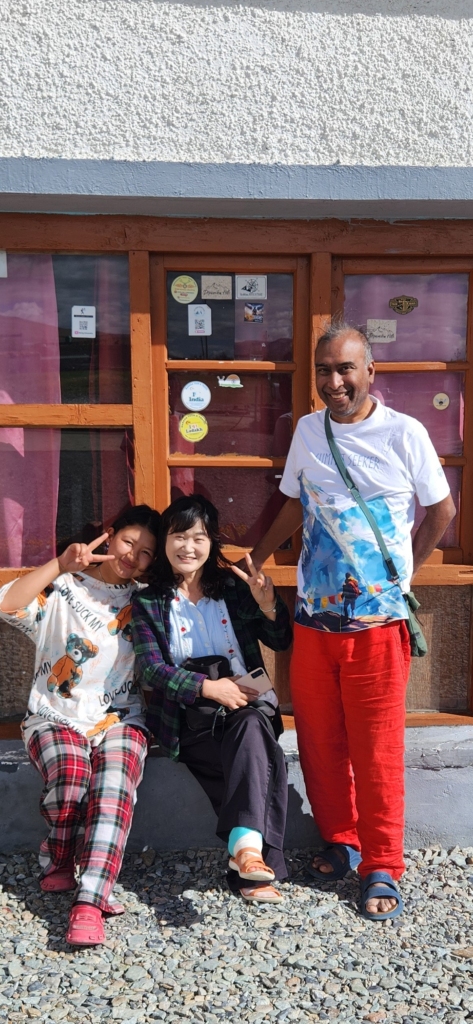
With Sonam heading off to Leh and us setting our sights on Hanle, we bid a reluctant farewell to the enchanting Pangong Tso, already dreaming of the next adventure that awaited us.
August 2024
If you’re planning a trip to Pangong Tso or explore Ladakh, we at HappyHorizon would be thrilled to curate your holiday plans to enhance your travel experiences. Feel free to reach out to us: connect@happyhorizon.in
Day 8 (Part 2): Rezang La – Read More
Gallery

Sukumar Jain, a Mumbai-based finance professional with global experience, is also a passionate traveler, wildlife enthusiast, and an aficionado of Indian culture. Alongside his career, which includes diverse roles in international banking and finance, he's working on a wildlife coffee table book and enjoys sculpture and pottery. His interests span reading non-fiction to engaging in social and global networking.

