Day 10 (Part 1): Puga Hot Spring – Read More
Day 10 (Part 2): Tso Moriri / Karzok
Puga (Rushpo Valley) – Kyagar La / Tso – Karzok: 150 Km. / 4 Hr. / Altitude: 15,000 ft. (Karzok)
Rushpo Valley
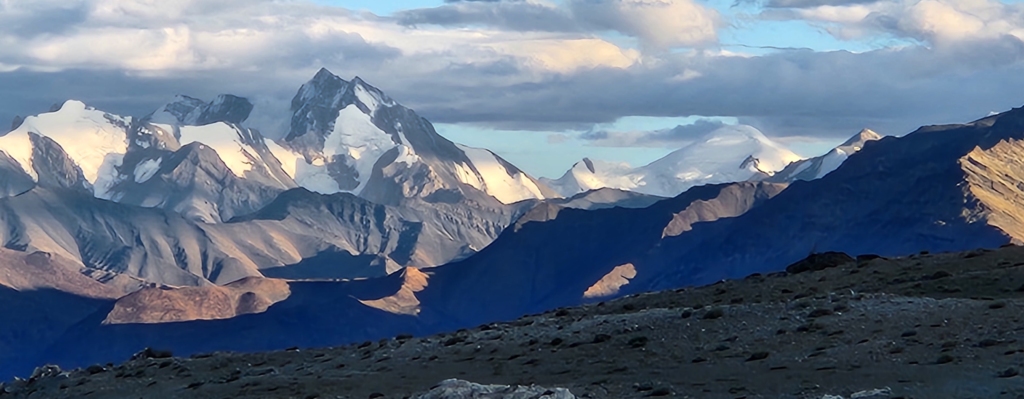
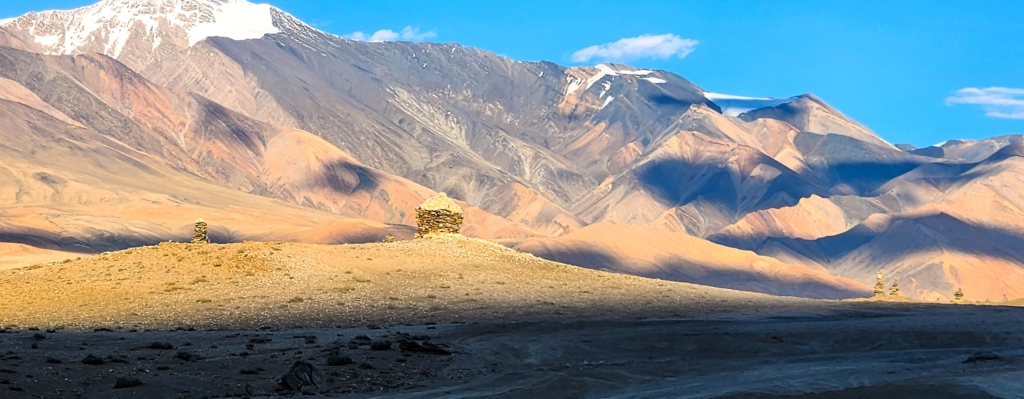
Overwhelmed by the natural beauty and the warmth of the people in Rushpo Valley at Puga, we decided to press on toward Tso Moriri / Karzok village. The Rushpo valley’s floor stretches wide, encircled by bare, smooth hills that rise gracefully.
The valley is cradled by mountains that ascend between 2,000 and 5,000 ft. above. Together, these expansive, elevated valleys form the mesmerizing uplands or tablelands of Rushpo.
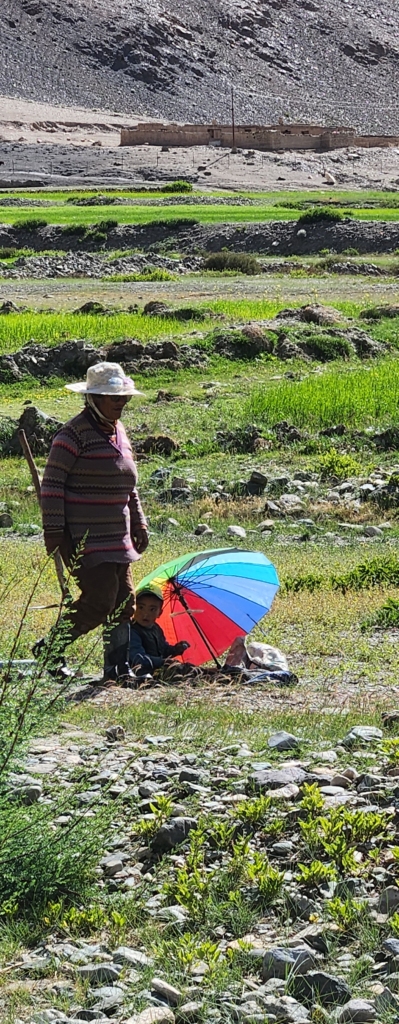
As we took diversion at Sumdo and drove towards Karzok a simple scene caught our attention – a local woman tending her field, with her young child seated patiently under the shade of an umbrella.
We shared chocolates with the child and captured the moment in photographs, a slice of life along this rugged road.
Kyagar La
As we ascended Kyagar La, the incline was so gradual we hardly noticed the change. Compared to the dramatic passes we’d already tackled – Zoji La, Khardung La, Chang La, Photi La, and the mighty Umling La – Kyagar La at about 15,400 ft. felt like a soft transition rather than a test of endurance.
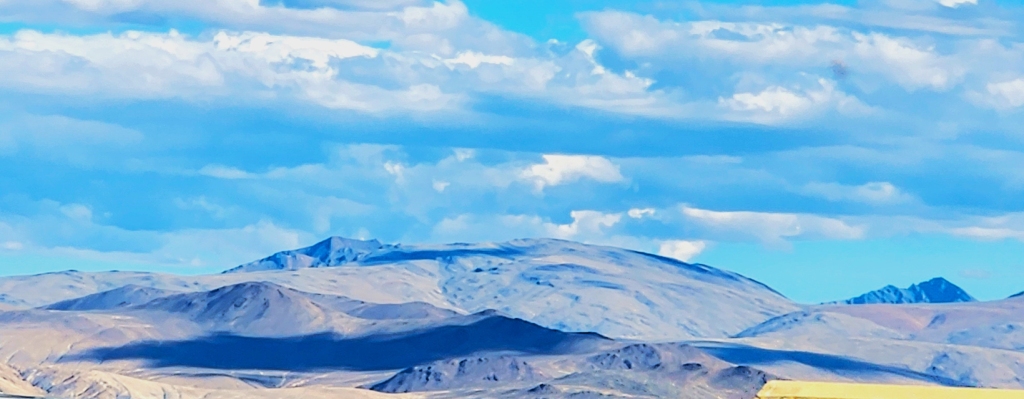
At such altitudes, measured from mean sea level, the incremental climbs felt modest. Already traveling along a high plateau, at an elevation of around 14,000 to 15,000 ft., the surrounding peaks seemed less imposing than usual.
Kyagar Tso
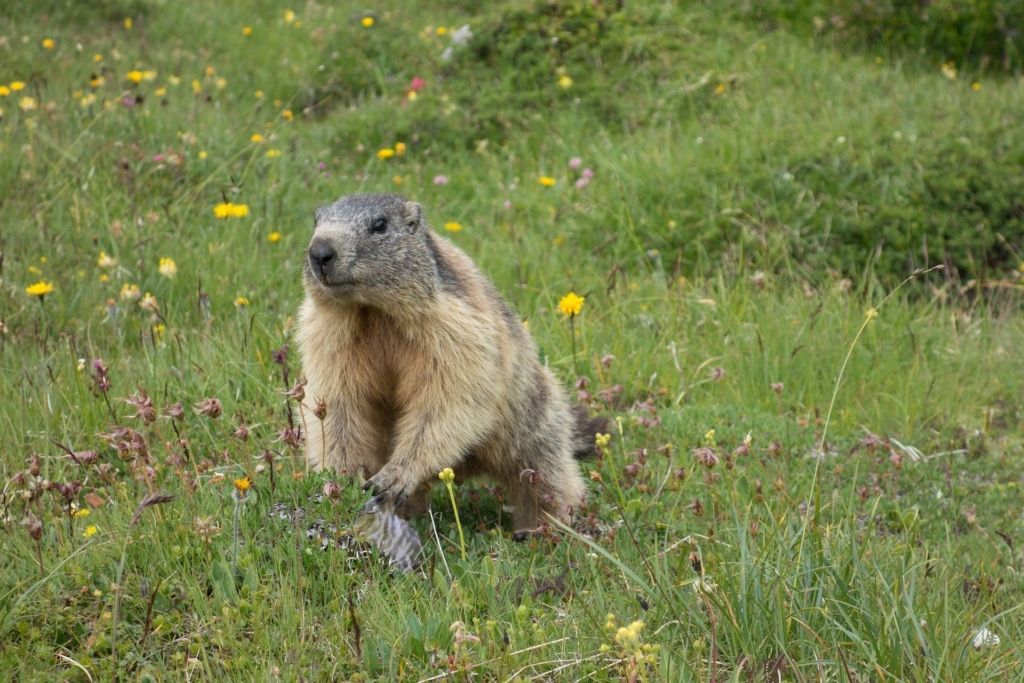
The road from Sumdo to Karzok was utterly desolate, with not a soul for miles. Then suddenly the road brought new, furry companions: marmots darted along our path, members of the squirrel family and undeniably some of the most charming creatures in the region.
They’d pause to stand on their hind legs, observing us with curiosity, or they’d dash boldly between burrows, sometimes running perilously close to the car. Danish drove with extra care, stopping occasionally to ensure they were out of harm’s way.
Despite their numbers, we were surprised not to see any large birds of prey in the sky – an unexpected absence, given the marmots’ plentiful presence.
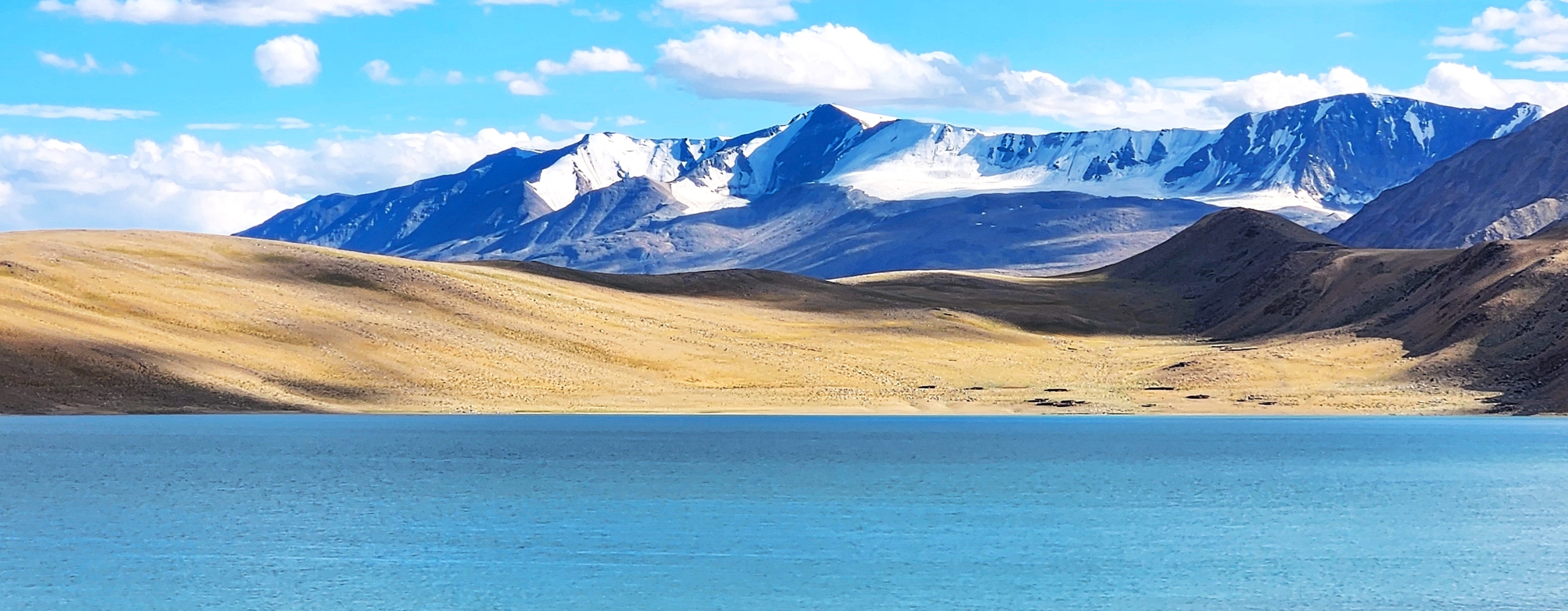
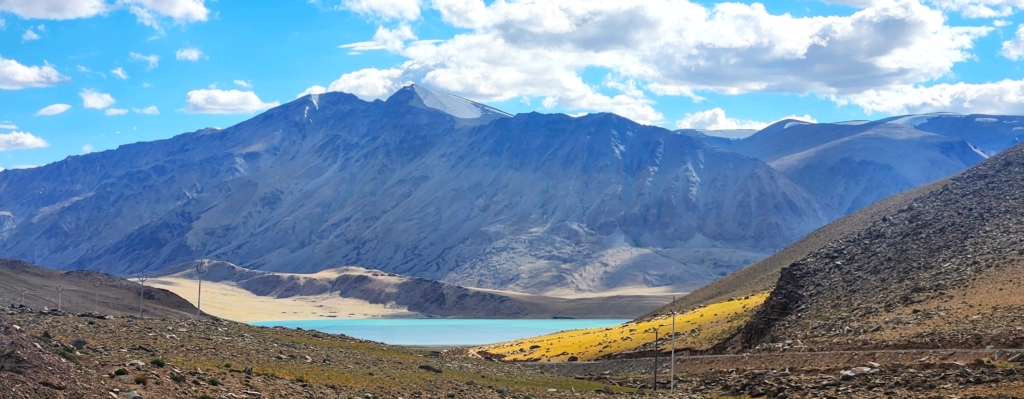
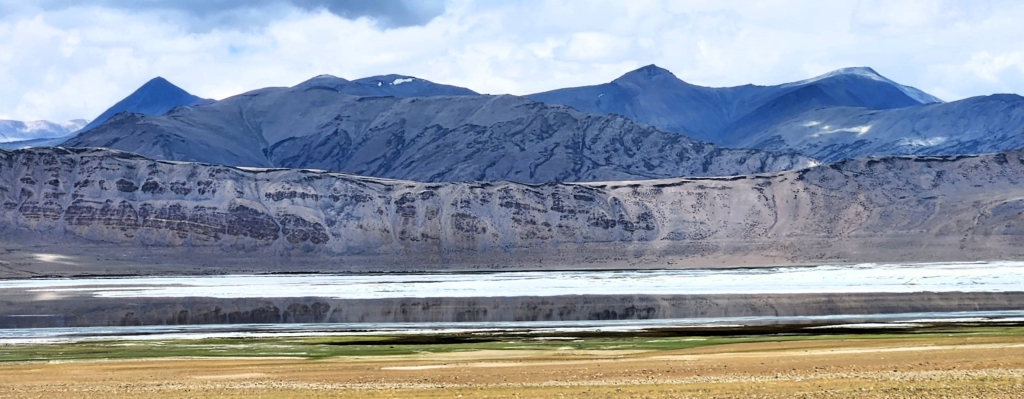
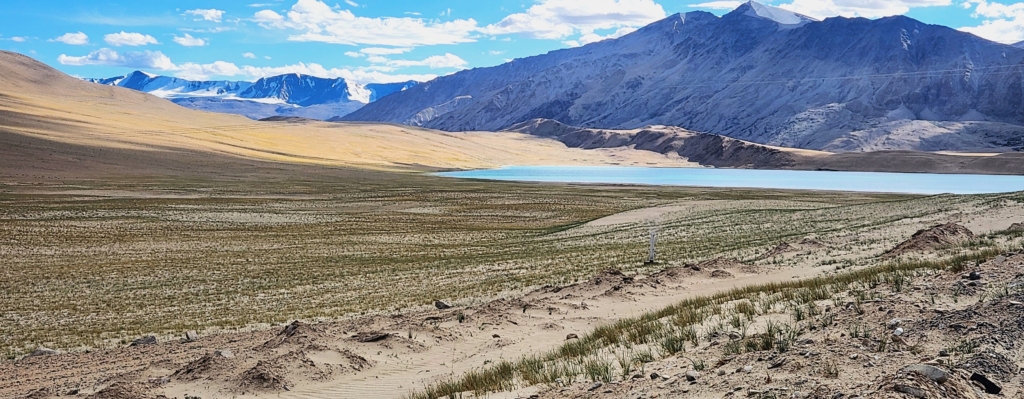
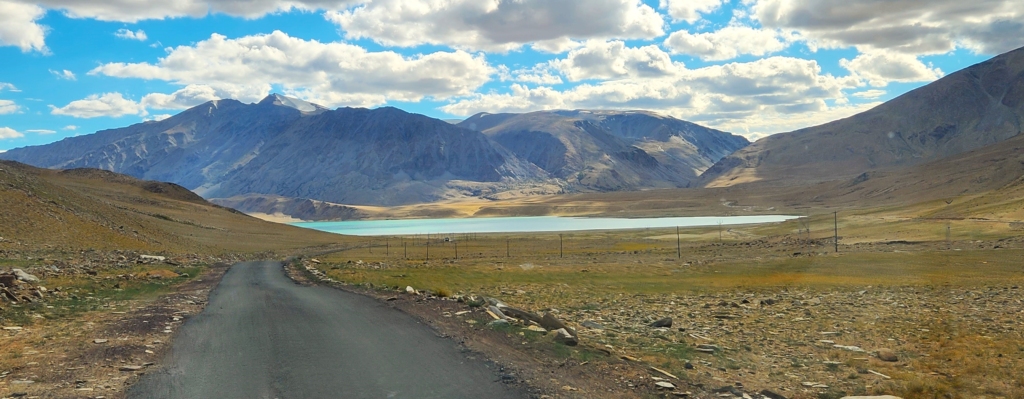
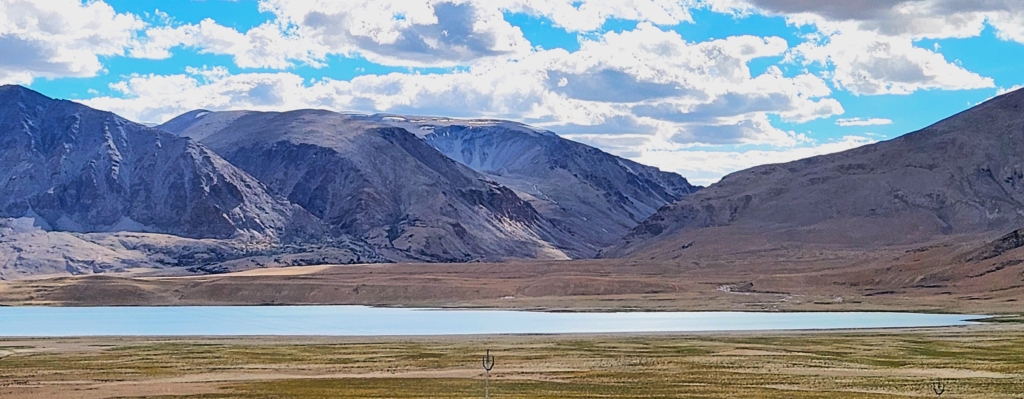
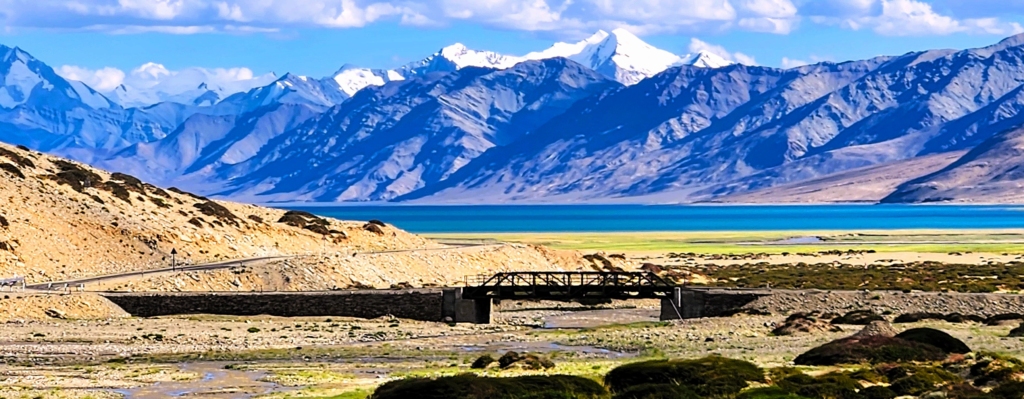
Then, like a jewel in the wilderness, a vivid blue lake appeared in the distance. We thought it might be Tso Moriri, but as we drew closer, we realized it was the smaller Kyagar Tso. Although small we couldn’t resist stopping to photograph this lake against the grand, silent mountains. The vast lake here hosts migratory birds. Sadly, we were a little early for the migration season – just one small miss in an otherwise unforgettable journey.
Tso Moriri
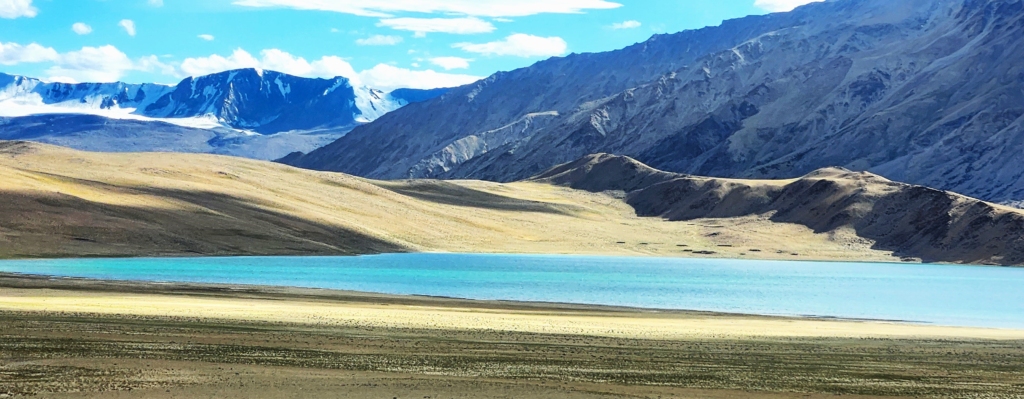
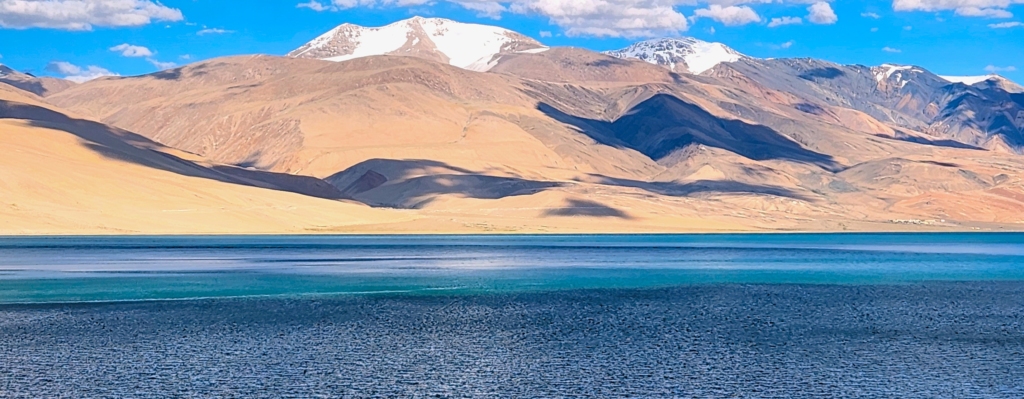
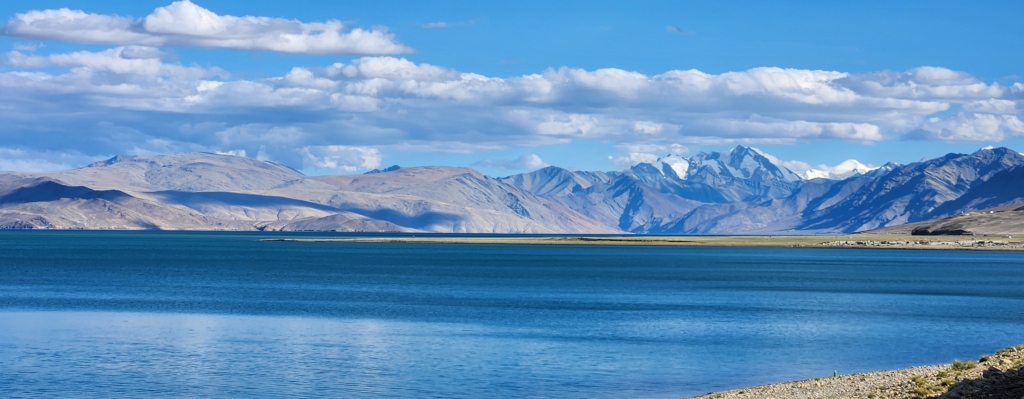
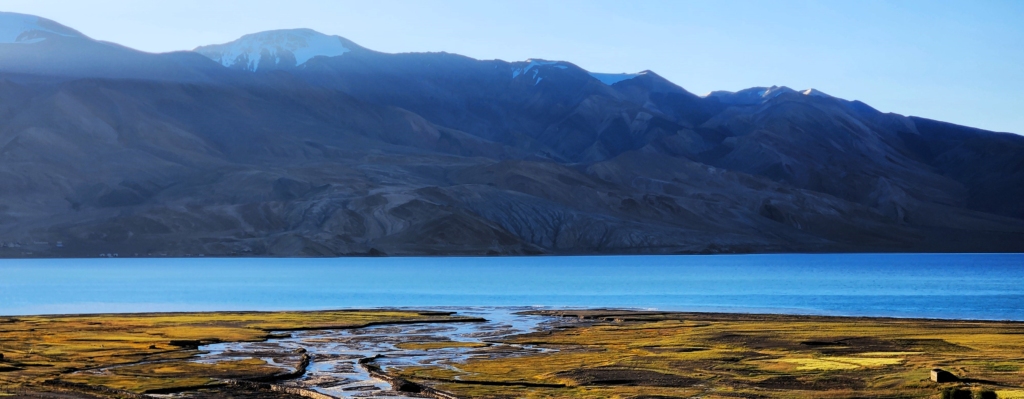
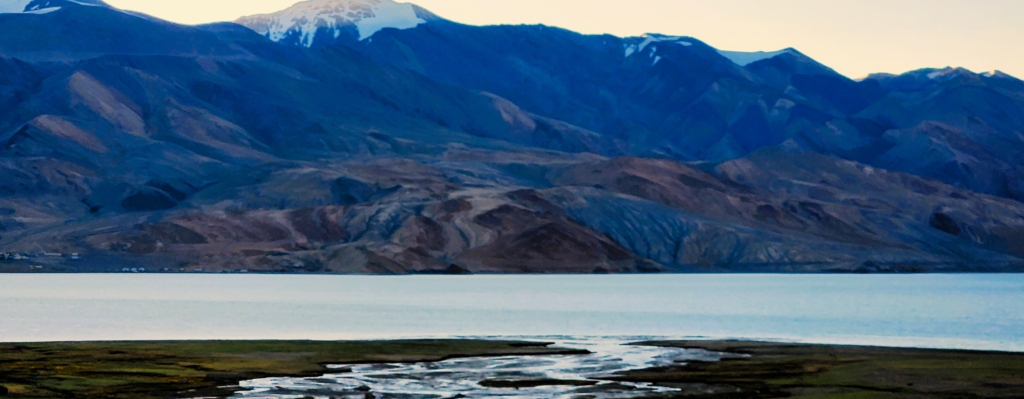
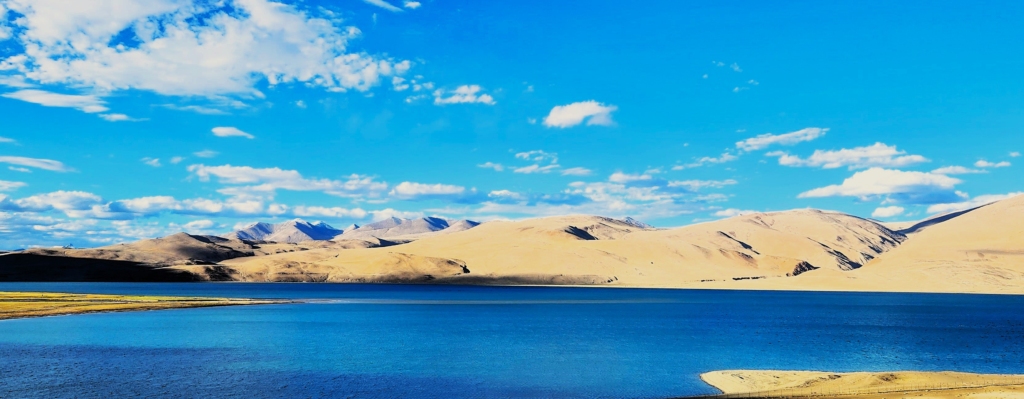
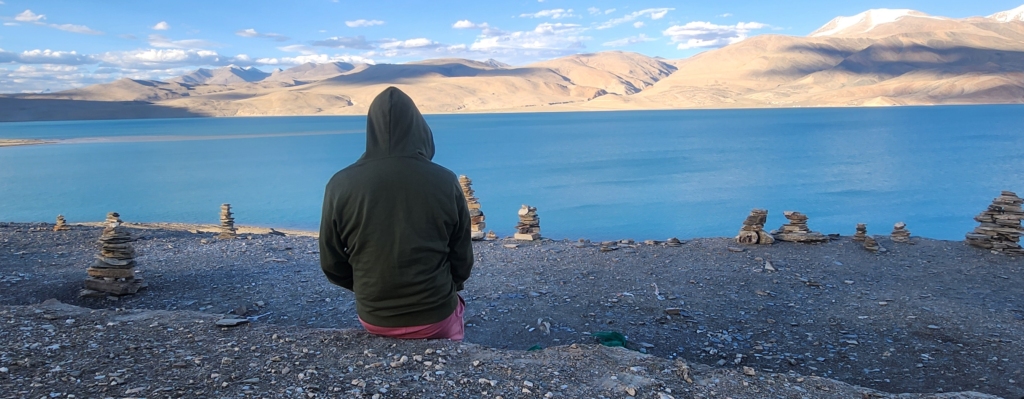
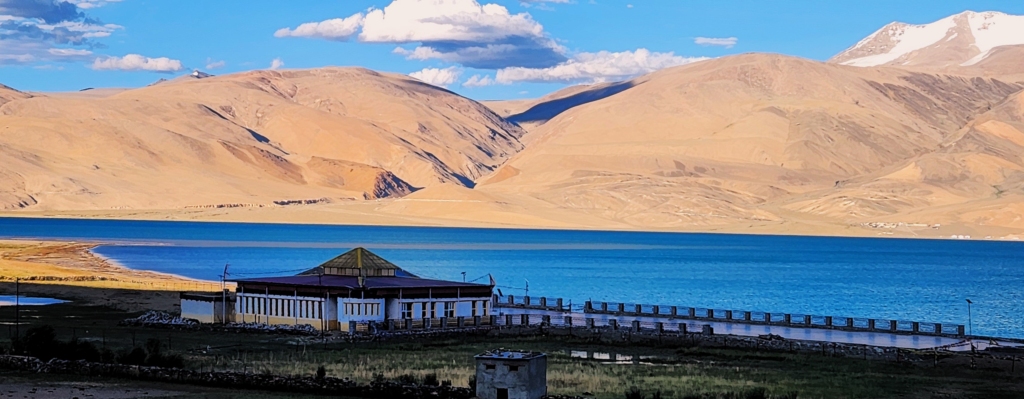
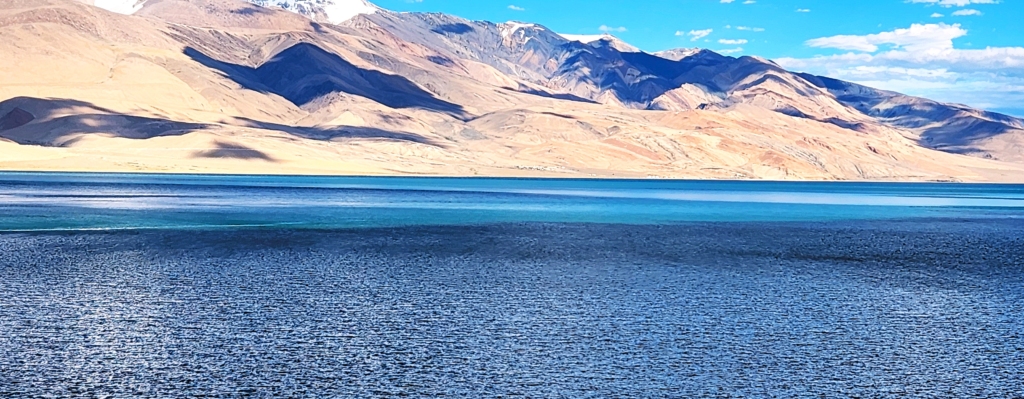
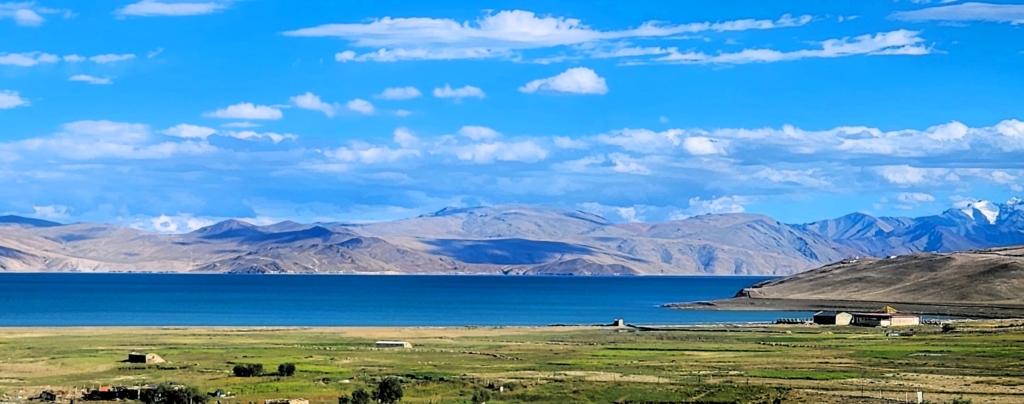
After a short drive from Kyagar Tso, we finally got our first glimpse of Tso Moriri – a stunning, dark blue sapphire cradled in starkly beautiful surroundings. Tso Moriri is undeniably one of the world’s most breathtaking sights. Stretching around 28 km. in length and set at an elevation of approximately 15,000 ft., it is Ladakh’s highest lake. Yet, in my mind, it stands unrivaled, even by the heights of Tsomgo Lake (Changu Lake) in Sikkim, which I visited earlier this year at 17,400 ft.
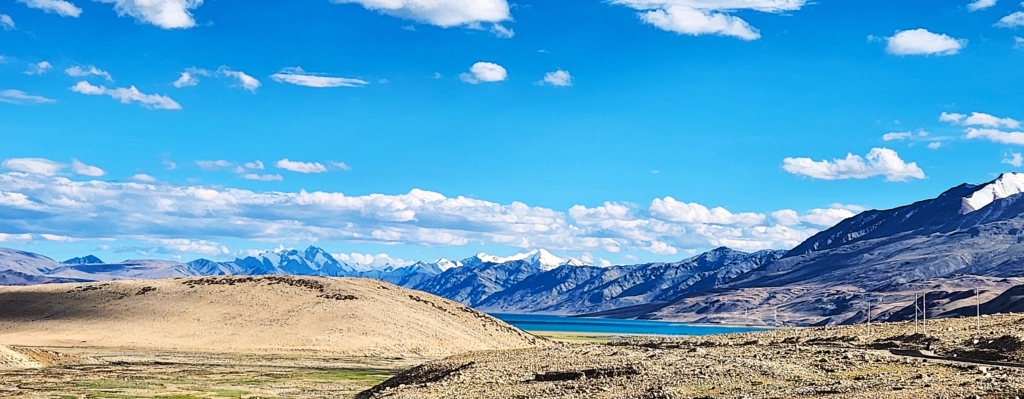
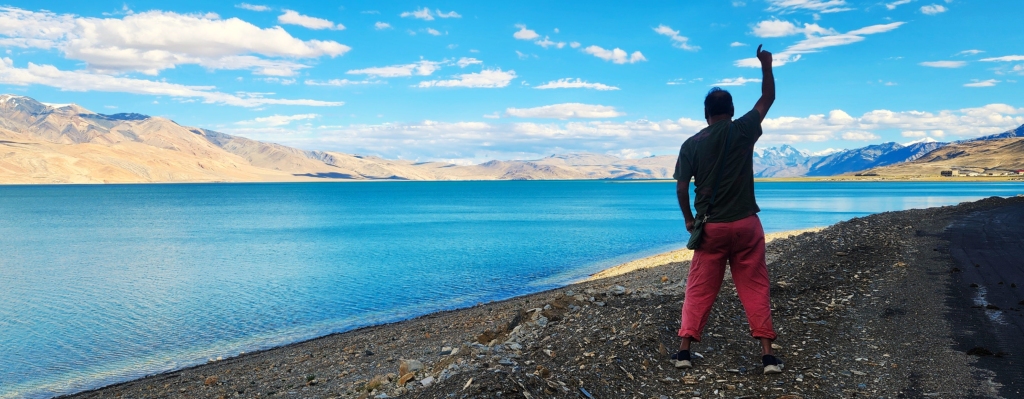
The sheer beauty and vastness of Tso Moriri momentarily made me forget the altitude altogether; it felt as if we had truly found paradise. To capture the place’s essence, one would need the words of Mirza Ghalib himself! It’s a pity that Ghalib did not make it to Ladakh. With vibrant mountains embracing the turquoise waters, it felt like stepping into a dream. If I could, I’d make Tso Moriri my summer home.
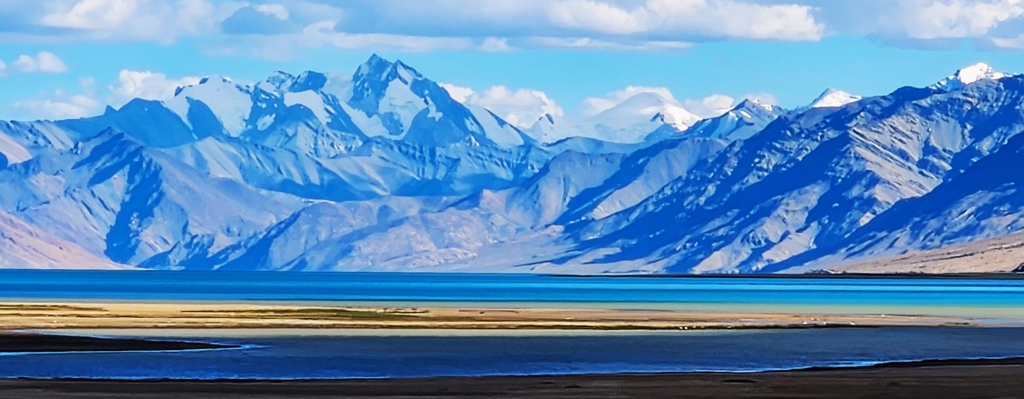
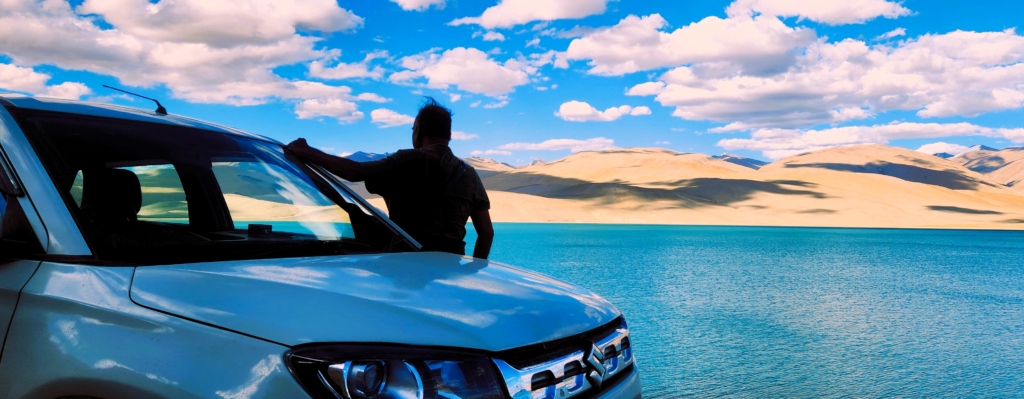
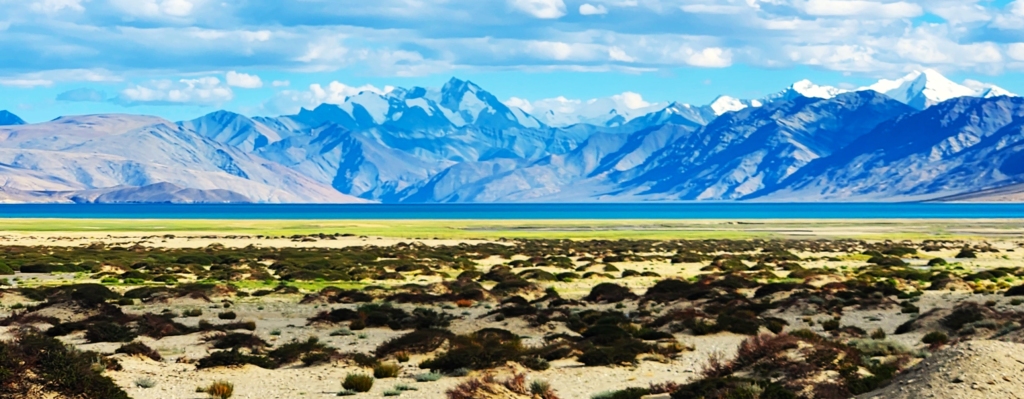
This “mountain lake,” as it’s known, rests within the Changthang Plateau, surrounded by towering peaks. Snow-capped mountains and natural springs feed the lake, which was once open but is now landlocked. Unlike Pangong Tso, Tso Moriri lies entirely within India, adding to its sense of solitude. Known formally as the Tso Moriri Wetland Conservation Reserve, this area is protected, and camping or construction near the lake is prohibited to preserve its untouched beauty.
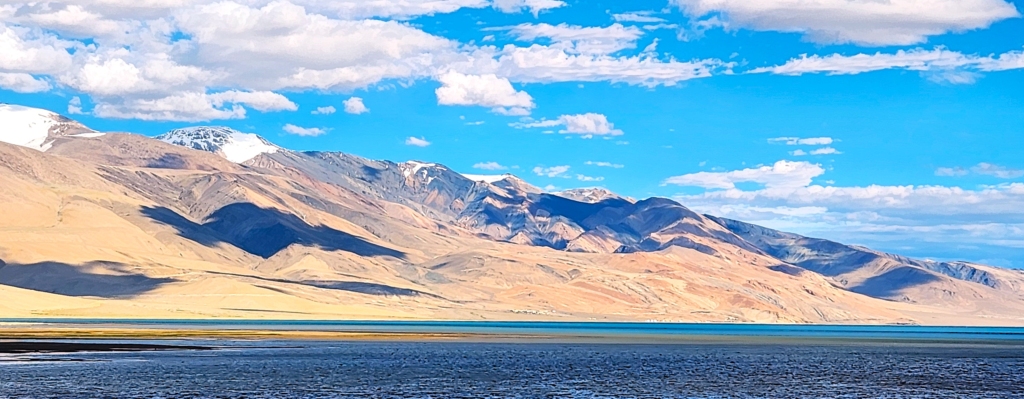
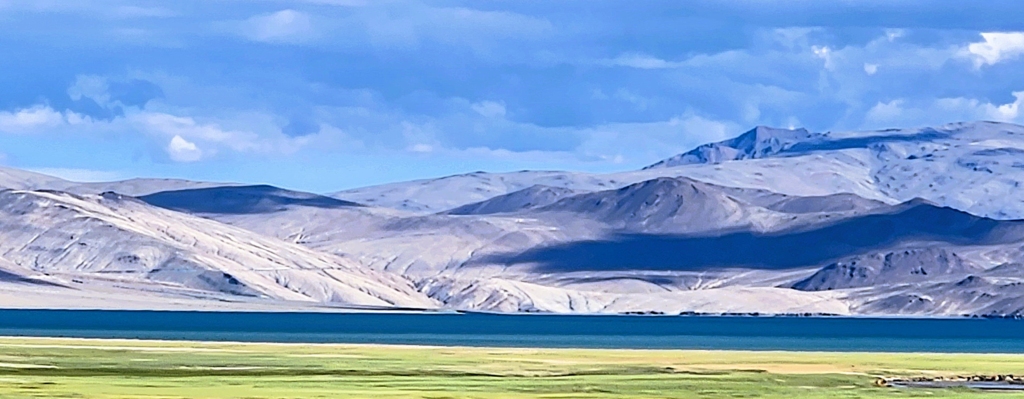
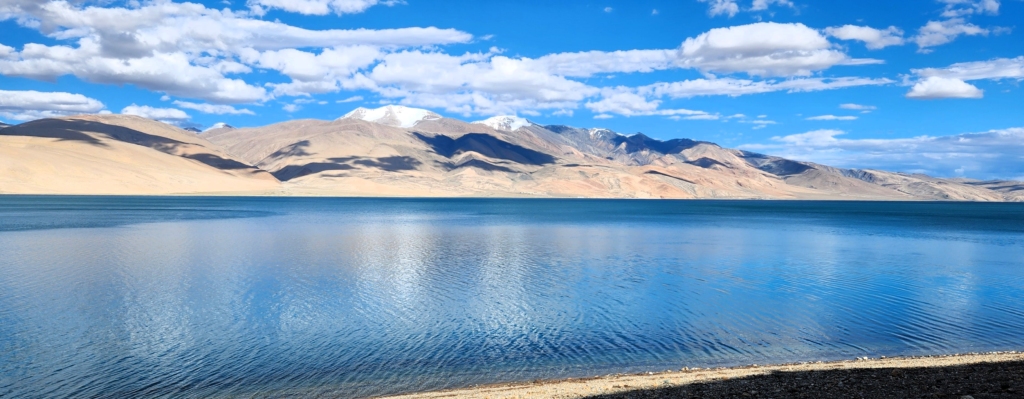
Similar to Kyagar Tso, the remoteness of Tso Moriri attracts a diverse array of migratory birds like black-necked cranes, bar-headed geese, brown-headed gulls, and black-necked grebes. This pristine wetland is designated as a Ramsar site, a rare wetland of international significance due to its unique flora and fauna, as well as its role as a vital breeding ground for water birds. Here, nature thrives undisturbed, lending an almost sacred aura to the lake’s tranquil beauty.
Karzok Village
The quaint village of Karzok, or Korzok, sits nestled on a gentle hill beside the lake. Currently, all accommodations – be it tented camps, hotels, or homestays – are within the village itself, though new lodgings are appearing along the road close to the lake. I can only hope it doesn’t end up overdeveloped, as Pangong has been. Staying in the village, with its sweeping views of snow-capped mountains surrounding the lake, is an experience in itself. One word of caution, though – there is no cell service here.
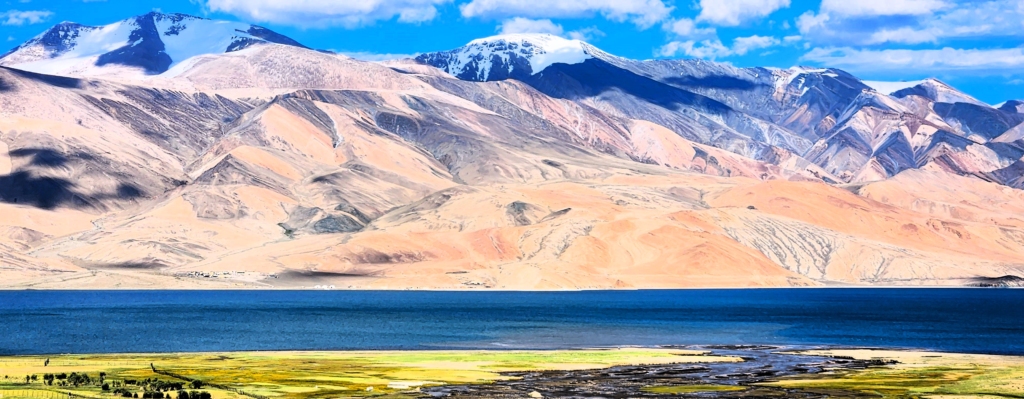
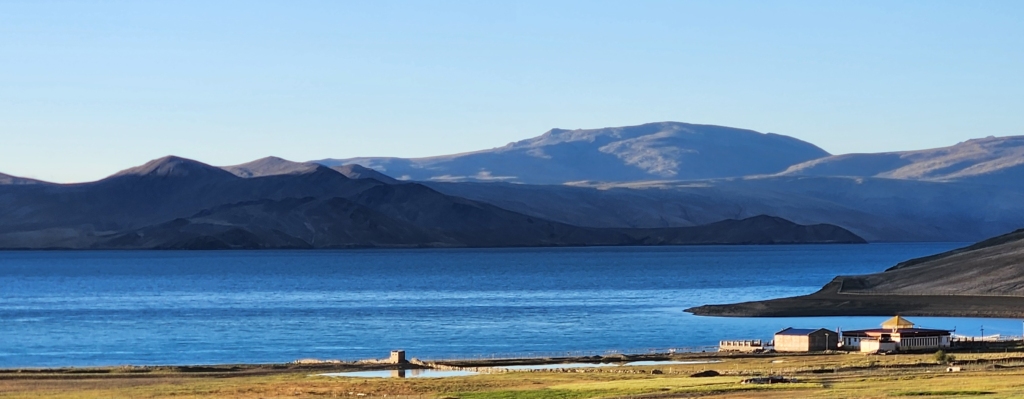
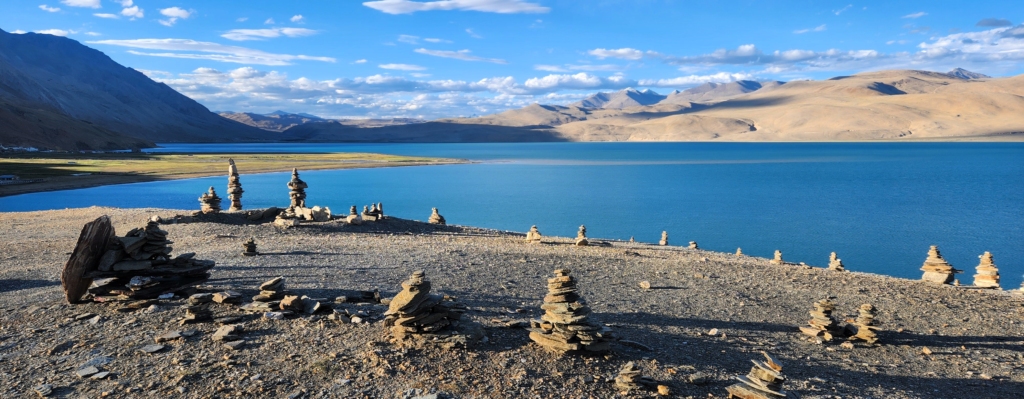
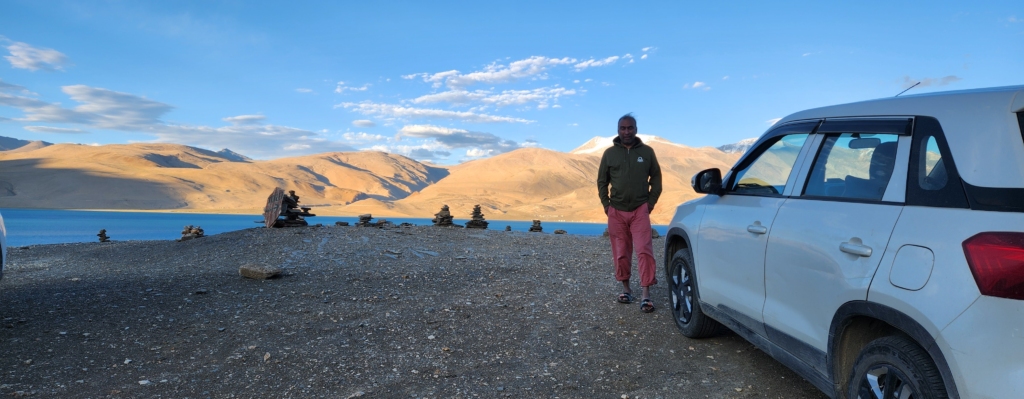
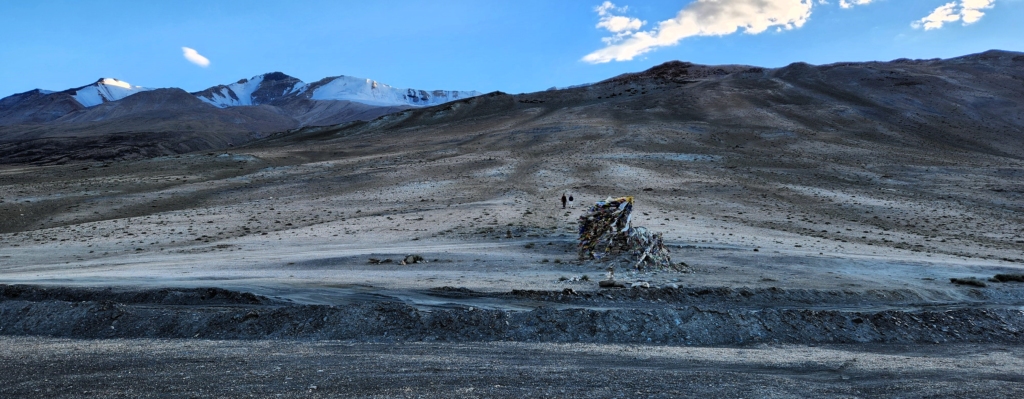
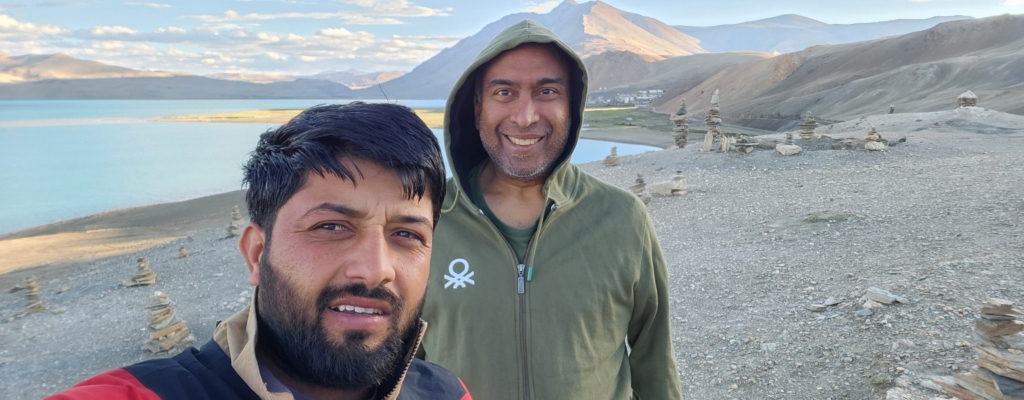
We checked into our hotel right away, and I had booked a room with panoramic views of Tso Moriri – it certainly lived up to expectations. The price was steep, but worth every penny. After a light snack and some local tips from the villagers, we headed to the lake’s viewpoint, a short drive or stroll up a neighbouring hill. The view was nothing short of breathtaking, with Tso Moriri stretching out in serene, blue splendour against the colossal barren mountains.
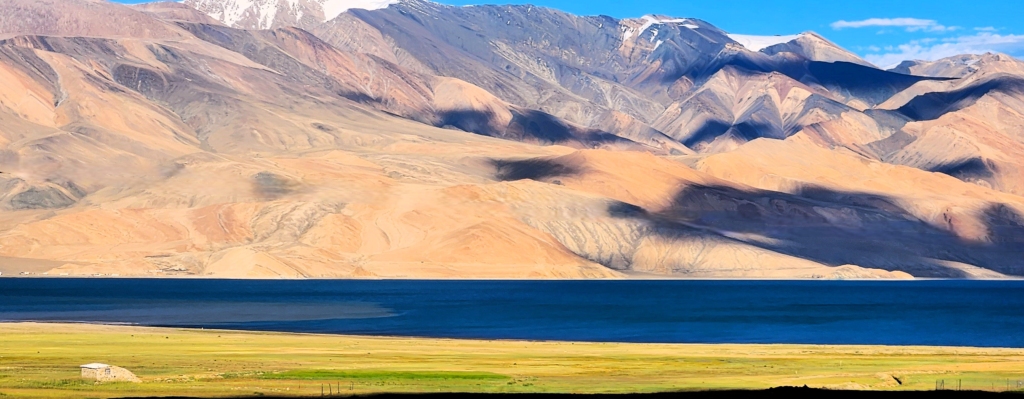
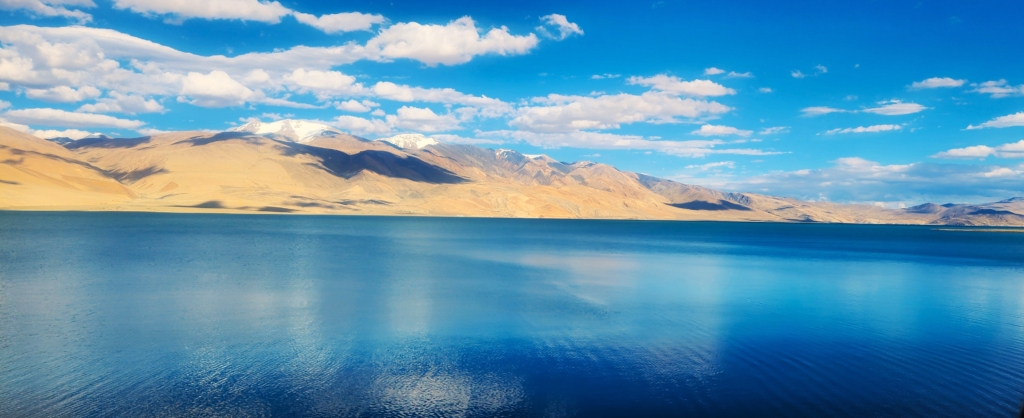
There’s so much to explore in the surrounding area. You can take a gentle trek up a smaller mountain behind the viewpoint for an incredible panorama, or venture down to the lake’s banks to taste its pristine, saline water. We sat there for a while, quietly absorbing the scenery – Tso Moriri, so vivid and dreamlike, resting in the lap of untouched nature. The photos capture a glimpse, but the experience will stay with me far longer.
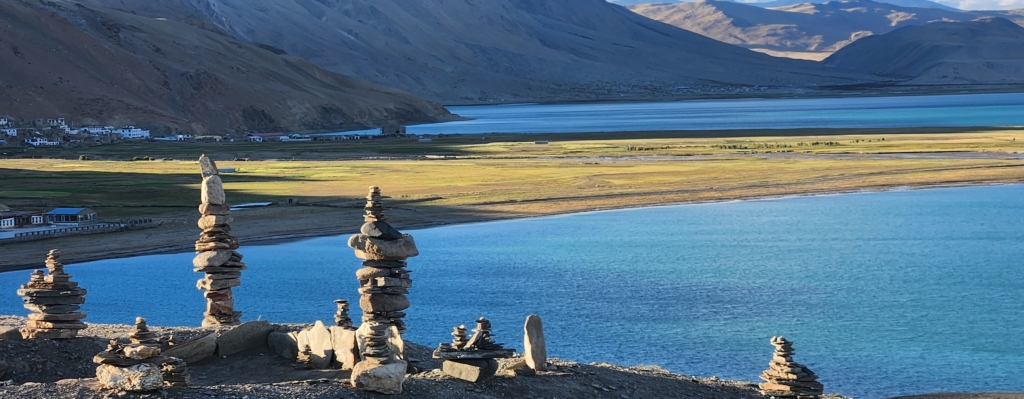
Karzok is also home to nomadic tribes, and in the early mornings or late evenings, you might spot them guiding their herds through the landscape. We tried to catch a glimpse of them on a drive around the village but weren’t in luck.
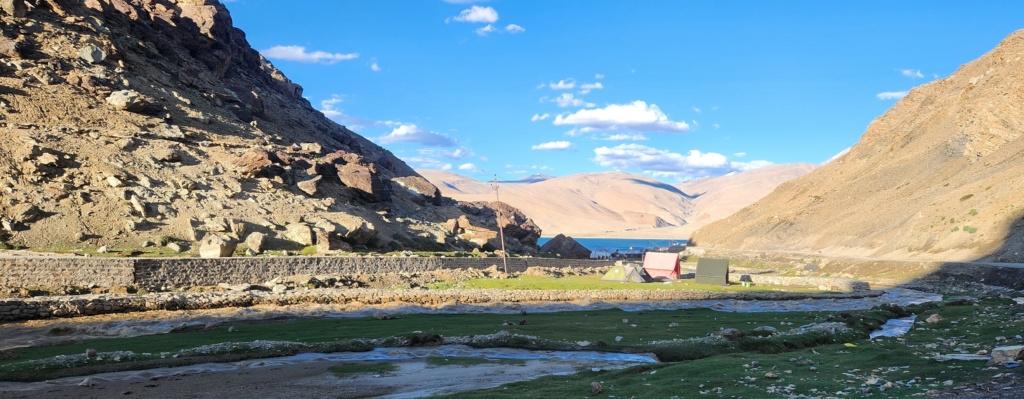
The hotel, though comfortable, was staffed with employees from Himachal Pradesh and Uttarakhand. This is the difference between a hotel and a homestay; hotels often lack the warmth of the host and local stories that make a destination come alive. I couldn’t help but wonder about the tales that locals might share – stories of the La’s (mountain passes) and the Tso’s (lakes) that define this land’s rugged beauty.
Karzok Monastery
On our way back from the viewpoint, we made a stop at the gompa, perched at the far end of the village.
As we walked towards the monastery we met a young lama, who graciously offered us a brief tour. He shared that this monastery, nearly 350 years old, draws Buddhist devotees from all over Ladakh.
Its main attraction, he explained, is the annual “Karzok Gustor” festival, a vivid celebration of Buddhism’s triumph of good over evil. During the festival, masked dancers in elaborate costumes embody the guardian deities of Buddhism. “Jhabro,” the traditional Changpa music, sets the stage for mesmerizing performances that retell ancient stories. I was about a month late for the festival, unfortunately.
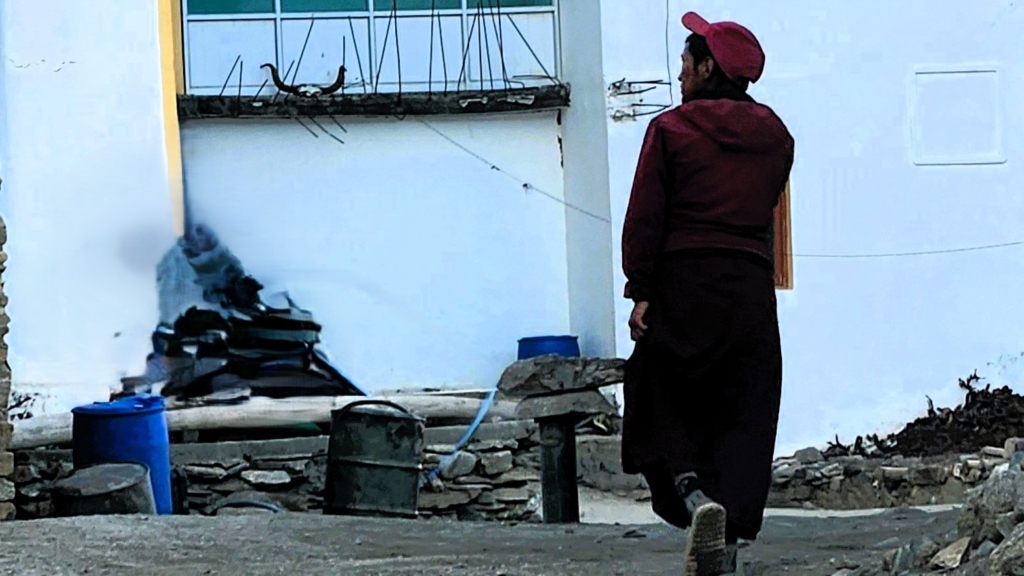
The lama added that the festival brings together nomadic tribes from the surrounding regions, as well as travelers seeking a deeper connection to Ladakh’s spiritual heritage. These tribes are deeply devoted, often dedicating one son from each family to serve the monastery. As night began to fall, we thanked the lama for his time and insights, then made our way back to the hotel for an early dinner.
Milky Way Galaxy @ Tso Moriri
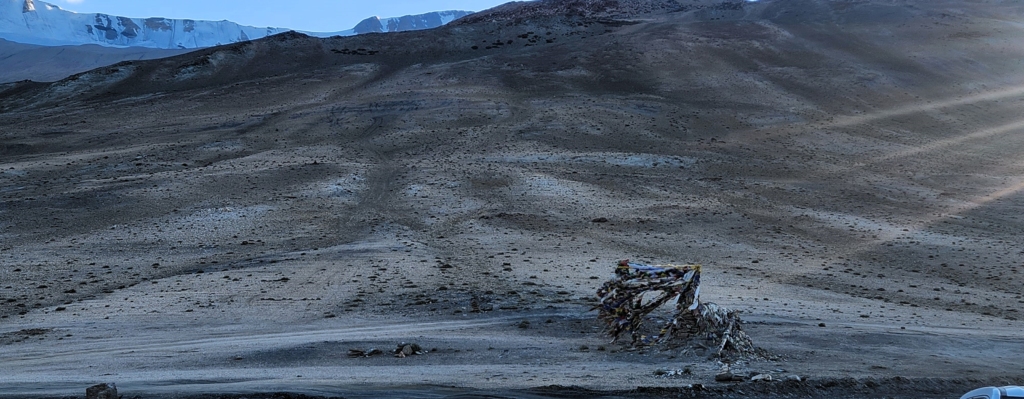
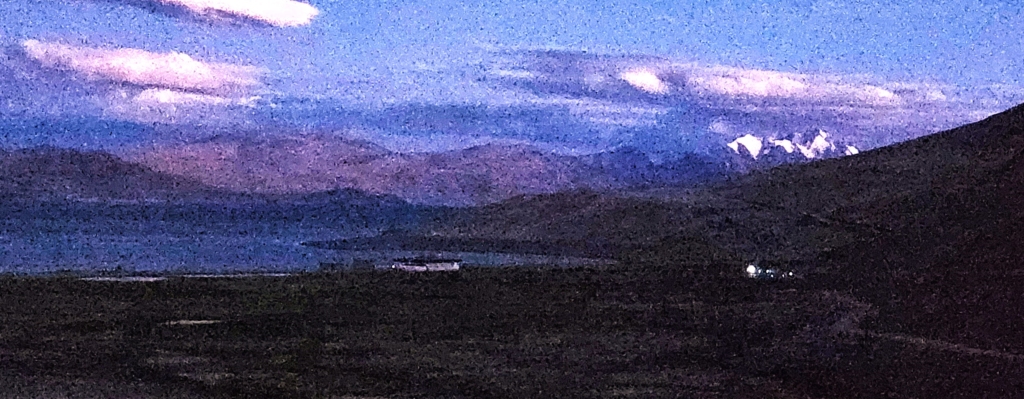
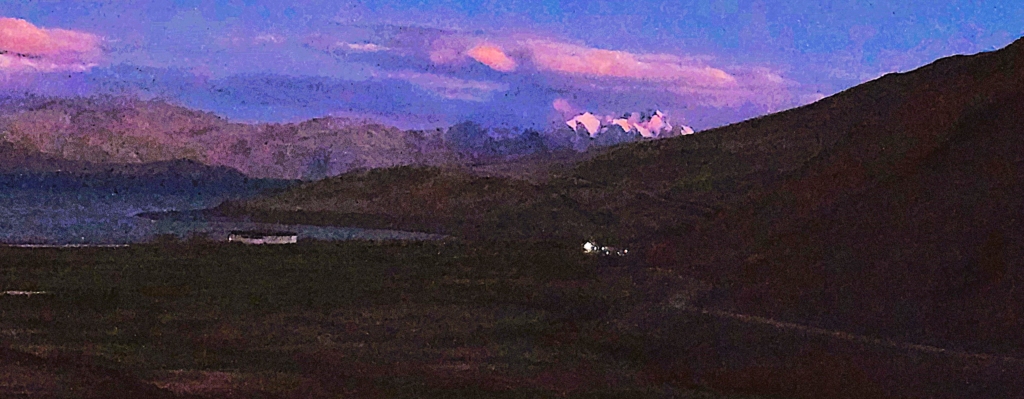
That night, as darkness blanketed Karzok, we stepped out to explore the universe above. The sky, dressed in a deep black gown, revealed the Milky Way in stunning clarity. We captured incredible shots of the galaxy before retreating to bed, content under the vast, star-filled skies.
NB: How the Tso’s Came to Be
Journeying through Ladakh’s scenic tso’s and la’s, I couldn’t help but ponder the mystery woven into these lands. It was later in the Leh market that I met Tsering Gurmet, who unraveled some of this lore with folktales of “How the Lakes Came to Be”. This particular folklore revolves around “Gatpo” – the village guardian mountain deity.
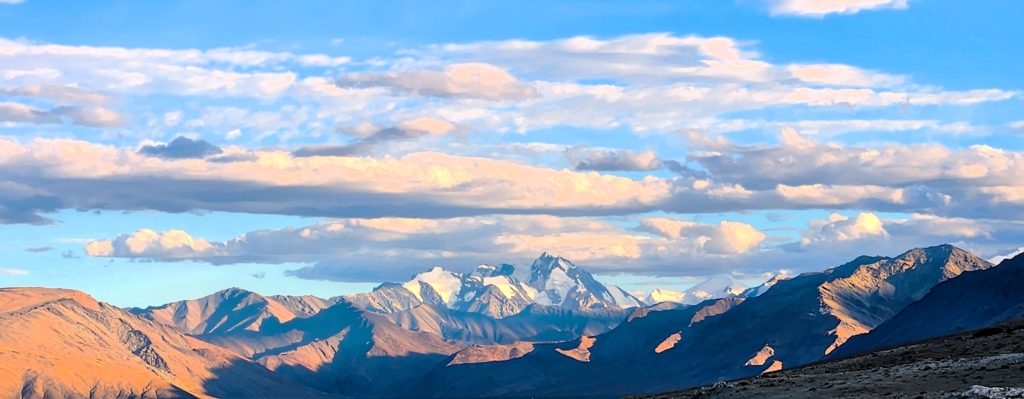
Co-authored with Mira Kapoor, the children’s book – Tales from the Rebo, tells these tales with captivating charm. I hope you’ll find this story as intriguing as I did.
According to legend, the region once held only a single, vast lake near Thukje. One festival night, the villagers had gathered in Karzok to celebrate, dancing through the night to the rhythm of jhabro. Drawn by the music, Gatpo, yearned to join the revelry. Transforming into an old, ragged Changpa, he ventured into the crowd. But when he approached the locals to dance amongst them, people mocked his tattered clothes and disheveled appearance. Disheartened, Gatpo began to leave – until a young girl chased after him and danced with him.
After the festival, Gatpo returned to Thukje, where an idea struck him as he gazed upon the great lake. Determined to teach the villagers a lesson, Gatpo drank up all the lake’s water. As he grinned at the now-dry lakebed, two water droplets slipped from his nostrils, falling to earth and forming “Tso Kar” and “Startsapuk Tso”. “A few drops are one thing”, he thought, “but taking the whole huge lake would truly humble the villagers”.
As he made his way toward Karzok with his mouth full of lake, Gatpo grew tired and yearned for butter tea. He released some of the lake water into the kettle, but as the water boiled, a puff of steam escaped, settling on the ground as “Kyagar Tso”.
Arriving at Karzok, he found the girl who had danced with him and told her that her uncle was looking for her up in the high pastures. Trusting him, she hurried up the hillside. Once she was safely away, Gatpo released the entire lake’s water from his mouth into the valley. A torrent swept through, submerging the valley and creating “Tso Moriri”.
There was an old woman, Tsomo, who had been among those who mocked Gatpo. She was riding her yak toward the valley and, upon seeing the rushing water, cried out, “Ri…ri…ri…” to halt her yak. Yet both she and her yak were claimed by the flood. The lake’s name – “Tso Moriri”, was inspired by the tragic incident. “Mo” is a tribute to Tsomo herself, while “Riri” represents the call she made to her yak as she tried to stop it from entering the flooded valley.
Together, Tso Moriri reflects her name and her final, desperate cry, capturing the sorrow and mystique of the lake’s origin in this folklore. That’s fascinating! The call of “riri” carries such a deep connection to both the folklore and the daily life of the Changpa, reflecting how these stories and traditions are woven into their practices even today. It’s a beautiful way to see how language and legend coexist in the lives of the people.
August 2024
If you’re planning a trip to Karzok / Tso Moriri or explore Ladakh, we at HappyHorizon would be thrilled to curate your holiday plans to enhance your travel experiences. Feel free to reach out to us: connect@happyhorizon.in
Day 11: Tso Kar – Leh – Read More
Gallery
Sukumar Jain, a Mumbai-based finance professional with global experience, is also a passionate traveler, wildlife enthusiast, and an aficionado of Indian culture. Alongside his career, which includes diverse roles in international banking and finance, he's working on a wildlife coffee table book and enjoys sculpture and pottery. His interests span reading non-fiction to engaging in social and global networking.