

Day 4: Nubra Valley – Read More
Day 5: Turtuk
Tyakshi – Turtuk Village – Yabgo Dynasty – Mukur Thang Village
Tyakshi Village
It was early morning for me. I was sitting right under the Saltoro mountain peak and soaking the atmosphere.
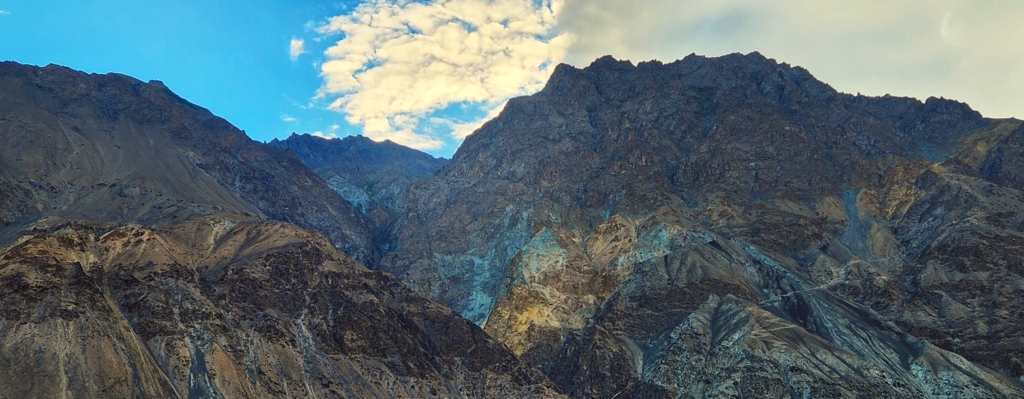

It was after very long time, I could feel falling in love with nature. The feeling is quite strange, that falling in love with a surrounding knowing very well it will be time to move the very next day. As I reflected the moment, I realized that probably love is a feeling which enhances ones experience and makes one happy and calm from within. If one continued to be in a state of love for long, the energy that would be generated within the body could transform the person. Turtuk is one such location, where I would love to go back and camp for a month amongst the locals.
I want that love that moved the mountains
Rumi
I want that love that split the ocean
I want that love that lifts us to ecstasy
I want that love that is the silence of eternity
Abbas, the owner of the resort, joined me for breakfast. As we discussed the beauty of Turtuk, As we discussed about things do around Turtuk, he helped me to put together an itinerary for the day.
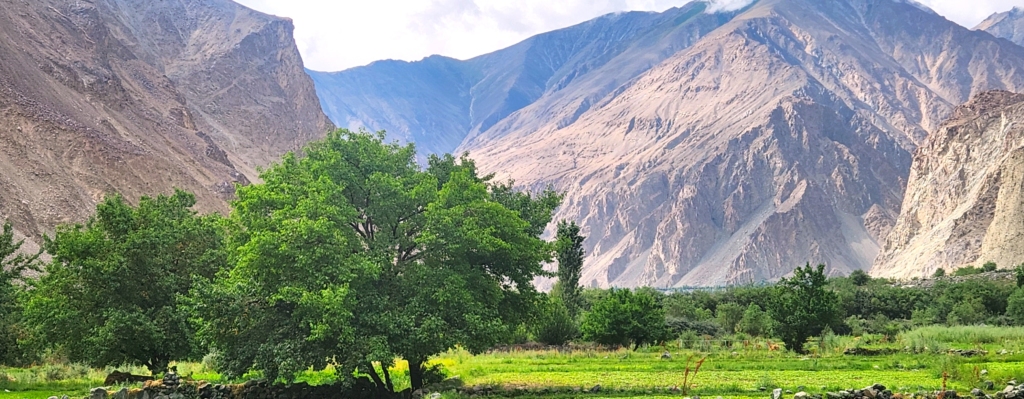
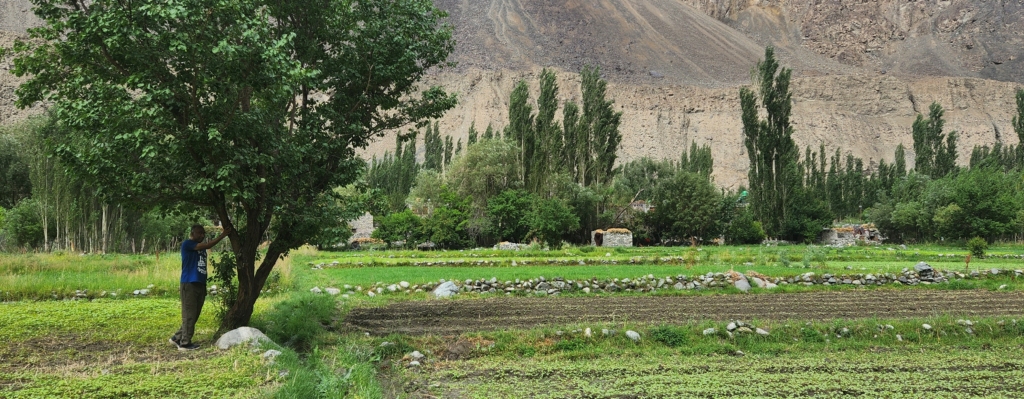
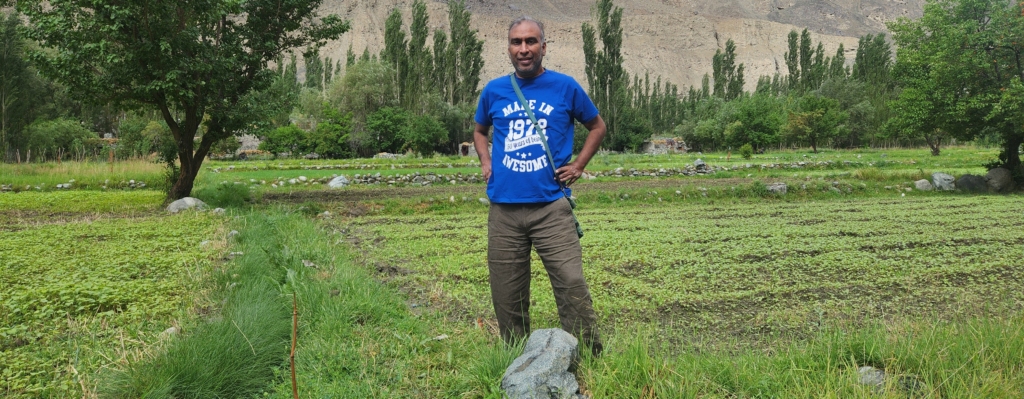
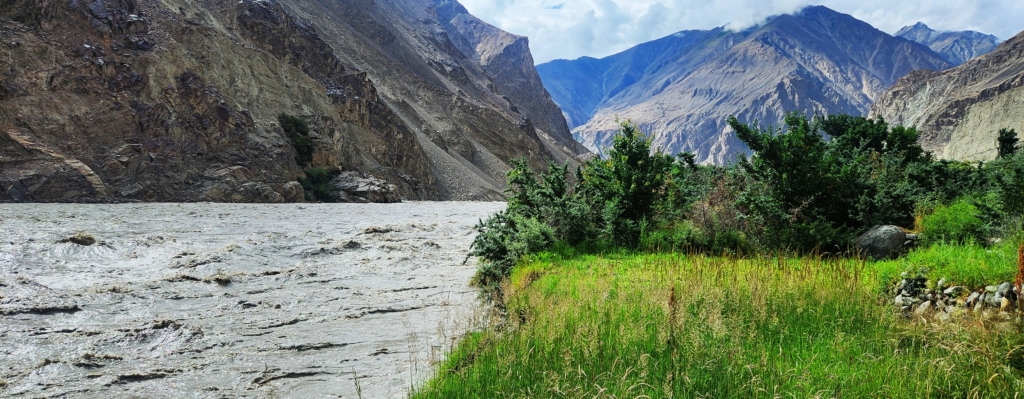
Post breakfast, we decided to explore the interiors of Tyakshi village. We found a short way to the banks of the Shyok river through the fields of the village. We walked carefully through the fields trying not to damage the paddy. We could see lush green paddy fields till the end of the village. There were few apricot trees on the sidelines.

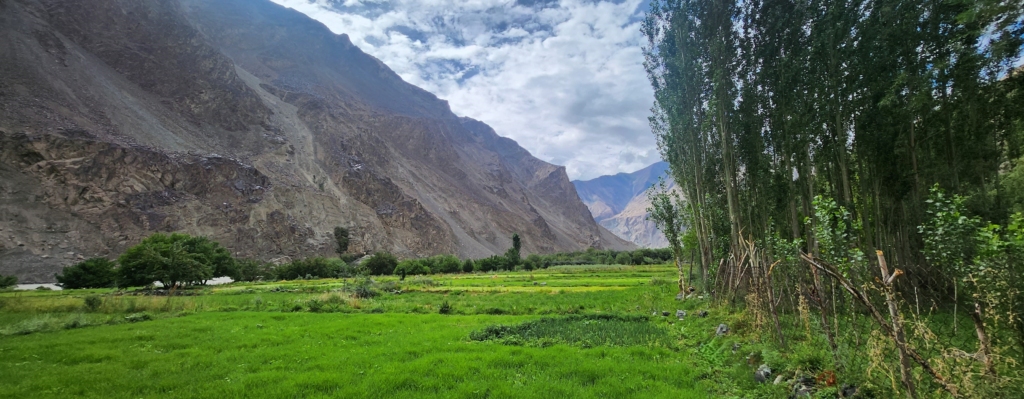
Shyok river was gushing through the valley as if it was in hurry to reach somewhere. Does the river know that it’s existence will cease as it flows down and merges with the ocean, after touching innumerable lives. Would it have slowed down its pace. There was so much to learn from the nature and transform our lives.
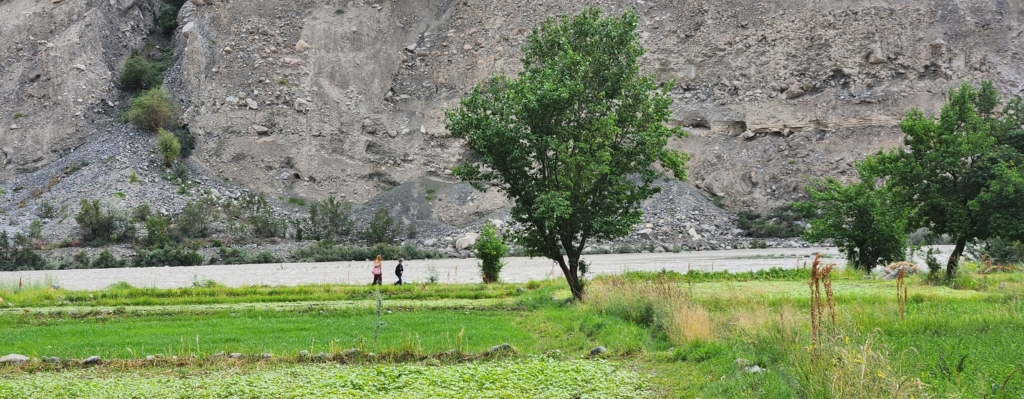
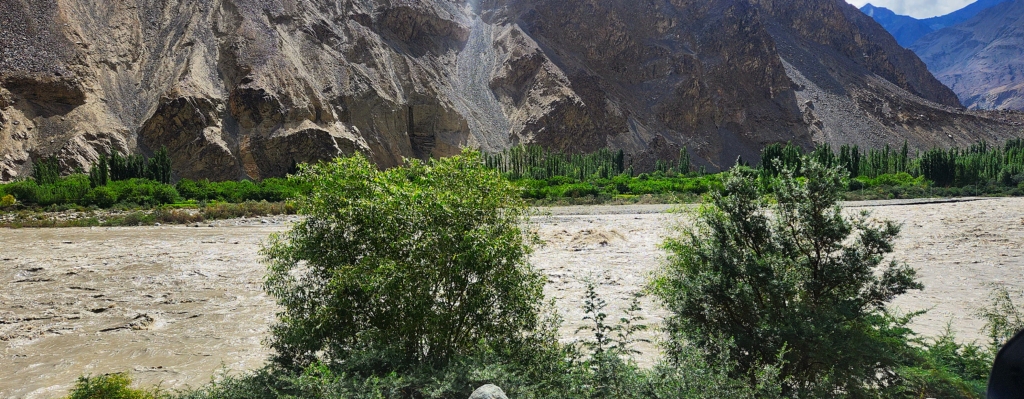
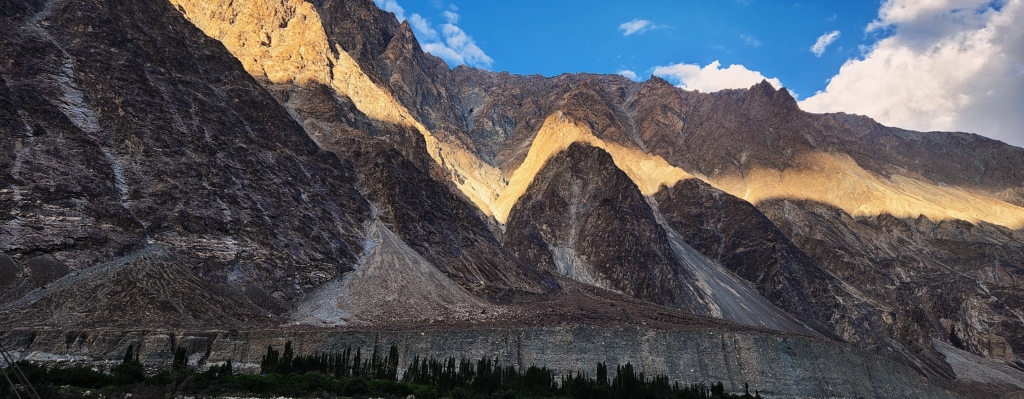
Abbas had mentioned that during winter, you could see Ibex on the cliff, however, there were none now. As we stood on the banks of the river, the rocky Saltoro mountain range with its baldness was staring right at me from the other side of the river.
Yabgo Dynasty: Click Here
Turtuk
After our rendezvous with the king we set out to explore the Turtuk village further. The village is divided into two sections – left and right, by a gushing stream flowing through the slopes of the hills that eventually flows into the Shyok River. Two bridges connect the banks: one is a charming old wooden bridge, while the other is a newly constructed structure.

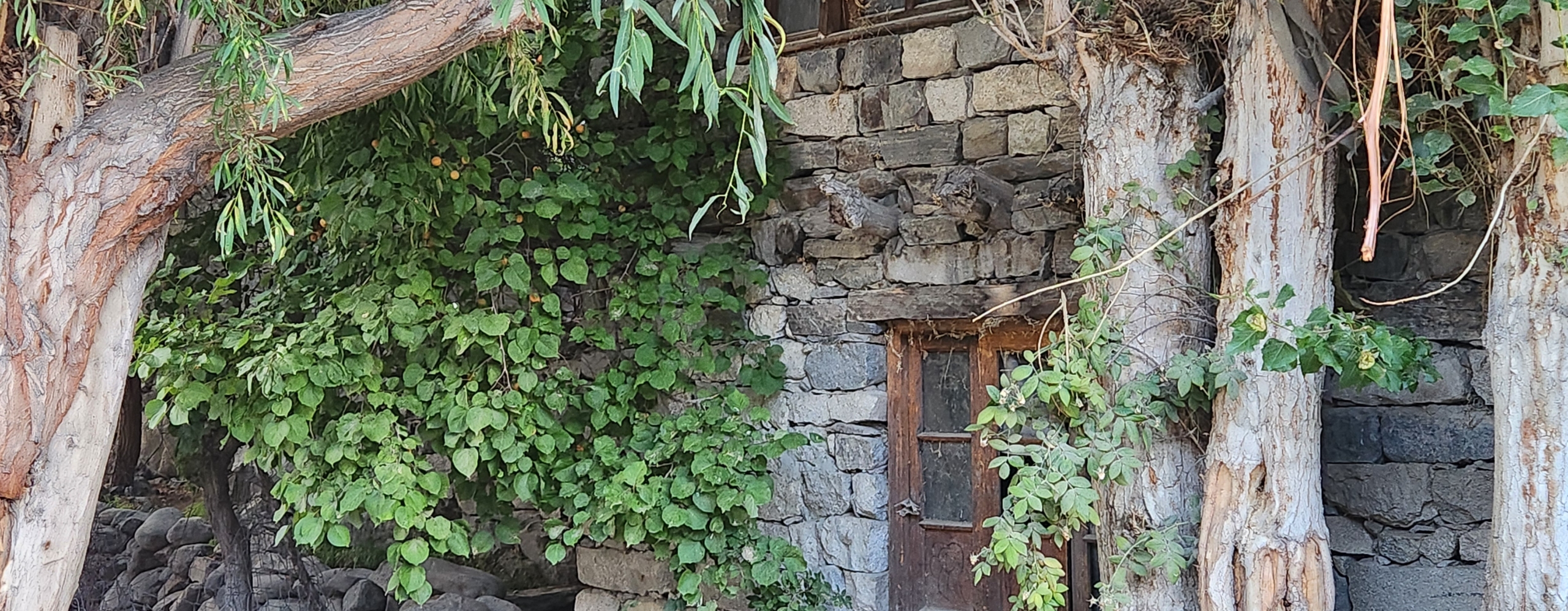
We crossed over to the right-bank via the new bridge. Turtuk village on the right bank is embedded in nature in contrast to the ghetto construct on the left-bank. Everything seems to be right on the right banks. The village of Turtuk itself is incredibly picturesque, nestled amongst apricot orchards and barley fields. The gentle slope of the mountain have been terraced for agriculture and the village pathway along the fields has an easy gradient to stroll through the lazy afternoon. The apricot trees and other plantations provide a good shadow cover over the pathway. The network of pathways is a maze, although you cannot go wrong directionally. As we gained height we could have aerial scenic view of the village with the Shyok river meandering along the Saltoro mountain range like a perfect romantic couple.
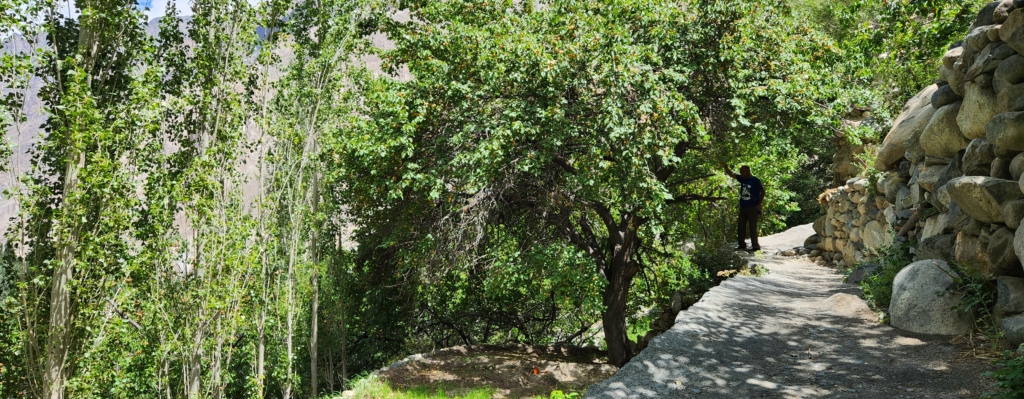
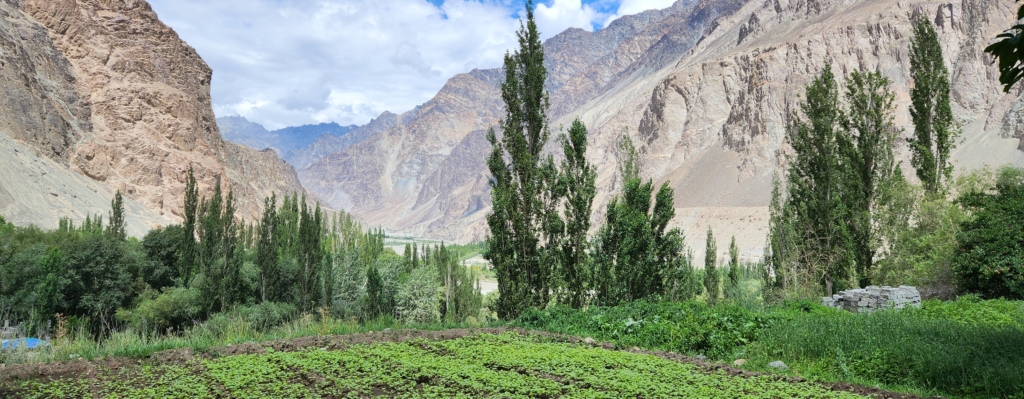
The villagers here offer homestay facilities to the tourists. For a close feel of the village in the midst of nature, this part of the village could be a good option to stay in Turtuk. Atleast the young Israelis seems to love it. A small water channel flows along the pathway to feed the farms and serve the household needs. You could carry small lunch box and settle under the tree and enjoy the nature for hours together. There are various activities which the homestays offer like star-gazing, village walk tours, etc.

As we explored the village, we came across a signage – “First Natural Freezing Point – Turtuk”. We were quite curious, so when we enquired with the passing by villager, he explained that the small cave in the mountain is freezing cold throughout the year because of the underground glacial watercourse. The villagers store perishables as it is naturally cold – it’s their natural refrigerator. He said that you may not find this natural wonder anywhere else but in Turtuk. He added that it remains freezing cold throughout the year. We tried putting our head inside to experience the cold breeze, it was so cold that we could not sustain it beyond couple of seconds.
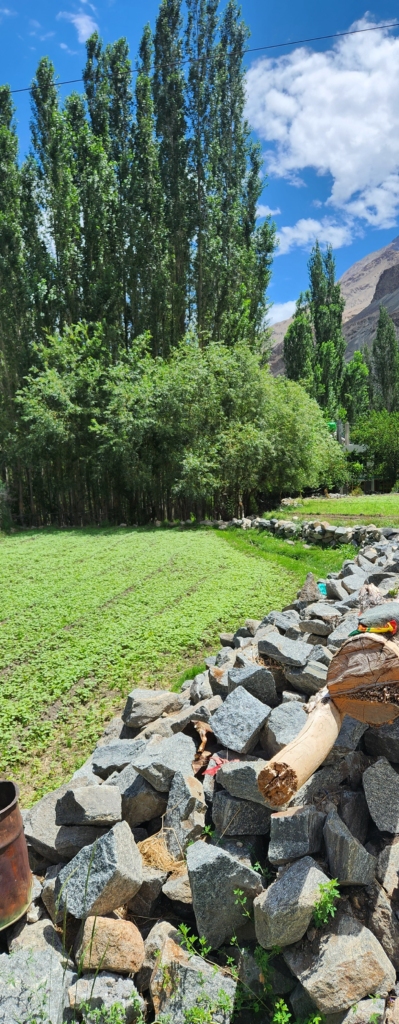
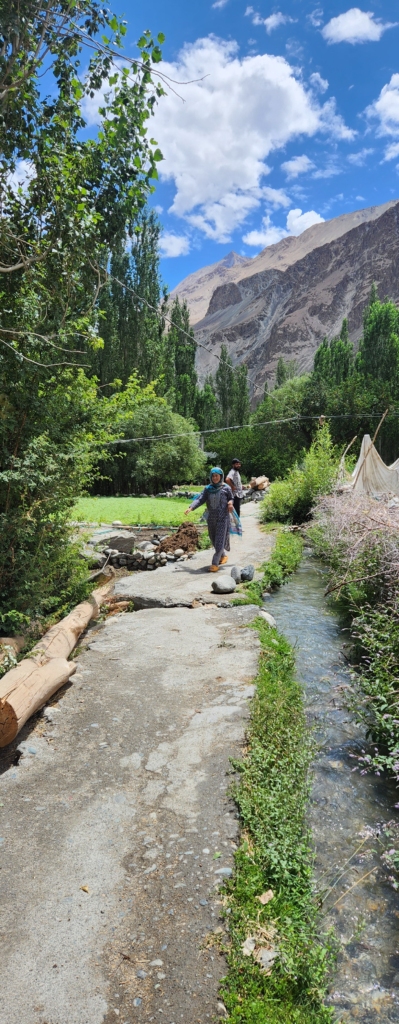

As we headed back tackling the maze, we met few young Israelis boys also looking for their route. Luckily our sense of direction to follow the downward trail worked and we reached the new bridge exit. There are several restaurants on either side of the bridge along the stream. We randomly selected one managed by a local village woman for our lunch break. Danish enjoyed the local Balti cuisine while I choose the uninteresting sandwich.
After lunch we drove around the village market area along the Shyok river. We spotted a makeshift salon, so we decided to give ourselves a makeover. After the job, as I tried to tip a young hairdresser. He was stunned. He refused to take it saying that he has charged for his services and anything extra was not earned, and hence not justified. There is still a part of the world which does not like free extra money.

We returned to our resort to rest. As it was our last evening in Turtuk, I ordered some plum cakes and veg puff from the local army bakery for everyone. Abbas was in the resort too. We had a great time sitting together and exchanging stories. I asked him about his story about his transition from agriculturalist to hotelier. He said that he already owned the land so the decision was relatively easier although he indeed has taken a big financial risk. He said that he was not in a hurry to reap the investment benefits. He is constantly thinking about expanding his hotel business. He was thinking of putting up a modest hostel to meet the lower end of the market, especially the young bikers.

He said that a road was being constructed which will connect Kargil to Turtuk directly by-passing Leh. He was quite hopeful that this new road will bring loads of tourists to Turtuk. I was not so sure whether this was good for Turtuk or not. I asked Abbas if I could buy any piece of land in the village. He said that the villagers in the region don’t sell their land. It is considered as a disgrace amongst their community. Abbas recounts the damage caused by earlier incidents of shelling at the border. He said that since the shelling has stopped, tourism has picked up in the region.

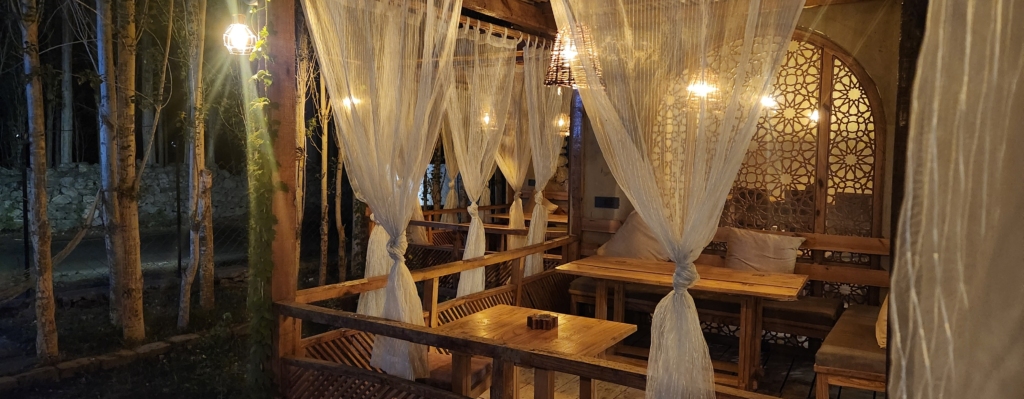
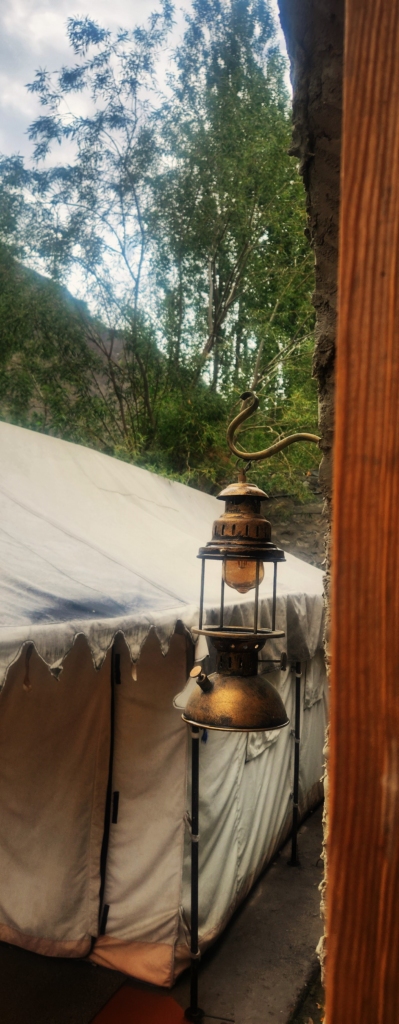
I loved the interiors and overall look and feel of the resort. I was inquisitive how did he managed to find an exquisite designer in Turtuk. He said that he had hired a south-India based architect. The architect, based herself for two months in Turtuk, to oversee the construction of the resort. I thought it was really commendable for a lady to travel all the way to Turtuk to take work assignment.
Abbas said that she was very hands on and had put together a working team from across cities. She had ordered furniture from Delhi. All the wood required for the construction were procured from Leh. The construction workers came from Srinagar. Abbas resort manager was from Himachal Pradesh. His chef came from Uttarakhand. It was nice to see people coming together in Turtuk from across the country in search of work.
Abbas along with his family lived in the village just behind the resort. His wife worked on the fields and took care of the home. He has three kids, two of them are pursuing medical studies in Srinagar and the third kid was studying in the local government school.
As the discussion moved towards 1971, Abbas said that the border villages, which came under India, has many stories of the families impacted by the border conflict. There are various families in the village who have been split due to the movement of boundaries twice. Some have been separated by their parents, children, spouse, etc. According to village lore, some couples, separated by the LOC, resorted to parting ways – divorcing each other through letters sent across the divide.
After the cease-fire line was marked, Chalunka became the last village on the Indian side, a place defined by its proximity to the unseen line. Then came 1971, when India reclaimed four villages, and with them, a new wave of residents. In the beginning, trust was scarce, and the people of these four villages lived as perpetual refugees, caught between borders and uncertainty. The new citizens were met with suspicion by the people of Chalunka, who viewed them through a lens of mistrust, branding them “Pakistanis”.


As Abbas and I reflected on the question: What was the crime of these villagers? Should they be punished simply for the misfortune of living along a shifting border?
Abbas said that now the villagers don’t live in a state of constant physical insecurity any more and they are happy to see their condition much better than their counter parts across the boundary. More importantly, with passage of time, trust has been built. Most of the affected families have accepted the fate, however the scar still remains.
Some of the family members have laboured the pained over the years in order to secure visa to meet their blood relations on the other side of the boundary – just for a warm hug or a glimpse. I would guess these challenges would have disappeared with advent of video calls and exchange of messages on social media. For the newer generation, the painful tales of partition and shifting boundaries have been reduced to little more than folklore – stories passed down but stripped of their raw emotion. For the dwindling few of the older generation, the boundary dispute has faded into a haze of distant memories, now little more than echoes of a forgotten past. Abbas said that the society is mix of people, there are some old people who remember the united past with found memories. Although we agreed that relationships become weak – out of sight, out of mind. Distant relatives become more distant with passage of time. Most importantly, the villagers have blended well into India’s eco-system, they have become one with the rest and have moved on to adjust with the changing circumstances.

Abbas highlighted that life for these families has found a sense of stability, anchored by steady employment, healthcare, and education – basic necessities that transcend nationalism. The freedom to practice their religion and preserve their traditions has brought significant relief. When our conversation touched on religion, Abbas noted an intriguing detail: though ethnically Muslim, the villagers of Turtuk do not consume meat. The stark contrast between the predominantly Buddhist landscape and this largely Muslim region is striking. Yet, the people of Turtuk have come to terms with their irrevocable separation, recognizing that they now stand on firmer ground within a stronger nation. Abbas is unwavering in his belief that the people here are just as patriotic as any other Indian citizen. There should be no question of their loyalty.
Abbas jokingly said that there would be families who would have separated due to partition in 1947 may have rejoined in 1971. There are always several perspectives for any given situation, however, its only the grim ones which often gets published. I could not agree with him more.
Mukur Thang
After our tea and snacks, Danish and I set off to explore the outskirts of the village, tracing the path along the Shyok River. It was our final evening to soak in the serenity of Tyakshi. As we drove, we reached a point where a wooden bridge spanned the swelling Shyok River, connecting us to the small village of Mukur Thang.
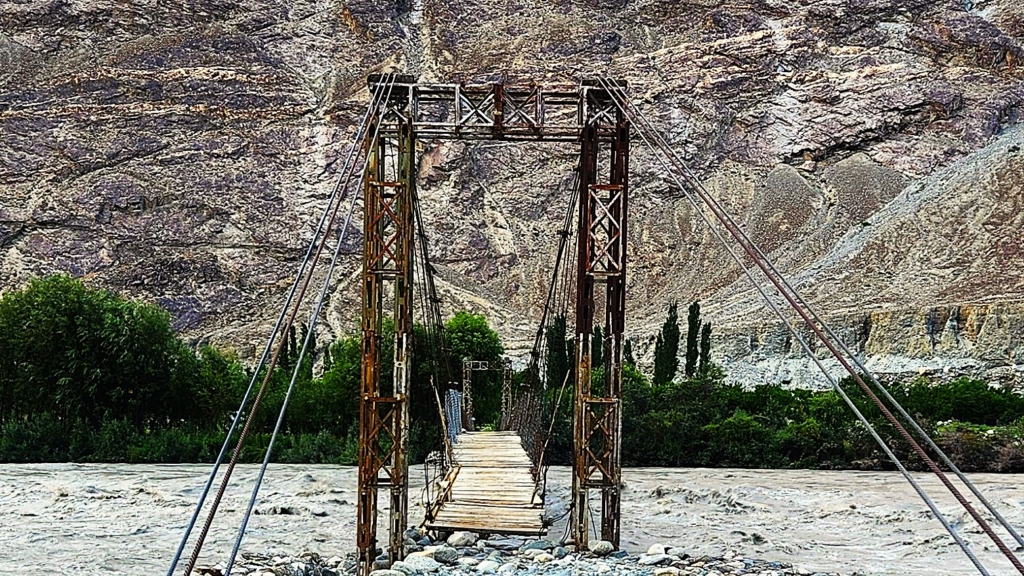
At first glance, the low, swaying bridge filled me with fear. The river’s thunderous roar only heightened the sense of foreboding. Its murky waters, heavy with sand and mud from the melting glacier, gave it a fearsome appearance. Yet, despite this, the surrounding landscape was nothing short of breathtaking, framed by the splendor of the atmosphere. After watching a few villagers cross with ease, I summoned the courage to step onto the bridge myself.
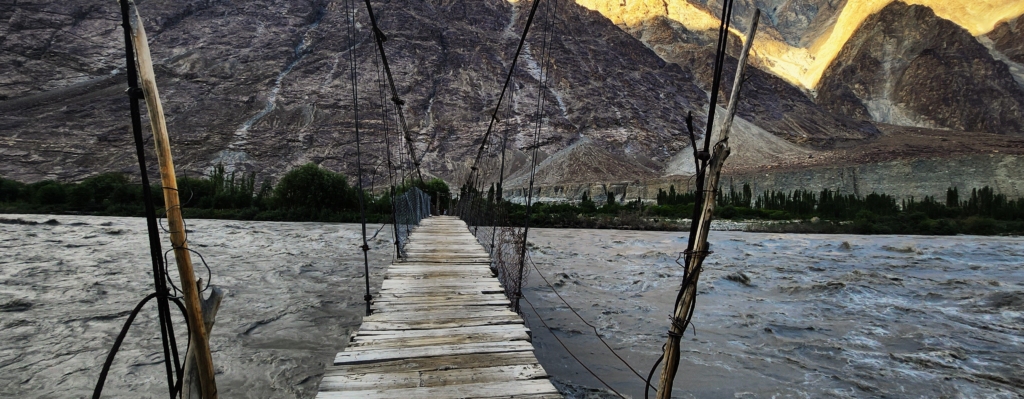

On the other side, I found myself enchanted by the fields of buckwheat and barley, nestled beneath the rugged majesty of the Saltoro mountains. The village’s natural beauty defied imagination, with the kaleidoscopic landscape leaving me utterly spellbound. The soaring mountain peaks, the powerful Shyok River, and the apricot orchards all contributed to the valley’s overwhelming charm.


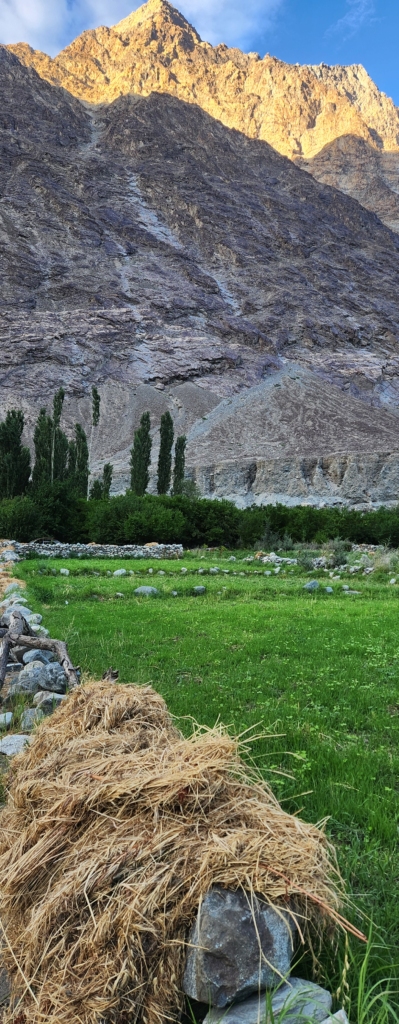
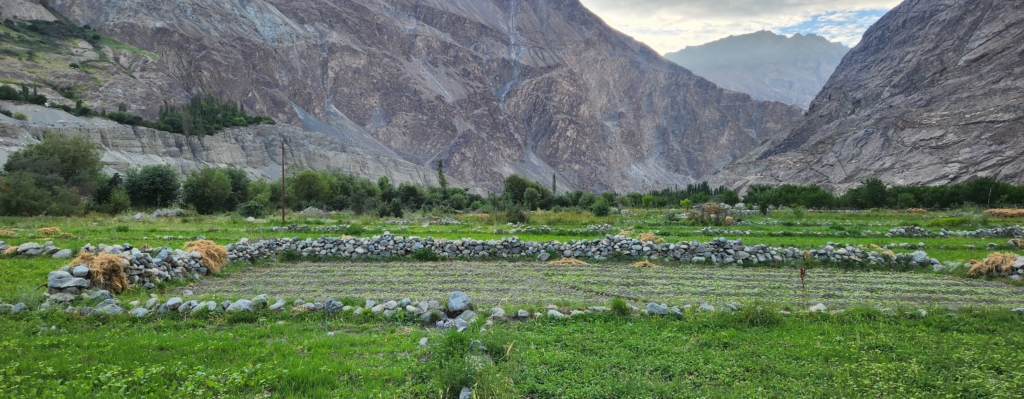

As I wandered, the people I encountered were exceptionally warm and welcoming, curious if I had lost my way. The women, however, remained hesitant about being photographed, so I respectfully refrained, capturing only what I could without intruding on their privacy.

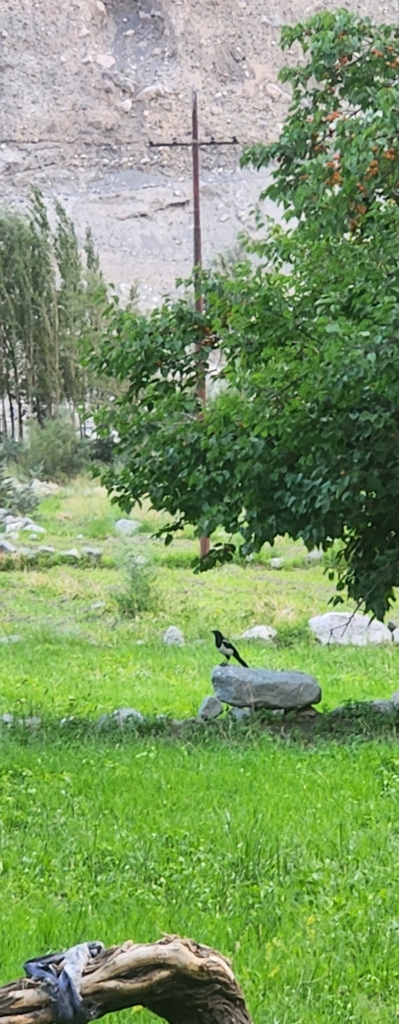

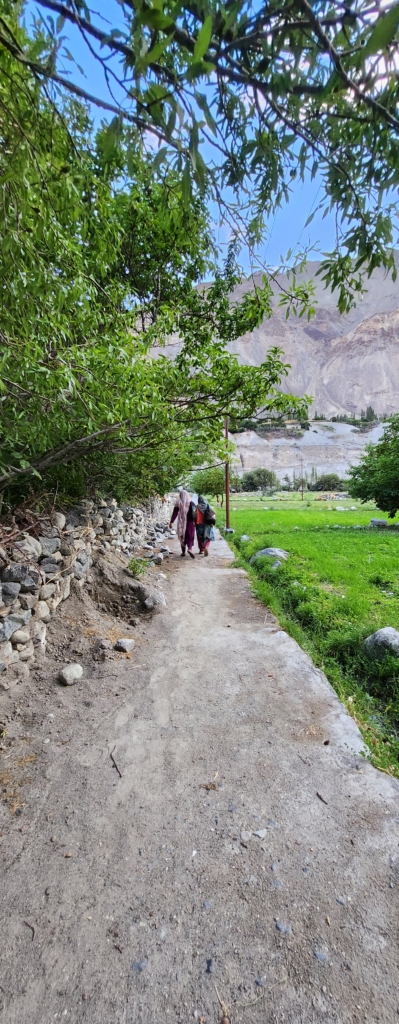
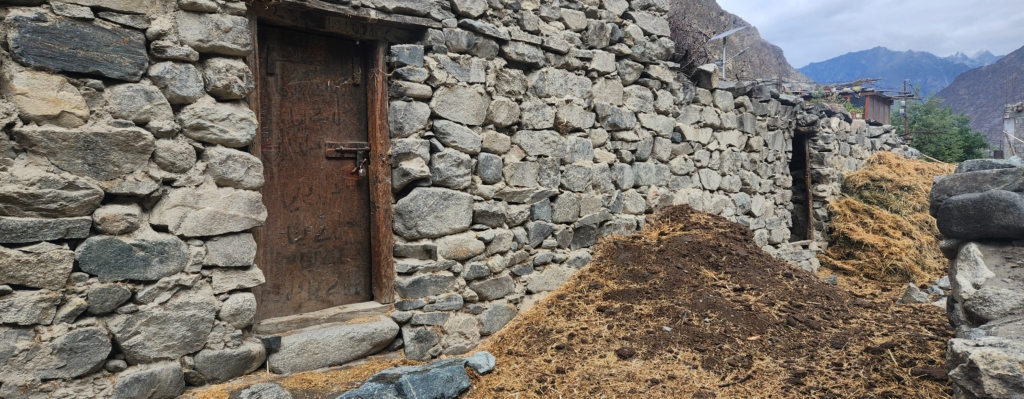
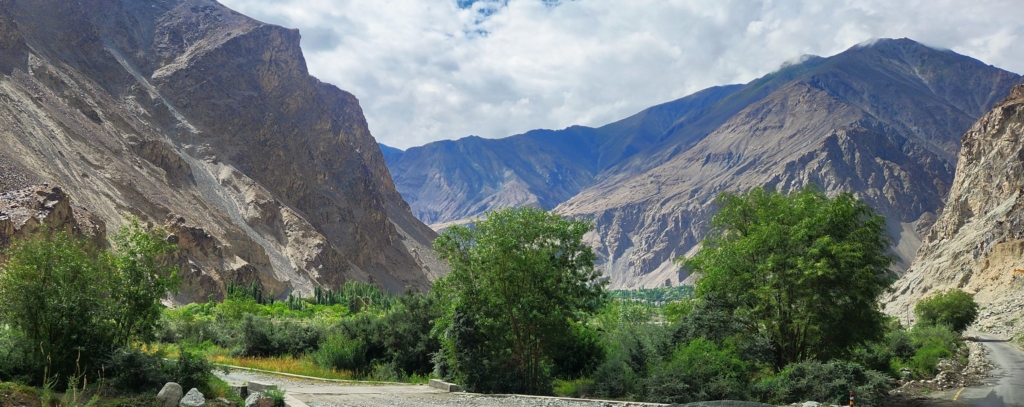
In truth, words may fail me here. I’ll let the photographs speak for themselves—they capture a beauty beyond my ability to describe.

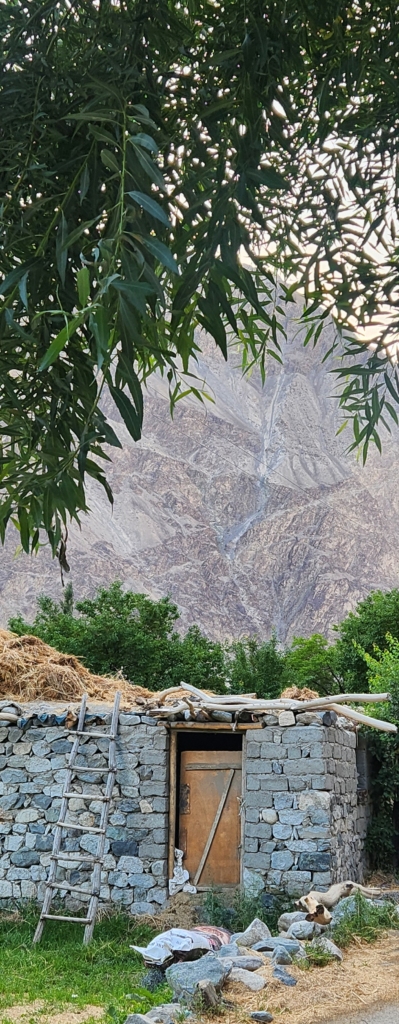


As it started to get dark, we rushed back to our resort, where Abbas was waiting for us for dinner.
After having another round of delicious dinner put together by resort’s phaadi chef, we retired to bed for a long enduring day which was to follow the next day.
Day 6 (Part 1): Hunder & Diskit
Tyakshi – Hunder – Diskit – Khalsar – 120 km. / 3hr.
Hunder
We were prepared for our long drive to Hunder through the deserted terrain. We were more observant and could enjoy the mighty mountains on the Saltoro range which we had missed on our earlier run-away drive.

Hunder, perched at an elevation of about 10,000 ft., is a prominent location on the ancient Silk Route, bordered by snow-clad mountains that present a picturesque backdrop to the arid but mesmerizing landscape. I was amazed by the scenic beauty of the gorgeous silver desert dunes that stretched across the entire valley. Time seemed to stand still along with the stillness of the warm air of the desert valley. I could not take our eyes off the picturesque views.

ye kya jageh hai dosto
ye kaun sa dayar hai
had-e-nigah tak
jaha gubar hi gubar hai
ye kya jageh hai dosto
This is an extract of the song from the hindi movie “Umrao Jaan” written by lyricist Shahryar. He writes –
“what a place is this friends, what kind of a place is this up to the eye-limits, where there is only dust, there is only dust, what a place is this friends”

The reference to dust suggests barrenness, evoking images of a landscape stripped of vitality. It could also symbolize the passage of time and the inevitability of change. This may also reflect a deeper commentary on human existence, highlighting a search for meaning in a seemingly inhospitable world. The lyricist seems to be reaching out to friends, seeking connection or understanding amidst this stark reality. What emotions or themes do you see resonating in these lines?
Hunder is home to two-humped Bactrian camels, or commonly known as Mongolian camels, who came to the region from Central Asia along with the Mongols. Bactrian camels are also exceptionally adept at withstanding wide variations in temperature, ranging from freezing cold to blistering heat. They have a remarkable ability to go without water for months at a time, making it expert to travel on the Silk Road.
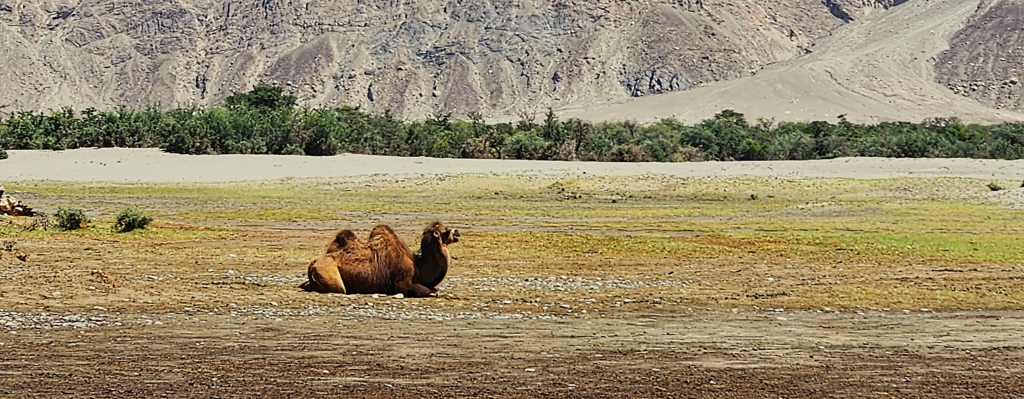
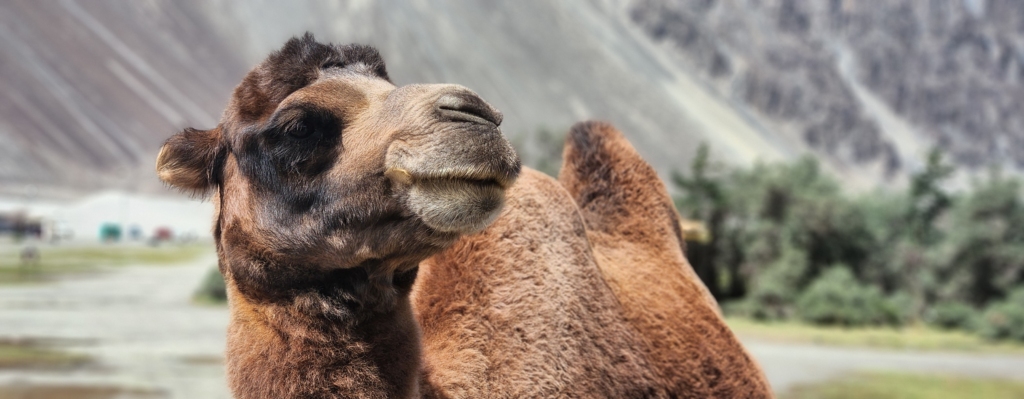
Today, these camels are the remnants of this glorious trading past and offer enjoyable joy rides to tourists around the sand dunes in Nubra Valley. Riding on the back of a camel is one of the most thrilling ways to explore this high altitude cold desert. The best time for a camel ride would be around late evening, when the sun is not over your head.
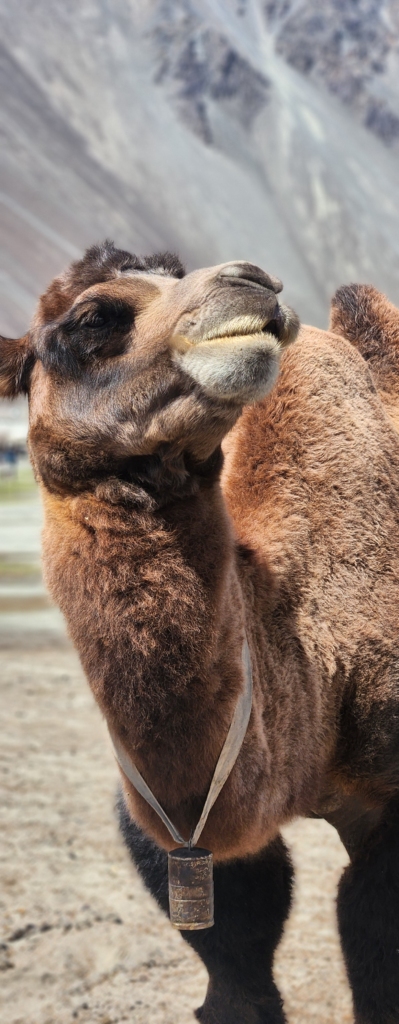
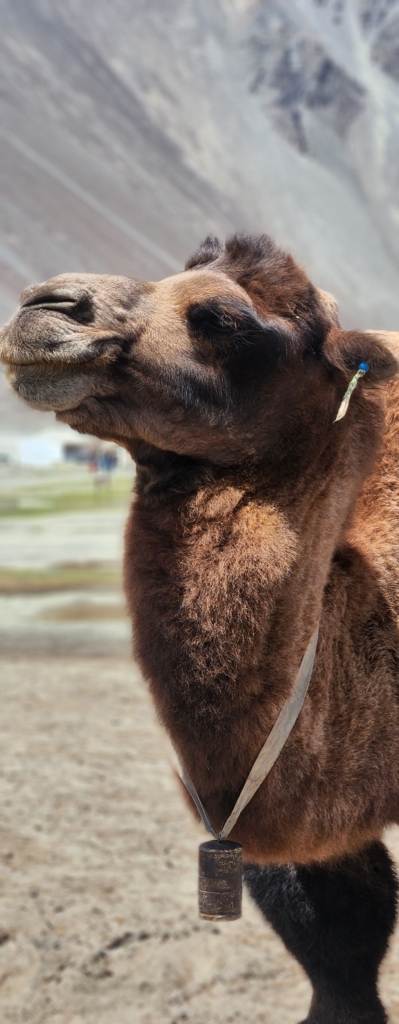

Although a word of caution with regard to the sand storms. Always carry a hat, scarves to cover the face and sun-glasses to protect your eyes. The best way to enjoy Hunder would be to camp in the dunes at night and enjoy the starry nights.
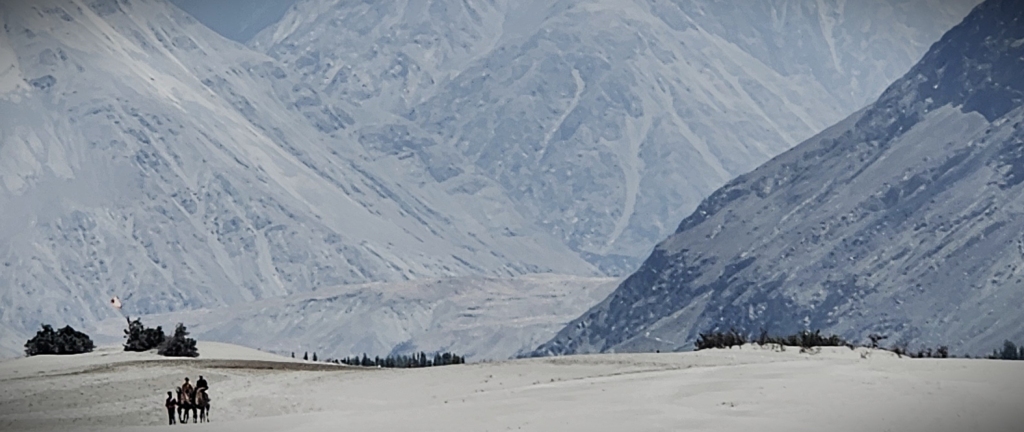


The herdsmen told us that the camels humps are plump and erect when the camels are well fed, but as resources decline, the humps shrink and lean to the side. The humps of most of these camels were leaning on the side. The camels looked malnourished. Danish tried his hand on archery. He failed miserably missing the bulls-eye on all his five attempts. It’s not an easy game, one needs to appreciate the Olympic medallists – regular and paralymics.
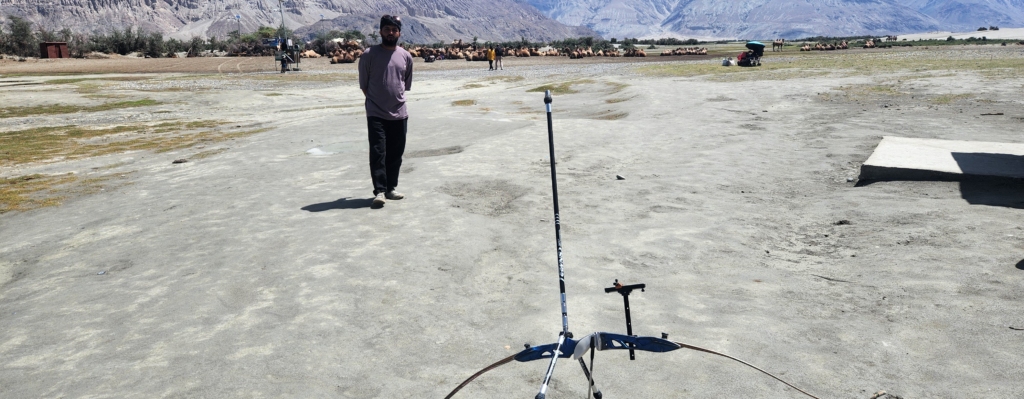
We wandered around the area for sometime, before realizing that we had miles to cover still. The problem with a fixed scheduled road trip is that one is running from pillar to post and not able to enjoy an elongated moment of serenity unless planned. If you need to enjoy Nubra valley, you need to take a week off from your schedule.
Diskit
Next on our schedule was to visit one of the largest Buddhist monasteries in Ladakh at Diskit. The main attraction of the monastery was the 32 ft. high statue of Maitreya Buddha and dominate the skies of the entire region. We got the glimpse of the statue from the main road, so we decided to give it a pass as we were running much behind our schedule.

We stopped at Diskit for a quick lunch break. We also wanted to check with the local taxi drivers if the route to Merak (Pangong Tso) along the Shyok river had opened up for traffic. The drivers confirmed that the route was badly damaged and would take additional week or so. As we left Diskit and reached Khalsar, it was time to say good-bye to the Nubra valley on the banks of Shyok river.
August 2024
If you’re planning a trip to Nubra Valley or explore Ladakh, we at HappyHorizon would be thrilled to curate your holiday plans to enhance your travel experiences. Feel free to reach out to us: connect@happyhorizon.in
Day 6 (Part 2): Siachen – Read More
Gallery


Sukumar Jain, a Mumbai-based finance professional with global experience, is also a passionate traveler, wildlife enthusiast, and an aficionado of Indian culture. Alongside his career, which includes diverse roles in international banking and finance, he's working on a wildlife coffee table book and enjoys sculpture and pottery. His interests span reading non-fiction to engaging in social and global networking.

